 Patricia Aas
37/ … huh this sounds familiar actually (thanks @malwareminigun)
https://youtu.be/q4k8SGmJqIA?si=MbtjKvkm6uxnl_54

How George Soros Broke the Bank of England
38/ Apparently one of the things you can do in our situation is to increase salaries. Because the currency thing is making goods a lot more expensive an increase in salaries could make that gap smaller. And we did that. Sort of. The government blessed a really good deal between the employers and the unions.
39/ However, here we meet another weird dynamic: in Norwegian union “culture” they negotiate first with the export industry. Because the thinking goes that they are more sensitive because they are exposed to currency fluctuations. But remember they are raking it in on the currency exchange. So now that deal is pretty great for workers. But… the rest of the Norwegian economy is not great and they get hit with yet another blow: first imports got way more expensive, then the interest rates shot up (absolutely doing its job of cooling our not-hot economy) and now salaries shoot up.
40/ And one sector is particularly vulnerable: construction. Because:
1. Materials (imported) are much more expensive
2. Interest rates are way up, so a lot of projects are halted due to financing
3. They are dominated by highly unionized workers and their salaries just went up (because the unions didn’t negotiate with them, they negotiated with the swimming in money export sector)
So all sorts of companies associated with construction are going bankrupt.
41/ Which means, as @intarga
points out, housing prices are not going down as we expected.
https://hachyderm.io/@intarga/112719682482183505
points out, housing prices are not going down as we expected.
https://hachyderm.io/@intarga/112719682482183505
Ingrid (@[email protected])
@[email protected] I find the interest rate situation in Norway extra annoying, because even with it not working to bring down inflation, the one silver lining it should have had was to cool the housing market. Instead, house prices are still going up because we completely stopped building 🙄🙄🙄
42/ The interest rate hikes are making a hard situation worse by “cooling” the wrong economy. We are getting a higher interest rate because America has lower unemployment (I am really happy for y’all though).
43/ And that gets us the whole “what is inflation?”. Because if it is that it is harder to make ends meet because everything is more expensive. Then they are actually creating MORE inflation.
Yeah, we are exposed to the exchange rate, but now we are killing the economy that’s supposed to compensate, while driving actual living costs even further through the roof.
44/ Housing is also a weird market in general, because once you’re in, you buy and sell in the same market. So that market becomes sort of disconnected from everything else. Because demand is constant and supply is pretty constrained: the people selling their homes and newly built stuff.
But with no construction the supply is even more constrained, and the people buying are mostly the people selling, so it becomes a strange closed loop system.
45/ However, if you are a renter you are also getting hit, again by different effects. The current left coalition (and previous iterations) have wanted to make it less lucrative to be a landlord. So margins have shrunk due to higher taxes etc. But a lot of this has been funded through loans, and so those margins are getting squeezed further. So landlords are either selling off their properties, which are often in the cities, or raising rents. But the housing market is undersupplied so it just absorbs these properties.
So now we have fewer rental properties, which would drive up prices on its own (according to economic theory 😅), but the remaining market is also increasing rent to compensate for higher interest rates.
So even if you rent you are getting hit by the interest rate. And actually it’s worse there, because rents will for sure not go down in the same way mortgages will if/when they reduce the interest rate.
46/ Or in kubernetes analogy (because of Cybercyn and the book The Unaccountability Machine): some stuff in our system (the Norwegian housing market) are auto-scaling in some cloud, some are manually scaled (by buying and adding new servers in our on prem data center) and once the peak in consumption is over, some things might scale down quickly, but some are stuck now with a lot of expensive hardware taking up space in our server racks.
Mortgages are in AWS and rents are on-prem in my very confusing analogy.
47/ I don’t know what the answer is, my earlier idea of constraining the supply of NOK… it looks like they did that, and it had apparently about as much effect as the interest rate (not much if any).
Maybe without these two things it would’ve spiraled out of control… but I don’t think so, because this wasn’t caused by our economy.
So maybe the best thing would’ve been to just accept it? Yeah, the NOK is weak, because the world is rough, increase salaries some and just sit tight? Maybe even stimulate internal growth to compensate?
48/ And maybe the bottom dropped out from under the NOK, but the whole oil tax thing will keep it from dying. Because there will always be buyers, because they have no other choice.
49/ is it possible that they are so afraid of “inflation” they are actually creating “inflation”? (Where each “inflation” is a different flavor of inflation)
50/ I told you, inflation is much harder to grok than I thought, because it’s much less well-defined than they say it is. It seems economists don’t actually know what it is, they just know some of its shapes. Unfortunately, the current Norwegian shape is not the stereotypical one. And the Norwegian central bank only has one hammer and it was made for the stereotypical case.
51/ Ok, I’m still on the inflation chapter (but getting towards the end, I promise), and I think I get at least one of the major changes MMT wants to do: To manage the economy through fiscal policy: spending more/less and increasing/lowering taxes, instead of through monetary policy: raising/lowering interest rates.
52/ Ok, I think I get it. MMT says that a deficit isn’t a sign of government overspending, inflation is. (And here they are clearly talking about the overheated economy inflation) So as long as the spending doesn’t cause inflation, it doesn’t matter if you run with a deficit even over a longer period (she mentioned decades).
So basically she is sort of saying that deficits aren’t real because taxes aren’t real.
This is more like the water in a radiator system (my analogy). You can add in water or remove water, but the system isn’t the water. And adding water (money) only becomes a problem when the pressure in the system gets too high and water starts spilling out somewhere.
Basically, money isn’t “real”. It’s… just water in a radiator system in a building. The building and the radiators and the people living there are the real things.
53/ Ok, fine. Y’all have told me over and over to read Steve Keen, and I would’ve if he had a freaking audiobook, but he does have a podcast, so let’s do a crossover, because he has an episode on MMT.
(h/t @joelving and the 5 other people who have brought it up)
https://mastodon.joelving.dk/@joelving/112720891429481986
(h/t @joelving and the 5 other people who have brought it up)
https://mastodon.joelving.dk/@joelving/112720891429481986
Peter Toft Jølving (@[email protected])
@[email protected] @[email protected] Most economic forecasting models are relatively simple and don't require supercomputers (because the models are oversimplified). Steve Keen takes a System Dynamics approach and has many more feedback loops in his models. He's also one of the fiercest critics of mainstream economics I know of, for many of the same reasons @[email protected] is. Worth looking up, if it interests you.
54/ Hopefully the link to the episode works, title is “Does Modern Monetary Theory make sense?”
https://debunkingeconomics.com/episode/does-modern-monetary-theory-make-sense
https://debunkingeconomics.com/episode/does-modern-monetary-theory-make-sense

Does Modern Monetary Theory make sense? | Debunking Economics - the podcast
Modern Monetary Theory states that’s, because the government of a country is the monopoly supplier of money, it has an unlimited capacity to pay for things and...
55/ Short recap: he basically agrees with MMT on most things. One thing came up though which is relevant to my discussion here about Norway, and that is that the USD is not a normal currency, and it can get away with a lot the rest of us can’t. The term he used was “reserve currency”.
https://en.wikipedia.org/wiki/Reserve_currency
https://en.wikipedia.org/wiki/Reserve_currency

56/ Here is the clip, I have no idea if he’s right or not about this particular argument, but I do think that (as far as I’ve gotten in the book) MMT seems very US centric and I also wonder if this protection they get from being a “universal global currency” protects them in ways they might not be completely aware of.
57/ The parts of MMT that I like are the descriptive parts. Where they just talk about How Stuff Works In Practice. The problem I have (and tbh they are by far the worst here) is that when they slip over from descriptive to prescriptive it’s like they don’t even notice. They go straight from How Stuff Works to My Opinion without skipping a beat. And then I start to wonder if they can even tell the difference.
58/ Another interesting clip from Keen where they talk about how to “create money”:
1. Through exports
2. Printing money
3. Borrowing from banks
1. Through exports
2. Printing money
3. Borrowing from banks
59/ Ah nice, finally we have some mention of a more “global” economy. And this is where I want to learn more “trade deficit” vs “trade surplus” and how it interacts with currencies.
60/ someone asked about this buying and selling of NOK when it comes to the sovereign wealth fund. And the Norwegian central bank has a page on it in English! And it has pictures 😃
https://www.norges-bank.no/en/topics/liquidity-and-markets/Foreign-exchange-purchases-for-GPFG/
https://www.norges-bank.no/en/topics/liquidity-and-markets/Foreign-exchange-purchases-for-GPFG/
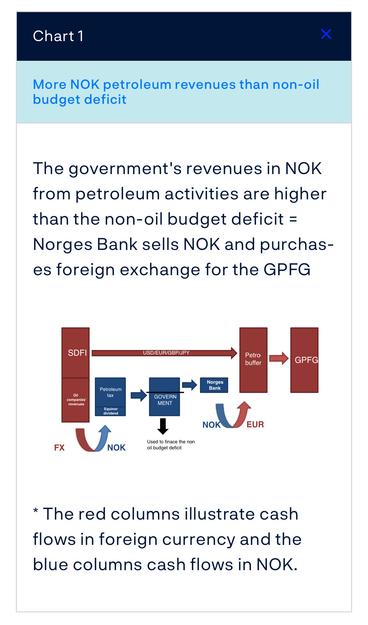
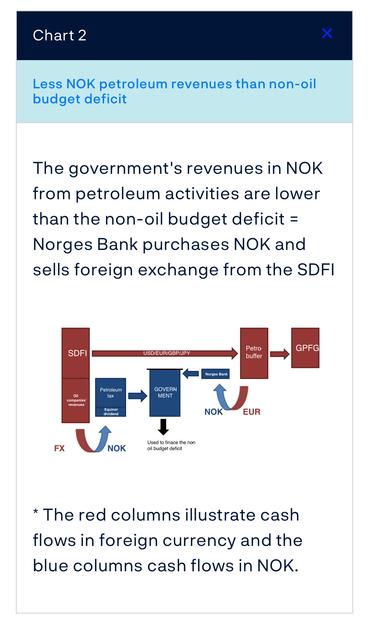
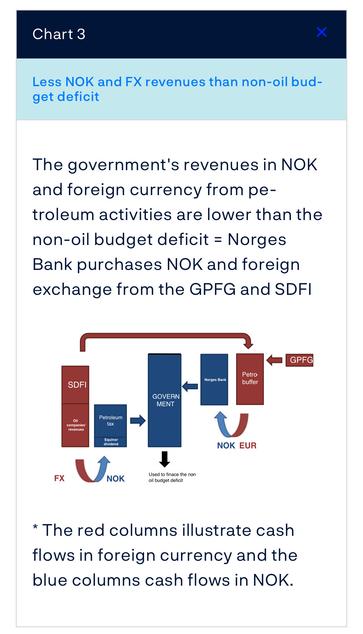
Norges Bank’s foreign exchange transactions on behalf of the government
The Norwegian government receives revenues in both NOK and foreign currency from petroleum activities. Some of these revenues are used to finance a planned central government budget deficit. Norges Bank carries out the necessary foreign exchange transactions associated with petroleum revenue spending. These foreign exchange transactions are planned and smoothed over the year and are pre-announced each month.
61/ Based on this is it possible that Norway is actually doing MMT? Sort of? But instead of “printing money” they are covering a planned deficit with the earnings from its petroleum export?
62/ I feel so smart when I read news articles that agree with me 🤓 🤣
“And an interest rate increase will not help, he believes. - The higher the interest rate goes, the more landlords have to raise the rent, and then the interest rate increase is inflationary. It does not have the same effect as in the housing market, where prices fall if interest rates rise. The interest rate is not a good weapon to deal with this kind of inflation. It makes matters worse, he says.”
https://e24.no/norsk-oekonomi/i/93zl4d/uenige-om-leieprisene-det-gjoer-vondt-verre

63/ What is absolutely hilarious is that the effect he describes on the housing market is actually not happening. But this is yet another time the terrain is wrong for not fitting their map.
64/ Real estate prices are up 8% this year, that’s bananas. But I guess it’s like the gold, people are investing in their homes, and maybe also the fact that it is a closed loop system. So until people start defaulting on their loans, the real estate market won’t feel it.
65/ After spending ages on inflation, I’m apparently breezing through chapter 3 “The National Debt (That Isn’t)”
Basically, in the same way tax isn’t real (in that it is just a mechanism to remove money from the economy and/or create demand for the currency. MMT says that the deficit isn’t real. Very clear that it is the US they are talking about. To generalize to more countries she picked the UK and I would’ve preferred another more “normal” country.
66/ Ok, done with chapter 3, the above sums it up, maybe with an addition that she is very pro-deficit, to the point that she’d like to give it another name. The whole thing is very idealistic, and that part should probably have been discussed beforehand. Because in effect the ideology and The Plan is mixed in with what is presented as descriptive. And maybe it’s just me, but I like it when the agenda is very clear and when the shifts between what is claimed to be descriptive and what is prescriptive is clear and emphasized.
67/ To be fair, I think that issue is pervasive in the whole field. They are not able to separate ideology from models of the economy. And then they infuse in morality and destiny and Right and Wrong in these models until it’s more mythology than science.
And I don’t mind ideology. I have a great helping myself. But when you’re already in a non rigorous field, mixing opinions into “models” makes the whole thing even less serious.
A complex system is what it is. You find out the shape of it empirically. You can form hypotheses, design experiments and test. You don’t sit in a corner and Devine It. You might have a famous “shower thought” but then you test.
And seriously, these people (economists) don’t test ANYTHING.
68/ I really thought I’d be more convinced by leftist economists. But they are methodically all very similar. And it is the methodology I have issue with in this whole… project(?).
This field has imo structural issues and they aren’t fixed by the practitioner being less of an ass.
The problem is they believe in these simplistic models and that is standing in the way of developing the kind of tooling, discipline and humility needed when working with complex systems imo.
69/ anyway, next chapter: 4. Their Red Ink Is Our Black Ink
70/ Related to this, if you had a billion dollars and you were convinced that we were facing a climate catastrophe which might even be an extinction level event. Where would you put your money to try to save it (don’t say you’d give it away, because you didn’t become a billionaire by giving stuff away)?
https://social.vivaldi.net/@Patricia/112719504676456386
https://social.vivaldi.net/@Patricia/112719504676456386
Patricia Aas (@[email protected])
When you quote me I hope you pick the best quotes: “And I posit that the NOK is weak because the planet is fucked and everybody knows it.” https://social.vivaldi.net/@Patricia/112719497998588756
71/ Couldn’t get excited about chapter 4 and 5 seems so much more interesting because it is about trade.
72/ Finally had some time to continue and this chapter might take a while, and I might need to read it several times. Funnily it seems that she agrees that the dollar is special. I learned a thing, though, after the world abandoned the gold standard we kind of didn’t, we pegged the dollar to gold and a lot of the other currencies to the dollar. This was called the “Bretton Woods system”.
https://en.wikipedia.org/wiki/Bretton_Woods_system
https://en.wikipedia.org/wiki/Bretton_Woods_system

73/ Well there it is, I wasn’t off base after all. Because of the position of the dollar the Feds actions, aimed at the domestic economy, has a much larger international blast radius.
74/ Some Norwegians have recommended that we peg the NOK to the Euro, and I think that our feeling that Denmark is similar to us culturally distracts us from recognizing how fundamentally different our economies are. Most importantly the petroleum “enhanced” economy of Norway and the fact that Denmark is a member of the EU and we are not, even with our extensive trade agreement.
75/ Chapter 5: “‘Winning’ at trade” is interesting, but doesn’t really go into the depth I’d like (but I guess after reading 4 Econ books in a row I’m not the target readership). The chapter is very “political” and idealistic rather than descriptive, but that was a tendency we saw earlier too. The basic idea is that a trade deficit isn’t a bad thing. She goes on to envisage a world economy that is more… equitable? It argues for developing countries to focus more inward, and diversifying their economies, perhaps making them less vulnerable to the global markets. It argues against losing control over one’s own currency (its MMT, so obviously). It makes clear that the dollar gives the US an outsized influence and leverage over the rest of the world.
She criticizes both democrats and republicans, but seems to have a soft spot for Bernie Sanders. He hired her to work at the Capitol, so I guess that makes sense.
The MMT premise seems to be that you don’t have to “have the money” to fund guaranteed full employment or “entitlement programs”, because the control over the currency means that the government always “has the money” to pay.
76/ The “winning vs losing” at trade is explicitly directed at Donald Trump. But she spends a lot of time emphasizing that American workers have lost jobs (“well paid union jobs” comes up several times) when production moved offshore.
It feels to me like she is arguing for a midpoint, a more protectionist approach, but not measuring in trade deficit/surplus, but instead in… standard of living?
She gets slightly into the topics of “The Shock Doctrine” in that the international trade organizations and the world bank became dominated by extremist (my word) capitalist forces.
77/ What I appreciate:
1. She is clear that the challenges that face us in the years to come are global, and that we have to work together to solve them, as partners instead of competitors.
2. She is not proposing some sort of bloody global revolution.
3. She is slowly selling me on the idea that guaranteed employment, benefits and entitlement programs are a safeguard against radicalization. I have mostly thought of these things as the “right thing to do” rather than a way to maintain peace.
4. The ideology is inclusive instead of divisive, and therefore doesn’t rest on the boogeyman approach of both the fundamentalist left and right. She doesn’t use immigrants or poorly veiled antisemitic tropes (the evil rich man of various formats) to paint some other group as the enemy.
1. She is clear that the challenges that face us in the years to come are global, and that we have to work together to solve them, as partners instead of competitors.
2. She is not proposing some sort of bloody global revolution.
3. She is slowly selling me on the idea that guaranteed employment, benefits and entitlement programs are a safeguard against radicalization. I have mostly thought of these things as the “right thing to do” rather than a way to maintain peace.
4. The ideology is inclusive instead of divisive, and therefore doesn’t rest on the boogeyman approach of both the fundamentalist left and right. She doesn’t use immigrants or poorly veiled antisemitic tropes (the evil rich man of various formats) to paint some other group as the enemy.
78/ I think 4 is essential for progress to be made, because the current right and left political movements are focusing on targeting hate and animosity towards another group of humans, rather than at an inequitable system. And that only perpetuates that system because that energy is wasted on being unproductive (and hateful, which sucks the soul out of everyone at a time when we need a surplus of generosity, in my view)
79/ But the book is supposed to not just be a work of ideology, but provide a way through this mess we’re in, in the aftermath 🤞of a global economy dominated by extremist capitalism.
And that premise is based on this currency “trick”, and there I am not yet convinced tbh.
80/ Chapter 6 is on entitlement programs, but I think I’m going to go back to chapter 4, which I skipped, hoping that might be a bit more illuminating on the MMT side.
81/ why are we humans so ready to blame all of our problems on “the other”. With all that we know about the consequences of this, we seem to fall for it every time. Why do we let them make us fight each other in some grotesque gladiator game? Is it our need for simple solutions? Do we need someone to hate?
That train of thought reminded me of this Norwegian song
https://youtu.be/9QxGKTTtYgM?si=G9in1FTPPu2q49_a
That train of thought reminded me of this Norwegian song
https://youtu.be/9QxGKTTtYgM?si=G9in1FTPPu2q49_a

Noen å hate
82/ Norwegian lyrics:
“Han der er ikke sånn som deg
Fort deg bort og ta han
Det er like godt som sex
Å banke en stakkars faen
Er det ikke deilig å ha noen å hate?
Føles det ikke godt å ha noen å hate?
Er det ikke herlig å slå dem flate?
Er det ikke deilig å ha noen å hate?
Hør lyden av nakker som knekker
Hør lyden av kjøtt som sprekker
Det er bare å følge fingeren som peker
Dit hvor de voksne leker
Er det ikke deilig å ha noen å hate?
Føles det ikke godt å ha noen å hate?
Er det ikke herlig å slå dem flate?
Er det ikke deilig å ha noen å hate?
Han der er ikke sånn som deg
Fort deg bort og ta han
Det er like godt som sex
Å banke gørra ut av en stakkars faen
Er det ikke deilig å ha noen å hate?
Føles det ikke godt å ha noen å hate?
Er det ikke herlig å slå dem flate?
Er det ikke deilig å ha noen å hate?
Er det ikke deilig å ha noen å hate?
Føles det ikke godt å ha noen å hate?
Er det ikke herlig å slå dem flate?
Er det ikke deilig å ha noen å hate?”
“Han der er ikke sånn som deg
Fort deg bort og ta han
Det er like godt som sex
Å banke en stakkars faen
Er det ikke deilig å ha noen å hate?
Føles det ikke godt å ha noen å hate?
Er det ikke herlig å slå dem flate?
Er det ikke deilig å ha noen å hate?
Hør lyden av nakker som knekker
Hør lyden av kjøtt som sprekker
Det er bare å følge fingeren som peker
Dit hvor de voksne leker
Er det ikke deilig å ha noen å hate?
Føles det ikke godt å ha noen å hate?
Er det ikke herlig å slå dem flate?
Er det ikke deilig å ha noen å hate?
Han der er ikke sånn som deg
Fort deg bort og ta han
Det er like godt som sex
Å banke gørra ut av en stakkars faen
Er det ikke deilig å ha noen å hate?
Føles det ikke godt å ha noen å hate?
Er det ikke herlig å slå dem flate?
Er det ikke deilig å ha noen å hate?
Er det ikke deilig å ha noen å hate?
Føles det ikke godt å ha noen å hate?
Er det ikke herlig å slå dem flate?
Er det ikke deilig å ha noen å hate?”
83/ Rudimentary English translation:
“He's not like you
Hurry over and get him
It's as good as sex
To beat a poor bastard
Isn't it nice to have someone to hate?
Doesn't it feel good to have someone to hate?
Isn't it great to knock them flat?
Isn't it nice to have someone to hate?
Hear the sound of necks snapping
Hear the sound of meat cracking
You just have to follow the pointing finger
Where the adults play
Isn't it nice to have someone to hate?
Doesn't it feel good to have someone to hate?
Isn't it great to knock them flat?
Isn't it nice to have someone to hate?
He's not like you
Hurry over and take him
It's as good as sex
Beating the crap out of a poor bastard
Isn't it nice to have someone to hate?
Doesn't it feel good to have someone to hate?
Isn't it great to knock them flat?
Isn't it nice to have someone to hate?
Isn't it nice to have someone to hate?
Doesn't it feel good to have someone to hate?
Isn't it great to knock them flat?
Isn't it nice to have someone to hate?”
“He's not like you
Hurry over and get him
It's as good as sex
To beat a poor bastard
Isn't it nice to have someone to hate?
Doesn't it feel good to have someone to hate?
Isn't it great to knock them flat?
Isn't it nice to have someone to hate?
Hear the sound of necks snapping
Hear the sound of meat cracking
You just have to follow the pointing finger
Where the adults play
Isn't it nice to have someone to hate?
Doesn't it feel good to have someone to hate?
Isn't it great to knock them flat?
Isn't it nice to have someone to hate?
He's not like you
Hurry over and take him
It's as good as sex
Beating the crap out of a poor bastard
Isn't it nice to have someone to hate?
Doesn't it feel good to have someone to hate?
Isn't it great to knock them flat?
Isn't it nice to have someone to hate?
Isn't it nice to have someone to hate?
Doesn't it feel good to have someone to hate?
Isn't it great to knock them flat?
Isn't it nice to have someone to hate?”
84/ Ok, chapter 4 “Their red ink, is our black ink”. I think it was Keen in one of his podcast episodes who said something that I hadn’t considered. From memory: as a country’s economy grows, whatever that means, the money supply would need to grow too.
Looking at population growth alone that makes sense to me. And that means that my mental model of a fixed “amount of money we have” isn’t correct. It would, at least over longer periods of time, need to be elastic in some way. And I can’t see how that could be a global zero sum game either, since many countries that were poor a century ago, and are still poor today, often still have a “bigger” economy than they did a century earlier.
85/ So if “the amount of money” we have is flexible, and that the value of a currency is affected by similar forces as stocks and gold and whatever… that seems to support that money is “artificial”. And of course, economists would say “of course it is, we abandoned the gold standard ages ago”, but to me that hasn’t been obvious, because even if we don’t peg our currency to something tangible (directly or indirectly) that doesn’t mean that we can consciously “grow money” on a money tree.
 BenAveling
@Patricia MMT = Magic Money Tree?
There's lot of ways in which the money supply can grow. There's lot of different ways we define money supply.
For example, if I write you an IOU and you accept it, we just grew the money supply.
There's lot of ways in which the money supply can grow. There's lot of different ways we define money supply.
For example, if I write you an IOU and you accept it, we just grew the money supply.
@BenAveling MMT is Modern Monetary Theory, which is what this book is about (and by extension what this thread is about).
@BenAveling one of its premises is that a currency issuer can “print money at will” and the only risk is inflation… and I think she means domestic inflation through a “heated economy” (too much money in circulation)
@Patricia The word "only" is doing a lot of work in that statement. A little inflation is usually harmless, arguably good. But hyperinflation destroys countries.
In a normal economy, money has two purposes - as a means of exchange, but also as a store of value. Hyperinflation hurts both.
In a normal economy, money has two purposes - as a means of exchange, but also as a store of value. Hyperinflation hurts both.
@BenAveling it’s funny because one of the other books talked about making money perishable in some way to avoid wealth accumulation.
@Patricia Ironic. The rich keep rather less of their wealth in the form of money than the poor do.
86/ I can accept that the relationship with a currency is different when one has control of it, rather than being just a user of it. But it is nonobvious to me (still) that manipulating the money supply can be done largely with impunity. My brain (perhaps polluted by economics) feels that having more of something would make it less valuable. But maybe that’s not a universal law… maybe Maslow should have a say. If we take a consumable, perishable product that is a necessity through being food. Would having a lot of bread make it worthless? We still pay for bread, even when stores and bakeries throw away bread every day. So… maybe (bombshell 😂) the economic theory here is too simplistic? Maybe money doesn’t work the way we have been taught that it does?
 Mrs Beanbag
@Patricia bread is not fungible because fresh bread is not interchangeable with stale bread
@mrsbeanbag yeah, but in my head… money is perhaps slightly consumable? At least in the same way as you need to “consume” a certain amount to stay alive (not me of course, I can’t eat wheat, but let’s not kill the analogy over details). But your point definitely applies to the surplus of bread/money. You can’t stockpile bread.
 Jan Lehnardt
@Patricia very much looking forward to your no-bs-economics book ✌️
87/ It’s funny because in my paper on Costa Rica (which I mentioned in another thread) one of the things that I argued was that what people believe (even if it is not currently true) is a driver for it to become true. So if a country started to print money at will, even if it might not matter (possibly 🤷🏻♀️) currency traders might believe that it does, and by the nature of their role, they might make it so it does matter, by weakening the currency through exchange rates.
88/ And as I mentioned earlier, maybe the dollar has some protection here. That through being a global “gold equivalent” everyone has a stake in it not tanking, even, I would guess, individual currency traders.
89/ Well, shit this is damning 😂
“Cases 5 and 6 underscore the lack of a causal relationship between rapid M2 growth [growth in money supply] and high inflation, because when we increase the threshold of nominal M2 growth to from 60 percent in five years to 200 percent in five years, it is followed by high inflation even less frequently than in Cases 3 and 4. This is, of course, the opposite of what one would expect if high M2 growth causes high inflation.”
(h/t @igimenezblb) https://www.ineteconomics.org/perspectives/blog/rapid-money-supply-growth-does-not-cause-inflation
“Cases 5 and 6 underscore the lack of a causal relationship between rapid M2 growth [growth in money supply] and high inflation, because when we increase the threshold of nominal M2 growth to from 60 percent in five years to 200 percent in five years, it is followed by high inflation even less frequently than in Cases 3 and 4. This is, of course, the opposite of what one would expect if high M2 growth causes high inflation.”
(h/t @igimenezblb) https://www.ineteconomics.org/perspectives/blog/rapid-money-supply-growth-does-not-cause-inflation

90/ I know after the rant I’ve been on the last few weeks that I shouldn’t be surprised that they just inferred from their damn models, with zero data to back it up… but shit I still am. Need to figure out if there has been discussions around this result.
@Patricia i mean it figures that the new money has to *actually circulate* before it has any effect. it's not magical action at a distance.
i explained this to my parents when i was like 10 and they laughed at me and told me that no because money was backed up by gold
@mrsbeanbag in the study they looked for inflation in the next five years, that should’ve been enough time?
 hallvors
@Patricia which of the books so far has explored what money actually is in a way you found interesting?
@hallvors I really liked “Money” but I read that years ago. It was a lot of fun. It looked at different kinds of money throughout history throughout the world. The emergence of banks and then central banks, the emergence of paper money and counterfeiting… very interesting. I should read it again now actually…
https://www.amazon.com/Money-True-Story-Made-Up-Thing/dp/031641719X
https://www.amazon.com/Money-True-Story-Made-Up-Thing/dp/031641719X
@Patricia Thanks! A very fascinating subject. Perhaps economics is like cults because money itself is like cults?
I might actually read it on paper without spending a dime on Amazon 😄:
https://deichman.no/utgivelse/3494bd1b-8d2a-463a-b63d-f181be119016

@hallvors looking at the history of all sorts of sciences I think as humans we instinctively reach for magic and “elegance” and what the scientific method did was wrench it out of our hands, tauntingly whispering: ok, tough guy, prove it
91/ Oh here he goes into another side of this (very US centric): that the increase in household wealth as a result of deficits tends to be tied to real estate and stock values, and that results in wealth distribution inequality, because most poor people don’t own homes nor stocks.
https://youtu.be/wuonrlKefRM?si=7TUvGs-JeUI2AWW5
https://youtu.be/wuonrlKefRM?si=7TUvGs-JeUI2AWW5

The Paradox of Debt | Richard Vague | TEDxCapeMay
92/ As some folks have alluded at (where does the new money actually go) and based on something she says earlier in the book (that deficits have actually been too low) I started wondering. Imagine I have a truck full of dirt and I tell you I’m going to pour it out, you’d think it would create a pile of dirt, right? But what if I pour it into a hole. We don’t get a pile, we lose a hole…
The thing that I think MMT are arguing is that “debt” isn’t “debt” if it’s monopoly money you made up. To you as the money machine it behaves differently. And debt isn’t debt. It’s potentially pothole filling. But that means something is absorbing money, and don’t just say “rich people” because that is lazy. Are there holes? Where are they? What would be the effect of filling them? I’m assuming that filling different holes would have different effects. And maybe that’s MMTs thing: to fill the unemployment/underemployment hole? And from there achieve an effect?
93/ Even if we accept that money doesn’t work the way it works for us “money users”, for the “money creators”… and tbh that study was pretty darn convincing, I thought (I’d love to see an opposing view). Then… that doesn’t actually prove (in my mind) that all kinds of “holes” in the economy would behave the same when “filled”. Just because there isn’t a causal relationship between printing money and inflation, do we know what printing money actually does? And does it matter who gets it?
94/ Still in chapter 4. She was discussing another economist, Wynne Godley, and so I had to look him up and that opened another line on economic models: equilibrium models (the “mainstream economics” models) and a set of models referred to as “accounting models”.
Steve Keen, who a lot of folks have brought up (the guy with the podcast “Debunking Economics”) seems to be one of the people who are proponents of “accounting models”.
And it seems to me that MMT draws from the work of economists in this area.
Wynne Godley was credited for predicting the financial crisis based on his model.
This paper looks very interesting because it seems to contrast the two approaches. Which tends to be illuminating in my experience.
“No one saw this coming. Understanding financial crisis through accounting models”.
https://pure.rug.nl/ws/portalfiles/portal/2646456/09002_Bezemer.pdf
95/ so far my (quite shallow) understanding is that these “accounting models” model flows of money. With the basic premise that money has to come from somewhere and go somewhere. Or more accounting-wise that a subtraction one place has to lead to an addition of equal size (possibly the sum of multiple additions) somewhere else.
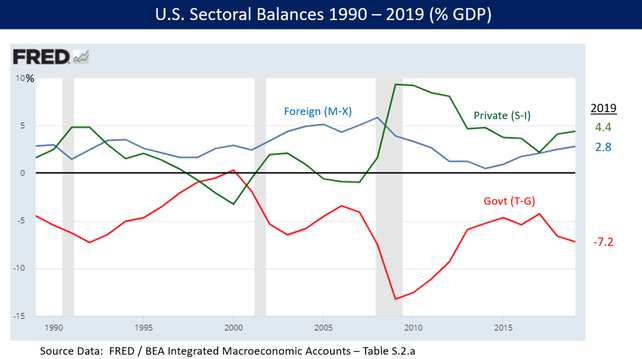
This relates to the idea that MMT presents, which Wynne Godley also seems to have supported and Richard Vague (above article and TED talk), that a deficit for the state necessitates a surplus somewhere else. Found this graph from Godley using his “sectoral financial balances” framework, depicting the US economy. This graph is very similar (perhaps identical?) to what Vague shows in his TED talk. They both show what seems to be an inverse relationship between a public deficit and a private surplus.
96/ I am worried that I’m finding this theory appealing just because the others are so terrible and so I’ve been primed to be positive to this one.
Which funnily enough is called “Anchoring effect” and features prominently in “behavioral economics”
https://en.wikipedia.org/wiki/Anchoring_effect
Which funnily enough is called “Anchoring effect” and features prominently in “behavioral economics”
https://en.wikipedia.org/wiki/Anchoring_effect
97/ Brains suck
 Dan Lyke
@Patricia one of the challenges I have when pondering money in this way is thinking about the dual overlapping roles it fills. One is as something to exchange for goods and services, the other is as a mechanism of control of... the economy? What gets produced? Other things?
So holes may look like luxury goods that have weird-ass no logical value (does it maybe cost $500 to make a Birken bag?) or Manhattan penthouses, or Tesla stock...
@danlyke or maybe it could be… free education? Or childcare? Or healthcare? What would be the effects? They must be massive and multiplicative, right? Freeing up people from treatable illness, caring for family members, making social mobility possible, this must be transformative for a society, I would think. And not a sinkhole but a leveling up.
@danlyke that’s why I said, maybe the effect of the “hole filling” depends on the hole that gets filled.
@Patricia right, because I used Tesla stock there, but in the late '90s or early naughts I'd have used Amazon stock, and then AWS happened...
And, hell yes, if we could do all of those social things, break some intergenerational trauma, do education and learning? I believe we could have amazing growth in human potential.
Rather than Birkin bags.
@danlyke exactly
 RAOF
RAOF@Patricia @danlyke incidentally, this is why I'm somewhat leary of sovereign wealth funds.
Like, really? There's nothing you could more usefully spend on locally to ensure future productivity? All your children have all the support they need to flourish into maximally-productive adults? All your potential parents have enough support to become parents while remaining productive? And so on.
These aren't privately capturable benefits, so putting money in private industry isn't going to make them happen, but they absolutely are things you want to happen.
@RAOF @danlyke funnily enough we actually do use a relatively small portion of the income from the oil industry to cover our “planned yearly deficits”. Which has made me wonder, which I mentioned earlier in the thread, if Norway is doing a form of MMT by accident. Because one of the three ways to “create money” according to Keen is to make it through exports. And if we can label what Norway is doing as creating money and using that money to support a reoccurring deficit, then maybe that’s a form of MMT?
 pelavarre
@pelavarre you get a pass 💜
@Patricia that also applies to commodities including gold. i remember the gold price crash of 2011(?).. i predicted it, iirc
@mrsbeanbag oh, that’s interesting, do you have a link?
@Patricia to me predicting it? no sadly lol
@Patricia i'd noticed the price of gold was following this pattern, though https://228main.com/2015/11/23/anatomy-of-a-bubble/ . and it absolutely did that. i might have the images on my PC at home. but i'd have to dig them out.

@Patricia well here's some evidence https://www.forbes.com/sites/nathanvardi/2013/10/11/the-year-of-the-gold-crash/ . you can get gold price history fairly easily though

 Iker
Iker@Patricia I mean, in so far as printing money driving inflation, there's a lot of real world evidence that this is not true. Most post-Keynesian and Marxist economists argue that the proposed mechanism by which injecting money in an economy produces inflation is built upon a simplistic model, where suppliers are met with more demand than they can handle, and so to deal with the demand they raise prices. Also, the people who argue this asume that the supplier is unable to increase their production, somehow having reached a maximum theoretical output, unable to hire more people and/or buy more equipment to produce more. In reality, what has driven price increases has been companies wanting to increase their profit margins, or keep them the same after production has become more expensive. And in today's economies, people are saddled with a ton of debt, so often money injected goes to paying debts to banks, not to businesses who produce goods. No induced demand.
https://www.ineteconomics.org/perspectives/blog/rapid-money-supply-growth-does-not-cause-inflation
https://www.ineteconomics.org/perspectives/blog/rapid-money-supply-growth-does-not-cause-inflation
@igimenezblb @Patricia i mean quantitative easing didn't produce any of the inflationary effects that some economists predicted, because banks simply sat on it (predictably)
@mrsbeanbag @igimenezblb I need to read more on quantitative easing
@Patricia @igimenezblb yeah well the thinking seemed to be if you put more money into the bank's reserves, they would lend more? but banks don't lend out of their reserves. reserves only function as equity, to keep the total value of the bank above zero.
@mrsbeanbag @igimenezblb hm, but according to his TED talk (the post after in the thread) he says that average household wealth increased (basically only real estate and stocks) but that seems to indicate that the money definitely went somewhere and in that somewhere were people who could buy real estate and stocks?
@Patricia @igimenezblb well i guess if you define average household wealth as equity divided by number of households then of course it did. but that doesn't actually *do* anything.
@mrsbeanbag @igimenezblb according to his TED talk it did make houses more expensive and stocks more valuable. But I would think that that is a result of who got the money? What I find interesting is that printing money doesn’t seem to hurt the economy. If that is true then you could potentially print money for more altruistic causes? Like universal healthcare, free university education, affordable childcare etc?
@Patricia @igimenezblb yeah well you can't "spend" houses can you. you can't go "ok here is my closet at the bottom of my stairs for a new macbook". that's what gets me. when you treat everything as numbers. it ignores the reality of physical objects.
@mrsbeanbag @igimenezblb I guess this is what Harvey was talking about (last thread) that things can have “use value” (roof over your head) and “exchange value” (can store value and be a financial instrument). So real estate can be both an investment, a way of saving and a home, or just some of the above. To quote Past Patricia who grew up relatively poor and became a single mom with a high school degree at 21: “I’m gonna live in my money, because even if it drops in value, I’ll still have a place to live”
@Patricia @igimenezblb well i think it all just comes down to the concept of "liquidity". real estate is not liquid assets. so if it goes up in value, it doesn't necessarily lead to any inflation, by my intuition. only disposable income can do that i think