 Ruth — of systems & design
Here are pages related to Scope of Complexity and Time Span of Discretion
with credits to @PavelASamsonov @johncutlefish @cyetain @yvonnezlam and Nivia Henry and others :)
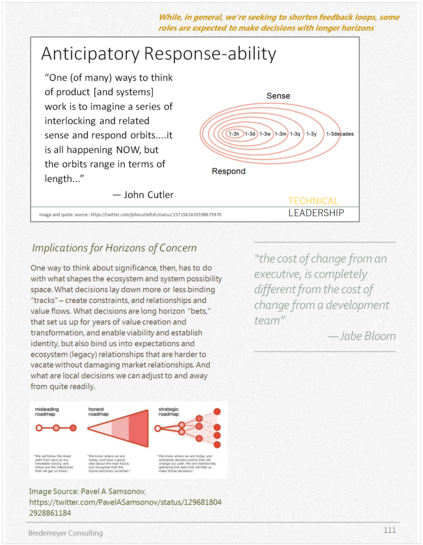
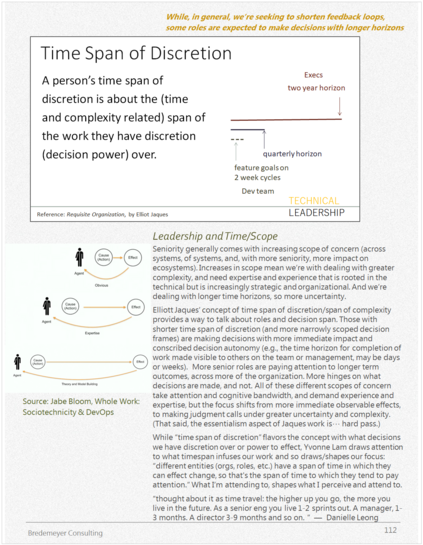
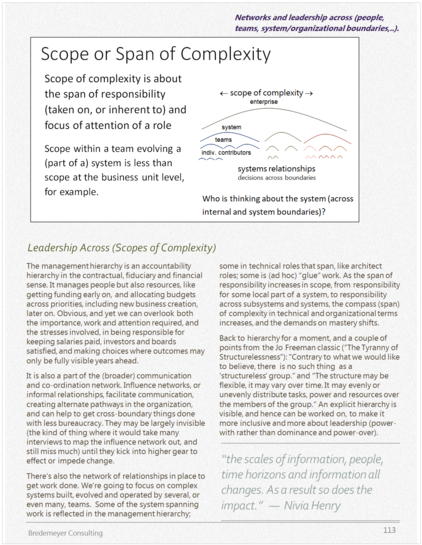
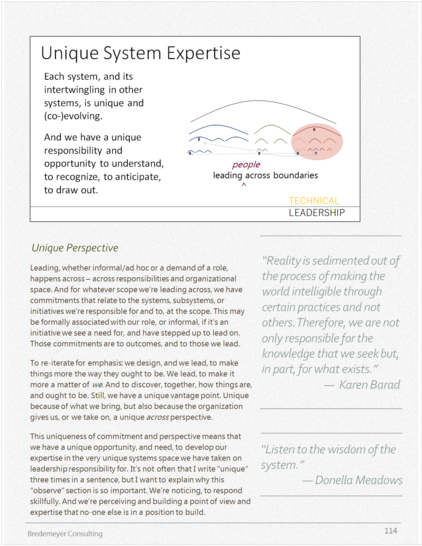
Here are pages related to Scope of Complexity and Time Span of Discretion
with credits to @PavelASamsonov @johncutlefish @cyetain @yvonnezlam and Nivia Henry and others :)
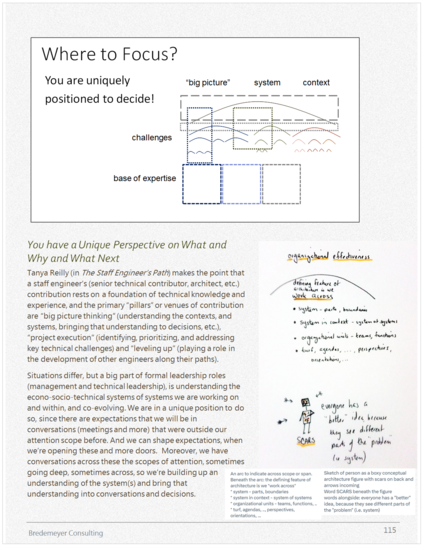
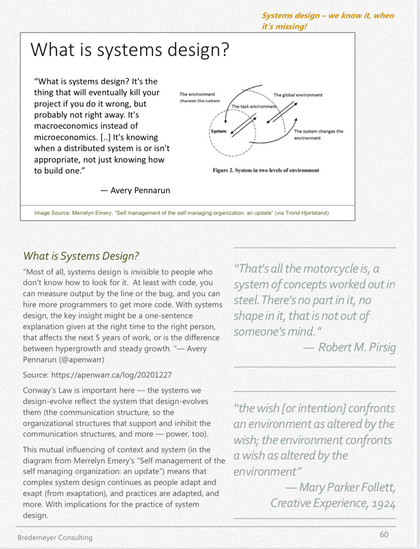
Each of those “with credit to” quotes (ie what is quoted on the pages upthread), contains an important idea (or set thereof). And as with anything “systemsy,” interaction across ideas (and with context, in this case your thinking-understanding and its history), gives rise to new ideas.
And that brings us back to this page..
And pretty soon you have over 500 pages — and it’s still incomplete!!!
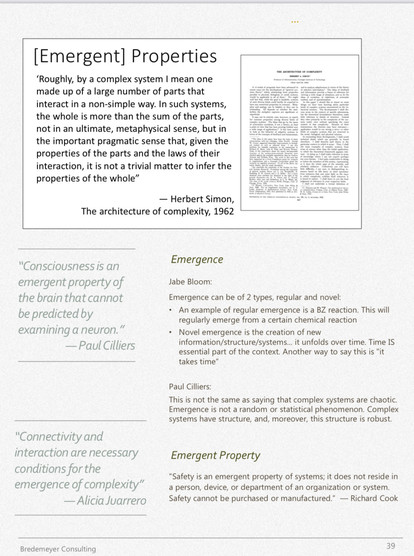
Because compliments are self-esteem food, haha, I’ll pay one forward with another page ;) (don’t worry; i think one or two appreciations is still below a healthy daily allocation :))
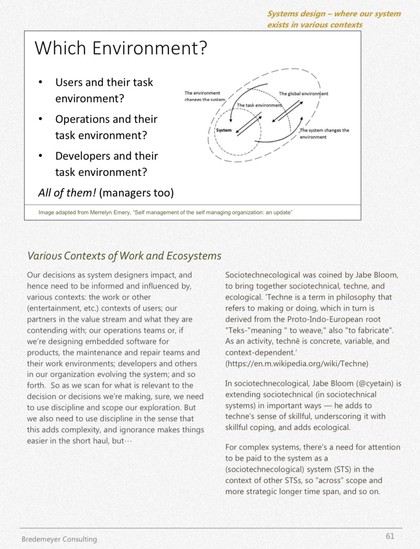
This one is important: we’re making decisions that impact various contexts
Related to scope of complexity and time span of discretion (and teams and sphere of authority and autonomy):
John Cutler on Mandate Levels https://cutlefish.substack.com/p/tbm-2752-mandate-levels
Scope (as a concept, in the mix) allows us flexibility to address how we will approach matters at system scope.
@[email protected] @jenniferplusplus Lately I’ve been thinking about ways to reframe organizational hierarchy in terms of •scope• rather than •authority•, i.e. who is zoomed out looking at big picture and who is zoomed in on local details, instead of who is the boss of who. This structurally acknowledges nobody can (or should) have all information. Good orgs already tend this way. I’m sure others are way ahead of me on this line of thought, but I haven’t found the definitive piece on it yet.
In part:
https://ruthmalan.com/Leadership/20240220TechnicalDecisions.pdf
And
https://ruthmalan.com/Leadership/20221031TechnicalLeadership.pdf
And this thread hahah
(But yeah. From the workshop “book”)
Some of the ideas are here, but i do need to update it to latest version : https://ruthmalan.com/Leadership/20221031TechnicalLeadership.pdf
Another important cluster of ideas:
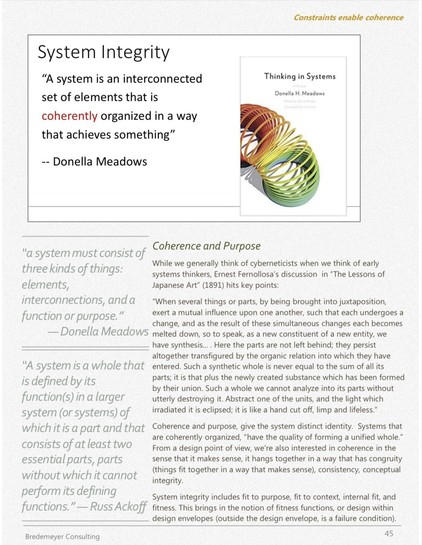
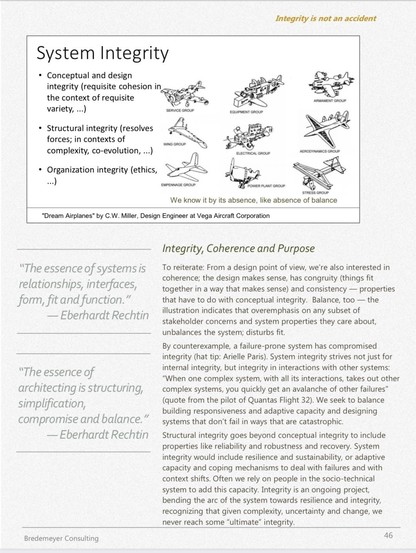
Continuing the cluster (exploring system integrity and conceptual integrity):
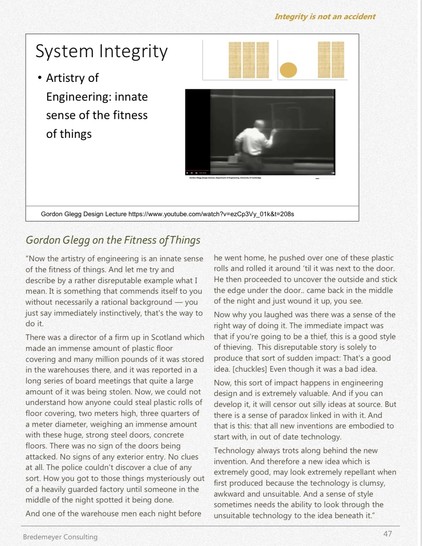
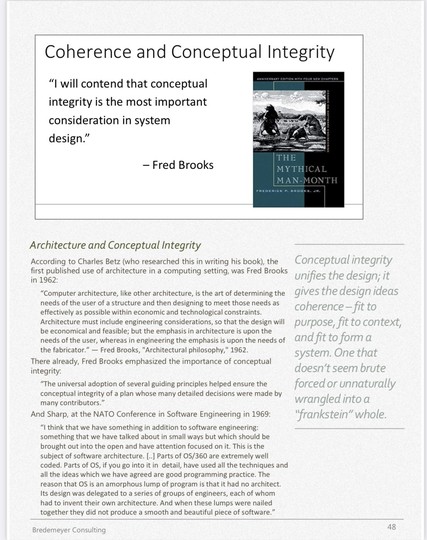
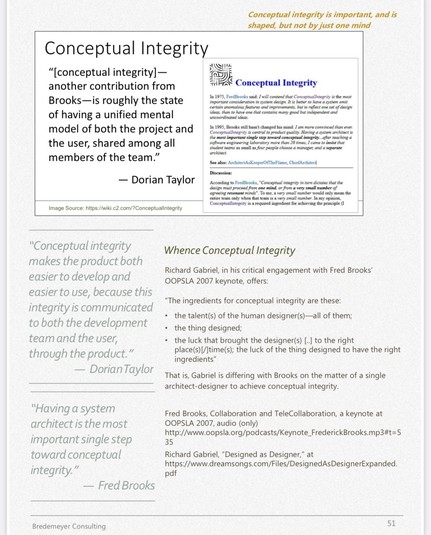
Which gets us to the ideas from this thread: https://mastodon.social/@RuthMalan/112462518849147839
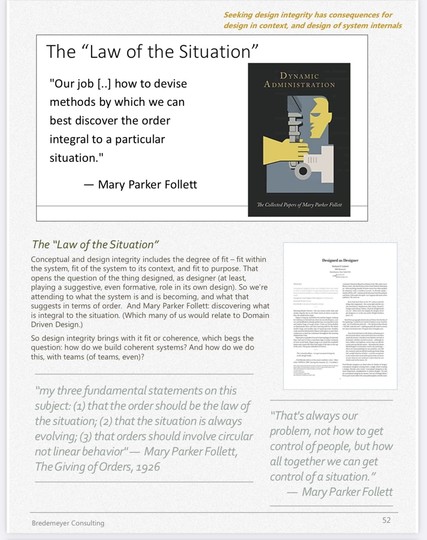
And Mary Parker Follett. Again. :)
@RuthMalan thanks 🤩
At least I read Meadows and MMM 😅
You can't imagine how /impactful/ it is to have so many big ideas of a domain sum up in that one page format. It conveys enough nuances / details to get a raw idea of the Big Idea without getting lost in hundreds-page books (which will worth it most of the time, but perhaps not at that time or in that order).
So yes, really, thank you. I will perhaps even be able to use them as introduction points in my team
@RuthMalan I'm glas6that reading that iw let me think that some of my intuitions were ok when I did that talk https://speakerdeck.com/fanf42/devoxxfr-2021-systematic-error-management-in-application?slide=11
Now, having the shoulders of others who are spending their life studying these things to step up brings a lot of clarity
@RuthMalan skimming through the book, there's SO MANY CHEAT SHEET FOR SO MANY IDEAS I HAD TO WAVE EXPLANATION FOR.
I will made a card game of it and call it the deck of thousands answers and distribute it around
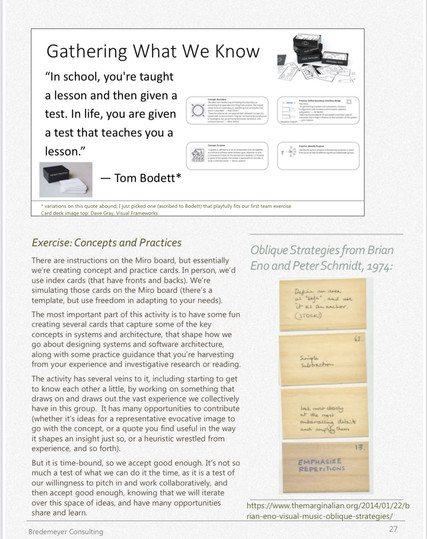
@fanf42 in just the last couple of workshops, we tried this… I’m not confident about it yet… but folk have created some really great cards. Speaking of user/ops/dev, one group created an observability card, with practices for those 3 areas :)
(thank you!)
@RuthMalan hiiii
OK, consider me a fan in the live concert of the decade
It's a bit like if someone has took the time to clearly pin, summerize, annotate, keep reference, and unveil interaction of all the disruptive texts I ever read and never had the diligence and rigor to keep trace of.
Seriously, that scholar work is impressive
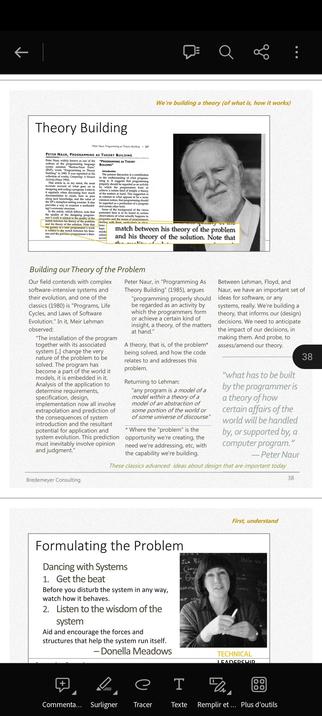
@fanf42 i call it a field work — in various senses. And yes. It takes an enormous amount of care to use other people’s words to say what I want to say.
“Whoever helps me see or explain what I am trying to explain, I will cite them.” — Hortense Spillers
‘The British sociologist Marilyn Strathern … taught me that “it matters what ideas we use to think other ideas (with).”’ — Donna Haraway
@RuthMalan :)
I'm discovering "evolve-building" in an other post, I will steal it, it's so just exactly that. What could it be in French? Le système que nous construi-voluons? Sounds ok. Will test it.
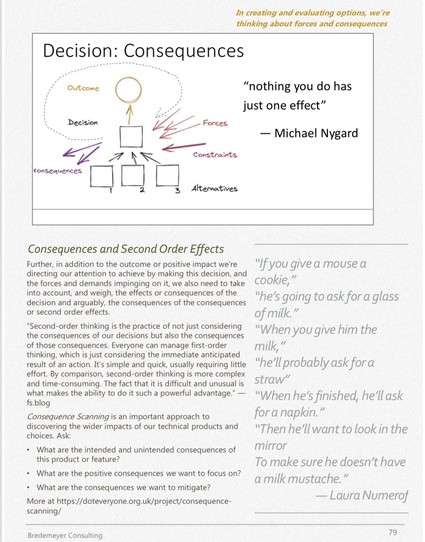
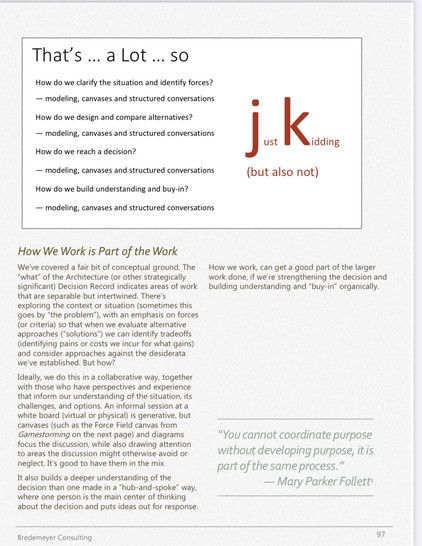
The bigger lesson is about contexts or situations, and exploring and understanding that together, before looking at (what others have found to be) various “solution” approaches and how they meet the needs of *this situation*… (but then also thinking across the “solutions” and how we’re understanding the situation, because they inform each other, etc… Our thinking isn’t neatly linearizable… It interacts.)
And we do this for design patterns — design of the org and design of the system (code). Too
@sebhans thank you! Yeah, experiences like yours point to the value of “integrative” roles (which have the organization time-space to focus attention *across*) and perspectives!
@ahl kindly quoted me, reminding me of this point I’d made about conversations:
not always initiating them, nor always helping to focus or navigate them, but ensuring they do happen […] and guiding when needed
(quoted in https://martinfowler.com/articles/scaling-architecture-conversationally.html)
@RuthMalan @ahl I've read that article and liked much of it. Actually, I'm using ideas from it to solve the issue I'm involved in.
Unfortunately, my multi-role wasn't meant as an integrative role; it was more of an organizational accident. I was given neither time nor space to fill any of these roles properly and just decided for myself that this cross-role issue was the point where I could provide the most value. My effort was well received, however, and I think we are on a good path now.

 fanf42
 Damon Kiesow
 Sebastian Hans
 Andrew Harmel-Law
 Adrian Cockcroft