 Ruth — of systems & design
Here are pages related to Scope of Complexity and Time Span of Discretion
with credits to @PavelASamsonov @johncutlefish @cyetain @yvonnezlam and Nivia Henry and others :)
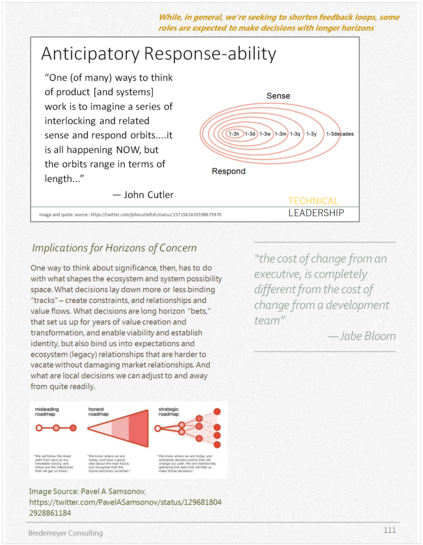
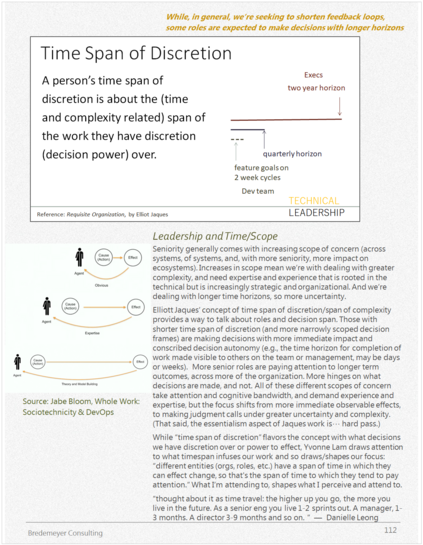
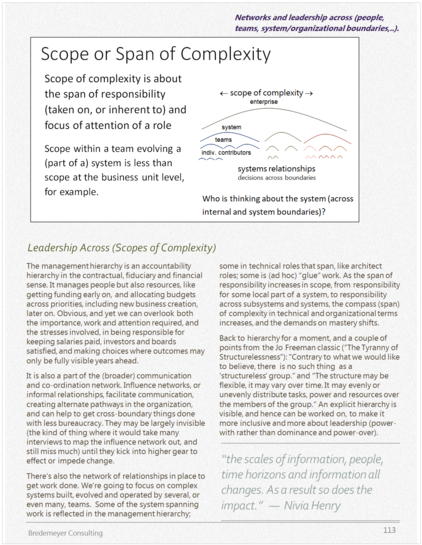
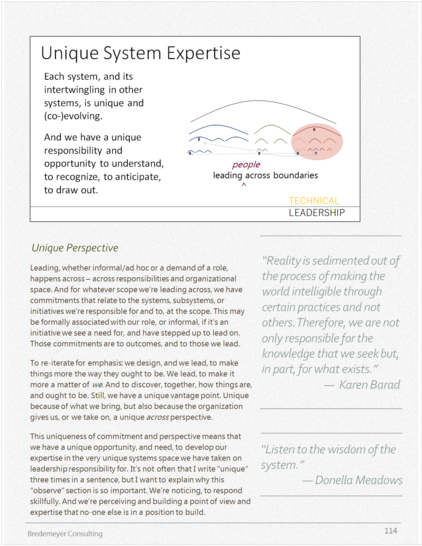
Here are pages related to Scope of Complexity and Time Span of Discretion
with credits to @PavelASamsonov @johncutlefish @cyetain @yvonnezlam and Nivia Henry and others :)
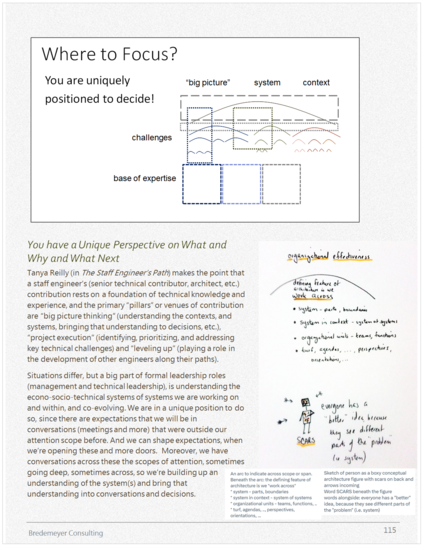
Each of those “with credit to” quotes (ie what is quoted on the pages upthread), contains an important idea (or set thereof). And as with anything “systemsy,” interaction across ideas (and with context, in this case your thinking-understanding and its history), gives rise to new ideas.
And that brings us back to this page..
And pretty soon you have over 500 pages — and it’s still incomplete!!!

Because compliments are self-esteem food, haha, I’ll pay one forward with another page ;) (don’t worry; i think one or two appreciations is still below a healthy daily allocation :))
This one is important: we’re making decisions that impact various contexts
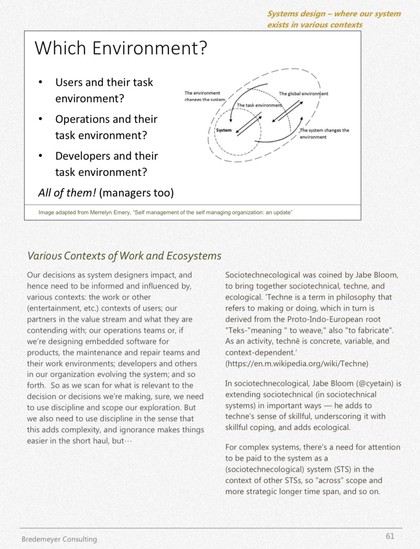
Related to scope of complexity and time span of discretion (and teams and sphere of authority and autonomy):
John Cutler on Mandate Levels https://cutlefish.substack.com/p/tbm-2752-mandate-levels
Scope (as a concept, in the mix) allows us flexibility to address how we will approach matters at system scope.
@[email protected] @jenniferplusplus Lately I’ve been thinking about ways to reframe organizational hierarchy in terms of •scope• rather than •authority•, i.e. who is zoomed out looking at big picture and who is zoomed in on local details, instead of who is the boss of who. This structurally acknowledges nobody can (or should) have all information. Good orgs already tend this way. I’m sure others are way ahead of me on this line of thought, but I haven’t found the definitive piece on it yet.


 fanf42