 Ruth — of systems & design
Here are pages related to Scope of Complexity and Time Span of Discretion
with credits to @PavelASamsonov @johncutlefish @cyetain @yvonnezlam and Nivia Henry and others :)
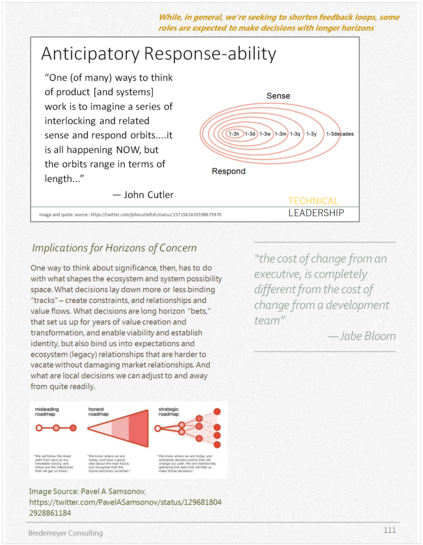
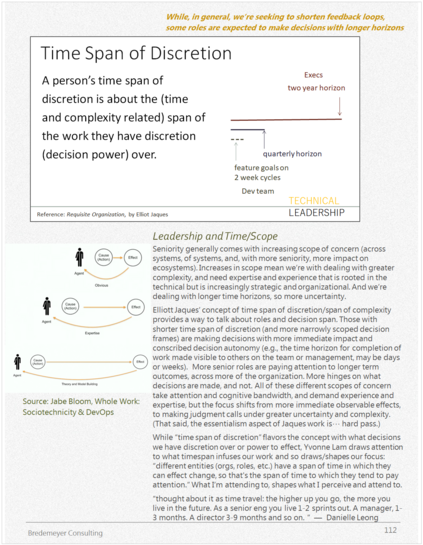
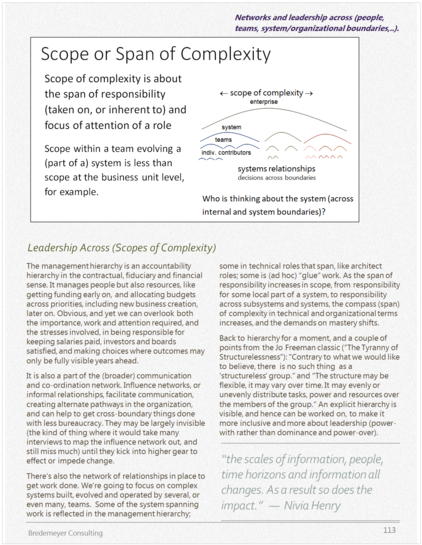
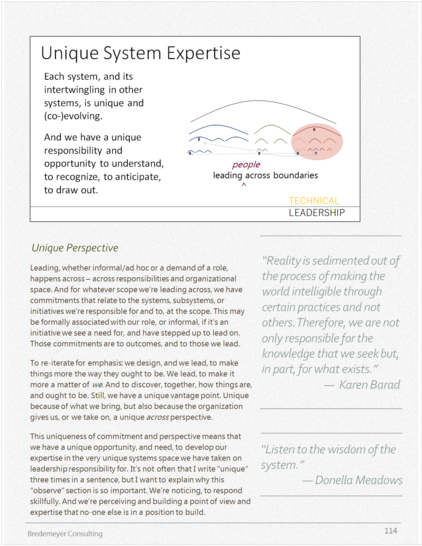
Here are pages related to Scope of Complexity and Time Span of Discretion
with credits to @PavelASamsonov @johncutlefish @cyetain @yvonnezlam and Nivia Henry and others :)
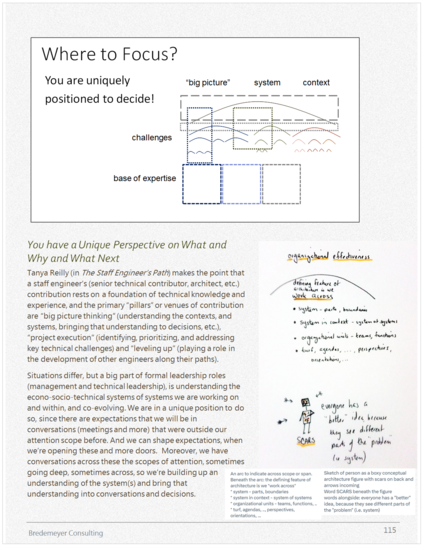
Each of those “with credit to” quotes (ie what is quoted on the pages upthread), contains an important idea (or set thereof). And as with anything “systemsy,” interaction across ideas (and with context, in this case your thinking-understanding and its history), gives rise to new ideas.
And that brings us back to this page..
And pretty soon you have over 500 pages — and it’s still incomplete!!!
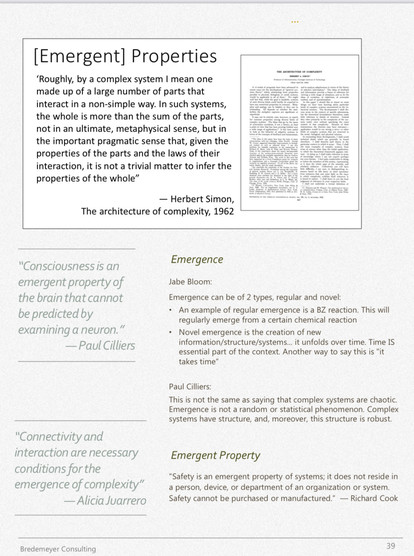
Some of the ideas are here, but i do need to update it to latest version : https://ruthmalan.com/Leadership/20221031TechnicalLeadership.pdf
Another important cluster of ideas:
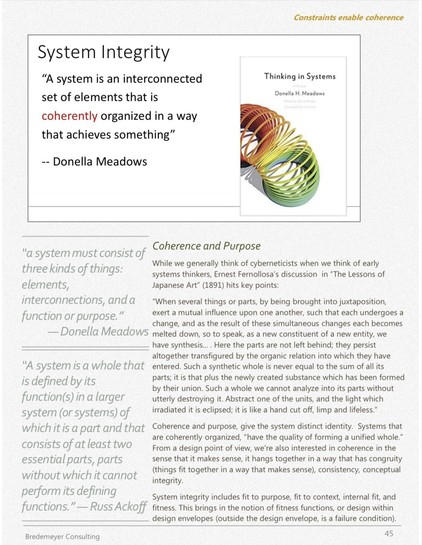
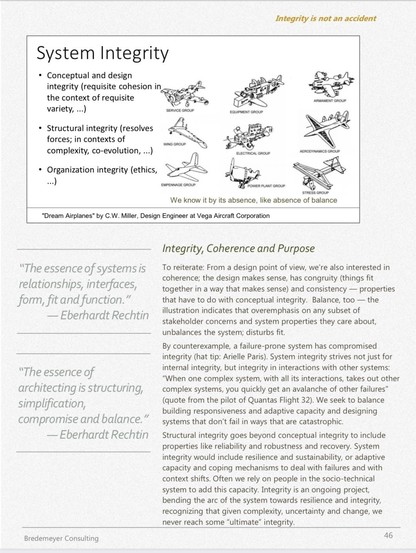
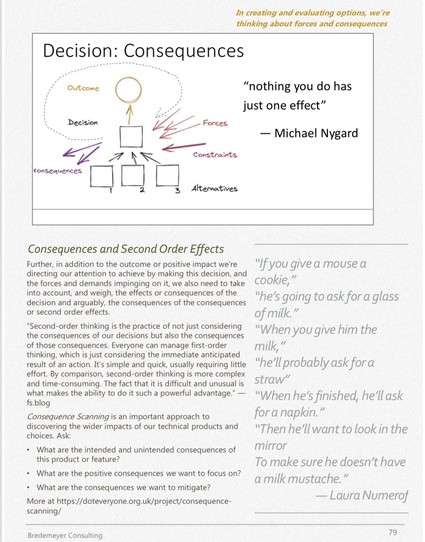
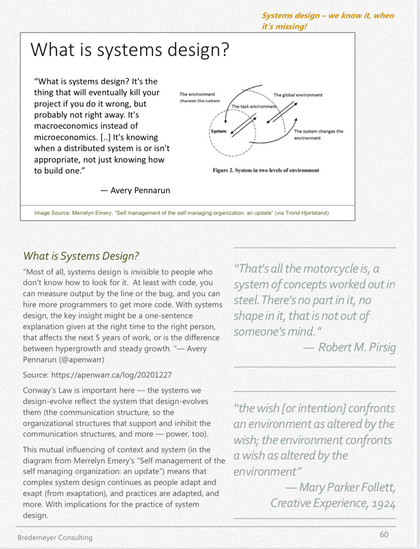
@RuthMalan skimming through the book, there's SO MANY CHEAT SHEET FOR SO MANY IDEAS I HAD TO WAVE EXPLANATION FOR.
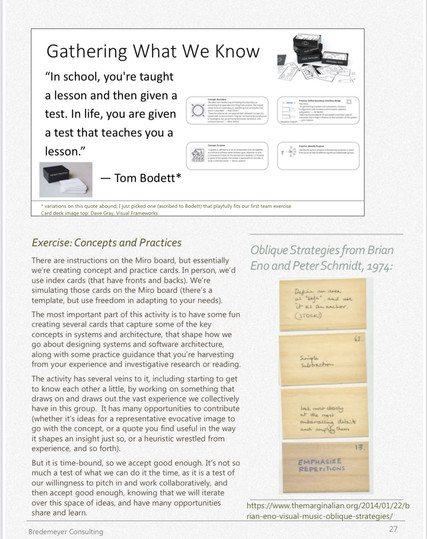
I will made a card game of it and call it the deck of thousands answers and distribute it around
@fanf42 in just the last couple of workshops, we tried this… I’m not confident about it yet… but folk have created some really great cards. Speaking of user/ops/dev, one group created an observability card, with practices for those 3 areas :)
(thank you!)
The bigger lesson is about contexts or situations, and exploring and understanding that together, before looking at (what others have found to be) various “solution” approaches and how they meet the needs of *this situation*… (but then also thinking across the “solutions” and how we’re understanding the situation, because they inform each other, etc… Our thinking isn’t neatly linearizable… It interacts.)
And we do this for design patterns — design of the org and design of the system (code). Too
 fanf42