 Kodi
Kodi 
 Anatoly Shashkin💾
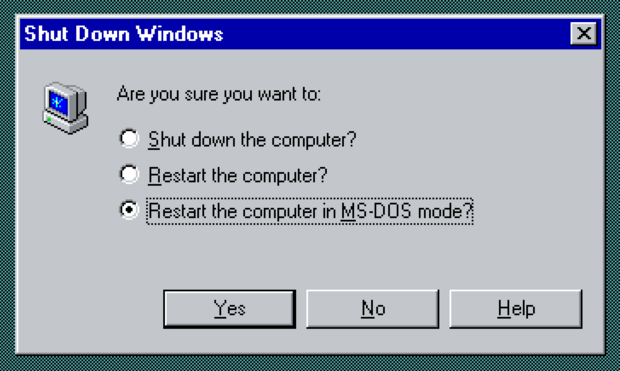
I miss the days when a brand new OS would just let you reboot into a legacy OS. Happy 28th birthday to Windows 95! 🎉🎂🎈🍾🥂
@dosnostalgic [goes cosmic]
I see.
@speaktrap @dosnostalgic Microshaft has done *good work* for Tech.
DirectX as a whole, bringing Multitasking and GUIs to mainstream PCs, the fact that they gave IBM the slip allowing for the entire "PC Compatible" ecosystem, which made computers cheaper over time.
They were never incompetent... They were always evil. "Lawful Evil" to use DnD words :P
@speaktrap @dosnostalgic while I ain't got sources for it, I'd bet a lot of money that the reason Carmack preferred OpenGL was that it allowed him to code closer to the bare metal, which is great if, like Carmack, you're basically a space alien level supergenius.
For everyone else, a library like DX that distanced you from the hardware (especially with how diverse PC hardware had become at that point) and provided a common layer of abstraction between it and software made development of applications infinitely easier.
As for OS/2 I'd have to double check the timeline... But I'm fairly sure it dropped *after* windows 3.0.
... And either way it was codeveloped by the microshaft team and a lot of its code got used on windows too.
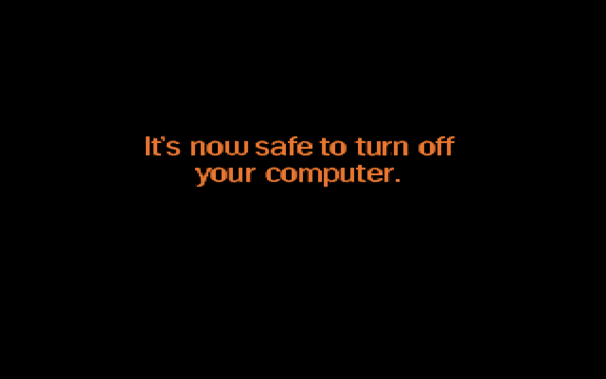
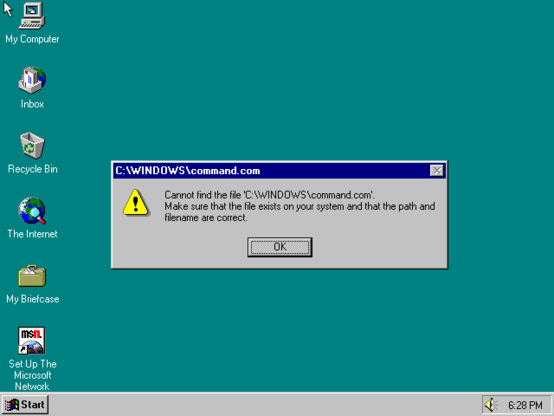
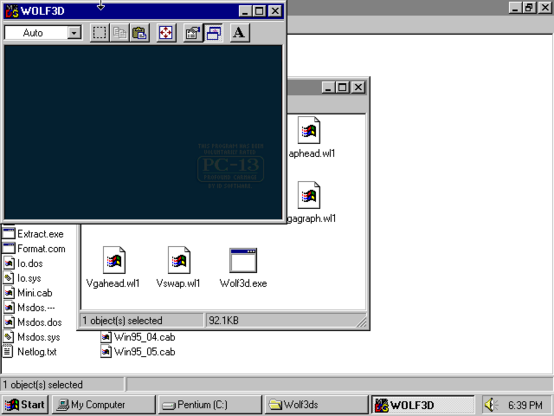
win to start Windows, then select Shut Down, it'll have a prompt behind the "It's safe to shut down" screen (and you can run cls to actually see it). If you boot Windows normally, there's no prompt.@dosnostalgic @kly Well paint me purple and call me "Twilight", it actually works.
The process goes:
Load Windows -> Exit to DOS mode -> Load windows again -> Shut down -> When in the screen just do "cls"-enter and this happens


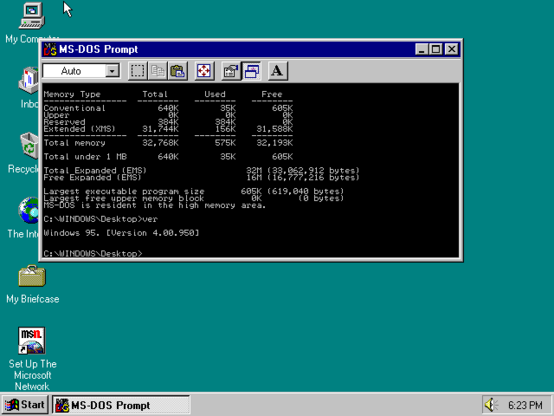
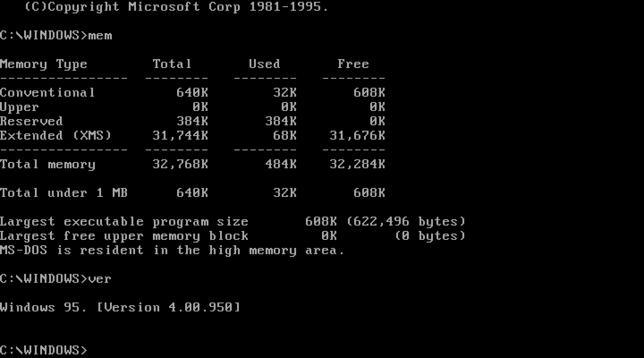
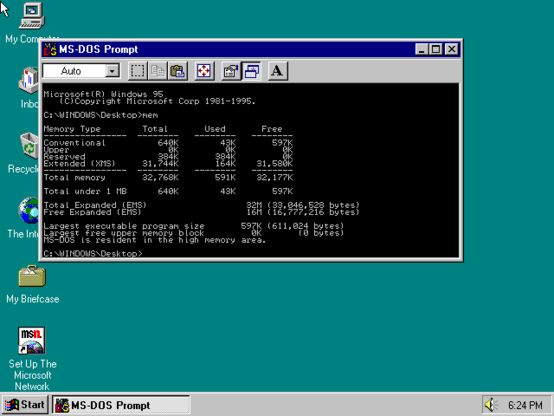
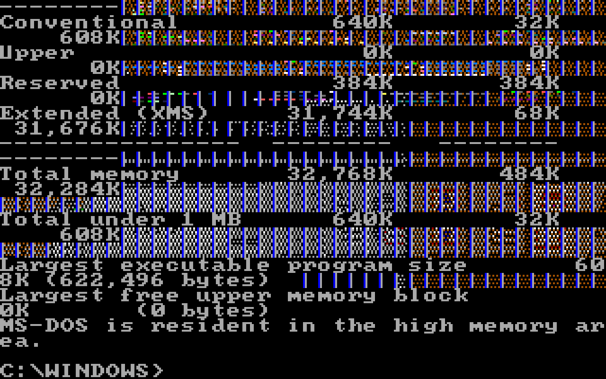
@dosnostalgic @kly Fascinating, actually.
Lil' oversight, doesn't actually change the OS's experience. But still cool to learn about.
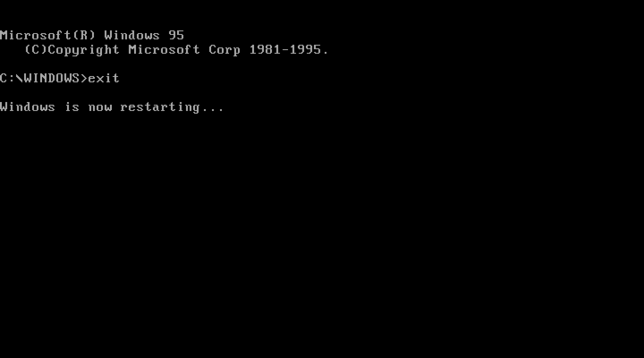
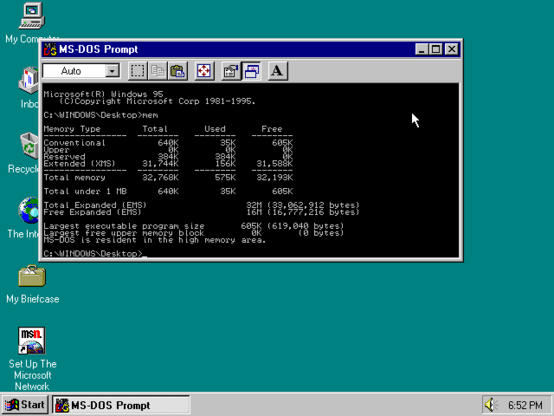
…OW! My back! My knees! My organs!
@dosnostalgic clear options, obvious ways to cancel completely out of it if you clicked by mistake, dimming the rest of the screen so it took your focus and gave you the power, and a help button that actually tried to help.
No dark patterns, no marketing, no patronising, no "this nameless system icon is preventing your computer from restarting", no "we rebooted automatically for updates, all your work is gone and all your tabs will reload". I miss not arguing with my PC just to get things done.
@dosnostalgic i have access to a computer still running this.
it's not mine, it's my mother's from college. the OS is older than me, but loved using that computer growing up lol.
windows 11 could learn a thing or two from past versions. sometimes less is more.
@dosnostalgic @codinghorror This prompt and the buttons just felt weird to me. The question begins with "are you sure you want to" so it looks like a yes-no question, and the buttons are for a yes-no question and yet it is actually a multiple choice question!
Why didn't they rephrase the prompt to be "what would you like to do", remove the question marks from the selections, and change the buttons to read "continue" and "cancel" respectively?
@dosnostalgic VAX/VMS circa 1978 used to boot with PDP-11 RSX-11M compatibility mode available and a fair chunk of the apps in the early VAX/VMS versions were RSX-11M apps running in compatibility mode.
The VAX-11 boxes supported PDP-11 instructions in hardware.
You could run your existing PDP-11 RSX-11M apps directly, too.
That all ended at VAX/VMS V4.0 (~1984), and with then-new VAX models after VAX 8600.
VAX 8600 was originally to be named VAX-11/790, but marketing marketed and dropped the -11 with the “architecture for the ‘80s”.
PDP-11 RSX-11M compatibility mode became a separate product, and the PDP-11 instructions were emulated, and the -11 was dropped from VAX.
Technically, an LSI-11 console processor booted RT-11 from the 8” console floppy which then booted the VAX-11/780 (organizationally within he hardware, the VAX was an enormous LSI-11 peripheral) which ran VAX and PDP-11 instructions and which could run simh emulator to emulate PDP-11 running RT-11. If the LSI-11 failed—as happened on a couple of occasions—the VAX could continue to run. Just not reboot.
The approach Apple used for migrations with Rosetta and Rosetta 2 was far smoother.
Yeah. Fun times. When it all worked.
There are shenanigans in newer boxes too, but they’re usually somewhat better hidden.
#digitalequipmentcorporation #OpenVMS #VMS #VAX #PDP11 #RSX11 #RSX11M #RT11 #retrocomputers #retrocomputing #history
@ids1024 @dosnostalgic If you want to see where the Windows NT design arose, look no further than the DEC MICA operating system:
The approach Apple used for migrations with Rosetta and Rosetta 2 was far smoother.
NT had (16-bit) x86 emulation on non-x86 Windows version from the beginning (then DEC made 32-bit x86 support for NT Alpha). Nowadays ARM64 Windows runs both x86 and x64 programs.
@jernej__s @dosnostalgic I’m well aware of DEC’s FX!32. Running 32-bit apps built for cheaper 32-bit x86-32 hardware on pricy 64-bit hardware running 32-bit apps was a bravely doomed strategy, in retrospect. DEC couldn’t do 64-bit with FX!32 (joke: FX!64) because Microsoft couldn’t do 64-bit. (The 1999 Microsoft PDC in Denver describing how easy their planned 64-bit migration was to be was amusing, having then just gone through a 32- to 64-bit OS migration else-platform.)
DEC also had DECmigrate (VEST and TIE, and later AEST and TIE) for migrating apps from OpenVMS VAX to Alpha and from OpenVMS Alpha to Itanium. SimH (which I’ve coincidentally mentioned in a joke recently) works well, as does UTM.
Lots of other platforms gave have or have had emulators or translators.
Among its other weirdnesses, Itanium had a feedback-based translator for executables, which sorta-kinda fits here, to incorporate observed run-time behavior back into the existing executables. Basically, post-linking feedback tuning thst produced different executables. This as the compilers inherently lacked visibility into the run-time memory state and latencies of a particular Itanium processor, and had to guess. One name ror this stuff was OM, and its translatiin escaped me at the time.
Of what I’ve worked with for app (and not system) emulators, Rosetta was both the most transparent, and the most compatible.
@dosnostalgic Ah, fond childhood memories :)
Looking back now, it's so awkward how you needed to pick 1 of 3 radio button questions and then confirm with "yes".
Or pick something and decline with "no", which makes the picking useless.
Great times
 Ursidinoj/The Bjornsdottirs
 Count Regal Inkwell
 Speaktrap
 Kristian
 Jernej Simončič �
 sj_zero
 Becky
Becky Tim 🎮
Tim 🎮 appzer0 - Libertadmin
 wednesday the valkyrja
 Григорий Клюшников
 kccqzy
 tultican
 Stephen Hoffman
 Ian Douglas Scott
 Christian Tietze
 Iαn has moved account
 Greg Smith
 John Vert