
Over on tiktok user @nomadicpancakes has observed a group of #bees that have learned to turn on the sensor on a water bottle filling station by walking over the target.

This is just the kind of thing bees are made to learn, they love targets and need to follow them when dealing with flowers all the time.

The interesting thing is that the bee who hits the target produces water for her sisters, herself less so. But these #eusocial girls seem to have that worked out!

https://www.tiktok.com/@nomadicpancakes/video/7255331484444314926

Bee dehydration is a serious problem. Why not design a water feeder just for the bees?

Some of the design challenges:
-standing water causes mosquitos
-bees can drown in water that's even a cm deep, ideally the feeder should reproduce dew drop like conditions
-if too many other things trigger the feeder it will waste water or be empty

It could be as simple as a runway that the bee lands on, then after walking through a tunnel there are a few drops of water to drink.

@futurebird this ceramic artist is making these beautiful bee cups for this very issue https://www.bee-cups.com/
Bee Cups

Bee Cups are handmade porcelain cups for your garden that collect a teaspoon of water for thirsty bees and butterflies.

Bee Cups
@caffeneko @futurebird I wish the words didn't cover the bottom of the video. If anyone is interested in a low-tech solution to giving bees water, why not a bottle with a cloth sticking out of the top? The cloth would have to be long enough to touch the bottom , water would wick up to the top. The bees could crawl along the cloth and take sips from where the threads touch.
@Artemis13Athena That's a perfect idea. The Bee Cups seem like a higher-tech alternative, but both have pros and cons, it seems (:
@futurebird I have a little dish full of marbles so if they fall in the water they can walk out
@futurebird how about pushing water up from below, through a material with channels here and there, so it makes small droplets that sit on the top surface? the amount of water on it would be measured, maybe optically, and controlled by something as simple as possible. no skeeters, no drowned bees. the block of material would need to be removable so it could be cleaned from time to time (peroxide, wash, whatever), to prevent clogging by bacteria or whatever.
@futurebird I have a large flower-pot saucer in a shady front yard spot with a bunch of rocks & one in a sunny backyard spot with a bunch of glass blobs, which I keep filled with water. There are lots of little birds in my yard & also wasps, so mosquitoes. My big problem is keeping the sunny one with the glass blobs free of algae & not letting them go dry.
@futurebird ugh "so no mosquitoes," I mean
@futurebird dewdrops make me think of misting sprays. It wouldn't be out of place in a garden, but it would probably have to run constantly.

@kryptosam

I love the idea of making it bee operated using a sensor. Something just so cute about how they learn to land on targets to make things happen. They have wonderful little fuzz-covered minds.

@futurebird Make it have attractive patterns in a UV frequency that bees can see but most other animals can't.
@futurebird I once built a water dispenser for dogs and cats (winter dehydration of feral or “neighborhood” dogs in northern MN is a real issue) that worked with capacitive touch sensing—like phone screens but using a metal bowl as the sensing element. But it seems to me that designing a water station for bees might be even easier if they will just walk through a tunnel!

@acsawdey @futurebird

A simple IR break beam could sense the bees right on the runway. Oh, wait, bees can see IR, can't they?

@hcf @futurebird is it IR or UV? I would hope they would just think it’s a helpful warm light in the tunnel 😄
@futurebird Bees are so smart and cute. I wish I wasn't allergic. I would love to do some bee husbandry. 🥲💔
@futurebird i love how they spaz out every time the water comes on
@apophis @futurebird
The stream of water there may be too strong to get very close to
@futurebird
Bees are altruistic, something humans have yet to learn
@futurebird @0x56 I, for one, welcome our new insect overlords.
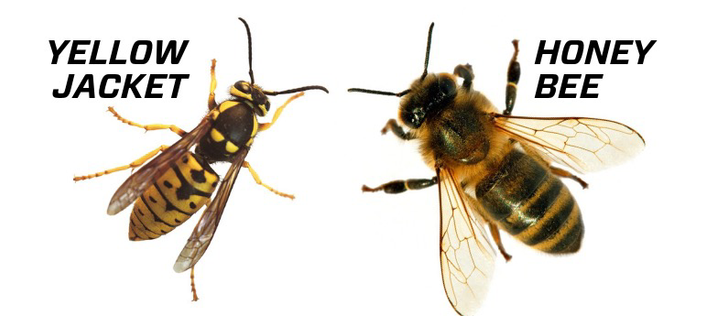
@futurebird Cool! But those are not bees, they are yellow jackets (a type of wasp) and they are probably trying to build a nest using the sensor hole as an entrance.
@americanjeff @futurebird are you sure? They really do look like bees to me?

@americanjeff

To see a higher res version of the video go to the link-- they are honeybees.

I kinda wish they were yellow jackets since those poor girls could use a cute video that people like.

Yellow jackets get so much hate... although they can be annoying.

@futurebird
I once sat next to a yellow jacket who contently ate the strawberry jam from my sandwich (I offered). She left me alone to eat my sandwich sitting on the same bolder. [the video]

But another time, I got a little too close to their nest, and I had to run as fast as I could as they chased me. I got stung and somehow ended up with a decapitated head of a yellow jacket in my t-shirt.

Their lookalike, paperWasps, are lovely, timid creatures who always hanging around my birdbaths. I love and welcome them.

@otterX they can be moody.
@futurebird they’re seriously protective of their nest for sure.
@futurebird it’s impressive how smart they are. It’s like they are a “Hive” mind… lol!
@futurebird one must surely applaud such ingenious beehaviour!
@futurebird
#BoxElderBugs keep triggering the visitor sensor on our #SmartDoorbell. I hope it is not intentional.
https://www.imdb.com/title/tt0072750/
#insects #HorrorMovies
Feuerkäfer (1975) ⭐ 5.2 | Horror, Mystery, Sci-Fi

1h 39m | 12

IMDb

@futurebird

If only that hydration was a major problem to solve for our honeybees unfortunately it is cultivation by beekeepers that has lead to their probable extinction. If only we would leave nature be natural. The biggest error was moving Queen’s and their keepers to different countries along with the killer Varrea Mites.

@futurebird what about a very small solar-powered heat-pump like device which uses condensation to pull moisture from the air, which would generate just the desired dew-like droplets.
@futurebird - Wow! That's brilliant! Yay bees!!
@futurebird similarly, there’s been a recent discovery of cockatoo birds that have learned how to turn the taps on drinking fountains
https://www.abc.net.au/news/science/2025-06-04/sydney-sulphur-crested-cockatoo-using-bubblers/105365658
Sydney's sulphur-crested cockatoos spotted using drinking fountains

The behaviour has spread among a mob of more than 100 sulphur-crested cockatoos that roost in the Western Sydney Parklands.

ABC News
@futurebird It's cool. But I'm unconvinced it's deliberate. Alternative narrative is they are coming for the abundant water. And then they keep investigating the potential nest hole.