1 km in a fossil fuel car takes about 2 MJ of gasoline
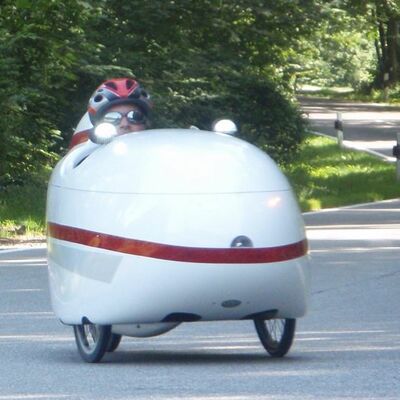
1 km in an electric car takes about 0.6 MJ of electricity
1 km in a Dutch train takes about 0.4 MJ of electricity
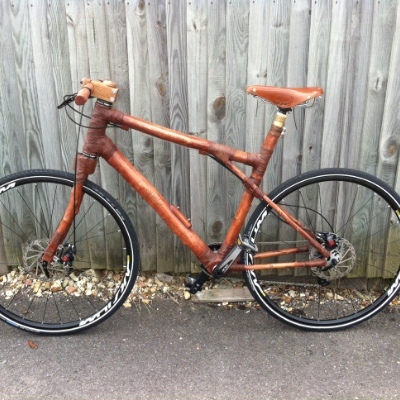
1 km on an e-bike takes about 0.03 MJ of electricity

@Sustainable2050 are you not forgetting an important factor? The electric car moves a person directly from A to B. Public transportation does not, which means the train trip involves additional transportation at both ends of the trip.
@randahl Often true, although cars also have to make quite some detours, and spend gasoline while looking for a parking spot. 40% of train passengers here get to the station on bicycle, btw. And we have 21,500 public transport bikes at the other end.
@Sustainable2050 i recommend adding your location to your about section on your profile. So when you write "we have 21,500 bikes" others can figure out which city and country you are talking about.
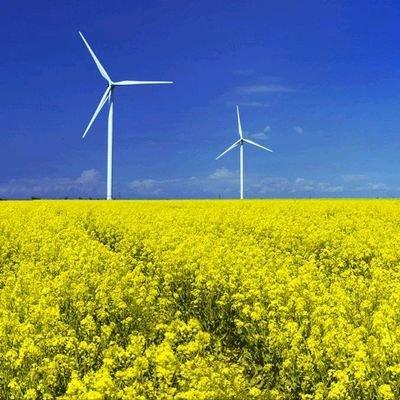
Dutch electric trains become 100% powered by wind energy

The national railway company, NS, said that its renewables target had been met a year earlier than planned

The Guardian

@Sustainable2050 and 1km on a regular bike?
Ca. 275 kcal expenditure for my ca. 12km commute, so ca. 100kJ per km? How much do I eat for that...

Rabbit-hole alert!

@brnrd 100 kJ/km is 0.10 MJ/km
@Sustainable2050 Yikes! Now I need to go ride an e-bike!?!
Can't imagine that's more sustainable than just propelling myself 😜​
@Sustainable2050 More likely I (or Polar HRM) is exaggerating my energy expenditure when self-propelling on a bicycle
(or my math is waaay off).
I hope I am intimate with any of the unit prefixes between micro and giga (anything beyond those is a crap-shoot)
otherwise I'll have to hand in my Ing. title (Dutch, probably at least US non-ivy-league university master equivalent)
@Sustainable2050
Not to mention that, with an e-vehicle, the ups and downs, and starts and stops cancel out, whereas with fossil fuels you get nothing back on the way down or slow down.
@Sustainable2050 and how much energy for a wind powered ship?
@Sustainable2050 EV are indeed 3.2x more efficient than an ICE vehicle. And reduce 5.4x more GHG emissions than an ICE running on biofuels. https://www.transportenvironment.org/discover/how-to-reward-renewable-energy-efficiency/
How to reward renewable energy efficiency - Transport & Environment

The energy efficiency of charging electric vehicles with renewable electricity must be rewarded in the EU's Renewable Energy Directive.

Transport & Environment
@Sustainable2050 2MJ put into the pedals on a "muscle bike" with a 25 kg trailer load routinely moves me about 100km in a day. The body efficiency is only about 25% so this requires about 8MJ of energy. Or 80kJ per km based on my experience.
@Sustainable2050 you need to add also the energy of fossil fuels required to generate and transport the electric energy. There's still a bit of that, as we don't all live on wind and solar.
@Sustainable2050
Just a question about the given values: Are they in total just per km or are the energy values per km and person?
@Sustainable2050 cool some ppl can’t ride an e bike
@blackqueeriroh @Sustainable2050 Some people can't drive a car.
@lnr @Sustainable2050 sure, but all of the people who can’t drive a car CAN ride in a car (or truck, or SUV, or van). The same cannot be said for e-bikes.
@Sustainable2050 How much coal / gas / gasoline / uranium for 1MJ of electricity?
@KewlCat Increasingly 1 MJ of renewables. Coal: about 2.2-2.5 MJ, gas: about 1.6-1.7 MJ (CCGT).
@Sustainable2050 "Renewables"! I knew I was missing something…
Thank you.