 Hacker News
AI vs. Professional Authors Results
http://mark---lawrence.blogspot.com/2025/08/the-ai-vs-authors-results-part-2.html
#HackerNews #AI #ProfessionalAuthors #WritingTechnology #LiteratureInsights
AI vs. Professional Authors Results
http://mark---lawrence.blogspot.com/2025/08/the-ai-vs-authors-results-part-2.html
#HackerNews #AI #ProfessionalAuthors #WritingTechnology #LiteratureInsights
Happy birthday to the Typographer Machine!
On 7/23/1829, William Austin Burt patented his Typographer Machine, a precursor to the typewriter. https://www.datamp.org/patents/displayPatent.php?pn=X5581&id=33563
US patent X5,581 Printing Machine Styled the Typographer was issued to William Austin Burt of Detroit, Wayne County, MI. It was granted on 07/23/1829. Most of the patents prior to 1836 were lost in the Dec. 1836 fire. Only about 2,000 of the almost 10,000 documents were recovered. This is one of the
I know we have reeds, but not remotely as big. I'm wondering if willow would work: durable + non-stick surface.
@valerie_polichar Looks like I'm back to Scrivener...
ps. @scrivenerapp - I'd love a better sync option with my ios devices. Please :)
Monday morning is for publication announcements:
For the workshop #in2Writing (co-located with #SIGCHI in April in Hamburg) I wrote a position paper: "Writing Tools: Looking Back to Look Ahead"
I argue that new writing tools should be inspired by "failed" projects from the 1970s and 1980s

Research on writing tools started with the increased availability of computers in the 1970s. After a first phase addressing the needs of programmers and data scientists, research in the late 1980s started to focus on writing-specific needs. Several projects aimed at supporting writers and letting them concentrate on the creative aspects of writing by having the writing tool take care of the mundane aspects using NLP techniques. Due to technical limitations at that time the projects failed and research in this area stopped. However, today's computing power and NLP resources make the ideas from these projects technically feasible; in fact, we see projects explicitly continuing from where abandoned projects stopped, and we see new applications integrating NLP resources without making references to those old projects. To design intelligent writing assistants with the possibilities offered by today's technology, we should re-examine the goals and lessons learned from previous projects to define the important dimensions to be considered.
For a proper #introduction:
I'm a #ComputationalLinguist by training doing #WritingResearch and #DigitalLinguistics by profession. Oh, and I do #DocumentEngineeing with a focus on #WritingTechnology on the side. I'm also interested in (and publish on and worked in) #DigitalTransformation in #HigherEd.
I live in #Lausanne (and #Zurich) and work as professor at the #ZHAW in #Winterthur.

 donutage (Bill Cole)
 Tim Mills
 Rev.Hans
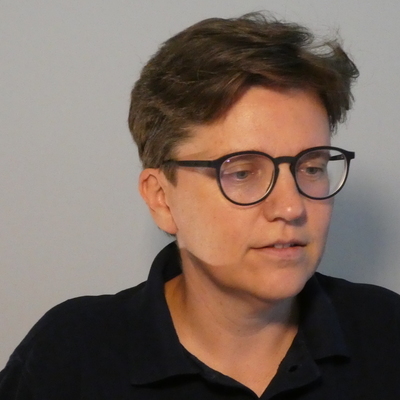 Cerstin Mahlow
 Cerstin Mahlow