É membro de ECUSA-DC (Españoles Científicos en USA), que engloba á comunidade científica española nas áreas de Washington, D.C., Maryland e Virginia.
Ademais do seu traballo, a doutora Begoña Vila participa en eventos de divulgación pública e actividades para dotar de referentes e animar ás mozas cara a estudos STEM.
#MulleresAstrónomas #AstroMulleres #cientificas #womenstem #womenscience
#Inequality in Science: Who Becomes a Star?
"... children from low-SES [socioeconomic status] homes were already severely underrepresented in the early 1900s."
"Scientists from high-SES families have 38% higher odds of becoming stars, controlling for age, publications, and disciplines."
Paper 10.2024 by Prof. Petra Moser, NYU and Dr. Anna Airoldi, NYU
https://cepr.org/publications/dp19572
#science #ses #socioeconomicstatus #socioeconomic #socioeconomics #womenscience #socialscience #economics #nyu
DP19572 Inequality in Science: Who Becomes a Star?
How does a person’s childhood socioeconomic status (SES) influence their chances to participate and succeed in science? To investigate this question, we use machine-learning methods to link scientists in a comprehensive biographical dictionary, the American Men of Science (1921), with their childhood home in the US Census and with publications. First, we show that children from low-SES homes were already severely underrepresented in the early 1900s. Second, we find that SES influences peer recognition, even conditional on participation: Scientists from high-SES families have 38% higher odds of becoming stars, controlling for age, publications, and disciplines. Using live-in servants as an alternative measure for SES confirms the strong link between childhood SES and becoming a star. Applying text analysis to assign scientists to disciplines, we find that mathematics is the only discipline in which SES influences stardom through the number and the quality of a scientist’s publications. Using detailed data on job titles to distinguish academic from industry scientists, we find that industry scientists have lower odds of being stars. Controlling for industry employment further strengthens the link between childhood SES and stardom. Elite undergraduate degrees explain more of the correlation between SES and stardom than any other control. At the same time, controls for birth order, family size, foreign-born parents, maternal education, patents, and connections with existing stars leave estimates unchanged, highlighting the importance of SES.
#astronomy #space #uranus #womenscience #women #science Cecilia Payne , première femme nommée cheffe du département d'astronomie de Harvard en 1956. L'astéroïde (2039) Payne-Gaposchkin a été nommé en son honneur. Lire le livre de Yaël Nazé, L'astronomie au féminin
https://www.arte.tv/fr/videos/090626-024-A/cherchez-la-femme/ 
Cherchez la femme ! - Cecilia Payne - L'astrophysique au début du XXe siècle - Regarder le documentaire complet | ARTE
À Harvard, Cecilia Payne (1900-1979) découvre que le Soleil et les étoiles sont constitués d’hydrogène. Son professeur, Henry Norris Russell, en tire toute la gloire quand il fait cette conclusion plus tard. Devenue la première femme à diriger le département d’astronomie à Harvard, elle est victime de l’effet Matilda, cette minimisation du travail des femmes en science.
The Unheralded Contributions of Klara Dan von Neumann
Despite having no formal mathematical training, she was a key figure in creating the computer that would later launch modern weather prediction
By Sarah Witman
https://www.smithsonianmag.com/science-nature/meet-computer-scientist-you-should-thank-your-phone-weather-app-180963716/
via @SmithsonianMagazine
#science #mathematics #WomenScience
The Unheralded Contributions of Klara Dan von Neumann
Despite having no formal mathematical training, she was a key figure in creating the computer that would later launch modern weather prediction
Today is the International Day of Women and Girls in Science. Check out this amazing project led by three Brazilian Physicists, which won Nature’s Inspiring Women in Science award last year.
It gets girls in low-income families involved with Science and Physics:
#womenscience #womenscientists #naturejournal
https://temmeninanocircuito.wordpress.com
 Tem Menina no Circuito
B for #Berlin: The capital is not only our founding site and known as the national #healthcity, but is also the "Capital of Women Scientists" - a project that was carried out with the support of the #BerlinSenate and initiated by the former Governing Mayor Michael Müller. You can find the online exhibition on our website: https://www.bihealth.org/en/news/media-center/capital-of-women-scientists
#adventskalender2022 #womenscience #adventcalender2022 #womeninscience #turningresearchintohealth #gesundheit

Capital of Women Scientists - BIH at Charité
Capital of Women Scientists - Berliner Institut für Gesundheitsforschung - Charité und Max-Delbrück-Centrum
B wie #Berlin: Die Hauptstadt ist nicht nur unser Gründungsort und bekannt als die nationale #Gesundheitsstadt, sondern auch "Hauptstadt der Wissenschaftlerinnen" - ein Projekt, bei dem uns die #BerlinerSenatskanzlei unterstützt hat Die Online-Ausstellung findet ihr auf unserer Website: https://www.bihealth.org/de/aktuelles/mediathek/hauptstadt-der-wissenschaftlerinnen
#adventskalender2022 #adventcalender2022 #womenscience #turningresearchintohealth #gesundheit

Hauptstadt der Wissenschaftlerinnen - BIH at Charité
Hauptstadt der Wissenschaftlerinnen - Berliner Institut für Gesundheitsforschung - Charité und Max-Delbrück-Centrum
@TuSocialMedia hola Lydia, que tal 😊
https://whotofollow.tibor.net/ is a tool to find people depending on your followers. It does not work for interest (yet) maybe talk to @Tibor
But regarding #womenscience I found a lot on yr server - have you checked https://mstdn.science/tags/WomeninScience ?
And there are several “science” instances - like https://fediscience.org/public/local . Check it out and have fun!
Gracias
Piff

Who to Follow on Mastodon
 Agrupación Ío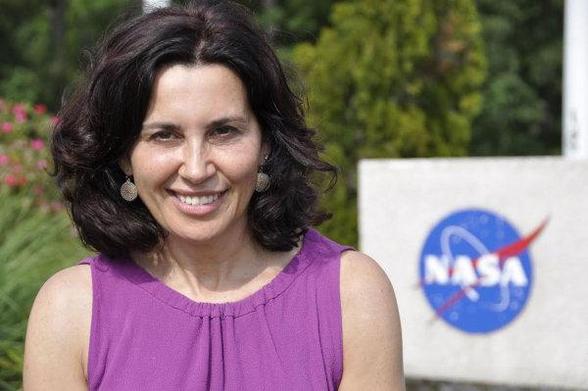
 Research Network Digi-Oek.ch
 jacquie
 Project Gutenberg
 Eduardo
 Berlin Institute of Health
 Piff 123