The Myth of Historic Range in Wolf Conservation
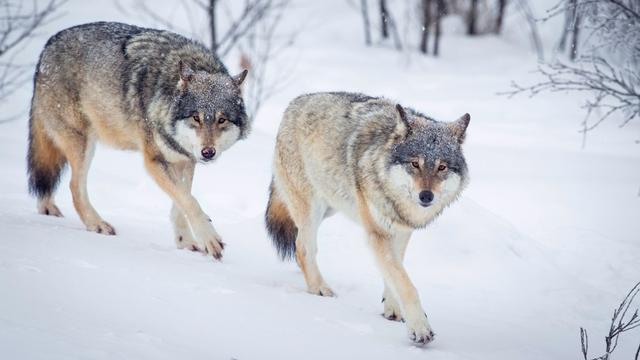
As you might know, the European Commission is moving forward with the proposal to lower the protection status of wolves in the EU. This reliably sparks fierce discussions online. Here, I want to focus on a specific element of these discussions: the historic range. The term is used in various contexts, but the underlying argument is usually the same. It is used to argue that wolf population recovery in Europe is insufficient and, therefore, lowering their protection status is unsubstantiated or even harmful and contrary to the conservation objectives set out by the Habitats Directive.
There is a big problem with that concept, though. The issue is that it is impossible to place it in time and therefore understand what it was. While in the case of the North American continent or Australia, we might anchor the historic range at the time of the arrival of Europeans (despite this being a rather colonial point of view, ignoring peoples living in those lands before), it equally makes no sense in the case of Europe, which species of Homo have inhabited for 400,000 years.
The real issue here is that a portion of conservationists and nature restoration fans are treating ecosystems or species restoration as finite projects. In their view, a conservation or restoration effort has a natural end when it can be deemed completed. The same thinking seems to be applied to the ecosystems. Assuming that there was, in the past, a stable and static natural state and that we should strive in our restoration efforts to go back to it. Of course, anyone who knows anything about ecology knows this notion is nonsensical.
Ecosystems change all the time. They are influenced by an immense number of factors, some of which are unknown or have an unknown influence on other factors. Some parameters of such systems are irreversibly changed over time. This makes attempts to go back in time futile. I’m not saying that knowledge of the previous state of the ecosystem or distribution of species is not useful, or that it cannot or shouldn’t be used as guidance. But guidance is the operative word here. Forgive me for stating the obvious, we’re not going to turn back time. The only way is forward, and that means taking into account conditions, factors and constraints that exist at present.
And so, I observed with a mixture of bafflement and amusement arguments breaking out over whether wolves should be restored to their historic range or native range. Of course, both notions are reflections of human wants and desires. They are essentially the same thing, the difference is only in people’s minds arbitrarily placing a dot on the timeline of the past. Wolves don’t know anything about this and will do what wolves do, as they have done for millennia.
Projects like wolf conservation or restoration are not finite. For example, if we decide to restore the wolf population to the British Isles, that project will only ever be complete in one of two cases. Wolves will be extirpated all over again or all humans will be gone. This point of view inevitably captures the very nature of such projects. They are human-driven but, more importantly, human-centric. Such a project is a human action to counter the results of past human actions. Without humans, there would be no wolf restoration or wolf extirpation – depending on where one would like to put their arbitrary and highly subjective point of reference in time.
#Biodiversity #conservationDebate #conservationGoals #ecologicalChange #ecosystemRestoration #environmentalPolicy #europeanCommission #HabitatsDirective #historicRange #humanImpact #restorationEfforts #speciesRecovery #wildlifeManagement #wolfConservation #wolfPopulation
 Moe Pets
 hope
hope The Wild
 Worlddefensereport

 defensedaily
 Tommy's Outdoors

 JPS_Lindberg