Montana jacks up wolf hunting limits in most regions

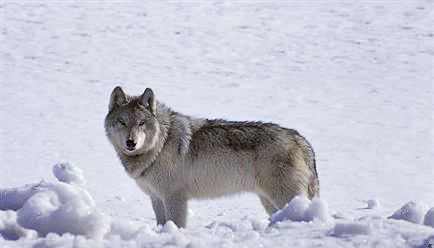
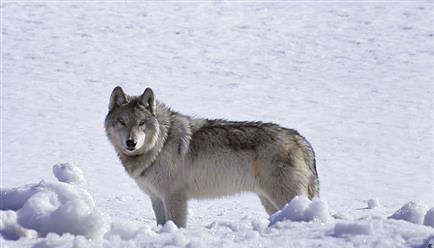
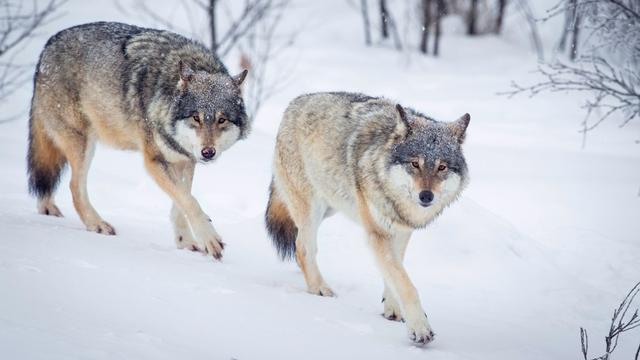
Gray Wolf – Adam Messer-Montana FWP

Here’s and excellent article by Tristan Scott of the Flathead Beacon concerning last Thursday’s Fish and Wildlife Commission decision to further raise wolf hunting quotas throughout most of Montana . . .

The Montana Fish and Wildlife Commission on Thursday raised the state’s wolf hunting quota by about 37%, approving new regulations that cap the number of wolves that hunters and trappers can kill annually at 452 while stopping just shy of adopting a statewide quota.

The seven-member commission formalized the new rules after a full afternoon of debate and discussion, including hours of testimony from members of the public who were mostly set against a state management regime aimed at reducing the statewide wolf population, per a state legislative mandate.

To achieve this reduction, Montana Fish, Wildlife and Parks (FWP) last month proposed a plan that blends the 2021 directive from Montana’s Republican-controlled legislature with its own recommendations, which are based on population estimates and projections that meet the minimum recovery criteria determined by the U.S. Fish and Wildlife Service.

Continue reading . . .

More reading: The official press release . . .

#MontanaFishAndWildlifeCommission #wolfManagement #wolfQuotas

Judge orders endangered species status review for gray wolves in Northern Rockies

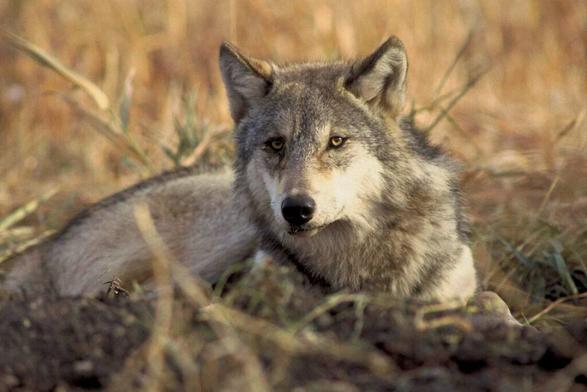
Gray wolf – John and Karen Hollingsworth, U.S. Fish and Wildlife Service

Saw this coming . . .

Citing “serious and pervasive” deficiencies with the U.S. Fish and Wildlife Service’s basis for rejecting a 2021 petition by a coalition of environmental groups seeking to revive Endangered Species Act protections for gray wolves in the northern Rocky Mountains, a federal judge in Missoula this week instructed wildlife managers to reconsider.

U.S. District Judge Donald Molloy issued the 105-page ruling in response to a lawsuit that conservation and animal welfare groups filed last year seeking to either restore protections, or afford new ones, to a distinct population of wolves spanning Montana, Idaho and Wyoming, as well as portions of Washington, Oregon and Utah…

Continue reading . . .

#grayWolves #wolfHarvest #wolfManagement

FWP releases final Montana Wolf Management Plan

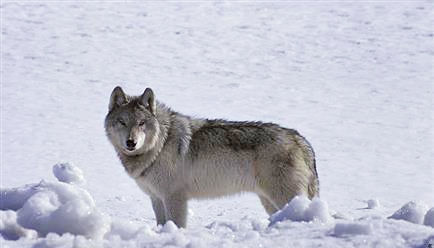
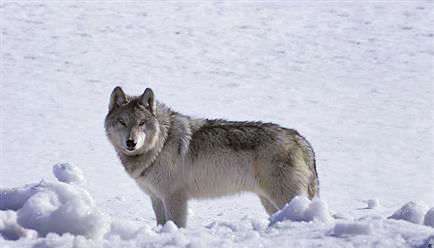
Gray Wolf – Adam Messer-Montana FWP

The press release is quoted in full here. There’s a link to the final plan at the end.

Mar 26, 2025 2:07 PM
HELENA – Montana Fish, Wildlife & Parks released the 2025 Montana Gray Wolf Conservation and Management Plan today, wrapping up an extensive public process to capture updates to wolf management strategies and research into a new plan.

The final 2025 Montana Gray Wolf Conservation and Management Plan (2025 Wolf Plan) incorporates updates in wolf-related research, more than 20 years of management experience, evolution in conflict management, new laws, social perspectives, and public input.

“The former wolf plan served us well, but it was time to make sure our management plan contained the evolutions we’ve made in wolf research, monitoring, conflict management, and the changes to the legal framework we operate under today,” said FWP Director Christy Clark.

The 2025 Wolf Plan builds on a foundation of FWP wolf management: monitoring populations, tracking harvest, effective conflict management, and flexibility to integrate evolutions in science.

The 2025 Wolf Plan shifts a key counting metric from the number of breeding pairs to the number of wolves representing at least 15 breeding pairs. The final plan establishes that 450 wolves would ensure 15 breeding pairs. Population estimates will continue to be determined by the peer-reviewed Integrated Patch Occupancy Modeling method, or iPOM. The final plan also reflects the current depredation prevention and response program.

“Wolf management discussions continue to draw a lot of attention from people in Montana and around the world,” Clark said. “The 2025 Wolf Plan will ensure those conversations can be grounded in current science and the research FWP is doing every day.”

To see the final plan, click here.

#wolfManagement #wolfRecovery

Howl – The dark side of wolf reintroduction

Biologist Diane Boyd with a tranquilized wolf in the field

Our own Diane Boyd got some more ink, this time in a long-form article with lots of photos published in ‘Nautilus’…

Diane Boyd walked along the North Fork of the Flathead River. It was a clear blue summer day, and the wolf biologist relished being in this Rocky Mountain valley in northwestern Montana. She set foot here 45 years ago to track the first known gray wolf to wander into the western continental United States from Canada in decades. Humans had exterminated the last of them in the 1930s.

The river wove through pine, aspen, and willow trees that rose along the edge of a sprawling grass meadow. The mountain peaks in the distance were topped with snow. Boyd grew up in suburban Minnesota, where she was the neighborhood kid who could be found at the wild edges of the subdivision putting caterpillars in jars.

“I always wanted to go more and more wild in my life—wildlife, wild places—and it doesn’t get a lot wilder than here,” Boyd said to me last summer, as we walked through the quiet meadow.

At age 69, dressed in jeans, running shoes, and a T-shirt picturing a dog lazing on a lake pier, Boyd seemed very much the innately independent biologist who settled here at age 24. She spoke with a directness that had little room for sentimentality. The meadow area is called Moose City and was originally a 1910s homesteader ranch with six log cabins. Boyd lived alone in one of the tiny cabins without electricity or running water for 12 years.

Continue reading . . .

#wolfManagement

168: Coexistence with Wolves in Estonia with Helen Arusoo

https://open.spotify.com/episode/2SacXgnHbTR90b9C9AIjJQ

On my podcast, we talk a lot about coexistence with large carnivores and the challenges it poses. Some of those challenges might seem insurmountable to some. To shed some light on overcoming these hurdles, I contacted Helen Arusoo, an Estonian nature journalist and the leader of the National Animal Working Group. In this conversation, we talk about how Estonia overcame these hurdles and created something that I would consider the gold standard of coexistence with large carnivores.

https://youtu.be/d1F8YtfrpD0

Unsurprisingly, the majority of our time was spent discussing wolves as they seem to be the most difficult carnivore species to coexist with, at least in the northern hemisphere. However, we did discuss other large carnivores like bears too. Our conversation focused mostly on social and cultural factors. We also touched on the European Commission’s proposal to lower the protection status of wolves, something we’ve discussed extensively in one of the previous episodes.

It was a wonderful conversation and I enjoyed speaking with Helen. Her profound understanding of the challenges of coexistence is impressive. She presented a deeply thought-out perspective and I can only wish that more people who care about wolves could learn from her experience and the Estonian model of coexistence with large carnivores.

#animals #coexistenceWithLargeCarnivores #coexistenceWithWolves #CoexistenceWithWolvesInEstonia #Conservation #Estonia #HateredOfWolf #HelenArusoo #HumanWildlifeConflice #largeCarnivores #nationalAnimalOfEstonia #NationalAnimalWorkingGroup #Podcast #Susi #tommysoutdoors #Wildlife #Wolf #wolfConservation #WolfHunting #wolfManagement #Wolves

168: Coexistence with Wolves in Estonia with Helen Arusoo

Conservation and Science · Episode

Spotify
Gray Wolf – Adam Messer-Montana FWP

Folks in Montana seem to be growing more tolerant of wolves . . .

\As wolves gain prominence in the northern Rockies and management policies evolve to keep the populations in check, researchers are tracking the shifting social dynamics surrounding Montanans’ complex attitudes toward a species that is both reviled and revered.

According to a new survey conducted cooperatively by Montana Fish, Wildlife and Parks (FWP) and the University of Montana, attitudes and beliefs about wolves and wolf management have generally grown more tolerant. Distributed three times – in 2012, 2017 and 2023 – the survey is aimed at providing insights to wildlife managers and officials tasked with making decisions on wolf management.

“We know people have complicated views and values on wolves, which is reflected in the results of the survey and the trends we see,” Quentin Kujala, FWP chief of conservation policy, stated in a press release announcing the latest survey’s findings. “It’s important for us and our partners at the University to continue research like this because how stakeholders feel about wildlife and its management is a critical awareness for FWP to have.”

Continue reading . . .

https://www.gravel.org/2024/01/12/survey-reports-growing-tolerance-for-wolves-in-montana/

#wolfManagement