Kommt der ICE bald aus dem 3D-Drucker? Fraunhofer Chemnitz schmiedet Leichtbau-Allianz. Ingenieure wollen mit additiver und automatischer Technik Bauteile für Hochgeschwindigkeits-Züge schneller, billiger und umweltfreundlicher herstellen
https://oiger.de/2026/05/29/ice-aus-dem-3d-drucker/197678#3DDruck #Leichtbau #Hochgeschwindigkeitszug #Bahntechnik #AdditiveFertigung #AM,
#Thermoplast #ICE #Chemnitz #Halle #Innovation #Werkstofftechnik@FraunhoferIWU @FraunzhoferIMWS @Hörmann
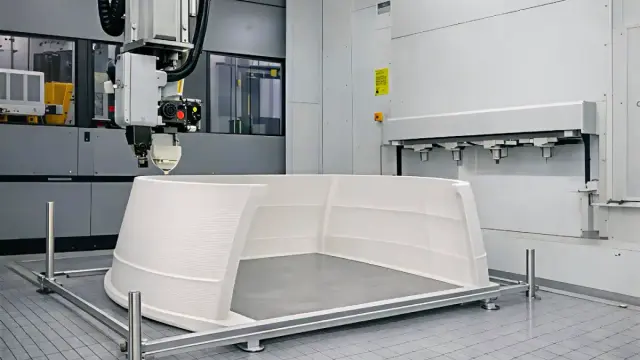
ICE aus dem 3D-Drucker - Oiger
Kommt der ICE bald aus dem 3D-Drucker? Fraunhofer Chemnitz schmiedet Leichtbau-Allianz. Die stellt u.a. Zugbauteile schneller und öko her.
Fernstudium Werkstofftechnik 2026: Alle Informationen zu Studiengängen, Voraussetzungen und Berufsperspektiven. Fernstudium Infomaterial bietet detaillierte Einblicke in Studieninhalte, Kosten (ca. 450€/Monat) und Karrieremöglichkeiten. Mit Bachelor- oder Master-Abschluss sind Einstiegsgehälter von 3.200-4.200€ möglich.
#FernstudiumInfomaterial #Werkstofftechnik #OnlineStudium https://fernstudium-infomaterial.de/fernstudium/werkstofftechnik/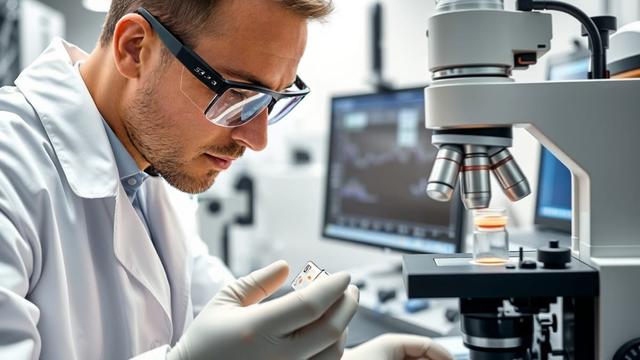
Fernstudium Werkstofftechnik 2026: Studiengänge im Vergleich
Werkstofftechnik im Fernstudium studieren. Alle Studiengänge und Hochschulen mit Informationen zu Kosten, Dauer, Voraussetzungen, Inhalten und Abschlüssen im Vergleich.
3D-Druck der besonderen Art:
An der Universität Kassel wurde heute eine weltweit einzigartige Anlage eingeweiht. Sie kann Materialien 3D-drucken, analysieren und mit KI ihr Verhalten vorhersagen. Damit eine enorme Bandbreite an Materialien additiv fertigen.
Unterstützt durch die hellste Röntgenquelle der Welt. Auch Wissenschaftsminister Timon Gremmels zeigte sich beeindruckt.
Zur Pressemeldung:
https://www.uni-kassel.de/uni/aktuelles-aus-der-universitaet/meldung-startseite/2026/03/12/eine-einzigartige-maschine-soll-helfen-kritische-rohstoffe-zu-ersetzen-und-noch-viel-mehr.html#werkstofftechnik #unikasselFernstudium Infomaterial: Werkstofftechnik per Fernstudium studieren — berufsbegleitend mit flexiblen Zeiten. Inhalte: Materialprüfung, Metallurgie und Produktentwicklung. Einstiegslöhne: ca. 3.200€ (Bachelor) bis 4.200€ (Master). Details zu Studiengängen und Zulassungsvoraussetzungen:
#FernstudiumInfomaterial #Werkstofftechnik https://fernstudium-infomaterial.de/fernstudium/werkstofftechnik/Fernstudium Werkstofftechnik 2026: Studiengänge im Vergleich
Werkstofftechnik im Fernstudium studieren. Alle Studiengänge und Hochschulen mit Informationen zu Kosten, Dauer, Voraussetzungen, Inhalten und Abschlüssen im Vergleich.
📢 Ein freundlicher Reminder: Am Montag, 24.11., um 11 Uhr findet das kostenfreie Webinar "Open Access in den Materialwissenschaften und der Werkstofftechnik" satt.
Mit dem FID Materials Science (@slubdresden und @tibhannover) informieren wir unter zu OA, Zweitveröffentlichung und Lizenzierung mit besonderem Fokus auf die Materialwissenschaften und Werkstofftechnik.
🔗 Weitere Infos: https://open-access.network/fortbilden/workshops/oa-materialwissenschaften-werkstofftechnik
#OpenAccess #Material #Materialwissenschaft #Werkstofftechnik #OpenScience #WissKomm
📢 Webinar: Open Access in den Materialwissenschaften & der Werkstofftechnik
🗓 24.11.2025 | 11:00–12:00 Uhr
Mit dem FID Materials Science (@slubdresden/ @tibhannover) zeigen wir #OpenAccess-Publikationsstrategien in einem hochgradig interdisziplinären Forschungsfeld an.
Besonders interessant für Forschende in den Materialwissenschaften und der Werkstofftechnik.
Link zur Teilnahme: https://tib-eu.webex.com/tib-eu/j.php?MTID=m74d9070d977164c83e3cedffd1961ff7
#Materialwissenschaft #Werkstofftechnik #openscience
Fernstudium Infomaterial stellt vor: Werkstofftechnik im Fernstudium - flexibel und berufsbegleitend studieren! Der Studiengang vermittelt Kenntnisse in Materialprüfung, Wärme- und Stoffübertragung sowie Beschichtungstechnologien. Kosten: ca. 450€/Monat. Einstiegsgehalt: 3.200-4.200€ brutto. Auch ohne Abitur möglich!
#FernstudiumInfomaterial #Werkstofftechnik https://fernstudium-infomaterial.de/fernstudium/werkstofftechnik/Fernstudium Werkstofftechnik 2026: Studiengänge im Vergleich
Werkstofftechnik im Fernstudium studieren. Alle Studiengänge und Hochschulen mit Informationen zu Kosten, Dauer, Voraussetzungen, Inhalten und Abschlüssen im Vergleich.
@tinoeberl
Es erheitert mich immer wieder wie überraschend simple physikalische Gegebenheiten für einige "Experten" in der EU sind,wobei eine einfache Googlesuche hier helfen kann :
H2 ist das kleinste Atom, diffundiert also durch die dicksten Stahlflaschen/leitungen in kürzester Zeit => Lagerung/Transport nur flüssig oder hoher Druck.
Erfahrungen:: BWM Flughafen Münch.+ Betreiber von H2 Tanke.
https://publications.jrc.ec.europa.eu/repository/handle/JRC140673
#Wasserstoffwirtschaft
#Energiewende
#Pipeline
#Werkstofftechnik
#H2Safety

Pipelines for hydrogen transport: A review of integrity and safety challenges
The European Commission highlights hydrogen as an important energy carrier and chemical feedstock that could help decarbonise sectors otherwise deemed hard-to-abate. Europe’s existing natural gas grid is seen as a promising asset to repurpose for the transportation of hydrogen. This technical report provides a literature review of hydrogen's impact on pipeline materials, particularly steel and polymers. Hydrogen is known to reduce the ductility, fracture toughness, and the fatigue crack growth resistance of steel materials commonly found in transmission pipelines. It is also known to permeate through polymeric materials that are often used in the distribution grid. The possible implications for pipeline integrity and safety are reviewed. This report emphasises the need for further experimental research and practical experience combining material science and safety engineering disciplines. Key areas lacking knowledge include the full- or large-scale validation on pipeline sections of small-scale laboratory results, the behaviour of typical pipeline defects, and the long-term performance of polymeric pipeline materials, all under the influence of gaseous hydrogen. The report highlights the essential role of testing facilities such as the High-Pressure Gas Testing Facility (GasTeF) of the European Commission’s Joint Research Centre in addressing these gaps.
@tinoeberl
Es erheitert mich immer wieder wie überraschend simple physikalische Gegebenheiten für einige "Experten" in der EU sind,wobei eine einfache Googlesuche hier helfen kann :
H2 ist das kleinste Atom, diffundiert also durch die dicksten Stahlflaschen/leitungen in kürzester Zeit => Lagerung/Transport nur flüssig oder hoher Druck.
Erfahrungen:: BWM Flughafen Münch.+ Betreiber von H2 Tanke.
https://publications.jrc.ec.europa.eu/repository/handle/JRC140673
#Wasserstoffwirtschaft
#Energiewende
#Pipeline
#Werkstofftechnik
#H2Safety
Pipelines for hydrogen transport: A review of integrity and safety challenges
The European Commission highlights hydrogen as an important energy carrier and chemical feedstock that could help decarbonise sectors otherwise deemed hard-to-abate. Europe’s existing natural gas grid is seen as a promising asset to repurpose for the transportation of hydrogen. This technical report provides a literature review of hydrogen's impact on pipeline materials, particularly steel and polymers. Hydrogen is known to reduce the ductility, fracture toughness, and the fatigue crack growth resistance of steel materials commonly found in transmission pipelines. It is also known to permeate through polymeric materials that are often used in the distribution grid. The possible implications for pipeline integrity and safety are reviewed. This report emphasises the need for further experimental research and practical experience combining material science and safety engineering disciplines. Key areas lacking knowledge include the full- or large-scale validation on pipeline sections of small-scale laboratory results, the behaviour of typical pipeline defects, and the long-term performance of polymeric pipeline materials, all under the influence of gaseous hydrogen. The report highlights the essential role of testing facilities such as the High-Pressure Gas Testing Facility (GasTeF) of the European Commission’s Joint Research Centre in addressing these gaps.
#Wasserstoff gilt als Hoffnungsträger für die #Dekarbonisierung, doch beim Transport durch bestehende #Erdgasleitungen gibt es #Sicherheitsrisiken.
Wasserstoff macht Stahl spröder, schwächt die #Bruchfestigkeit und durchdringt #Kunststoffe. Ein Bericht der EU zeigt, dass viele Fragen zur Materialbeständigkeit und #Sicherheit im Dauerbetrieb noch offen sind.
https://publications.jrc.ec.europa.eu/repository/handle/JRC140673
#Wasserstoffwirtschaft #Energiewende #Pipeline #Werkstofftechnik #H2Safety #Energiewende
Pipelines for hydrogen transport: A review of integrity and safety challenges
The European Commission highlights hydrogen as an important energy carrier and chemical feedstock that could help decarbonise sectors otherwise deemed hard-to-abate. Europe’s existing natural gas grid is seen as a promising asset to repurpose for the transportation of hydrogen. This technical report provides a literature review of hydrogen's impact on pipeline materials, particularly steel and polymers. Hydrogen is known to reduce the ductility, fracture toughness, and the fatigue crack growth resistance of steel materials commonly found in transmission pipelines. It is also known to permeate through polymeric materials that are often used in the distribution grid. The possible implications for pipeline integrity and safety are reviewed. This report emphasises the need for further experimental research and practical experience combining material science and safety engineering disciplines. Key areas lacking knowledge include the full- or large-scale validation on pipeline sections of small-scale laboratory results, the behaviour of typical pipeline defects, and the long-term performance of polymeric pipeline materials, all under the influence of gaseous hydrogen. The report highlights the essential role of testing facilities such as the High-Pressure Gas Testing Facility (GasTeF) of the European Commission’s Joint Research Centre in addressing these gaps.
 oiger
oiger Fernstudium Infomaterial
 Universität Kassel
 open-access.network
 Talkredius

 Tino Eberl