The @ietf #v6ops draft on #IPv6 Prefix Assignment to End-Sites by Jordi Palet Martinez gives practical guidance for IPv6 access networks.
https://datatracker.ietf.org/doc/draft-ietf-v6ops-prefix-to-end-sites/

It recommends persistent prefix delegation, preferably /48 per end-site, and delegations longer than /56 should be avoided. A single /64 is not enough for an end-site.

As heard in Packet Pushers IPv6 buzz with Ed Horley, Tom Coffeen and Nick Buraglio: https://packetpushers.net/podcasts/ipv6-buzz/ipb201-the-never-ending-prefix-debate-revisiting-best-current-practices/
Great presentation from Jen Linkova during #IETF #v6ops on switching the Google Enterprise network to be #IPv6 mostly (with a rollout that's now 90% complete). Yes it is possible! https://datatracker.ietf.org/meeting/118/materials/slides-118-v6ops-jen-linkova-turning-ipv4-off-short-version-slides-118-v6ops-jen-linkova-turning-ipv4-off-short-version
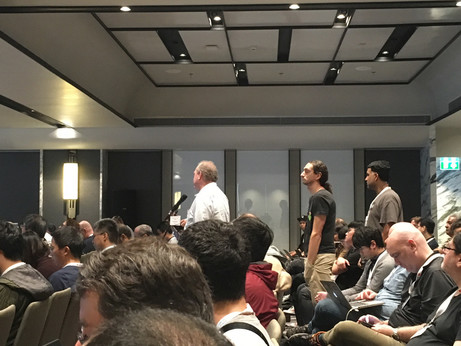
As heard at the mic in #IETF #v6ops: "the tool for this is not an RFC, it's an RFP"
@g3rv4 Have you tried changing gai.conf to increase the priority of #IPv6 #ULA? This has some discussion of the issues: https://datatracker.ietf.org/doc/html/draft-ietf-v6ops-ula-00. The #v6ops mailing list in the #IETF is discussing changing the recommend defaults.
Unintended Operational Issues With ULA

The behavior of ULA addressing as defined by [RFC6724] is preferred below legacy IPv4 addressing, thus rendering ULA IPv6 deployment functionally unusable in IPv4 / IPv6 dual-stacked environments. This behavior is counter to the operational behavior of GUA IPv6 addressing on nearly all modern operating systems that leverage a preference model based on [RFC6724] .

IETF Datatracker
debian developer offered to package CLATd for #debian at the #v6ops meeting at #IETF115

That alone was worth getting up at 0300 to attend the meeting for.
Vigorous #IPv6 discussion in the #v6ops working group at #IETF103 -
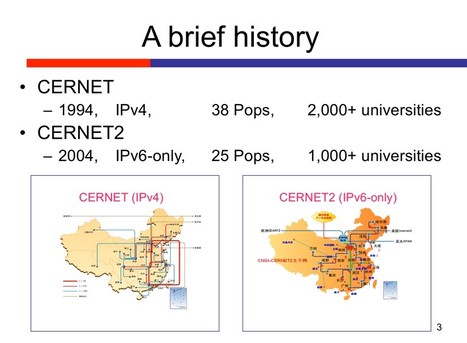
Learning about Chinese research networks in the #IETF103 #v6OPS session - CERNET2 has been #IPv6-only since 2004 -