Book Reviews
Photo by Simon Wilkes on Unsplash
Anthology #66
Proof, by Adam Kucharski
Prior to reading this fascinating book, I had never thought much about what proof is as a concept, but now, as well as realising how difficult [if not actually impossible] it can be to ascertain proof, it affects nearly everything we do — or think. The author was a founding co-director of the Centre for Epidemic Preparedness and Response at the London School of Hygiene & Tropical Medicine [LSHTM] (2022–2025), and has contributed scientific insights to multiple governments and health agencies. Prior to joining the School in October 2013, he was a postdoc at Imperial College London; he also looks unfeasibly young, but here I am just showing my age. In his own words: “Proof … is not just about what is true: it is about convincing ourselves — and others — that something is true. If prosecutors want to stop a murderer walking free, they need to assemble enough proof to persuade a jury. If countries want to roll out a new vaccine during an epidemic, they need proof it’s sufficiently safe and effective. If we want to have fewer legal errors, or more medical advances, or make better decisions about whether to send up planes after a volcanic eruption, we need to seek out proof”. This gives you some idea of the scope of the book’s coverage, and inevitably, the COVID pandemic is examined in some detail, with regard to the author’s specialist area of knowledge. Also, the latest bête noire, Artificial Intelligence [AI], is comprehensively covered: “It’s time to get serious about AI’s very real challenges, like misinformation, bias and deep fakes.” [Aidan Gomez, Attention is all you need] “If we spend all of our energy getting distracted by doomsday scenarios, we will repeat the mistakes we made during the rise of social media.” “From pandemics to climate change to adversarial AI, knowing that a disaster is on the way isn’t enough if vindication comes only after that disaster hits.” There is enough optimism here to prevent this becoming a doom-laden read, but it is also a salutary warning that we should keep our wits about us. The paperback I read was published in 2026 [2025] by Profile Books Ltd, London, ISBN 978-1-7881-6909-7.
Dreamland, an Autobiography, by Bob Lazar
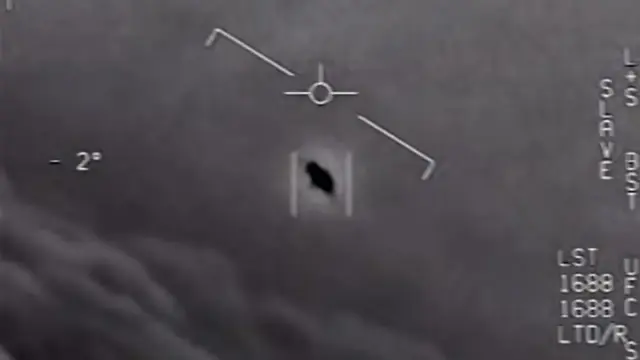
How you regard this book depends very much upon your preparedness to accept that there might be some other intelligence in the universe beyond what we think we know; inevitably, this can call into question the credulity of the individual who believes it, but this is mostly a tactic used by those who want to discredit anything substantially different, and potentially frightening. Notwithstanding the attention that the possibility of alien visitation [or even presence] on earth has received latterly, I would be more prepared to accept the validity of Lazar’s experience in this autobiography, if it weren’t for the number of errors in the writing, both grammatical & proof-reading, given that he was a scientist, although no editor is credited. After a spell working at Los Alamos, he was recruited to work at a secret location in Area 51, to establish how an amazing, presumably alien, propulsion system worked: he was even given sight of several of the craft from which the system came; what soured the whole experience for him though was that, in addition to the inevitable secrecy surrounding the whole enterprise, his employment was not regular or even reliable. He felt like he was being held at arm’s length, and the uncertainty of it all [plus paranoia at being constantly monitored] contributed to the breakup of his marriage. He very much regrets allowing the story to be released to the public in 1989, via a local television news station, preferring now to stay out of the limelight; the story has only continued to grow, however. The December 2017 revelations in The New York Times about a secret Pentagon study of UFOs & related phenomena [now referred to as UAP], the release of 3 videos recorded by military pilots, and the testimony of credible witnesses, including pilot David Fravor about the capabilities of the craft he encountered, have only bolstered Lazar’s story. Many believe a major revelation is just around the corner: time will tell. The hardback I read was published in 2019 by Interstellar, USA, ISBN 978-0-5784-3705-7.
The Vanishing Point, by Paul Theroux
This is an engaging collection of short stories from this US novelist & travel writer: they are arranged in four sections, the first of which is a single, titular story; the others are either set in a location — Hawai’i [Hawaii Nei], or Elsewhere — or philosophical; Aide-Mémoires. The first location is explained by one of his current choices of home, according to his bio; the second is explained by his travels, although there is an overlap with the final section, which is mostly set in & around the area of his birth, Massachusetts, and they are probably semi-autobiographical, using a fictitious character called Andre Parent, who is a novelist & college lecturer. To quote from the rear-cover blurb: “The stories in The Vanishing Point are both exotic and domestic, their settings ranging from Hawaii [sic] to Africa and New England. Each focuses on life’s vanishing points — moments when seemingly all lines running through one’s life converge, and one can see no farther, yet must deal with the implications. With the insight, subtlety and empathy that has [sic] long characterised his work, Theroux has written deeply moving stories about memory, longing and the passing of time, affirming his status, once again, as a master of the form.” Aside from the final potential overstatement, although understandable as a marketing device, I would say that this assessment is pretty accurate: I found plenty to identify with in the final set of stories in which he muses in later life on the inevitable approach of death, with all its implications; that said, these stories are by no means morbid, but full of subtle humour. I will be very happy to find other examples of his work. The paperback I read was published in 2026 by Penguin Books, London [2025, Hamish Hamilton]; 2025, Mariner Books, an imprint of HarperCollins Publishers LLC, USA, ISBN 978-0-2419-9558-7.
My Inner Child Wants to Murder Mindfully, by Karsten Dusse
This is the follow-up to a successful first novel from this German author, and the title is an extension of the first book’s title, which was Murder Mindfully: it has been adapted into a Netflix series*, called Mindful Murder, which I have just started watching, inspired by this second novel. It is written with what used to be called black humour: the irony in the sequel is that, after the murders in the original, which are referred to in the sequel, the protagonist, Björn Diemel, has renounced murder but, unfortunately, events have a tendency to conspire against the most honourable of intentions. In the Netflix version of Murder Mindfully, at the instigation of Björn’s wife Katharina, he has begun consulting a mindfulness coach, but here, he is persuaded to do so after an alpine holiday with their pre-school daughter was soured by an altercation with a slovenly waiter. He is introduced to the concept of an inner child, which we all possess, apparently, and managing this concept should allow Björn to deal with unresolved damage inflicted on him by his parents. It is also coincidental that Björn manages the building, owned by the absent boss of a criminal syndicate, and in which Björn lives, separately from Katharina, in which a pre-school business is situated, and which their daughter, Emily, attends. Björn had exchanged “a crippling permanent position at a large law firm for a financially sound freelance position as a solo practitioner”; one aspect of all this which only one other person knew was that, a year earlier, he’d killed Dragan, the criminal boss: he “had no choice but to let his criminal consortium continue to operate under Dragan’s name. And pretend to his gang that their boss was still alive”. What follows is a comedy of errors & unintended consequences, and it is amusing to read how Björn reasons with his inner child, under his mindfulness coach’s direction, to resolve problems as they arise, despite the coach being unaware of all the sordid details! *Unfortunately, the original dialogue is dubbed into American: I would rather have had subtitles & the original German dialogue. The paperback I read was published in 2020 by Wilhelm Heyne Verlag, Munich [Das Kind in mir will achtsam morden], 2026 Faber & Faber Ltd, London [translation by Florian Duijsens, 2025] ISBN 978-0-5713-8407-5.
#Africa #AI #Aliens #Area51 #Covid #Germany #HawaiI #ImperialCollege #LosAlamos #Mindfulness #Netflix #NewEngland #UAP #UFO #USA Lauren McMenemy
 World Briefly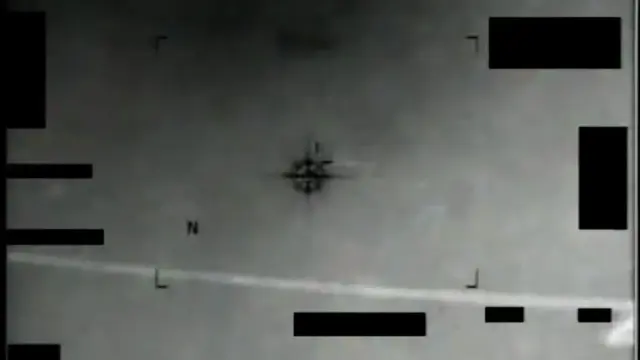
 Wulfy—Speaker to the machines
 Jack C.M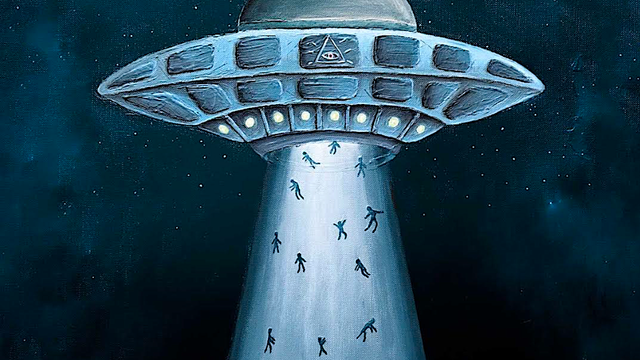
 NewsletterTF
 Wilfred Books
 KilleansRow 🇺🇲 🇺🇦🍀
 Erbrichmalnicht