Will economic constraints on token use in organisations drive the emergence of norms?
I’ve been following the token maxxing discourse with interest. Essentially we’ve seen a tendency to equate quantity of tokens used with the extent of AI integration. It’s hard to measure integration so organisations have turned to the proxy of tokens, assuming that the more tokens you are using then the more you are integrating LLMs into your work. The problem with this is two fold:
- At present tokens are essentially being subsidised by investors in AI labs interested in maximising adoption of the products. The costs of token to the lab are either minimised for the end user or entirely removed from the equation with unmetered access.
- The assumption that more use = better is obviously untenable with even a rudimentary knowledge of the ethical and epistemological risks of language models. Further, more use of LLMs might be worse for the organisation because it hinders other forms of work which are essential to the organisation’s mission.
There is a significant shift underway which is going to change how LLMs are used within organisation, summarised here by 404 media:
The news highlights a major shift in the tech industry and other companies that use AI: the wave of uninhibited AI growth is over. Some AI providers like GitHub are now charging customers per token rather than a flat subscription fee, leading some companies to burn through their tokens. Uber recently capped employees’ use of AI tools like Claude Code and Cursor; that came after Uber told employees to use AI as much as possible and Uber’s CTO said the company had blown its entire AI budget in four months. And Accenture itself reportedly started requiring senior staff to start using AI or risk losing out on promotions.
I was wrong to believe that model development was flatlining. A week with Claude Fable, the continual development of Claude Opus and my begrudging appreciation of GPT 5.5 leave me persuaded we’ve come along way since GPT 5. However even if the models are getting more capable, to what extent are those capabilities becoming more expensive? I managed to burn through £100+ in five days playing with Claude Fable and I constantly have Opus switched to max now, even when I vaguely know it’s wasteful. There’s a whole style of use which has taken hold here which isn’t sustainable and is increasingly hitting a brick wall.
For individuals it raises the question of what you’re willing to pay for. I switch to Max plans when I have a special reason to do so but I never keep the subscription any more. I hit the rate limits with Claude so frequently that it’s left me thinking more carefully about what I do want to use models for and what I don’t want to use models for. The same process is inevitably going to take place in organisations I think in the sense of resource constraints necessitating evaluative criteria for desirable and undesirable use of the model.
In the meantime though I think it’s imperative that we stop universities from sliding into token maxxing with the use of enterprise systems because the entire price model for this is likely to change dramatically in the coming months. Given the wider economics of the industry, will any AI lab really retain per seat pricing for enterprise packages (i.e. paying by user rather than for tokens?) in the longer term? If not then the norms about use we establish now will have significant financial consequences further down the line.
#AIIntegration #compute #economics #organisations #tokenMaxxing #tokens N-gated Hacker News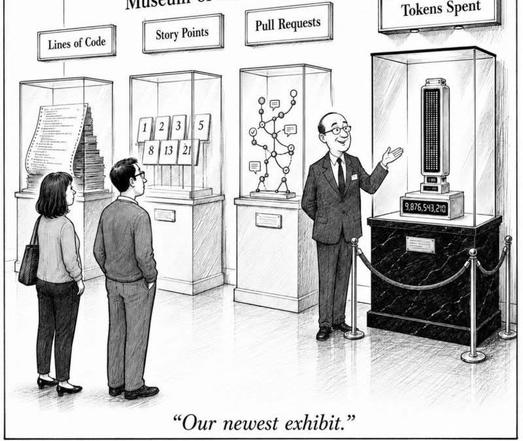
 Hacker News
 Mark Carrigan
 bsmall2
 Benjamin Carr, Ph.D. 👨🏻💻🧬
 Kodsnack
 BenderIsGreat34
 Vladimir Savić
 Nicolas Zahn
 bk
bk