I Built a Device to Never Miss the Subway

YouTube

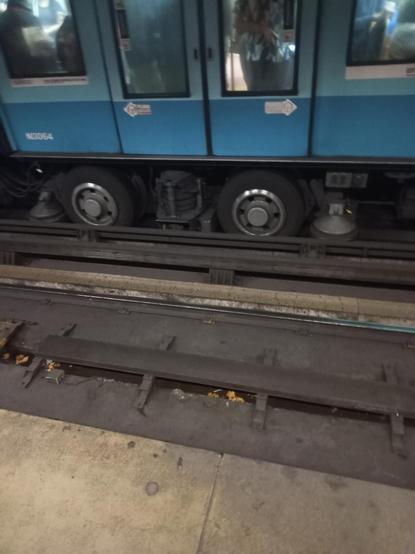
Fun fact: The subway trains on Santiago's Line 1 have rubber tires! I think this is borrowed from a French design, but I don't know that part for sure.

More recent lines like lines 3 and 6 don't follow this design. I can't speak for lines 2, 4A, or 5 since I haven't been on those (I have been on line 4, though. I *think* it doesn't have rubber tires, but it's been a while, and I can't remember)
#trains #subways #santiago

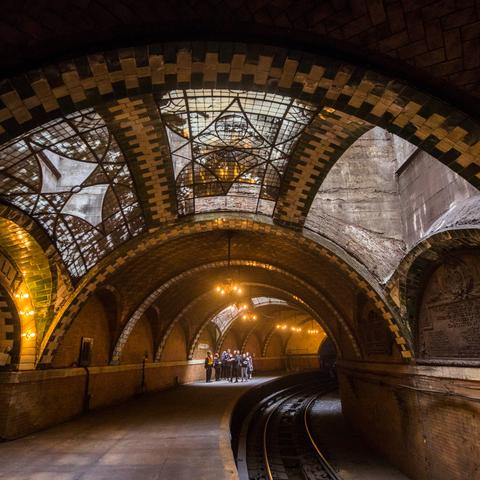
Mamdani Will Be Sworn In at Abandoned Subway Station Beneath City Hall

https://fed.brid.gy/r/https://www.nytimes.com/2025/12/29/nyregion/mamdani-subway-sworn-in-mayor.html
The Guardian: Warsaw opens metro station ‘express’ library to get commuters off their phones. “An ‘express’ library has opened in a new metro station in Warsaw, aiming to provide an appealing cultural space to encourage residents and commuters to forgo smartphones in favour of books and, thanks to fresh herbs growing in a vertical garden, a dash of subterranean greenery too.”

https://rbfirehose.com/2025/11/19/the-guardian-warsaw-opens-metro-station-express-library-to-get-commuters-off-their-phones/

The Guardian: Warsaw opens metro station ‘express’ library to get commuters off their phones | ResearchBuzz: Firehose

ResearchBuzz: Firehose | Individual posts from ResearchBuzz

Trump Says $16 Billion Hudson River Tunnel Project Is ‘Terminated’

https://fed.brid.gy/r/https://www.nytimes.com/2025/10/15/nyregion/trump-gateway-cancellation.html

Speeding train Kills 93 people: The Malbone Street Disaster #disaster #documentary #truestories

YouTube

A direct current of urban planning lessons from D.C.

The following planning lessons are but a few among an infinite number emitted directly by the District of Columbia (D.C.). Few places in the United States, nor globally have such a profound effect on urban planning either through legislation, funding, policy, or local action. Unfortunately, as of late, many of the lessons have taken a more sinister tone, as the city/district have become one of the pawns in an unpleasant, politically-charged chess match. Here’s the list. Peace!

Source: officialfreedc.com
  • While the intention of our nation’s founders was to create a neutral and nonpartisan capital city, by placing control of D.C. in Congress, they mistakenly created a situation where 700,000+ residents are now being held hostage by the very hyperpartisan forces the founders sought to avoid in the first place. As a result, D.C. has limited to no control over its own destiny.
  • Geography should never result in the loss of the same inalienable rights we’ve all have been granted by the Constitution.
  • Residents of and workers in D.C. are far too often maligned as scapegoats, when many of them are the true cogs that keep the nation’s governmental entities operating smoothly and effectively.
  • Public servants work tirelessly to serve communities, states, and the nation. It is lazy politics to blame them for the documented and/or perceived ills of government, but yet it happens at all levels.
  • One of the most pleasing and noticeable aspects of D.C. is its diversity as a city. It only makes sense that our nation’s capital should reflect the great diversity found within our nation. Diversity is a testament to our strength as a nation.
  • The D.C. Metro was a marvel of engineering and design when it opened. Today, while still providing efficient rail service, the stations have become dark, brutalist concrete vaults that desperately need a makeover. Murals, artwork, colorful lights, increased lighting, tile work, amongst other options could re-enliven and refresh these tired looking public spaces. Such installations would be particularly pleasing while riding escalators or waiting for a train.
  • The non-motorized transportation infrastructure in D.C. is quite impressive as are the numbers of people who utilize them. 
  • D.C.; Santa Fe; Savannah; Annapolis; Madison, WI; and Charleston, SC; are some of the best examples of low-rise skyline cities in the United States. Such cities create a “wow factor” through their quality of life and physical setting.
  • One of the first truisms taught in planning school about statistics was “statistics don’t lie, statisticians do.”  Well, a more appropriate version in today’s surreal world would be, “statistics don’t lie, but those quoting them do.” In either case, the gross misuse of the National Guard in D.C. is definitely based on the latter half of these two quotes.
  • Surrounding D.C. are a series of mini-Manhattans in Maryland and Virginia. Some, such as Bethesda, Maryland (see images below), have developed into walkable and dynamic communities in their own right.
  • The endearing charm of D.C.’s wide array of inner city neighborhoods is inescapable, whether they be residential, commercial, or mixed-use in character.
  • Oh, if only all of our highways were as pleasant to traverse or as serene to drive as the parkways are in and around D.C., such as the George Washington Parkway and the Baltimore-Washington Parkway. Sigh.
  • If there is one single place in all of greater D.C. to find pure joy and excitement, just take a walk into the historic Glen Echo Park in neighboring Maryland. Neon and art deco (streamline moderne) set amidst the trees and rolling landscape are a sweet, sweet recipe.
  • The monuments adorning the center city of D.C. are both solemn and inspirational. Having recently seen the World War II Memorial up close for the first time, it may very well be the most impressive of them all, particularly the way it is positioned on the National Mall between the Washington Monument and Lincoln Memorial.
Source: commons.wikimedia.org
  • Monuments, memorials, statues, and similar structures are a critical element to placemaking and urban design. Without these pillars of remembrance and/or celebration, cities and towns would likely lose their historical continuity and context within the greater scope of society and humanity.

“…monuments, memorials, statues, and the like are a critical element to placemaking and urban design. Without these pillars of remembrance and/or celebration, cities and towns lose their historic continuity and context within the greater scope of society and humanity.”

Source: panethos.wordpress.com

——-

Footnote:

The American Planning Association should take a strong and clear position against the militarization of our nation’s cities, particularly when the justification(s) for such actions are weak, inflated, or nonexistent. Nothing could more detrimental to the collective betterment of our communities than for some (or all) opinions to be silenced by fear and intimidation. A similar opposition should be stated regarding broadly netted immigration raids that have been taking place across the country without due process. The loss of one of our rights begets the loss of more…and more.

#art #Bethesda #capital #cities #civics #Constitution #DC #diversity #fun #geography #GlenEchoPark #highways #history #immigration #landUse #Maryland #Metro #military #monuments #parkways #planning #politics #rail #Rights #skylines #subways #tourism #transportation #travel #Virginia #WashingtonDC

Gothamist: ‘If you hear something, free something’: What’s behind new sound at NYC’s subway stations. “Most of the announcements are around 30 seconds long. Some are voiced by professional actors, and others by everyday New Yorkers whom Bass recruited through a grassroots casting process. Some announcements sound like poetry, while some sound like overhearing a conversation. Some are personal […]

https://rbfirehose.com/2025/09/04/if-you-hear-something-free-something-whats-behind-new-sound-at-nycs-subway-stations-gothamist/

‘If you hear something, free something’: What’s behind new sound at NYC’s subway stations (Gothamist) | ResearchBuzz: Firehose

ResearchBuzz: Firehose | Individual posts from ResearchBuzz
Towards a Better Way: The "Vignelli" Map at 50

In August of 1972, the New York City Transit Authority debuted a colorful diagrammatic map of the subway system, now commonly referred to as the Vignelli Map. Trace the evolution of subway maps that led to the Vignelli Map and its use today.

New York Transit Museum