🎬 The Streets of Rage movie is ALIVE: writers from the Sonic film Pat Casey and Josh Miller have joined as executive producers, and the project will be directed by Jeymes Samuel (The Harder They Fall).

The original draft was by Derek Kolstad, but he left. Producers include Toru Nakahara, Dmitri M. Johnson, Michael Lawrence Goldberg and Timothy I. Stevenson for Story Kitchen, plus Todd Black, Jason Blumenthal and Tony Shaw...

#SteamAndEpic #Producers #Blumenthal #Stevenson #Nakahara #Lawrence

#boxing O'Shaquie #Foster retains the WBC Super Featherweight Title against Raymond #Ford via MD. It was a surprisingly competitive fight, Ford came to fight in this grudge match, even though Foster pushed him off the ring in the first round. Good fight. 💪👊

The after-fight was also fun, as Foster and Shakur #Stevenson got into a flip-top battle in the ring. Seems they want to fight each other next. 😆

Domani: Il fascino di Long John Silver, il cuoco di mare

Il personaggio più magnetico dell’Isola del Tesoro è Long John Silver: una gamba sola, una stampella e una cucina da governare nel ventre della nave. Stevenson affida il centro della trama a un cuoco zoppo, che nonostante questo – o forse proprio per questo – domina la scena. È la centralità di figure che stanno ai margini, ma che proprio per questo aprono possibilità

The charm of Long John Silver, the sailor’s cook.

The most magnetic character in Treasure Island is Long John Silver: one leg, a crutch, and a kitchen to run in the ship’s belly. Stevenson entrusts the center of the plot to a one-legged cook, who, despite this – or perhaps because of it – dominates the scene. It’s the centrality of figures who are on the margins, but who, precisely for this reason, open up possibilities.

#TreasureIsland #Stevenson

https://www.editorialedomani.it/idee/cultura/il-fascino-di-long-john-silver-il-cuoco-di-mare-isola-de-tesoro-ecmamgvp

Il fascino di Long John Silver, il cuoco di mare

Il personaggio più magnetico dell’ Isola del Tesoro è Long John Silver: una gamba sola, una stampella e una cucina da governare nel ventre della ... Scopri di più!

Domani

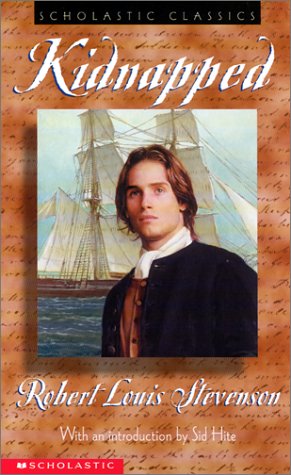
T.A.E.’s Book Review – Kidnapped by Robert Louis Stevenson

Robert Louis Stevenson’s Kidnapped is, on its surface, a brisk adventure novel of flight, danger, and narrow escape; yet beneath its athletic plot lies a far more intricate moral and historical design. The author turns the novel into a study of divided loyalties, national tension, and the uneasy education of a young man forced to learn that character is not revealed in safety but under pressure. David Balfour begins as a sheltered heir, but the book strips away his assumptions with almost ceremonial ruthlessness. He is cheated, abducted, shipwrecked, hunted through the Highlands, and repeatedly forced to revise his understanding of both himself and the world. The title itself is suggestive: David is not merely kidnapped in the literal sense, but also seized from innocence and transported into history.

One of the novel’s great strengths is the way the writer makes landscape carry ethical and emotional weight. The Scottish terrain is never just background; it is an active force in the shaping of David’s consciousness. The Highlands are rendered as sublime, perilous, and morally ambiguous, a place where beauty and threat coexist. Stevenson repeatedly aligns physical movement with psychological change: David’s passage through hills, moors, and sea channels becomes a schooling in uncertainty. This is one reason the novel feels larger than a conventional boy’s adventure. It is also a national romance, a meditation on the fractured aftermath of the Jacobite rebellions, where personal survival is inseparable from political instability.

Stevenson’s prose is admirably lucid, but it is not emotionally neutral. He often gives David’s narration a tone of retrospective balance, so that the adult voice organizes the boy’s terror into something intelligible. That distance is part of the novel’s artistry. David is frightened, yet his account is never hysterical; instead, it is marked by the kind of hard-earned composure that comes from having lived through disaster and come out changed. This gives the novel its unusual moral credibility. When David observes events, he is not merely reporting action; he is learning to judge. His encounter with Alan Breck Stewart is especially important in this respect. Alan is charismatic, quick-witted, and politically compromised, yet he is also brave, loyal, and romantically alive in a way David cannot help admiring. Their relationship is one of Stevenson’s finest inventions: a friendship built on friction, irony, and mutual respect rather than sentimentality.

The famous line “The wind blew and the rain drove” perfectly captures the novelist’s gift for forceful simplicity. In Kidnapped, weather is not decorative; it is structural, a relentless pressure that mirrors the instability of the human world. Likewise, the novel’s dialogue is lean and dramatic, especially in scenes involving Alan, whose speech sparkles with pride and verbal agility. Against Alan’s vividness, David often appears plain, but that plainness is intentional. He is a moral centre rather than a flamboyant personality, and the novel asks us to watch him become worthy of the suffering he endures. In this sense, Kidnapped is a bildungsroman disguised as a chase story.

What gives the novel lasting power is its refusal to simplify its moral world. The characters are not divided neatly into heroes and villains; instead, they are shaped by history, kinship, class, and survival. Even those who betray David are often driven by greed, fear, or political calculation rather than pure malice. That complexity makes the book more modern than its adventurous surface suggests. At the same time, Stevenson never loses the sheer pleasures of storytelling: the pace is quick, the dangers are immediate, and the chapter endings often have the snap of a practiced dramatist. The result is a novel that feels both thrilling and reflective, both boyishly direct and subtly adult.

In the end, Kidnapped is memorable not simply because it is exciting, but because it understands adventure as a form of moral ordeal. David emerges with something more valuable than escape: a clearer sense of courage, obligation, and human ambiguity. Stevenson transforms a flight through hostile country into an education in the complexities of identity, allegiance, and friendship. Few adventure novels are so alive to the costs of growing up, or so graceful in the telling.

#BookReviews #classicBooks #LiteraryCriticism #RobertLouisStevenson #Stevenson

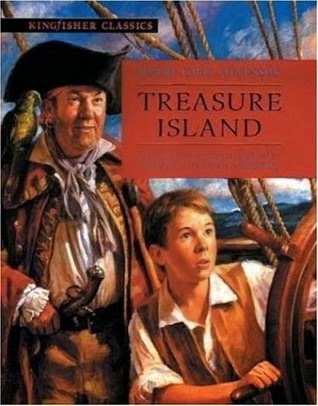
T.A.E.’s Book Review – Treasure Island by Robert Louis Stevenson

Robert Louis Stevenson’s Treasure Island is one of those rare adventure novels that has so thoroughly entered the cultural imagination that it can be easy to forget how artfully made it is. Beneath its exhilarating surface—maps, mutiny, hidden gold, and pirate song—lies a remarkably controlled narrative about temptation, loyalty, and the unstable line between civilization and savagery. Stevenson does not merely tell a boy’s adventure story; he stages a moral education in which excitement and danger are inseparable. The novel’s power comes from the way it seduces the reader with romance while steadily complicating every romantic expectation.

At the centre of the book is Jim Hawkins, whose perspective gives the novel its emotional and ethical frame. Jim is not a passive witness but a participant whose growing self-reliance marks the movement from innocence to experience. The author carefully lets us feel Jim’s astonishment, fear, and desire for heroism without ever allowing him to become unrealistically invulnerable. His narration has the freshness of immediate memory, which makes the novel feel lived rather than merely plotted. The result is that adventure becomes a form of initiation: Jim learns that courage is never pure and that moral clarity is often tested in moments of confusion.

Long John Silver is the novel’s most dazzling creation, and rightly so. He is not simply a villain but a figure of theatrical intelligence, verbal agility, and unsettling charm. Stevenson makes him magnetic through contradiction: he is warm and threatening, paternal and predatory, comic and cruel. Silver’s doubleness is the key to the novel’s larger vision. He embodies the instability of social masks, showing how easily affection can shade into manipulation. A reader may recoil from him in one chapter and admire him in the next, which is precisely the point. Stevenson refuses the cheap simplicity of a one-dimensional pirate. Silver is memorable because he is morally mobile.

The novel is equally attentive to the psychology of greed. Treasure in Treasure Island is less a reward than a corrosive fantasy that distorts judgment and order. The gold itself is oddly abstract; its real function is to expose what men become when possessed by desire. The buccaneers are driven by appetite stripped of discipline, while the respectable figures who oppose them are not always free from the same impulses. The wordsmith’s famous world of “good” and “bad” men is therefore more unstable than it first appears. The treasure is a test, and many fail it. Even the title suggests this double nature: the island is at once a place of wonder and a trap.

Stylistically, Stevenson’s prose is a major part of the novel’s success. It is clear, fast-moving, and highly visual, yet it also contains a subtle note of dread. His descriptive language often turns landscape into psychology: the island seems to reflect the characters’ inner turbulence, with its shifting weather, hidden coves, and dangerous thresholds. The book’s pace is masterful, but what makes it endure is the precision of its scenes. He knows when to accelerate and when to delay, when to raise suspense and when to let atmosphere do the work. The famous pirate vocabulary and seafaring detail are not decorative; they create a fully convincing world in which language itself feels adventurous.

One of the novel’s most striking achievements is its treatment of adulthood. The adult men are not models of settled authority so much as competing performances of masculinity—doctor, squire, cook, sailor, pirate. The book asks who truly possesses competence, courage, and judgment, and the answer is never as simple as rank or reputation would suggest. In that sense, Treasure Island is quietly modern. It distrusts appearances, dramatizes instability, and suggests that identity is partly a matter of role-playing. The pirates do this overtly, but the “respectable” characters do it too. Civilization, Stevenson implies, is only a veneer unless it is continually tested.

What gives Treasure Island its lasting force is that it satisfies the appetite for adventure while exposing the cost of appetite itself. It is thrilling, but not naive; lively, but never lightweight. Stevenson has created a book in which the map is also a moral diagram, the voyage is also an education, and the treasure is also a warning. Few novels of adventure are so entertaining, and fewer still are so perceptive about the shadowed human motives that make adventure possible.

#BookReviews #childrenBooks #classicBooks #LiteraryCriticism #RobertLouisStevenson #Stevenson

T.A.E.’s Book Review – The Body Snatcher by Robert Louis Stevenson

Robert Louis Stevenson’s “The Body Snatcher” is one of the most chilling and morally incisive Gothic tales in nineteenth-century fiction. It begins not with a thunderclap of horror, but with the cool precision of a remembered anecdote, and this restraint is part of its power. The author understands that true dread is often most effective when it arrives under the guise of ordinary conversation, professional routine, and civilized manners. The story’s central terror is not merely that bodies are stolen for anatomy, but that respectable people can become complicit in atrocity while preserving an outward appearance of order.

At its most immediate level, the tale is a superbly sustained horror story. The graveyard scenes, the midnight roads, the dissecting rooms, and the repeated arrival of the dead into the space of scientific labor create a world where the boundary between the living and the dead is constantly being crossed. Stevenson’s prose is notably exact and economical. He does not luxuriate in excess for its own sake; instead, he places a few sinister details with surgical control. That method is deeply appropriate to a story about anatomy. The narrative itself feels like an operation performed on conscience, exposing the tissue beneath social decorum.

The figure of Fettes is especially compelling because the writer refuses to make him a simple villain. He is morally compromised, certainly, but he is also a man caught in a system that normalizes corruption. His detachment is one of the story’s greatest horrors. The opening frame presents him as a doctor, but also as a man marked by silence, illness, and inward pressure. He is not a flamboyant Gothic madman; he is almost worse, because he appears ordinary. His knowledge is inseparable from his guilt. Stevenson turns the medical profession into a stage on which the rational, empirical, and humane ideals of science are shadowed by exploitation.

This is where the story becomes especially rich as literary art: it is not only about corpse robbery, but about the ethics of looking. The body in the story is both an object of scientific inquiry and a human remainder that resists such reduction. Stevenson repeatedly unsettles the reader by making the dead seem less inert than the living. The title itself, “The Body Snatcher,” suggests a crude materialism, yet the story persistently asks what it means to treat a person as a body only. The answer is grim. The reduction of human beings to anatomical specimens corrodes moral perception. In that sense, the tale is less a ghost story than a study in dehumanization.

The relationship between Fettes and Macfarlane sharpens this theme. Macfarlane embodies ambition, wit, and professional confidence, the very qualities that can disguise ethical emptiness. Their bond is not sentimental, but uneasy, competitive, and mutually binding. Stevenson makes friendship itself ambiguous: it can be a shelter, a conspiracy, or a trap. The men’s shared history deepens the story’s sense that guilt is social rather than solitary. No one in this tale is entirely outside the contamination. That is why the story’s final revelations land with such force: horror has already been internalized long before the physical shock arrives.

Stevenson’s handling of atmosphere is masterful because he relies on suggestion rather than spectacle. He often lets ordinary details become uncanny through placement and pacing. The repeated journeys with the wagon, the cold nights, the inn, the innkeeper’s tale, the medical routines, and the famous final encounter all accumulate into a sense that the world has gone subtly wrong. One of the most effective features of the story is its refusal to separate realism from terror. Indeed, the story’s realism is what makes it so disturbing. The historical setting, the practical details of anatomy, and the social world of the characters all give the supernatural-adjacent dread a hard factual edge.

This book also uses irony with great sophistication. Those who claim to serve knowledge are entangled with criminality; those who appear crass or vulgar often possess a kind of brutal clarity; and the “respectable” institutions of learning are shown to depend on illicit acts hidden behind respectable language. The tale is therefore not only Gothic but satiric. Its moral world is one in which civility can coexist with corpse theft, and scholarship with desecration. That is a devastating critique of institutions that prize results while ignoring the means by which they are achieved.

A brief passage often remembered from the story is the bluntly practical line about the trade itself: “the dead are very useful.” That spirit, more than any single moment of suspense, captures Stevenson’s bleak intelligence. The dead are “useful” only because the living have made them so, and the sentence reveals the cold logic by which ethical categories are suspended in the name of progress. It is a line that sounds almost casual, and that casualness is the point. The story’s evil is banal, efficient, and systemic.

If “The Body Snatcher” remains so powerful, it is because Stevenson transforms a gruesome Victorian scandal into a profound meditation on conscience, complicity, and the value of the human body. The tale is frightening not simply because it contains a corpse in the wrong place, but because it asks how often human beings participate in wrongness while insisting on their own respectability. Its nightmare is ethical before it is supernatural. We’re left with the sense that the truly haunted space is not the graveyard or the laboratory, but the mind that has learned to justify what it should abhor.

In the end, “The Body Snatcher” is a small masterpiece of controlled terror: lean, intelligent, and merciless. It endures because it understands that horror is most durable when it is tied to ordinary ambitions, professional ambition, and the long shadow of denial. Stevenson gives us not just a macabre tale, but a dark anatomy of human self-deception.

#BookReviews #classicBooks #Horror #LiteraryCriticism #RobertLouisStevenson #Stevenson

T.A.E.’s Book Review – A Child’s Garden of Verses by Robert Louis Stevenson

Robert Louis Stevenson’s A Child’s Garden of Verses is one of the most enduringly graceful accomplishments in children’s poetry, but its reputation as a nursery classic can obscure how artfully strange, psychologically nuanced, and formally sophisticated it is. Published in 1885, the collection presents itself as a sequence of simple poems drawn from the imaginative world of a child, yet Stevenson’s achievement lies in the way he transforms that apparently modest subject into a meditation on solitude, desire, fear, fantasy, and the shifting border between inner and outer life. The book is not merely “about childhood.” It is an attempt to inhabit childhood from within, to render its rhythms of perception with delicacy rather than sentimentality.

What immediately distinguishes the collection is its intimacy of scale. Stevenson does not grandly announce childhood as an ideal; he listens to it. In poems such as “The Land of Counterpane,” the child’s bed becomes an entire topography: “When I was sick and lay a-bed, / I had two pillows at my head.” The detail is small, but the imaginative expansion is vast. A blanket becomes “a pleasant land,” and the child’s fingers “travel” among hills, rivers, and roads. The poem elegantly captures one of childhood’s great powers: the ability to convert confinement into freedom. The child is physically immobilized, yet mentally sovereign. Stevenson understands that play is not mere diversion but a mode of creation, a way of remaking the world in the image of desire.

This same imaginative doubleness animates “My Shadow,” perhaps the most famous poem in the collection. The speaker observes that his shadow is “very, very like me from the heels up to the head,” but the poem is not just a charming description of a child’s curiosity. It is also an encounter with alterity: the self split into companion and mystery. The shadow behaves inconsistently, arriving and disappearing in ways that puzzle the child, who can only conclude, with innocent astonishment, “What can be the use of him / Is more than I can see.” Stevenson gives us a comic mystery that is also a philosophical one. The child confronts the fact that perception is partial and the world exceeds explanation. The poem’s lightness is deceptive; beneath it lies the earliest drama of consciousness, the realization that the self is not entirely transparent even to itself.

Stevenson’s child is often solitary, but never simply lonely. The poems repeatedly create a world in which solitude becomes productive, and even luminous. In “Bed in Summer,” for example, the child resents bedtime because the world outside remains awake: “In winter I get up at night / And dress by yellow candle-light.” The poem’s pleasure lies in its sympathy with the child’s complaint, but it also reveals the acute sensory intelligence of youth. The child is not just refusing authority; he is noticing the mismatch between adult order and natural abundance. Stevenson’s sympathy is deeply literary because it is also formal: the measured, singsong verse enacts the very constraint the child resists. The poem becomes an exquisite miniature of discipline and desire.

That tension between order and freedom runs throughout the collection. Stevenson’s apparently simple rhythms often conceal remarkable technical control. His meters are supple, musical, and memorable, but never mechanical. He uses repetition, internal rhyme, and plain diction to create a voice that feels spontaneous while remaining carefully composed. This is one reason the poems linger so powerfully in memory: they sound like songs the child might have invented, but they are in fact highly crafted acts of imaginative ventriloquism. The art lies in making art sound unforced.

There is also, in many of these poems, a quiet melancholy that deepens the book beyond the merely delightful. Childhood in Stevenson is not a realm of unbroken innocence; it is shadowed by transience, vulnerability, and distance. In “Foreign Lands,” the child imagines traveling to see “the neat little towns, and the sea, and the trees,” yet the movement outward is inseparable from longing. The child’s imagination is expansive precisely because his actual world is limited. Similarly, “Rain” turns weather into a source of wonder, but the wonder is tinged with enclosure and listening. The child hears the “sweet” rain on the roof and watches the world through the shelter of home. Stevenson’s child is always between exposure and protection, adventure and refuge.

One of the finest qualities of the collection is its refusal to patronize childhood. Stevenson does not write down to the child reader, nor does he sentimentalize youth as a lost paradise. Instead, he treats children’s consciousness as serious material for art. That seriousness is especially evident in the poems that approach fear, moral authority, or punishment. Even in playful pieces, there is often a faint pressure of adult supervision or social expectation. Yet Stevenson rarely turns oppressive. Rather, he allows the child’s perspective to gently expose the absurdity or rigidity of the adult world. The result is a book that can be read as a liberation from adult assumptions, but also as a recognition that childhood itself contains complexity, contradiction, and reflective depth.

The collection’s lasting power also comes from its emotional honesty. The child in these poems is affectionate, curious, impatient, reverent, jealous, fanciful, and lonely by turns. Stevenson captures these states without forcing them into a moral lesson. This is crucial. The poems do not insist that childhood is pure or that imagination solves everything. They simply observe how the child mind moves: how it animates the ordinary, resists confinement, and occasionally stumbles upon existential wonder. In “The Swing,” the delight of motion becomes almost abstract in its intensity: “How do you like to go up in a swing, / Up in the air so blue?” The exhilaration is bodily, yes, but it is also visionary. The child is suspended between earth and sky, between safety and risk, in a moment that feels like transcendence.

As a whole, A Child’s Garden of Verses is remarkable for the way it transforms domestic experience into lyric art. Its gardens, beds, windows, roads, shadows, and rooftops are not minor settings; they are the coordinates of a mind coming into awareness. Stevenson’s genius is to show that childhood is not a smaller version of adulthood but a different scale of being altogether, where the ordinary is never merely ordinary. A bed can become a continent, a shadow a companion, rain a music, and a stanza a toy. The book’s enduring appeal lies in that rare combination of accessibility and depth: it is immediately enchanting, yet endlessly readable.

In the end, A Child’s Garden of Verses is not simply a nostalgic relic of Victorian childhood. It is a subtle and enduring poetic exploration of how consciousness begins—through play, attention, solitude, and wonder. Stevenson gives us not a portrait of children as adults imagine them, but as they experience themselves: alert, imaginative, wounded, joyful, and always in the act of making a world.

#BookReviews #childrenBooks #classicBooks #LiteraryCriticism #poetry #RobertLouisStevenson #Stevenson

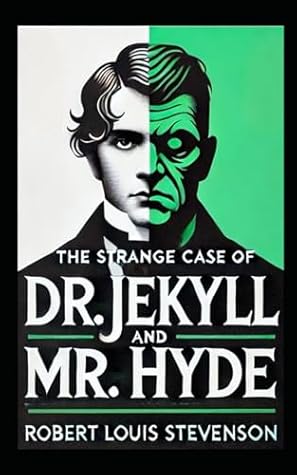
T.A.E.’s Book Review – The Strange Case of Dr. Jekyll and Mr. Hyde by Robert Louis Stevenson

Robert Louis Stevenson’s The Strange Case of Dr. Jekyll and Mr. Hyde remains one of the most enduring explorations of moral duality in modern fiction. Though often reduced to a simple cautionary tale about good and evil, the novella is far more unsettling than that. Stevenson does not merely split a man into two selves; he exposes the fragile architecture of identity itself. The result is a work that is at once gothic, psychological, philosophical, and deeply modern.

At the heart of the novella is a brilliant symbolic premise: the belief that human nature can be separated into distinct moral parts. Dr. Jekyll insists that “man is not truly one, but truly two,” and this sentence captures the whole tragic logic of the book. Jekyll’s experiment is not just scientific curiosity, but an attempt to give form to a private moral fantasy: that one might indulge desire, shame, aggression, and transgression without consequence, leaving the respectable self untarnished. Stevenson understands how seductive that fantasy is, especially in a society governed by appearances, reputation, and repression.

The novella’s greatest strength lies in the way it dramatizes this divided self through atmosphere and structure. London is rendered as a city of concealment, where respectable facades hide corruption and secret passageways connect outward order to inward chaos. Stevenson repeatedly uses doors, windows, laboratories, and sealed envelopes as symbols of division and secrecy. The prose itself mirrors this instability. It is controlled, polished, and often elegant, but it is also haunted by a sense of pressure, as though language itself is holding something back from eruption.

Mr. Hyde is one of the most terrifying figures in literature not because he is flamboyantly monstrous, but because he is difficult to describe with precision. Stevenson deliberately makes him morally legible but visually elusive. He inspires disgust before explanation. Characters struggle to say exactly what is wrong with him, and that uncertainty is crucial. Hyde embodies the fear that evil may not appear as theatrical villainy at all, but as an almost unreadable distortion in human presence. When the text describes him as possessing something “satanic,” Stevenson is less interested in theology than in the instinctive recognition of corruption.

What makes the novella especially powerful is that Jekyll and Hyde are not true opposites. Hyde is not an alien invader; he is a release, an embodiment of what Jekyll already contains. This is why the story feels so disturbing. It refuses the comforting idea that evil belongs only to the other, the outsider, or the visibly wicked. Instead, Stevenson suggests that repression does not eliminate desire or cruelty; it incubates them. The more Jekyll divides himself from his impulses, the more violently those impulses return. His tragedy is not that he becomes Hyde once, but that he creates the conditions for Hyde to grow stronger than his will.

The novella also has a strong moral intelligence about respectability. Stevenson’s Victorian world is one in which public virtue often masks private vice, and the narration repeatedly exposes the gap between social appearance and ethical reality. Jekyll is not simply a fallen man; he is a man whose public goodness is compromised by self-deception. His most revealing confession is not that he has sinned, but that he believed he could preserve innocence through compartmentalization. That illusion is what the novella dismantles.

Stylistically, the book is a masterpiece of suspenseful economy. Stevenson withholds information with extraordinary control, allowing the mystery to deepen through perspective shifts and delayed revelation. The legal and domestic voices of Utterson and Enfield give the story its surface of reason, while the deeper truth is delivered only gradually through confessions and documents. This layered method makes the novella feel like an investigation into consciousness itself. The truth arrives in fragments because the self, too, is fragmented.

One of the novella’s most remarkable achievements is its ending. Jekyll’s final confession is not merely explanatory; it is tragic in the classical sense. He recognizes too late that he has mistaken division for freedom. His words reveal that the self cannot be neatly purified by partitioning off its darker energies. Rather, the effort to separate the moral from the immoral produces monstrosity. The ending thus closes not with sensational horror, but with existential loss: a man discovers that he has been split beyond repair.

What gives Dr. Jekyll and Mr. Hyde its lasting force is its refusal to become outdated. It can be read as a gothic thriller, a critique of Victorian hypocrisy, a meditation on addiction, or an early psychological study of dissociation. But at its core it remains a profound warning about the human tendency to externalize the parts of ourselves we cannot bear to own. Stevenson’s genius lies in showing that the shadow self is not merely hidden beneath civilization; it is woven into it.

This is a compact novel with enormous reach. Its prose is restrained, but its implications are vast. Stevenson leaves us with one of the most unsettling truths in literature: the battle between saint and sinner is never as simple as it seems, because both may be housed in the same fragile body.

#BookReviews #classicBooks #Horror #LiteraryCriticism #RobertLouisStevenson #Stevenson
L'Étrange Cas du docteur Jekyll et de M. Hyde

De jour en jour, et par les deux côtés de mon intelligence, le moral et l’intellectuel, je me rapprochai donc peu à peu de cette vérité, dont la découverte partielle a entraîné pour moi un si terri…

K-Farnaom
#boxing Ryan #Garcia won the WBC Welterweight Title from Mario #Barrios via UD. 'King Ry' is finally a champion. He scored a KD in round 1, and got busy throughout the fight and landed cleanly, even when at time fighting on the backfoot. Barrios did fight, but wasn't as busy with his punches the way he was going forward with his feet. Good fight. 💪
King Ry called out Shakur #Stevenson, that would be an exciting match if no one runs. 👊💪