T.A.E.’s Book Review – The Body Snatcher by Robert Louis Stevenson

Robert Louis Stevenson’s “The Body Snatcher” is one of the most chilling and morally incisive Gothic tales in nineteenth-century fiction. It begins not with a thunderclap of horror, but with the cool precision of a remembered anecdote, and this restraint is part of its power. The author understands that true dread is often most effective when it arrives under the guise of ordinary conversation, professional routine, and civilized manners. The story’s central terror is not merely that bodies are stolen for anatomy, but that respectable people can become complicit in atrocity while preserving an outward appearance of order.

At its most immediate level, the tale is a superbly sustained horror story. The graveyard scenes, the midnight roads, the dissecting rooms, and the repeated arrival of the dead into the space of scientific labor create a world where the boundary between the living and the dead is constantly being crossed. Stevenson’s prose is notably exact and economical. He does not luxuriate in excess for its own sake; instead, he places a few sinister details with surgical control. That method is deeply appropriate to a story about anatomy. The narrative itself feels like an operation performed on conscience, exposing the tissue beneath social decorum.

The figure of Fettes is especially compelling because the writer refuses to make him a simple villain. He is morally compromised, certainly, but he is also a man caught in a system that normalizes corruption. His detachment is one of the story’s greatest horrors. The opening frame presents him as a doctor, but also as a man marked by silence, illness, and inward pressure. He is not a flamboyant Gothic madman; he is almost worse, because he appears ordinary. His knowledge is inseparable from his guilt. Stevenson turns the medical profession into a stage on which the rational, empirical, and humane ideals of science are shadowed by exploitation.

This is where the story becomes especially rich as literary art: it is not only about corpse robbery, but about the ethics of looking. The body in the story is both an object of scientific inquiry and a human remainder that resists such reduction. Stevenson repeatedly unsettles the reader by making the dead seem less inert than the living. The title itself, “The Body Snatcher,” suggests a crude materialism, yet the story persistently asks what it means to treat a person as a body only. The answer is grim. The reduction of human beings to anatomical specimens corrodes moral perception. In that sense, the tale is less a ghost story than a study in dehumanization.

The relationship between Fettes and Macfarlane sharpens this theme. Macfarlane embodies ambition, wit, and professional confidence, the very qualities that can disguise ethical emptiness. Their bond is not sentimental, but uneasy, competitive, and mutually binding. Stevenson makes friendship itself ambiguous: it can be a shelter, a conspiracy, or a trap. The men’s shared history deepens the story’s sense that guilt is social rather than solitary. No one in this tale is entirely outside the contamination. That is why the story’s final revelations land with such force: horror has already been internalized long before the physical shock arrives.

Stevenson’s handling of atmosphere is masterful because he relies on suggestion rather than spectacle. He often lets ordinary details become uncanny through placement and pacing. The repeated journeys with the wagon, the cold nights, the inn, the innkeeper’s tale, the medical routines, and the famous final encounter all accumulate into a sense that the world has gone subtly wrong. One of the most effective features of the story is its refusal to separate realism from terror. Indeed, the story’s realism is what makes it so disturbing. The historical setting, the practical details of anatomy, and the social world of the characters all give the supernatural-adjacent dread a hard factual edge.

This book also uses irony with great sophistication. Those who claim to serve knowledge are entangled with criminality; those who appear crass or vulgar often possess a kind of brutal clarity; and the “respectable” institutions of learning are shown to depend on illicit acts hidden behind respectable language. The tale is therefore not only Gothic but satiric. Its moral world is one in which civility can coexist with corpse theft, and scholarship with desecration. That is a devastating critique of institutions that prize results while ignoring the means by which they are achieved.

A brief passage often remembered from the story is the bluntly practical line about the trade itself: “the dead are very useful.” That spirit, more than any single moment of suspense, captures Stevenson’s bleak intelligence. The dead are “useful” only because the living have made them so, and the sentence reveals the cold logic by which ethical categories are suspended in the name of progress. It is a line that sounds almost casual, and that casualness is the point. The story’s evil is banal, efficient, and systemic.

If “The Body Snatcher” remains so powerful, it is because Stevenson transforms a gruesome Victorian scandal into a profound meditation on conscience, complicity, and the value of the human body. The tale is frightening not simply because it contains a corpse in the wrong place, but because it asks how often human beings participate in wrongness while insisting on their own respectability. Its nightmare is ethical before it is supernatural. We’re left with the sense that the truly haunted space is not the graveyard or the laboratory, but the mind that has learned to justify what it should abhor.

In the end, “The Body Snatcher” is a small masterpiece of controlled terror: lean, intelligent, and merciless. It endures because it understands that horror is most durable when it is tied to ordinary ambitions, professional ambition, and the long shadow of denial. Stevenson gives us not just a macabre tale, but a dark anatomy of human self-deception.

#BookReviews #classicBooks #Horror #LiteraryCriticism #RobertLouisStevenson #Stevenson
T.A.E.’s Book Review – A Child’s Garden of Verses by Robert Louis Stevenson

Robert Louis Stevenson’s A Child’s Garden of Verses is one of the most enduringly graceful accomplishments in children’s poetry, but its reputation as a nursery classic can obscure how artfully strange, psychologically nuanced, and formally sophisticated it is. Published in 1885, the collection presents itself as a sequence of simple poems drawn from the imaginative world of a child, yet Stevenson’s achievement lies in the way he transforms that apparently modest subject into a meditation on solitude, desire, fear, fantasy, and the shifting border between inner and outer life. The book is not merely “about childhood.” It is an attempt to inhabit childhood from within, to render its rhythms of perception with delicacy rather than sentimentality.

What immediately distinguishes the collection is its intimacy of scale. Stevenson does not grandly announce childhood as an ideal; he listens to it. In poems such as “The Land of Counterpane,” the child’s bed becomes an entire topography: “When I was sick and lay a-bed, / I had two pillows at my head.” The detail is small, but the imaginative expansion is vast. A blanket becomes “a pleasant land,” and the child’s fingers “travel” among hills, rivers, and roads. The poem elegantly captures one of childhood’s great powers: the ability to convert confinement into freedom. The child is physically immobilized, yet mentally sovereign. Stevenson understands that play is not mere diversion but a mode of creation, a way of remaking the world in the image of desire.

This same imaginative doubleness animates “My Shadow,” perhaps the most famous poem in the collection. The speaker observes that his shadow is “very, very like me from the heels up to the head,” but the poem is not just a charming description of a child’s curiosity. It is also an encounter with alterity: the self split into companion and mystery. The shadow behaves inconsistently, arriving and disappearing in ways that puzzle the child, who can only conclude, with innocent astonishment, “What can be the use of him / Is more than I can see.” Stevenson gives us a comic mystery that is also a philosophical one. The child confronts the fact that perception is partial and the world exceeds explanation. The poem’s lightness is deceptive; beneath it lies the earliest drama of consciousness, the realization that the self is not entirely transparent even to itself.

Stevenson’s child is often solitary, but never simply lonely. The poems repeatedly create a world in which solitude becomes productive, and even luminous. In “Bed in Summer,” for example, the child resents bedtime because the world outside remains awake: “In winter I get up at night / And dress by yellow candle-light.” The poem’s pleasure lies in its sympathy with the child’s complaint, but it also reveals the acute sensory intelligence of youth. The child is not just refusing authority; he is noticing the mismatch between adult order and natural abundance. Stevenson’s sympathy is deeply literary because it is also formal: the measured, singsong verse enacts the very constraint the child resists. The poem becomes an exquisite miniature of discipline and desire.

That tension between order and freedom runs throughout the collection. Stevenson’s apparently simple rhythms often conceal remarkable technical control. His meters are supple, musical, and memorable, but never mechanical. He uses repetition, internal rhyme, and plain diction to create a voice that feels spontaneous while remaining carefully composed. This is one reason the poems linger so powerfully in memory: they sound like songs the child might have invented, but they are in fact highly crafted acts of imaginative ventriloquism. The art lies in making art sound unforced.

There is also, in many of these poems, a quiet melancholy that deepens the book beyond the merely delightful. Childhood in Stevenson is not a realm of unbroken innocence; it is shadowed by transience, vulnerability, and distance. In “Foreign Lands,” the child imagines traveling to see “the neat little towns, and the sea, and the trees,” yet the movement outward is inseparable from longing. The child’s imagination is expansive precisely because his actual world is limited. Similarly, “Rain” turns weather into a source of wonder, but the wonder is tinged with enclosure and listening. The child hears the “sweet” rain on the roof and watches the world through the shelter of home. Stevenson’s child is always between exposure and protection, adventure and refuge.

One of the finest qualities of the collection is its refusal to patronize childhood. Stevenson does not write down to the child reader, nor does he sentimentalize youth as a lost paradise. Instead, he treats children’s consciousness as serious material for art. That seriousness is especially evident in the poems that approach fear, moral authority, or punishment. Even in playful pieces, there is often a faint pressure of adult supervision or social expectation. Yet Stevenson rarely turns oppressive. Rather, he allows the child’s perspective to gently expose the absurdity or rigidity of the adult world. The result is a book that can be read as a liberation from adult assumptions, but also as a recognition that childhood itself contains complexity, contradiction, and reflective depth.

The collection’s lasting power also comes from its emotional honesty. The child in these poems is affectionate, curious, impatient, reverent, jealous, fanciful, and lonely by turns. Stevenson captures these states without forcing them into a moral lesson. This is crucial. The poems do not insist that childhood is pure or that imagination solves everything. They simply observe how the child mind moves: how it animates the ordinary, resists confinement, and occasionally stumbles upon existential wonder. In “The Swing,” the delight of motion becomes almost abstract in its intensity: “How do you like to go up in a swing, / Up in the air so blue?” The exhilaration is bodily, yes, but it is also visionary. The child is suspended between earth and sky, between safety and risk, in a moment that feels like transcendence.

As a whole, A Child’s Garden of Verses is remarkable for the way it transforms domestic experience into lyric art. Its gardens, beds, windows, roads, shadows, and rooftops are not minor settings; they are the coordinates of a mind coming into awareness. Stevenson’s genius is to show that childhood is not a smaller version of adulthood but a different scale of being altogether, where the ordinary is never merely ordinary. A bed can become a continent, a shadow a companion, rain a music, and a stanza a toy. The book’s enduring appeal lies in that rare combination of accessibility and depth: it is immediately enchanting, yet endlessly readable.

In the end, A Child’s Garden of Verses is not simply a nostalgic relic of Victorian childhood. It is a subtle and enduring poetic exploration of how consciousness begins—through play, attention, solitude, and wonder. Stevenson gives us not a portrait of children as adults imagine them, but as they experience themselves: alert, imaginative, wounded, joyful, and always in the act of making a world.

#BookReviews #childrenBooks #classicBooks #LiteraryCriticism #poetry #RobertLouisStevenson #Stevenson

📅 This Day in Literature — May 15

Born on this day: L. Frank Baum (1856)

Creator of Oz — he wrote 13 sequels but the first remains magic.

#Bookstodon #Literature #Books #ClassicBooks

https://lk0.eu/bks701m

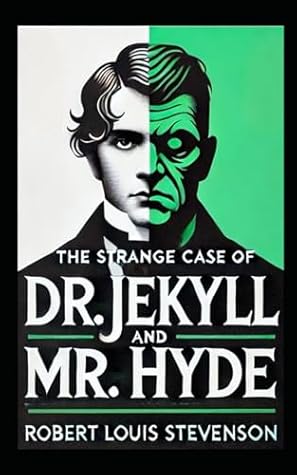
T.A.E.’s Book Review – The Strange Case of Dr. Jekyll and Mr. Hyde by Robert Louis Stevenson

Robert Louis Stevenson’s The Strange Case of Dr. Jekyll and Mr. Hyde remains one of the most enduring explorations of moral duality in modern fiction. Though often reduced to a simple cautionary tale about good and evil, the novella is far more unsettling than that. Stevenson does not merely split a man into two selves; he exposes the fragile architecture of identity itself. The result is a work that is at once gothic, psychological, philosophical, and deeply modern.

At the heart of the novella is a brilliant symbolic premise: the belief that human nature can be separated into distinct moral parts. Dr. Jekyll insists that “man is not truly one, but truly two,” and this sentence captures the whole tragic logic of the book. Jekyll’s experiment is not just scientific curiosity, but an attempt to give form to a private moral fantasy: that one might indulge desire, shame, aggression, and transgression without consequence, leaving the respectable self untarnished. Stevenson understands how seductive that fantasy is, especially in a society governed by appearances, reputation, and repression.

The novella’s greatest strength lies in the way it dramatizes this divided self through atmosphere and structure. London is rendered as a city of concealment, where respectable facades hide corruption and secret passageways connect outward order to inward chaos. Stevenson repeatedly uses doors, windows, laboratories, and sealed envelopes as symbols of division and secrecy. The prose itself mirrors this instability. It is controlled, polished, and often elegant, but it is also haunted by a sense of pressure, as though language itself is holding something back from eruption.

Mr. Hyde is one of the most terrifying figures in literature not because he is flamboyantly monstrous, but because he is difficult to describe with precision. Stevenson deliberately makes him morally legible but visually elusive. He inspires disgust before explanation. Characters struggle to say exactly what is wrong with him, and that uncertainty is crucial. Hyde embodies the fear that evil may not appear as theatrical villainy at all, but as an almost unreadable distortion in human presence. When the text describes him as possessing something “satanic,” Stevenson is less interested in theology than in the instinctive recognition of corruption.

What makes the novella especially powerful is that Jekyll and Hyde are not true opposites. Hyde is not an alien invader; he is a release, an embodiment of what Jekyll already contains. This is why the story feels so disturbing. It refuses the comforting idea that evil belongs only to the other, the outsider, or the visibly wicked. Instead, Stevenson suggests that repression does not eliminate desire or cruelty; it incubates them. The more Jekyll divides himself from his impulses, the more violently those impulses return. His tragedy is not that he becomes Hyde once, but that he creates the conditions for Hyde to grow stronger than his will.

The novella also has a strong moral intelligence about respectability. Stevenson’s Victorian world is one in which public virtue often masks private vice, and the narration repeatedly exposes the gap between social appearance and ethical reality. Jekyll is not simply a fallen man; he is a man whose public goodness is compromised by self-deception. His most revealing confession is not that he has sinned, but that he believed he could preserve innocence through compartmentalization. That illusion is what the novella dismantles.

Stylistically, the book is a masterpiece of suspenseful economy. Stevenson withholds information with extraordinary control, allowing the mystery to deepen through perspective shifts and delayed revelation. The legal and domestic voices of Utterson and Enfield give the story its surface of reason, while the deeper truth is delivered only gradually through confessions and documents. This layered method makes the novella feel like an investigation into consciousness itself. The truth arrives in fragments because the self, too, is fragmented.

One of the novella’s most remarkable achievements is its ending. Jekyll’s final confession is not merely explanatory; it is tragic in the classical sense. He recognizes too late that he has mistaken division for freedom. His words reveal that the self cannot be neatly purified by partitioning off its darker energies. Rather, the effort to separate the moral from the immoral produces monstrosity. The ending thus closes not with sensational horror, but with existential loss: a man discovers that he has been split beyond repair.

What gives Dr. Jekyll and Mr. Hyde its lasting force is its refusal to become outdated. It can be read as a gothic thriller, a critique of Victorian hypocrisy, a meditation on addiction, or an early psychological study of dissociation. But at its core it remains a profound warning about the human tendency to externalize the parts of ourselves we cannot bear to own. Stevenson’s genius lies in showing that the shadow self is not merely hidden beneath civilization; it is woven into it.

This is a compact novel with enormous reach. Its prose is restrained, but its implications are vast. Stevenson leaves us with one of the most unsettling truths in literature: the battle between saint and sinner is never as simple as it seems, because both may be housed in the same fragile body.

#BookReviews #classicBooks #Horror #LiteraryCriticism #RobertLouisStevenson #Stevenson

T.A.E.’s Book Review – Viva Zapata! by John Steinbeck

John Steinbeck’s Viva Zapata! is less a conventional biographical screenplay than a tragic meditation on power, integrity, and the corruption that attends victory. Though it dramatizes the life of Emiliano Zapata, the author is not chiefly interested in historical pageantry. He is interested in the moral problem of revolution: what happens when a righteous uprising succeeds, and the men who were born to resist become the men who must govern.

What gives the work its force is Steinbeck’s characteristic ability to turn political history into elemental drama. Zapata is introduced not as a polished statesman but as a peasant leader whose authority comes from ethical clarity rather than institutional power. He speaks, acts, and chooses as a man rooted in the land. In that sense, the screenplay treats land not merely as property but as identity, memory, and justice. The struggle for the fields becomes a struggle for human dignity itself. The story’s revolution is therefore deeply physical: boots in dust, horses, rifles, farms, hunger, soil. Its prose-driven screenwriting style gives the events a spare, almost biblical weight.

One of the work’s most compelling tensions lies in its refusal to romanticize leadership. Zapata begins as a liberator, but the screenplay steadily exposes the loneliness and burden of public power. The line between justice and authority grows increasingly thin. This is where Steinbeck’s tragic imagination comes into full view: the revolution does not fail because its ideals are false, but because institutions and ambition deform even noble causes. A brief phrase like “the land” carries enormous moral pressure in the screenplay, becoming almost sacred in its repetition. Likewise, “the people” is never an abstract slogan; it names actual bodies, actual losses, actual histories.

Steinbeck’s Zapata is especially moving because he is not written as a flawless hero. He is stubborn, morally serious, and at times isolated by the very purity that makes him admirable. The screenplay understands that integrity can be a kind of doom in a world that rewards compromise. Zapata’s tragedy is that he remains more loyal to justice than to expediency, and Steinbeck frames this not as weakness but as greatness. In this sense, the work aligns Zapata with the writer’s broader fascination with the outsider who sees more clearly than the crowd, even when that clarity exacts a terrible cost.

The language of the screenplay is restrained, but its restraint is part of its power. Steinbeck avoids decorative excess because he wants the political and moral stakes to emerge cleanly. The dialogue often feels carved down to essentials, which gives moments of idealism or betrayal a sharp edge. When the screenplay invokes ideas such as “freedom” or “revolution,” it does so with an awareness that such words are easily corrupted. That suspicion is one of Steinbeck’s great themes: language can inspire liberation, but it can also become propaganda.

As a literary work, Viva Zapata! is strongest when read as a tragedy of moral consequence. It does not simply celebrate rebellion; it asks what rebellion costs, and who survives to inherit its victories. The book shows that the end of oppression does not automatically produce justice, because human desire, vanity, and fear remain. The result is a screenplay of unusual seriousness, one that transforms historical revolution into a parable about the fragility of goodness under the pressure of power.

In the end, Viva Zapata! stands as a compact but resonant Steinbeck work: humane, severe, and unsentimental. Its hero is memorable not because he conquers, but because he refuses to betray the principles that gave his struggle meaning. That refusal gives the screenplay its tragic grandeur. It reminds us that the most difficult revolution is not the overthrow of tyranny, but the preservation of justice after victory.

#BookReviews #classicBooks #JohnSteinbeck #LiteraryCriticism #screenplay #Steinbeck #Theatre

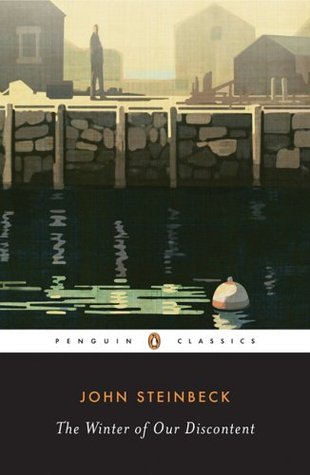
T.A.E.’s Book Review – The Winter of Our Discontent by John Steinbeck

John Steinbeck’s The Winter of Our Discontent is a late, bitter, and deeply searching novel, one that turns the tools of the social novel inward and asks what becomes of integrity when decency itself is treated as a liability. Set in the fictional Long Island town of New Bayport, the book follows Ethan Hawley, a once-prosperous man now reduced to working in a grocery store that his family once owned. On the surface, Ethan is a figure of mild disappointment: educated, courteous, observant, and chronically underemployed. But Steinbeck uses him to stage a drama far larger than personal failure. Ethan becomes a test case for American morality under pressure, a man who begins the novel with a desire to remain good and ends by discovering how easily “goodness” can be compromised by aspiration, shame, and social hunger.

The novel’s title signals this tension immediately. The author draws on Shakespeare’s Richard III—“Now is the winter of our discontent”—yet he reverses the phrase’s mood. In Shakespeare, the line moves toward triumph; in Steinbeck, it becomes a condition of spiritual coldness, a season of erosion rather than transformation. Ethan’s discontent is not flamboyant or revolutionary. It is quiet, intimate, and corrosive. He is surrounded by the language of respectability, but respectability in this novel is nearly always a mask. The bank, the grocery store, the church, and even the family home are all places where status is negotiated, performed, and defended rather than simply lived.

One of Steinbeck’s great strengths here is his handling of Ethan’s inward life. Ethan is not a hero in the conventional sense; he is a man who knows the vocabulary of conscience but cannot always sustain its authority. His reflections often reveal the novel’s central ethical problem: he sees through the hypocrisies around him, yet he is also vulnerable to the same temptations he condemns. Early on, Ethan insists on the ideal of self-command and inherited honour, but those ideals are unstable in a world where everyone else seems to be trading character for advancement. Steinbeck makes this instability vivid through Ethan’s interactions with his wife Mary, his children, and the town’s social climbers. The novel repeatedly suggests that goodness without power is treated as weakness, and weakness is treated as an invitation.

This is where Steinbeck becomes especially sharp as a social critic. New Bayport is not merely a setting; it is a moral ecosystem. Everyone is implicated in forms of aspiration, opportunism, or vanity. Ethan’s wife, Mary, exemplifies a kind of anxious domestic ambition: she wants security, status, and the visible signs of success that she believes have been unjustly denied. Their children reflect the pressures of modern America in different ways, with one seeking military escape and the other drifting into a world of improvisation and self-invention. Around Ethan, the town speaks the language of improvement, but improvement here often means compromise. Steinbeck suggests that the American dream has narrowed into a contest of acquisition, in which ethical distinction is not rewarded but exploited.

The novel’s most unsettling feature is that Ethan’s moral descent does not feel melodramatic; it feels logical. That is what makes it so disturbing. Steinbeck does not present corruption as a single catastrophic fall, but as a series of small permissions. Ethan tells himself stories, rationalizes choices, and learns to enjoy his own cleverness. His internal conflict is captured in the novel’s repeated opposition between performance and sincerity. He is a man who can still recognize fraud in others even as he begins to become fluent in it himself. That double vision gives the book much of its tragic force. Ethan’s tragedy is not that he is uniquely evil, but that he is ordinary enough to be persuaded.

The novelist also deepens the novel through biblical and symbolic undercurrents. Ethan’s very name invites reflection: “Hawley” suggests the hardy, thorny natural world of old New England, while the family’s history recalls the decline of older moral and economic orders. The novel is full of images of seasonal decay, enclosed spaces, and inheritance under pressure. Winter, in particular, is not just a metaphor for hardship but for spiritual suspension, a time in which things do not grow, only endure. Yet Steinbeck resists simple despair. Ethan’s awareness remains a form of grace, even when his conduct fails to match it. The novel’s sadness comes partly from the fact that he knows better.

Stylistically, the book is leaner and more compressed than the author’s great epic novels. The prose is controlled, almost severe, but it carries a faintly ironic edge. Steinbeck is less expansive here than in East of Eden or The Grapes of Wrath, and that compression suits the novel’s moral claustrophobia. The dialogue is especially effective because it is often double-layered: characters say one thing while meaning another, or use politeness as a weapon. The town’s surface civility hides a great deal of predation. His tonal balance—between satire, sadness, and moral inquiry—keeps the novel from becoming a simple sermon. He does not merely accuse; he observes, and his observation is merciless.

What ultimately makes The Winter of Our Discontent enduring is that it refuses comforting resolutions. It is a novel about the price of adaptation, but also about the humiliations that make adaptation tempting. We come to understand that moral failure rarely begins with evil intentions; it begins with fatigue, embarrassment, resentment, and the desire to belong. Ethan Hawley is memorable precisely because he is so human in that regard. He wants dignity, but he is drawn toward advantage. He wants to remain clean, but he is standing in the mud. That contradiction is the novel’s central insight, and Steinbeck renders it with unsparing clarity.

In the end, the book is not only about discontent but about the modern condition of self-division. The deepest winter in the novel is not outside Ethan Hawley. It is the cold that settles within a conscience when it begins to negotiate with the world. Steinbeck’s achievement is to make that inner season feel at once personal, historical, and national.

#BookReviews #classicBooks #JohnSteinbeck #LiteraryCriticism #Steinbeck
The idea of Marc Andreesen reading _Infinite Jest_ is funny, not because it’s hard (it’s not) but because a lot of it is just inept imitations of Ronald Reagan’s speaking style and Ivy League basketball coverage. It gets treated like an epic profound mediation on addiction but it’s one of the frattiest #books imaginable. #bookstodon #ClassicBooks

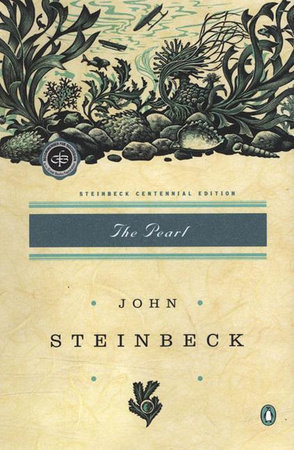
T.A.E.’s Book Review – The Pearl by John Steinbeck

John Steinbeck’s The Pearl is a parable as sharp as a knife and as sombre as a verdict. On the surface, it is a simple story: Kino, a poor pearl diver, discovers an immense treasure, “the Pearl of the World,” and imagines that it will lift his family into dignity, safety, and possibility. But the author shapes that premise into a moral fable about the violent instability of hope under capitalism, the corruption of desire, and the tragic fragility of human innocence when it meets greed.

What makes the novella so enduring is the way it works its way through symbolism without ever letting the symbols feel mechanical. The pearl is never just an object of wealth; it becomes a moral test, a mirror that reflects the hidden structure of the world around Kino. At first, it seems to promise order, almost providence. Kino hears in it the music of his aspirations: marriage, education, medicine, a better life for his child. Yet Steinbeck gradually darkens that promise until the pearl becomes “a thing of evil.” That shift is central to the book’s power: the treasure does not change in substance, but the meanings people project onto it reveal the corruption already present in society. The pearl’s value is therefore not stable or innocent; it is socially manufactured, and that social reality brings violence with it.

Steinbeck’s prose style is a major part of the novella’s authority. He writes with biblical compression, so that the story feels ancient, almost archetypal, even while it remains grounded in the specific textures of Kino’s world. The style is spare, but never thin. Images carry ethical weight. The recurring motif of music is especially effective, because it externalizes Kino’s inner life while also dramatizing his evolving consciousness. Early on, the family is associated with harmony and warmth; the “music of the family” suggests unity, continuity, and belonging. As the plot darkens, that music is replaced by dissonance, fear, and predation. The writer does not merely tell us that Kino is changing; he gives his emotional world acoustic form.

The novella is also a devastating critique of institutions that claim neutrality. The doctor, the priest, the pearl buyers, and the town itself all reveal that power is organized to preserve inequality. Kino’s discovery does not liberate him because the world around him is built to absorb and distort that possibility. Even apparently civilized systems—medicine, religion, commerce—are shown to be compromised by class interests. The doctor’s sudden interest in Coyotito is one of Steinbeck’s most effective acts of irony: the child is valued not as a life but as a customer. The novella’s social criticism is thus inseparable from its tragedy. Kino is not destroyed by greed alone; he is destroyed by a world that knows how to monetize desperation.

What is most heartbreaking, though, is that The Pearl never mocks Kino’s hopes. Steinbeck treats aspiration seriously. Kino’s dream for Coyotito is not foolish. His desire for education and dignity is morally intelligible, even beautiful. That is why the novella hurts: it shows a good dream being poisoned by a bad world. Here, Steinbeck refuses sentimental consolation. The ending is not a simple punishment for ambition, but a recognition that innocence and hope are dangerously vulnerable when they enter a system designed to exploit them.

As a literary work, The Pearl succeeds because it combines the clarity of a folktale with the bitterness of social realism. It is brief, but its meanings are layered: economic, spiritual, psychological, and symbolic. Steinbeck’s genius lies in making the pearl itself feel both dazzling and cursed, an object of longing that gradually becomes a seal of loss. By the end, the novella leaves behind not only tragedy, but an unsettling question: how many human dreams are ruined not because they are too large, but because the world in which they are born is too cruel?

#BookReviews #classicBooks #JohnSteinbeck #LiteraryCriticism #Steinbeck
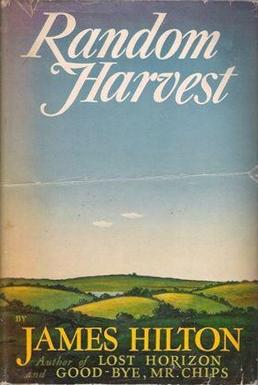
When I was maybe 11 or so, I picked this book from a dusty old shelf, and found a story that has stayed with me ever since. It's a strange book, almost unclassifiable, but beautifully written. My favorite character doesn't appear until nearly the end, but I relate to him more strongly with every rereading. In our present day, it echoes profoundly. The audiobook is also wonderful. #books #bookstodon #classicbooks
https://en.wikipedia.org/wiki/Random_Harvest
Random Harvest - Wikipedia

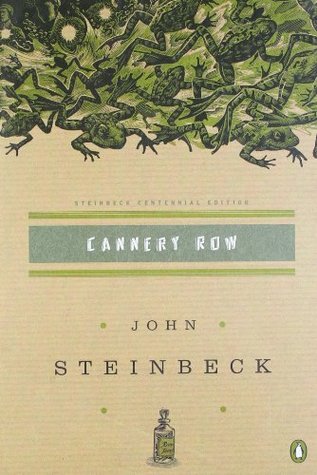
T.A.E.’s Book Review – Cannery Row by John Steinbeck

John Steinbeck’s Cannery Row is one of his most deceptively modest books: a novel that seems to drift rather than drive, yet beneath its relaxed surface lies a carefully tuned meditation on community, poverty, loneliness, and grace. The author turns a working-class street in Monterey into a kind of moral ecosystem, where the “misfits,” dreamers, drunks, scientists, sex workers, shopkeepers, and labourers form an accidental fellowship. The result is at once comic, elegiac, and profoundly humane.

From the opening, Steinbeck announces that he is writing against simple categories. Cannery Row is described as “a poem, a stink, a grating noise” — an image that captures the book’s central method: it refuses to idealize life, but it also refuses to dismiss it. The place is at once beautiful and sordid, industrial and lyrical, ordinary and mythic. His prose keeps that tension alive. He writes with the eye of a naturalist and the sympathy of a moralist, noticing the weathered surfaces of things while also listening for their emotional resonance.

What gives the novel its special force is its communal structure. Rather than centring one heroic plot, Steinbeck creates a mosaic of interdependent lives, especially around characters like Doc, Mack, and the boys. Doc stands at the centre as a figure of intelligence, patience, and quiet dignity. He is not a sentimental saint, but he is the book’s ethical anchor: a man who studies marine life yet seems equally attentive to human fragility. Around him, the writer builds a world in which tenderness often appears indirectly, through practical acts, jokes, and improbable schemes. The famous efforts of Mack and the boys to do something “nice” for Doc are comic on the surface, but they reveal the novel’s deepest concern: how damaged people try, awkwardly and sincerely, to care for one another.

The book’s emotional range is one of its great achievements. It is deeply funny, especially in its depictions of collective incompetence, drunken logic, and entrepreneurial absurdity. But the humour is never merely decorative. It protects the book from sentimentality while making room for sorrow. Behind the laughter is a persistent awareness of precariousness: homes can be lost, bodies can fail, ambitions can curdle, and affection can arrive too late. In this sense, Cannery Row is one of Steinbeck’s clearest statements about dignity under pressure. His characters rarely succeed in conventional terms, but many of them possess a rough, stubborn nobility.

Stylistically, the novel is notable for its flexibility. It can move from panoramic description to intimate vignette, from earthy comedy to almost biblical generalization. We feel how the author enjoys catalogues, local colour, and broad social observation, but he also shows us when to pause and let a small moment carry the whole weight of the book. That formal looseness suits the subject. Cannery Row is not a city of grand narratives; it is a place of improvisation, survival, and recurring improvisational grace.

If the book has a weakness, it is also tied to its charm: some readers may find its episodic structure too diffuse, its plot too light. Yet that looseness is part of the design. Steinbeck is less interested in suspense than in atmosphere, less interested in dramatic resolution than in the texture of a shared life. The novel asks us to value local existence, however broken or unlikely, as something worthy of attention.

Ultimately, Cannery Row is a celebration of the human margin. It suggests that society’s castoffs may sometimes understand community more deeply than the respectable do. Its vision is neither naive nor cynical. It is compassionate, a little bruised, and utterly alive. Few novels make such a convincing case that the humble, the comic, and the shabby can together form a kind of beauty.

#BookReviews #classicBooks #JohnSteinbeck #LiteraryCriticism #Steinbeck