 Where are we now?
THE WEEKLY SPIN
25/2026
 Knowledge Zone
#QuizOfTheDay: The #Planets in our #SolarSystem play host to an incredibly diverse collection of hundreds of #Moons, ranging from barren, cratered rocks to active, icy worlds.
#Titania is moon of which Planet?
A. Mars
B. Uranus
C. Jupiter
D. Neptune
https://knowledgezone.co.in/resources/quiz?qId=6a339ffda30a86d403ce33ab

 TKSST • seethis.tv 🌈🪐✨
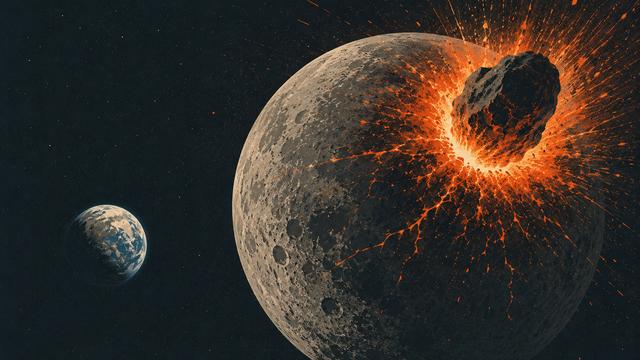
💁🏻♀️ TIL: 🌙🪨 A lunar #meteorite called Northwest #Africa 12593 preserves evidence of three impacts, including one 3.5 billion years ago that melted #lunar rock.
University of #Colorado #Boulder researchers linked the blast to similar impacts on #Earth and #asteroid #Vesta when #life was first appearing here.
#moon #space #geology #science #northwestafrica #earthscience #solarsystem #minerals
2026-06-19 12:00:00 UTC (Delta: 2026-06-12)
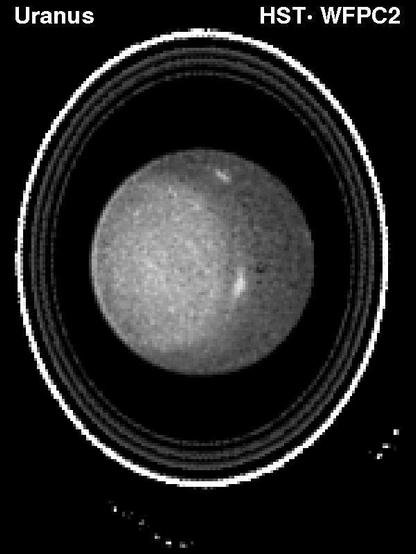
URANUS
- Distance (km): 3,048,070,021.51 km (-6,656,240.50 km)
- Distance (AU): 20.38 (-0.04)
- Light travel time: 2 h 49 min 27.27 s (-22.20 s)
- Orbital speed: 6.72 km/s (+0.00 km/s)
Image: Hubble Observes the Planet Uranus
Credit: NASA/JPL/STScI
💁🏻♀️ TIL: 🛑⚛️ Even if the #Sun’s #fusion shut off right now, nothing would change for 10,000 years.
After that, its core collapses, and counterintuitively, it gets smaller and hotter for millions of years as #gravity squeezes it. #Neutrino detectors on #Earth would sense trouble within 8 minutes, but life would barely notice for generations.
👉 https://www.universetoday.com/articles/what-would-happen-if-the-sun-stopped-part-4-black-hole-sun
#astrophysics #stars #solarsystem #space #science #heat #photon #climate #cosmology #time
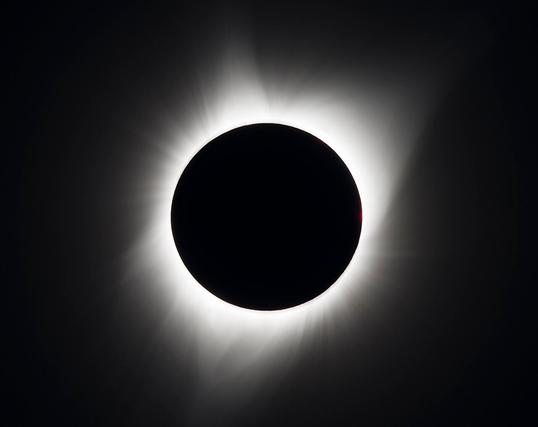
What Would Happen if the Sun Stopped? Part 4: Black Hole Sun
Switch off fusion and, for ten thousand years, nothing happens. Then the Sun begins a slow, strange death: shrinking, briefly brightening, and coasting on gravitational heat for tens of millions of years. And the neutrinos give the whole thing away in just eight minutes.
 Space.com: NASA, Space Exploration and Astronomy News [Unofficial]
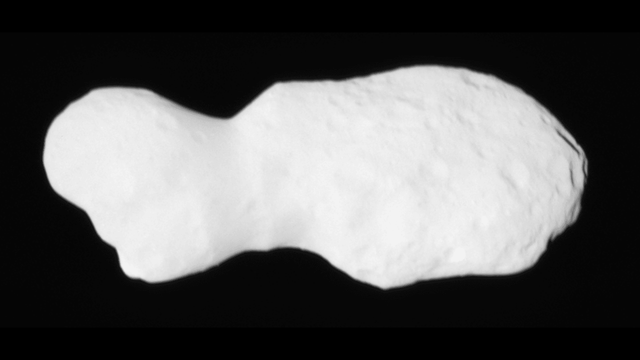
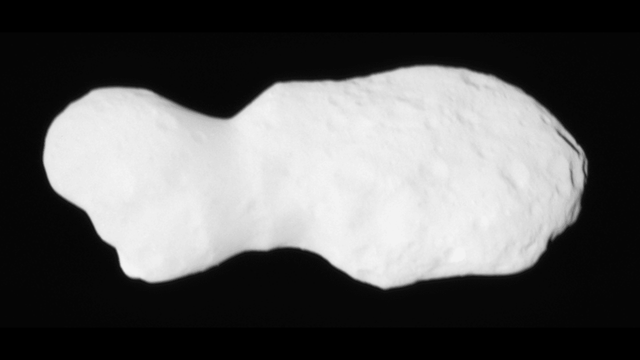
Juicy new details emerge about an asteroid NASA's Lucy spacecraft flew by last year
💁🏻♀️ TIL: 🌙🪨 A lunar #meteorite called Northwest #Africa 12593 preserves evidence of three impacts, including one 3.5 billion years ago that melted #lunar rock.
University of #Colorado #Boulder researchers linked the blast to similar impacts on #Earth and #asteroid #Vesta when #life was first appearing here.
#moon #space #geology #science #northwestafrica #earthscience #solarsystem #minerals
💁🏻♀️ TIL: 🛑⚛️ Even if the #Sun’s #fusion shut off right now, nothing would change for 10,000 years.
After that, its core collapses, and counterintuitively, it gets smaller and hotter for millions of years as #gravity squeezes it. #Neutrino detectors on #Earth would sense trouble within 8 minutes, but life would barely notice for generations.
👉 https://www.universetoday.com/articles/what-would-happen-if-the-sun-stopped-part-4-black-hole-sun
#astrophysics #stars #solarsystem #space #science #heat #photon #climate #cosmology #time
What Would Happen if the Sun Stopped? Part 4: Black Hole Sun
Switch off fusion and, for ten thousand years, nothing happens. Then the Sun begins a slow, strange death: shrinking, briefly brightening, and coasting on gravitational heat for tens of millions of years. And the neutrinos give the whole thing away in just eight minutes.
 ASTROCOHORS SOLAR Video
Schwarzbraun ist das Heldentum, Teil 3: Der Ochsenkrieg | ACSOLAR #061

Schwarzbraun ist das Heldentum, Teil 3: Der Ochsenkrieg | ACSOLAR #061
 The Perpetually Curious!
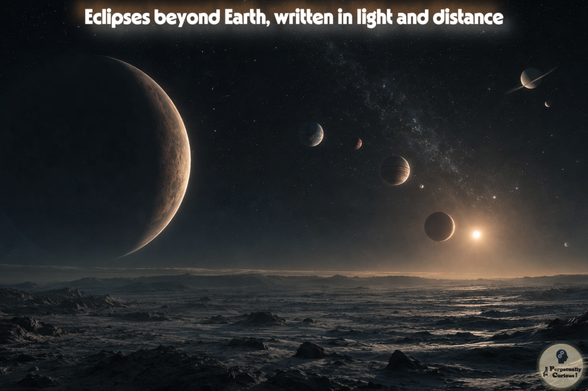
🌑 Across the Solar System, shadows trace quiet stories of planets, moons, and distant light.
✍️ Explore eclipses beyond Earth: https://www.theperpetuallycurious.org/eclipses-beyond-earth/
Worlds move in silence and shadow.