Why leaving a marriage is harder for women than staying

There is a reason The Girlfriend on Netflix unsettles so many women, even those who have never left a marriage, never filed for divorce, never walked away publicly.

For many, the discomfort comes from seeing a truth we rarely name out loud: women leaving marriage are questioned, scrutinized, and asked to justify their choice in ways men never are.

It is not because of the plot alone.
It is because the film holds up a mirror to something deeply rooted in society.

The way women are allowed to suffer quietly.
The way they are questioned the moment they choose themselves.
The way explanation becomes a punishment.

When a man leaves, the story ends. When a woman leaves, the trial begins.

There is an unspoken rule in society that most women learn only after they break it. When a man leaves a marriage, the world accepts the ending quietly. When a woman leaves, the world demands an explanation. Not once, but repeatedly. Not gently, but suspiciously.

This blog is not about divorce statistics or legal frameworks. It is about the emotional cost of explanation. The cost that women pay not for leaving, but for having to justify why staying became impossible.

A man who walks out of a marriage is usually granted privacy. People assume there were reasons. They assume exhaustion, incompatibility, or personal choice.

A woman who walks out is rarely given that grace.

The first questions arrive almost immediately:

  • Was he abusive?
  • Was he having an affair?
  • Was there violence?

These are not neutral questions. They set a condition.

Unless a woman’s pain is extreme, visible, and undeniable, her decision is seen as insufficient. Subtle harm does not qualify. Loneliness does not qualify. Emotional neglect does not qualify.

The Girlfriend shows this quietly. And that is what makes it so unsettling.

Why women struggle to explain what broke them

Women do not fail to explain because they lack clarity. They fail because what broke them cannot be reduced to a single moment. Most marriages don’t collapse dramatically. They erode.

Erosion is quiet. Erosion is slow. It happens in everyday life. In conversations that stop happening. In being emotionally alone while technically partnered. In carrying financial, emotional, and mental responsibility without reciprocity.

How do you explain:

  • Feeling alone while married?
  • Carrying emotional labor without acknowledgment?
  • Being financially responsible but emotionally unsupported?
  • Shrinking yourself to keep peace?
  • There is no timestamp. No headline incident. No courtroom-friendly event.
  • So when women try to explain, they sound scattered. Emotional. Inconsistent.
  • Not because they are confused, but because they are translating years of internal harm into a system that only understands visible damage.

We live in a world that understands explosions better than erosion. Bruises better than emptiness. Betrayal better than neglect. So when women try to explain, they sound scattered. Emotional. Inconsistent. Not because they are confused, but because they are trying to translate years of internal damage into a language that society and institutions understand, acknowledge, and respect.

The society sees women as “less adjusting” and “more demanding”

Women are conditioned early to absorb discomfort. Adjustment is taught as virtue.

A woman who adapts is praised. A woman who stops adapting is judged.

So when a woman finally says, “This doesn’t work for me anymore,” it is not heard as exhaustion. It is heard as entitlement.

Her needs are labeled as expectations.
Her boundaries are labeled as rigidity.
Her clarity is labeled as selfishness.

Meanwhile, a man’s withdrawal is framed as burnout or emotional limitation. This is not accidental. It is cultural conditioning.

Women are expected to carry emotional continuity. When they step away from that role, the system destabilizes. And systems tend to blame those who stop holding them together.

The courts and legal systems rely on tangible proof

Legal systems are built around tagible proof.

Bruises are easier to document than emptiness.
Affairs are easier to establish than indifference.
Violence is easier to prove than neglect.

So when a woman enters a legal process, she is asked to narrate her marriage like a case file.

What happened?
When did it happen?
Why didn’t you leave sooner?

She is asked to produce evidence for things she herself did not label as abuse because she was too busy surviving them. The system assumes that staying negates harm. That endurance equals consent.

By the end of the process, many women are no longer explaining their marriage. They are defending their perception of reality. They are defending their sanity.

The ritual of explanation strips women of dignity

There is a particular kind of collapse that happens when you are asked to repeatedly justify your pain. Women explain themselves to parents. To friends. To lawyers. To judges. To relatives. To strangers. To co-workers. Every time, the rules are the same: Be calm. Be reasonable. Don’t sound bitter. Don’t cry too much. Don’t sound angry.

Because anger discredits. And tears are seens as sign on remorse, guilt and weakness.

So women edit themselves.

They flatten their pain.
They soften their truth.
They question their own memories, experiences, and perception.

With every explanation, confidence erodes. The illusion of strength cracks. The self-image they worked so hard to build starts to feel conditional.

Meanwhile, the man’s narrative often remains unchanged. He stays quiet. He “doesn’t want to get into details.” He “wishes her well.”

His silence is seen as dignity.
Her silence is seen as guilt.

Somewhere along the line women start doubting themselves

After enough questioning, many women arrive at the most dangerous thought of all: Was it really that bad? This is not weakness. This is psychological wear.

When the world repeatedly minimizes your pain, you internalize that minimization. You start questioning your own thresholds. You wonder if enduring it would have been a more moral choice, compared to leaving which indicated failure to cope (read adjust). This is why so many women look composed on the outside while unraveling internally.

They are grieving the version of themselves that trusted her own knowing.

The uncomfortable truth society avoids

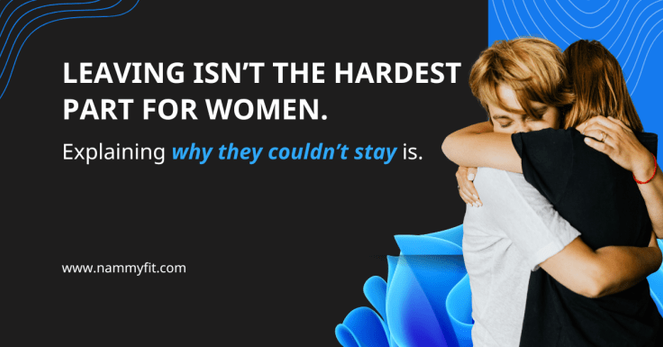
A woman does not leave because she wants more. She leaves because she has been carrying too much alone for too long. She leaves because the marriage demanded her silence, her adjustment, her emotional labor, without offering reciprocity. She leaves not in rebellion, but in exhaustion. And the hardest part is not the leaving. It is standing in a world that demands she prove she ‘deserved’ peace.

What needs to change

We need to change the lens through which we evaluate women’s decisions.

We need to stop requiring women to dramatize pain to legitimize it.
We need to stop confusing endurance with virtue.
We need to stop asking women to endure suffering to earn freedom from it.

A woman should be allowed to say, “This no longer works for me,” and have that sentence stand on its own.

Most of all, we need to understand this: A woman explaining why she left is not seeking validation.
She is surviving a system that only believes pain when it follows a familiar script. Until that script changes, women will continue to lose more than marriages when they leave. They will lose pieces of themselves in the explaining.

Related blogs:

The Rise of Emotionally Fatigued, Hyper-Independent Women

What is more important: The institution of marriage or the people in it?

#choosingPeace #divorceStigma #emotionalExhaustion #emotionalLabor #emotionalNeglectInMarriage #genderBiasInDivorce #marriageAndIdentity #selfTrust #societalConditioning #subtleAbuse #womenAndBoundaries #womenAndDivorce #womenLeavingMarriage #womenSMentalHealth
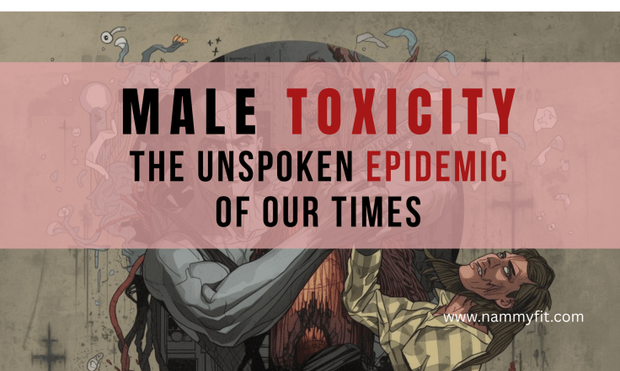
Male Toxicity: The Unspoken Epidemic of Our Times

Male toxicity refers to patterns in which masculinity is constructed around dominance, emotional suppression, aggression, entitlement, and power over others. These patterns are not just private. They are social. They affect relationships, families, workplaces, and institutions. For many women, they signal that marriage, long-term commitment, or shared life may not feel safe or equal. For society as a whole, they erode trust, safety, and fairness.

The slow rot beneath the surface

Toxic masculinity is not just about men behaving badly. It’s a social design. It’s the way masculinity has been built around dominance, emotional suppression, aggression, entitlement, and control. These traits aren’t private quirks, they are public forces shaping families, workplaces, and institutions. For many women, they make partnership feel unsafe or unequal. For society, they corrode trust, fairness, and peace.

We like to talk about progress, women breaking barriers, gender equality gaining ground, workplaces growing more inclusive. But beneath this surface of modernity runs a darker current. Male toxicity isn’t a few bad men or isolated events; it’s a cultural flaw we’ve normalized.

From the boardroom to the bedroom, women are still told to “adjust.”
If a husband is angry, it’s her tone.
If a male boss is rude, it’s her lack of resilience.
If a boy is violent, it’s the mother’s fault for being too soft.

Generation after generation, women learn that safety and dignity are negotiable — because the world forgives male aggression and rewards female endurance.

The unbearable normal

We have learned to live with male toxicity. That may sound harsh, but look closely. Every time a woman is told to “adjust,” we ignore her discomfort. Every time abuse is excused as “temper,” we dismiss the harm. Every time a child hears “boys will be boys,” we reinforce harmful expectations. These actions renew an ancient social contract. This contract trades women’s safety and dignity for the comfort of male entitlement.

This contract has governed homes, workplaces, and nations for centuries. What’s different today is that women are walking away, from marriages, from unsafe workplaces, and from the illusion that patience will reform patriarchy.

What we are witnessing is not rebellion. It’s survival.

A society built to forgive men

In India, normalization begins early. Boys are taught control, not compassion. Girls are taught silence, not self-respect. A son’s anger is excused; a daughter’s pain is dismissed. One grows up entitled to power; the other learns to live with fear.

This conditioning seeps into every institution. Marital rape is still not a crime. Domestic violence is underreported and often withdrawn under pressure. NCRB data in 2024 revealed that every third woman in India faces domestic abuse at some point — and that’s only what’s recorded. “Adjust and endure” remains society’s silent policy.

Globally, the pattern repeats. Men dominate headlines not for what they build, but for what they destroy.
In the U.S., most mass shooters are men.
In Iran and Afghanistan, male authority strips women of freedom.
In wars across Ukraine, Gaza, and Sudan, men plan and prolong destruction, while women and children pay the price.

Whether it’s a man taking hostages, an abusive husband setting a woman on fire, or a CEO silencing a female employee, the pattern is chillingly consistent: violence, power, control.

Society doesn’t just tolerate male toxicity. It rationalizes it.

And men suffer too, trapped in narrow roles of provider, protector, or punisher. Deprived of empathy and emotional literacy, they become victims of the very system they benefit from.

But women still pay more, in unpaid care, emotional labor, and the daily effort to survive male rage. Every mother raising a son today carries a quiet fear: What kind of man will he become if the world keeps teaching him that softness is weakness?

The workplaces of silence

India’s workplaces mirror its homes. Hierarchies are invisible but powerful. Leadership remains male-heavy; aggression is mistaken for competence.
This “masculinity contest culture,” as researchers call it, rewards dominance, long hours, and posturing.
Women who resist are labeled “difficult.” Men who refuse it are labeled “weak.”

This silent toxicity costs more than morale. It drains innovation, deepens attrition, and erodes collaboration. Yet most organizations still treat it as an HR topic, not a governance issue. Diversity workshops cannot fix what leadership refuses to name.

A generational reckoning

We stand at a crossroads.
Our children will inherit either our silence or our courage.
If we keep excusing toxicity as tradition, they will grow up in broken families, unsafe workplaces, and emotionally barren relationships.

The collapse won’t be sudden. It will creep in, as loneliness disguised as freedom, fear disguised as caution, and mistrust disguised as independence.
Women will stop believing in love.
Men will stop understanding intimacy.
Society will fracture, not from ideology, but from the absence of empathy.

If we do not break this cycle, the future will look like this:

  • Women opting out of marriage and motherhood altogether.
  • Workplaces divided by resentment, not respect.
  • Children growing up without emotional compass.
  • A world run by angry men,emotionally bankrupt and morally desensitized.

Male toxicity is not just a gender problem. It’s a civilizational one. It corrodes empathy, destabilizes homes, and threatens the very fabric of human connection.

We must pause. Rethink. Rebuild.

Because a culture that teaches women to adapt and men to dominate is not sustainable. It is violent, and it is collapsing.

Reform, education, and accountability are tools. But introspection is the beginning.
Each man must examine the privileges he mistakes for rights.
Each institution must confront the behaviors it quietly rewards.
Each family must stop raising sons who think respect is optional.

Male toxicity is not a women’s burden to fix. It is society’s disease, and curing it will demand collective courage.

If we fail, our children will inherit a world where empathy is extinct, equality is fiction, and humanity itself feels unsafe.

That is the true cost of silence.

#culturalPatriarchy #domesticViolence #emotionalAbuse #feminismInIndia #genderInequality #genderJustice #genderSensitization #genderBasedViolence #maleToxicity #maritalRapeLaw #masculinityCrisis #patriarchy #policyReform #powerAndControl #socialReform #societalConditioning #theHinduEditorial #toxicMasculinity

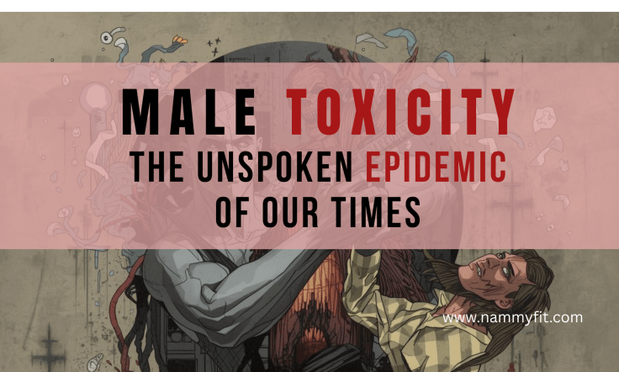
Male Toxicity: The Unspoken Epidemic of Our Times

Male toxicity refers to patterns in which masculinity is constructed around dominance, emotional suppression, aggression, entitlement, and power over others. These patterns are not just private. They are social. They affect relationships, families, workplaces, and institutions. For many women, they signal that marriage, long-term commitment, or shared life may not feel safe or equal. For society as a whole, they erode trust, safety, and fairness.

The slow rot beneath the surface

Toxic masculinity is not just about men behaving badly. It’s a social design. It’s the way masculinity has been built around dominance, emotional suppression, aggression, entitlement, and control. These traits aren’t private quirks, they are public forces shaping families, workplaces, and institutions. For many women, they make partnership feel unsafe or unequal. For society, they corrode trust, fairness, and peace.

We like to talk about progress, women breaking barriers, gender equality gaining ground, workplaces growing more inclusive. But beneath this surface of modernity runs a darker current. Male toxicity isn’t a few bad men or isolated events; it’s a cultural flaw we’ve normalized.

From the boardroom to the bedroom, women are still told to “adjust.”
If a husband is angry, it’s her tone.
If a male boss is rude, it’s her lack of resilience.
If a boy is violent, it’s the mother’s fault for being too soft.

Generation after generation, women learn that safety and dignity are negotiable — because the world forgives male aggression and rewards female endurance.

The unbearable normal

We have learned to live with male toxicity. That may sound harsh, but look closely. Every time a woman is told to “adjust,” we ignore her discomfort. Every time abuse is excused as “temper,” we dismiss the harm. Every time a child hears “boys will be boys,” we reinforce harmful expectations. These actions renew an ancient social contract. This contract trades women’s safety and dignity for the comfort of male entitlement.

This contract has governed homes, workplaces, and nations for centuries. What’s different today is that women are walking away, from marriages, from unsafe workplaces, and from the illusion that patience will reform patriarchy.

What we are witnessing is not rebellion. It’s survival.

A society built to forgive men

In India, normalization begins early. Boys are taught control, not compassion. Girls are taught silence, not self-respect. A son’s anger is excused; a daughter’s pain is dismissed. One grows up entitled to power; the other learns to live with fear.

This conditioning seeps into every institution. Marital rape is still not a crime. Domestic violence is underreported and often withdrawn under pressure. NCRB data in 2024 revealed that every third woman in India faces domestic abuse at some point — and that’s only what’s recorded. “Adjust and endure” remains society’s silent policy.

Globally, the pattern repeats. Men dominate headlines not for what they build, but for what they destroy.
In the U.S., most mass shooters are men.
In Iran and Afghanistan, male authority strips women of freedom.
In wars across Ukraine, Gaza, and Sudan, men plan and prolong destruction, while women and children pay the price.

Whether it’s a man taking hostages, an abusive husband setting a woman on fire, or a CEO silencing a female employee, the pattern is chillingly consistent: violence, power, control.

Society doesn’t just tolerate male toxicity. It rationalizes it.

And men suffer too, trapped in narrow roles of provider, protector, or punisher. Deprived of empathy and emotional literacy, they become victims of the very system they benefit from.

But women still pay more, in unpaid care, emotional labor, and the daily effort to survive male rage. Every mother raising a son today carries a quiet fear: What kind of man will he become if the world keeps teaching him that softness is weakness?

The workplaces of silence

India’s workplaces mirror its homes. Hierarchies are invisible but powerful. Leadership remains male-heavy; aggression is mistaken for competence.
This “masculinity contest culture,” as researchers call it, rewards dominance, long hours, and posturing.
Women who resist are labeled “difficult.” Men who refuse it are labeled “weak.”

This silent toxicity costs more than morale. It drains innovation, deepens attrition, and erodes collaboration. Yet most organizations still treat it as an HR topic, not a governance issue. Diversity workshops cannot fix what leadership refuses to name.

A generational reckoning

We stand at a crossroads.
Our children will inherit either our silence or our courage.
If we keep excusing toxicity as tradition, they will grow up in broken families, unsafe workplaces, and emotionally barren relationships.

The collapse won’t be sudden. It will creep in, as loneliness disguised as freedom, fear disguised as caution, and mistrust disguised as independence.
Women will stop believing in love.
Men will stop understanding intimacy.
Society will fracture, not from ideology, but from the absence of empathy.

If we do not break this cycle, the future will look like this:

  • Women opting out of marriage and motherhood altogether.
  • Workplaces divided by resentment, not respect.
  • Children growing up without emotional compass.
  • A world run by angry men,emotionally bankrupt and morally desensitized.

Male toxicity is not just a gender problem. It’s a civilizational one. It corrodes empathy, destabilizes homes, and threatens the very fabric of human connection.

We must pause. Rethink. Rebuild.

Because a culture that teaches women to adapt and men to dominate is not sustainable. It is violent, and it is collapsing.

Reform, education, and accountability are tools. But introspection is the beginning.
Each man must examine the privileges he mistakes for rights.
Each institution must confront the behaviors it quietly rewards.
Each family must stop raising sons who think respect is optional.

Male toxicity is not a women’s burden to fix. It is society’s disease, and curing it will demand collective courage.

If we fail, our children will inherit a world where empathy is extinct, equality is fiction, and humanity itself feels unsafe.

That is the true cost of silence.

#culturalPatriarchy #domesticViolence #emotionalAbuse #feminismInIndia #genderInequality #genderJustice #genderSensitization #genderBasedViolence #maleToxicity #maritalRapeLaw #masculinityCrisis #patriarchy #policyReform #powerAndControl #socialReform #societalConditioning #theHinduEditorial #toxicMasculinity