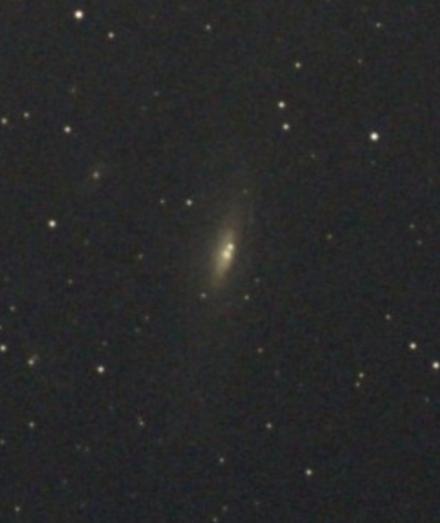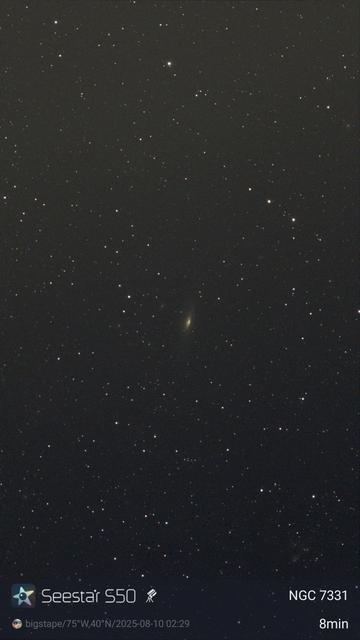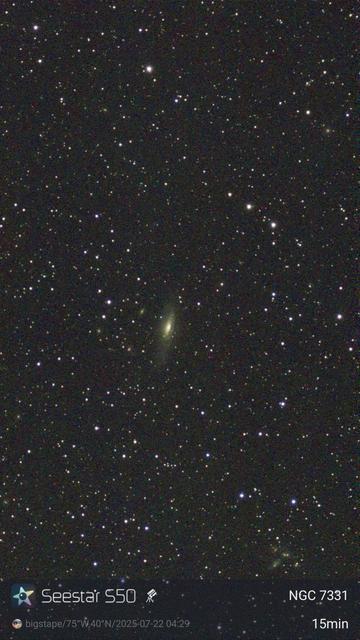
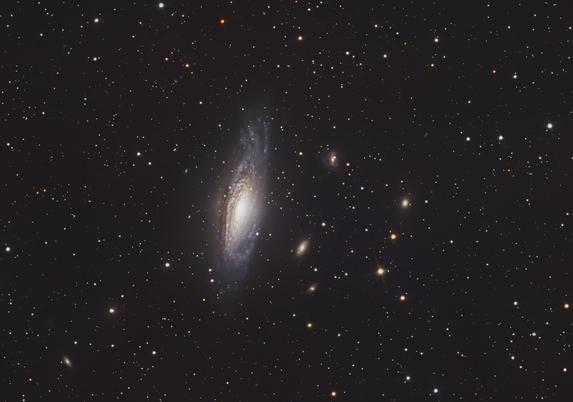
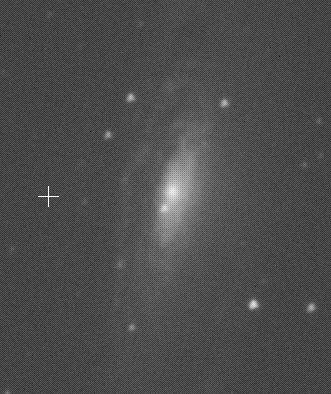
NGC 7331 - a galaxy about 44 mil light years away - recently became a sought-after target for many astrophotographers as Supernova was detected in it. Interestingly although I can see the remains of it in a single raw exposure, once I stack them core of the galaxy ends up much brighter washing it out no matter how I would try to process it. If anyone has any tips on how to salvage it I would love to hear from you.
#astronomy #astrophotography #SN2025rbs #galaxy

Supernova SN 2025rbs in NGC 7331 no longer detectable by Seestar. Today vs. two weeks ago. Both 8 minute exposures. #astrophotography #seestar #sn2025rbs #ngc7331
Meanwhile, supernova SN 2025rbs is still flaring away in NGC 7331. #astrophotography #seestar #sn2025rbs #ngc7331
A closeup of an even shorter stack (7 minutes) to bring out supernova SN 2025rbs in NGC 7331. #astrophotography #seestar #sn2025rbs #ngc7331
Caught supernova SN 2025rbs in NGC 7331 with a shorter exposure. It's the slightly brighter spot in the top of the core. #astrophotography #seestar #sn2025rbs #ngc7331
Tried to shoot supernova SN 2025rbs in NGC 7331, but it's too close to the core to differentiate. #astrophotography #seestar #sn2025rbs #ngc7331
There's been a supernova and WAS astrophotographer Carl Lancaster has the before and after of this star blowing it's guts out into the universe, erupting in "nearby" galaxy NGC 7331, 40 million light-years away in the constellation Pegasus. Officially known as SN 2025rbs, it is a type 1A supernova, a type of supernova that occurs in binary systems in which one of the stars is a white dwarf. #SN2025rbs #Supernova #WestportAstronomicalSociety