Jesus The Christ by James E Talmage: A Comprehensive Summary and Review
When James E. Talmage penned Jesus the Christ in 1915, he wasn’t just writing a biography; he was crafting a theological masterpiece. Written within the quiet walls of the Salt Lake Temple, this book remains one of the most authoritative accounts of the Savior’s life from a Latter-day Saint perspective. More details… https://spiritualkhazaana.com/jesus-the-christ-book-summary-and-review/
#jesusthechrist #gospelofjesus #sonofgod #sermononthemount #lifeofjesus

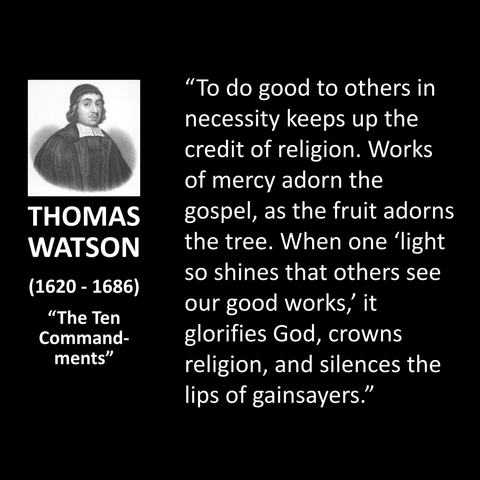
Watson on the 6th Commandment: mercy works adorn the gospel as fruit adorns a tree (Matt. 5:16)—they credit religion and silence its critics. Westminster-level conviction.

Contrast today: God is fine with our bad PR, gainsayers deserve snark, a few meals last month covers it. Watson’s question lingers: how do you let your light shine?

#puritanism #puritan #christian #matthew #sermononthemount

The Sermon on the Mount: Jesus’ Most Life-Changing Message
Discover the powerful message of Jesus’ Sermon on the Mount explained in simple and clear language. In this inspiring Bible story, we explore the Beatitudes, the Lord’s Prayer, loving your enemies, the Golden Rule, and the parable of the Wise and Foolish Builders.
More details… https://spiritualkhazaana.com/web-stories/jesus-sermon-on-the-mount/
#jesussermononthemount #SermonOnTheMount #JesusTeachings #BibleStory #ChristianInspiration #FaithInGod #Beatitudes #LordsPrayer

When Light Walks into the Room

A Day in the Life

“Let your light so shine before men, that they may see your good works and glorify your Father in heaven.” — Matthew 5:16

When I read Jesus’ words in Matthew 5:16, I cannot escape the simplicity and weight of them. “Let your light so shine…” He does not say, “Create your own light,” nor does He say, “Force the world to change.” He assumes that something has already been placed within us. Earlier in the Sermon on the Mount, Jesus declares, “You are the light of the world” (Matthew 5:14). Not “you might be,” not “you should try to become,” but “you are.” That identity flows from our union with Him.

The Greek word for light, φῶς (phōs), carries the sense of illumination, revelation, and moral clarity. It is the same word used in John 1:5: “The light shines in the darkness, and the darkness has not overcome it.” Darkness is not an active force with equal power; it is the absence of light. That truth alone reframes how I see the world around me. When culture seems darker, more confused, or morally unsettled, I am reminded that darkness is simply doing what darkness does. It is not my task to curse it. My calling is to shine.

Jesus Himself fulfilled Isaiah’s promise: “The people who sat in darkness have seen a great light” (Matthew 4:16). Wherever He walked, things changed. Hypocrisy was exposed. The sick were healed. The forgotten were restored. Sinners found forgiveness. There was no mistaking His presence. As D.A. Carson notes, “The good works of Jesus’ disciples are to be so distinctive that they point beyond themselves to God.” That is the key. The light is not for self-display; it is for the Father’s glory.

When I consider this in the rhythm of my own day, I have to ask myself the same question the study presses upon us: Can that be said of me? When I enter a room at work, does tension ease or increase? When I speak, do my words clarify truth or add confusion? When I serve quietly at home, does Christ’s presence radiate outward? These are not abstract reflections. They are daily spiritual disciplines.

Light is not loud, but it is unmistakable. It does not argue with darkness; it dispels it. I think of a single candle in a pitch-black sanctuary. The flame does not strain. It simply burns, and the darkness retreats. In the same way, when Christ’s character is formed in us, we do not need to manufacture impact. The fruit of the Spirit—love, joy, peace—begins to illuminate our surroundings. John Stott once wrote, “We are not to hide our Christianity, but neither are we to advertise it. We are to be like a light, quietly shining.” That insight has guided my own walk for years.

Yet Jesus adds a necessary phrase: “that they may see your good works and glorify your Father in heaven.” The word for good, καλός (kalos), means beautiful, noble, or attractive. Our actions should carry a beauty that draws attention not to our virtue, but to God’s grace. When we forgive instead of retaliate, when we tell the truth with gentleness, when we serve without recognition, something beautiful happens. People may not always articulate it, but they sense a different source of life.

In the Church Calendar, as we move through ordinary days between great celebrations, this calling remains steady. Whether we are in Epiphany’s season of light or in the quiet weeks that follow, the mission does not change. We reflect the Light of the World in kitchens, offices, schools, and hospital rooms. The world was never the same once the Father introduced His light through His Son. That same light now dwells in us through the Holy Spirit.

So how do I live this out today? First, I remain connected to Christ. Jesus later says in John 8:12, “I am the light of the world. He who follows Me shall not walk in darkness, but have the light of life.” Light is not a technique; it is a relationship. Second, I examine whether anything is covering the lamp. Unconfessed sin, bitterness, fear of opinion—these can dim what God intends to shine. Third, I remember that even small acts matter. A quiet word of encouragement may be the very beam of light someone needs in a dark hour.

If you would like further reflection on living as light in a dark world, The Gospel Coalition offers a helpful article on embodying the Sermon on the Mount in daily life: https://www.thegospelcoalition.org/article/sermon-on-the-mount/. It provides theological depth while remaining practical for discipleship.

Today, as I walk with you through this “day in the life,” I am reminded that shining is not about perfection. It is about availability. When I allow Christ to shine through my thoughts, speech, and actions, the Father is glorified. Darkness may remain in the world, but it does not have to dominate my corner of it.

FEEL FREE TO COMMENT, SUBSCRIBE, AND REPOST, SO OTHERS MAY KNOW


#ChristianDiscipleship #lightOfTheWorld #livingAsLight #Matthew516 #SermonOnTheMount

When Ordinary Lives Become Preserving Grace

A Day in the Life

“You are the salt of the earth; but if the salt loses its flavor, how shall it be seasoned? It is then good for nothing but to be thrown out and trampled underfoot by men.” — Matthew 5:13

When I sit with Jesus on that hillside in Matthew 5, listening as He teaches what we now call the Sermon on the Mount, I feel the weight of His words. He does not say, “You should try to become salt.” He says, “You are the salt of the earth.” That identity comes before activity. Salt in the ancient world was not decorative; it was preservative. Without refrigeration, salt slowed decay and protected what would otherwise spoil. In the same way, Jesus describes His followers as agents of preservation in a world corroded by sin.

John Stott once wrote, “The Christian’s influence is to be a restraining influence in a decaying society.” That line has stayed with me. I look at my own life and ask, Is there a restraining presence because Christ lives in me? When Jesus speaks of salt losing its flavor, He is describing something unnatural. Pure salt does not simply stop being salt. But when mixed with impurities, it becomes diluted, compromised, ineffective. The issue is not the world’s corruption; it is our contamination. If I am not in a right relationship with my Lord, the preserving power of Christ cannot flow through me as it should.

So I test the “saltiness” of my life. I begin at home. Is my family strengthened spiritually because I am present? Do my words reduce anxiety or inflame it? Do I model repentance and humility? It is easy to speak boldly about cultural decline while neglecting the atmosphere around my own table. Jesus’ words call me first to integrity in the closest relationships. If I am salt, then my home should taste of grace.

Then I look at my workplace. Whether that is an office, a classroom, a garage, or a church hallway, I ask: Are destructive influences subtly halted because I am there? Not because I preach at everyone, but because Christ’s character is expressed through me. The presence of Jesus in me makes His life available to others. His salvation can free an addict, mend a broken home, heal the pain of the past, restore a wayward child, and comfort a grieving heart. But this does not happen through slogans; it happens through surrendered vessels. Paul reminds us in 2 Corinthians 4:7 that “we have this treasure in earthen vessels.” The treasure is His; the vessel is ours.

I also consider my community and church. Is there measurable spiritual improvement around me? Not perfection, but movement toward health? Salt works quietly. It does not announce itself; it does its work steadily. In the same way, the Christian life is often unremarkable to the world yet decisive in impact. D. A. Carson observed that the Beatitudes and the salt metaphor are inseparable: “The standards of the kingdom produce the influence of the kingdom.” If I am not cultivating poverty of spirit, mercy, purity of heart, and hunger for righteousness, then I should not expect preserving influence.

There is a sobering edge to Jesus’ warning: salt that loses its saltiness is “good for nothing.” Those are strong words. He is not threatening our salvation; He is confronting our usefulness. When my life is spiritually dull—when prayer is neglected, Scripture ignored, repentance postponed—I become less effective in dispensing God’s grace to others. None of His saving power can be shared through a vessel that is closed off.

This pushes me back to relationship. Saltiness flows from intimacy. The more closely I walk with Christ, the more His nature flavors my responses. I do not manufacture influence; I receive it. I do not produce preservation; I participate in it. As Jesus lives through me, my presence in a room, a family, or a workplace begins to make things spiritually better instead of worse.

That is the real diagnostic question: Are people around me deteriorating spiritually, or are they being quietly strengthened? If the answer troubles me, the remedy is not self-condemnation but realignment. I go to my Lord and allow Him to adjust my life. I ask Him to cleanse impurities, renew my hunger for righteousness, and restore the joy of His salvation. Psalm 51:12 becomes my prayer: “Restore to me the joy of Your salvation, and uphold me by Your generous Spirit.” Only then can I teach transgressors His ways and see sinners turn back to Him.

Today, I want to walk through my ordinary routines aware that I am not neutral. I either preserve or I permit decay. I either reflect Christ or I obscure Him. Jesus did not call us to retreat from the earth but to season it. In every conversation, decision, and silent act of integrity, I am participating in His mission.

For further study on the Sermon on the Mount and the meaning of being salt and light, see this helpful resource from The Gospel Coalition:
https://www.thegospelcoalition.org/article/sermon-on-the-mount-salt-light/

As I move through this day, I pray that my life will carry the distinct taste of Christ—noticeable not because it is loud, but because it is life-giving.

FEEL FREE TO COMMENT, SUBSCRIBE, AND REPOST, SO OTHERS MAY KNOW


#ChristianInfluence #Matthew513 #saltOfTheEarth #SermonOnTheMount #spiritualDiscipleship

Being Divine Salt and Light

“‘Dear Lord God, I wish to preach in your honor. I wish to speak about you, glorify you, praise your name. Although I can’t do this well of myself, I pray that you may make it good.’”[i]

Matthew 5:13-20

After promising his disciples that they will be persecuted, Jesus immediately adds,

You, you are the salt of the earth; but if the salt loses savor, by what will it be made salty? It is yet worth nothing if not to be tread down under people after being thrown out. You, you are the light of the cosmos. A city situated on a hill is not able to be hidden. No one kindles a lamp and places it under a basket but upon the lampstand, and it shines for all who are in the house. In this way, let your light your light shine before humanity… (vv13-16a).

Keeping in mind that Jesus hasn’t had a week off between his last statement and this one like we have, these verses are a corresponding instructional[ii] product of his promise to the disciples that they will be persecuted and the other blessed statements. The disciples are expected to participate and continue the work of Christ, which is both salt and light in the world. Thus, the disciples will also be light and salt in the world because they will—by faith and the presence of the (coming) Holy Spirit—continue God’s work revealed/made tangible in Christ.[iii] Because of their identity with Christ, because of their faith in him, because of their union with God through the Holy Spirit, the disciples won’t be able to be anything else but salt and light in the world…just like the prophets before them—caught up in the divine pathos. So it happens with those God calls to be disciples (prophets).[iv] Jesus exhorts the disciples: go and be lights, go and be salt; btdubs, you haven’t a choice in the matter (you are salt and you are a light hanging form a lampstand for all to see, not by your own doing but by God’s). And this will bring both wanted and unwanted attention, thus the previous statement about being persecuted.

Thus, the negative statements in these verses are not so much a curse (e.g. be salt or else!), but a practical statement of an either/or situation: salt salts or it doesn’t, when it doesn’t it’s thrown out and trampled; a light lights or it doesn’t, when it doesn’t it doesn’t help anyone. Jesus is setting up a practical if/then: those who are salt and light are those who are called by God to participate in the divine mission of God’s revolution of love, life, and liberation;[v] they are to help the birthing of the reign of God amid the kingdom of humanity (which, by the way, will bring attention and persecution). A world that is void of divine justice, is a world that is awful to live in; the disciples are to bring the salt to make this world a better place to live in; they are to be the light that exposes human injustice and draws people unto the truth of God’s reign and justice.[vi]

But here is an important point: all of this is done by God’s power and presence in and with them. The disciples are not mustering up their saltiness and lightyness of their own free will and choice; they’re being used to salt and to light (they are these things). Without the divine calling (“come and follow me”), without this divine power (baptism of water and Spirit), without the incarnate Word (the gospel[vii]), one can’t be the salt or light of which Jesus speaks—not unlike when the words of a false prophet fall to the ground (there to be trampled upon, words that do not expose and bring to God).

Jesus continues, that your good works might be perceived and might esteem your Father who is in the heavens (v16b). It’s as if the light that they have by faith in Christ and the presence of the Holy Spirit will illuminate (for all to see) their being the salt of the earth.[viii] To be salt of the earth is to cause the earth to be savory (tasty;[ix] thus good and well-pleasing) and also to preserve it so it doesn’t rot[x] and become corrupt(ed) (two uses common to the historical context[xi]). To be salt is to be active in the world to the benefit of others[xii] (being unsalty in the world is like being nothing).[xiii] And it’s the light that shines through them that will expose them as salt to the benefit to the neighbor and the entire cosmos; Jesus’s scope of the disciples saltiness and lightyness, according to Matthew, is all encompassing; it’s massive.[xiv] The salt and light born of faith is loving deeds;[xv] those who love, those who participate in bringing life, those who hunger and thirst for liberation from captivity (for others and not only for themselves), are the salt and light making the world better, more enjoyable, a place that not only sustains but causes life to thrive (for both salt and light are necessary for such conditions of grown and thrive[xvi]). And the depth and breadth of their loving (faithful) activity is a (divine intended) result of being members of the blessed ones just mentioned; like Abraham and Sarah and their family, the disciples are a blessing to be a (public[xvii]) blessing to others and the world.[xviii] In this way, God’s name will be esteemed because of the disciples[xix] (a fulfillment of the petition in the Lord’s prayer to come, let your name be hallowed!).

Thus, Jesus continues to speak of the law and of righteousness (justice),

Do not consider that I came to destroy the law or the prophets; I came not to destroy but to complete. For, truly, I say to you, until heaven and earth might pass away, one iota or one distinguishing point will not at all pass away from the law until all might come into being. …  For I say unto you, if your justice is not over and above, much greater than the scribes and pharisees, you might not at all enter into the kingdom of the heavens (vv17-20).

Jesus completes or fulfills the law and the prophets by being the substance of the promise, in doing what is expected therein, and embodying the heart of the law and not just the words; [xx],[xxi] rather than discard or destroy, he takes up into his being even the smallest strokes of the law (the iotas and distinguishing points).[xxii] Jesus is bringing into being that which the law and the prophets have been pointing to; “carry[ing] them into a new era of completion.”[xxiii] He does so through his orientation in the world that is the product of God’s love for humanity (for God so loved the cosmos…); the law was to be a tool used to structure fractured human love. However, the scribes and Pharisees often missed this component paying attention (instead) to the rubric of the law, the acting out of the words of the law rather than the intent, the “weightier matters” of the law.[xxiv] Thus the law has gone “undone” or not completed; Jesus is here to do such doing and completing. Jesus expects his disciples to participate in this doing and completing, too. How? By being one of the blessed ones, by being the salt and light of the world, by being his followers in the world now (while he is here) and (especially!) after he leaves; by being those who publicly live out what he taught and lived out.[xxv] It is in this way (Jesus’s way[xxvi]) that their righteousness (their Christ defined divine justice) will exceed the righteousness of the scribes and Pharisees (human defined justice). It’s not about doing the law better and harder than the scribes and Pharisees;[xxvii] it’s about doing it the way Jesus did it:[xxviii] by faith working itself out in loving deeds for the wellbeing of the neighbor and the world to God’s glory.[xxix]

Conclusion

The good and not so nice expectations offered in the first part of Matthew’s Sermon on the Mount, give way to the why…why do the disciples need to be concerned with identifying with the poor and those who mourn, being gentle, seeking and desiring justice in the world, being merciful and clear of heart, having an eye to making peace that surpasses understanding, and preparing for being persecuted? Because this is how they add life-sustaining flavor to the world and preserve it from decay; because this is how they become the light shining the light of Christ into the world, ushering everything it touches into the divine presence.

The beatitudes are not a personal pursuit of individual and autonomous righteousness, a means to a self-centered end. In post-modern America, we—each of us—want to know—before endeavoring to participate in a plan, offering a solution to a problem, fulfilling a request, or doing a task—what’s in it for me? We want to know how we will benefit from our investment (whatever form it takes). But what Jesus laid out in the beatitudes and solidifies here in this portion of chapter five is that our reward lies in being found in and participating with the reign of God that is meant not only to bring glory to God but to also bring well-being to the neighbor. Not our own happy state and satisfaction is in mind here; being so oriented is antithetical, according to Matthew, to the goal of the proclamation of the gospel. As disciples of Christ, those who follow Jesus out of the Jordan, we are to put ourselves aside (not deny ourselves as if we didn’t exist) and to intentionally put the needs of the neighbor first (which is exactly what God does in Christ). It is through this other-orientation that disciples are recognized as the salty salt of the earth and the lighty light of the whole world; and this goal—becoming the salt and light of the world—is precisely the goal of the law and the prophets, it is the goal of our encounter with God in Christ, it is the goal of our faith eager to work itself out in loving deeds.

In other words, Beloved, we are blessed to be a blessing; we are loved to be love, to be salt, to be light in the world bringing everything and everyone whom we touch and encounter into the life giving, loving, and liberating encounter with Godself in Christ by the power of the Holy Spirit.

[i] LW 54:157-158; Table Talk 1590.

[ii] Anna Case-Winters Matthew Belief: A Theological Commentary on the Bible Eds Amy Plantinga Pauw and William C. Placher (Louisville: WJK, 2015), 78. Moving into the instructional portion of the sermon on the mount

[iii] Case-Winters, Matthew, 78-79. “It is prefaced with ‘salt and light’ sayings addressed to the disciples in a way that points them toward their mission in the world. Neither salt nor light exists for its own sake. The salt needs to stay salty to fulfill its function and the light needs to be lifted up to give light.”

[iv] . T. France The Gospel of Matthew The New International Commentary on the New Testament. Gen. Ed Joel B. Green (Grand Rapids: Eerdmans, 2007), 175. “Here the light which Jesus brings is also provided by his disciples, who will soon be commissioned to share in his ministry of proclamation and deliverance.”

[v] Ernesto Cardenal, The Gospel in Solentiname, translated by Donald D. Walsh (Eugene: Wipf & Stock, 2010), 94. “Julio: ‘By liberating it. Because a world filled with injustice is tasteless. Mainly for the poor, life like that has no taste.’”

[vi] Cardenal, Solentiname, 94. “Elvis: ‘…Christians don’t have that Christian taste. They’re simpleminded, insipid. Only the ones who are struggling for a just society are the ones who have that taste of salt.’”

[vii] Cardenal, Solentiname, 95. “Marcelino: ‘I think that “salt” is the Gospel word given to us so that we’ll practice it and pass it on to others, practicing love, so that everybody will have it. Because salt is thing that you never deny to anybody.’”

[viii] France, Matthew, 177. “The metaphor of v. 15 is now explained more prosaically, with the ‘light’ shed by disciples interpreted as the good that they do.”

[ix] Cardenal, Solentiname, 94. “Adan: ‘It seems to me its because every meal should have salt. A meal without salt has no taste. We must give taste to the world.’”

[x] Cardenal, Solentiname, 94. “And Doña Adela, a little old woman with a weak voice: ‘We are the salt of the world because we have been placed in it so the world won’t rot.’”

[xi] France, Matthew, 174. “The two most significant uses of salt in the ancient world were for flavoring and for the preservation of food, and either or both of those uses would provide an appropriate sense here: the disciples are to provide flavor to the world the live in …and/or they are to help to prevent its corruption.”

[xii] Case-Winters, Matthew, 79. “These metaphors imply a turning outward toward mission in the world. The impact of the followers of Jesus upon others is part of the message here. Something good and desirable is given that will cause them to give glory to God.”

[xiii] Case-Winters, Matthew, 79. “These metaphors imply a turning outward toward mission in the world. The impact of the followers of Jesus upon others is part of the message here. Something good and desirable is given that will cause them to give glory to God.”

[xiv] Case-Winters, Matthew, 79. “The scope of this blessing is the widest possible…”

[xv] Cardenal, Solentiname, 95-96. “Felix Mayorga: ‘Maybe the light is the good people, who practice love. Everyone that has a good spirit and loves others, he is the light of the world.’”

[xvi] France, Matthew, 173. “Sir 39:26 lists salt as one of the essentials for human life…’The world cannot endure without salt.’ Disciples are no less essential to the well-being of ‘the earth,’ which here refers to human life in general.’”

[xvii] Case-Winters, Matthew, 79. “The community of disciples cannot be a closed community, an ‘introverted secrete society shielding itself from the world.’ Its witness is public.”

[xviii] Case-Winters, Matthew, 79. “The universal scope of divine blessing through the people of God is consistent with the theme in Hebrew Scriptures of ‘blessed in order to be a blessing’ (Gen. 12:2; 22:80) and called to be a ‘light to the nations’ (Isa. 2:2-5, 42:6; 49:6).”

[xix] Case-Winters, Matthew, 79. “The gifts/functions of salt and light are not self-contained; they are meant to be shaken out and shining forth. Followers of Jesus need to be salty and we have to shine. Are we ‘salt of the earth’ kind of people? Are we ‘shining examples’ of God’s light in the world? Do people have cause to praise God (v. 16) because of us?”

[xx] Case-Winters, Matthew, 79-80. “Jesus’ fulfilling the law and the prophets can have several dimensions of meaning:

  • That Jesus brings into being what the law and prophets promised. Reference to the fulfilling of the law is often made just before Matthew quotes something from the Hebrew Bible.
  • That Jesus himself does what the law and prophets in fact require of us. His life is molded by the law, and it defines his vocation and the conduct of his life.
  • The Jesus teaches and lives the deeper meaning of the law, which is best understood in terms of the love command on which ‘hang all the law and the prophets’ (22:450). All the laws concerning tithing, ritual purity, and Sabbath observance remain in place, but they are subordinate to the love command. Love exceeds these. It requires more and not less than the law.”
  • [xxi] Case-Winters, Matthew, 80. “All three of these dimensions seem to be involved in Jesus’ relations to the law and the prophets as variously presented in the Sermon on the Mount.”

    [xxii] France, Matthew, 186. “The jots and tittles are there to be fulfilled, not discarded, and that is what Jesus has come to do. They are not lost, but taken up into the eschatological events to which they pointed forward.”

    [xxiii] France, Matthew, 183. “In the light of that concept, and of the general sense of ’fulfill’ in Matthew, we might then paraphrase Jesus’ words here as follows: ‘Far from wanting to set aside the law and the prophets, it is my role to bring into being that to which they have pointed forward, to carry them into a new era of fulfillment.’”

    [xxiv] Case-Winters, Matthew, 80. “The commandments of Torah are not all of the same weight. Jesus argues later that love and compassion for the neighbor outweighs matters such as cultic observance…He chides the scribes and Pharisees because they ‘tithe the mint, dill and cumin, and have neglected the weightier matters of the law: justice, mercy and faith.’ Jesus’ own life is an exemplar of attending to the weightier matters.”

    [xxv] France, Matthew, 183. “From now on it will be the authoritative teaching of Jesus which must govern his disciples;’ understanding and practical application of the law.”

    [xxvi] France, Matthew, 187. A different type of doing the law that is different from scribes and pharisees “That will mean in effect the keeping of the law as it is now interpreted by Jesus himself…”

    [xxvii] France, Matthew, 189. “The paradox of Jesus’ demand here makes sense only if their basic premise as to what ‘righteousness’ consist of is put in question. Jesus is not talking about beating the scribes and Pharisees at their own game, but about a different level or concept of righteousness altogether.”

    [xxviii] France, Matthew, 182-183. Jesus “the way in which he  ‘fulfills’ the pattern laid down in the law and the prophets.”

    [xxix] France, Matthew, 190. “Those who are to belong to God’s new realm must move beyond literal observance of rules, however good and scriptural, to a new consciousness of what it means to please God, one which penetrates beneath the surface level of rules to be obeyed to a more radical openness to knowing and doing the underlying will of ‘your Father in heaven.’”

    #AnnaCaseWinters #Beloved #Disciples #Discipleship #DivineLiberation #DivineLife #DivineLove #ErnestoCardenal #GodSMission #GodSRevolution #Jesus #Liberation #Life #Love #Participation #Persecution #RTFrance #SaltAndLight #SermonOnTheMount #TheGospelInSolentiname #TheGospelOfMatthew

    A Disciple or One of the Crowd?

    https://youtu.be/c7Flx5Qopn0

    “‘Dear Lord God, I wish to preach in your honor. I wish to speak about you, glorify you, praise your name. Although I can’t do this well of myself, I pray that you may make it good.’”[i]

    Matthew 5:1-12

    Matthew begins by telling us that Jesus after seeing crowd went up/ascended up the mountain; after he sat down his disciples came to him. And after opening his mouth he was teaching them saying… (v1-2). Jesus pulls back a bit. Matthew doesn’t tell us why he creates distance between himself and the crowd, but only that he does. Most likely, Jesus aims to teach something (pointed and specific) to his disciples about what is expected of them. So, Jesus ascends a mountain to give himself (and thus his disciples) some distance from the crowd. What follows is primarily for the disciples of Christ (his own who came to him) and only then, secondarily, for the overhearing crowd who followed the disciples and overheard the teaching.[ii] Thus, what Jesus teaches his disciples must be understood as an expected characteristic of their life in the world; Matthew is intentionally drawing Jesus and the disciples up and out to focus the narrative spotlight on them. This teaching isn’t for the average passerby or casually interested; it’s for those who are called to be disciples, the ones empowered by faith and the Holy Spirit to be Christ’s representatives in the world to the glory of God and well-being of the neighbor.

    So, what does Jesus teach his disciples that the crowd overhears?

  • Blessed [are] the beggarly poor in spirit, because theirs is the kingdom of heaven (v3).
  • Who are the “beggarly poor in spirit”? Matthew is not setting up a dichotomy between those who have materially naught and those who have spiritually naught. Matthew has in mind the very same people Luke does, the poor. These are the “‘anawim’”; translated from the Hebrew, these are “‘the poor of Yahweh,’” those who find themselves captive to sin (in themselves) and the sin of the kingdom of humanity holding them hostage (in other words these are the “oppressed”; there is no Greek word that neatly translates the Hebrew).[iii] The blessed here are the ones who cry out to God for liberation and long for the kingdom of heaven, exhausted and fatigued by dehumanizing rules and demands of the kingdom of humanity. The “beggarly poor in spirit” are the ones who Jesus then mentions in the following “blessed” statements: the mourners, the gentle, the hungry and thirsty for righteousness, the merciful, the clear of heart, the peacemakers, the persecuted, and his representatives who will live in the world as he did and who will suffer like he did.[iv] To these “beggarly poor in spirit” will be given the kingdom of heaven, the reign of God that will liberate them from death, indifference, and captivity. Jesus exhorts his disciples to see that around them are those who do not fit into the status quo, those who are rejected and pushed out, those who are scapegoated by the powerful and mighty, those who are exiled and deported; it is these, Jesus tells his disciples, who will be heard and answered by God through Christ’s representatives inspired by the power of the Holy Spirit.

    • Blessed [are] the ones who mourn, because they, they will be comforted (v4).

    This one is straight forward: those who mourn for loss and in grief and sorrow will be comforted. The mourners are the widows who find themselves afraid and scared, thrust into a situation of precarious dependency on agencies and institutions for their well-being. They are the children who do not know what has happened to their parents. They are the ones who carry the burden of remembering a life cut short too soon and too early, life lost in the wake of impulsive and deadly actions of the kingdom of humanity. Those who lose in the game of health and wealth; their deaths are mourned for. Jesus promises that these who mourn will be comforted; for theirs is the kingdom of heaven, that which is to come, that which is being born through Christ’s disciples and representatives, those who are eager to see life, love, and liberation reign.[v]

    • Blessed [are] the gentle/humble, because they, they will inherit the earth (v5).

    In our understanding of the world (the ideologies that are resonant with the kingdom of humanity) it is the powerful and mighty who take ownership of the land, those who initiate and win wars dedicated to taking lands and nations unto themselves, causing their empire to grow in presence and stature. But Jesus says something different: it is not the powerful and mighty who inherit the earth, but the gentle, the humble, or we could say “the beggarly poor in spirit.”[vi] Why? Why does Jesus flip the expectation? Because it is not the powerful and mighty who are the trustworthy, but those who put themselves aside to take up the cause of the earth—flora, fauna, humanity, and creation.

    • Blessed [are] the ones who hunger and thirst for justice; [vii] because they, they will be filled (v6).

    Jesus then promises that the ones who hunger and thirst for justice will be filled. God is on the side of the hungry and thirsty, for those who are hungry and thirsty desire and call out for justice which is God’s justice.[viii] It is also those who advocate (in word and deed) on behalf of the hungry and thirsty and strive for justice to be done in the world who find God on their side. The disciples of Christ are to be driven by a hermeneutic of hunger for God and God’s justice to be done on earth as it is in heaven for the well-being of the neighbor.

    • Blessed [are] the merciful/compassionate, because they, they will be shown mercy/will have mercy by God’s grace (v7).

    A trademark characteristic of the disciples of Christ is connected to the pursuit of justice: mercy, compassion. It is not a blind reverence and obedience to the law, executing harsh judgment and deadly punishment for noncompliance. Those who dare to wear the name of Christ, those who have faith, those who are participants in the grace of God are those so called to be patient, discerning, calm, and (most of all) merciful. Just like justice, mercy does not set out to harm but to cause to flourish. For in showing mercy they receive mercy from God.

    • Blessed [are] the clear of heart, because they, they will see God (v8).

    One may expect this to come first. But it doesn’t. For only the clear of heart are those who do not carry internal burdens of dissonance, shame, and guilt; these ones are aligned—inner to the outer and with God and God’s will. Thus, why they will (and do) see God. Only those who attempt to find a compromise or live according to the tenets of the kingdom of humanity while claiming Christ are considered the “unclear of heart” who, then, cannot see God.

    • Blessed [are] the peacemakers/peaceable, because they, they will be called [children] of God (v9).

    To be a maker of peace is to be one who causes peace to happen amid conflict and tension. It is not done by threat or condemnation, it is not obtaining security by means of might and power, it is not done by being the biggest and the strongest. It is done through humility seeking justice; it is done through mercy and patience; it is done through vulnerability and risk. No military of the kingdom of humanity will ever be able to bring peace; security maybe—but only temporarily—but not peace and real safety. It is the ones who strive for peace and unity by means of love, mercy, humility, and justice that can expect to be the children of God.[ix] Like children do, they carry with them (inside and out) the genetic traits of their parents. And in this instance that parent is Abba God and to make peace is to bring divine justice into the world.

    • Blessed [are] the ones who have been persecuted on account of justice, because theirs is the kingdom of heaven (v10).

    To pursue the justice of the reign of God as children of God will pit the disciples of Christ against the forces of the kingdom of humanity. [x] This is not persecution because one sides with traditional ideologies or the status-quo of the kingdom of humanity; this is persecution because you dare to be a midwife for the divine reign of God being born into the world. These ones who are so persecuted are already in the kingdom of heaven.[xi]

    • Blessed are you when they might insult you and they might persecute [you] and they might say all evil against you, lying on account of me. Be glad and exult, because much is your reward in the heavens; for in this way they persecuted the prophets those before you (v11-12).

    This statement targets the disciples directly (moving it to a direct address with “you”). If they weren’t paying attention before, they are now. Jesus prophesies that they will be persecuted as they pursue God’s justice in the world in the name of Christ and just as Christ will be persecuted for the very same thing.[xii] Those who are persecuted for pursuing justice, for thirsting and hungering after God’s justice are those who follow Christ and will be persecuted because of his name and this pursuit. They are, by default, guilty of bearing into the world the collision of the reign of God with the kingdom of humanity in the name of Jesus and will be treated like he was treated and as the prophets before were treated. Jesus is linking—through himself—those who follow Christ in Christ’s name are the same as the prophets who came before. It is these prophets (past, present, and future) who declare the reign of God comes and who denounce the present controlled by the kingdom of humanity.[xiii] They will be persecuted. But they are to take heart, their reward is the kingdom of heaven because the kingdom of heaven is for the “beggarly poor of spirit.”

    Conclusion

    We are faced with a question in this moment: are we the disciples of Christ or just the crowd? Are we being addressed by Jesus’s sermon here, or are we overhearing? Discern your answer because how you answer will determine how you walk away from this sermon and what you do with the commands therein and the grace so promised by God and received by faith.[xiv],[xv]

    To be a follower of Christ, a disciple and representative, offers not ease and comfort but blessedness. [xvi] The life of faith is not a solitary endeavor, one relegated to isolated mountaintops and singular experiences of worship one hour each Sunday. The life of faith is not meant to take the believer up and out but to push that believer down and in, it is an incarnated faith that is active in love, that is eager to show itself in loving deeds to benefit the neighbor and bring glory to God, it is to be the body broken bearing into the world the reign of God. To be a follower of Christ, a disciple and representative, is to be left without recourse to compromise with this world and it’s fractured and misdirected human rule; to follow Christ out of the Jordan—to be baptized into his baptism (both of water and Spirit)—is to be positioned—forever—at odds with the way things are because they know, by the Word, what should and could be. The disciples and representatives of Christ—not the crowd in general—are called to a higher level of righteousness of the reign of God that is in opposition to the errant righteousness celebrated by the kingdom of humanity.[xvii]

    This is both very good news and very hard news.

    While our faith does bring us assurance—all who believe are saved and all are the beloved of God—those daring to live out that faith—those “foolish” enough to follow Christ out of the Jordan—will find themselves in the paradox of blessedness and persecution.[xviii] For, “[t]he gospel of the love of God is…good news for sinners, but it is not nice news without any confrontation with human sinfulness for what it really is, a nothing.”[xx] There is absolutely no way for the disciple and representative of Christ to see the pain of the world, to feel the pain of the world and not speak up and not act even if it means being brought to our own end. The life of faith brings discontent and confrontation with the kingdom of humanity; the life of faith—eyes and ears, and hands and heart set on the bringing forth of the reign of God—will cause us to “quarrel” with and “chaff against” the current reality under the rule of the kingdom of humanity.[xix]

    But the good, good word, Beloved, is that in all this heaviness of being called to be a disciple of Christ means that God is with us; we labor not alone but with Christ and by the power of the Holy Spirit. And if God is for us, then who, I ask, can be against us?

    [i] LW 54:157-158; Table Talk 1590.

    [ii] Anna Case-Winters, Matthew Belief: A Theological Commentary on the Bible Eds Amy Plantinga Pauw and William C. Placher (Louisville: WJK, 2015), 76.

    [iii] Ernesto Cardenal, The Gospel in Solentiname, translated by Donald D. Walsh (Eugene: Wipf&Stock, 2010), 82. “I said that in the Bible the poor are often called anawim, which in Hebrew means ‘the poor of Yahweh.’ They are so called because they are the poor of the liberation of Yahweh, those that God is going to liberate by means of the Messiah. It’s like what we now understand as the ’oppressed,’ but in the Bible those poor people are also considered to be good people, honorable, kindly and holy, while their opposites are the oppressors, the rich, the proud, the impious. This word anawim was probably the one that Jesus used. In Greek there was no word like that, and when the Gospel of Matthew was translated into Greek that word was translated as ‘poor in spirit,’ whereas Luke in his Beatitudes as simply ‘the poor.’ This phrase of Matthew, ‘poor in spirit,’ has created confusion, and many have believed that it deals with spiritual poverty. And I said that I met a priest who said that the ‘poor in spirit’ were the good rich people.”

    [iv] Cardenal, Solentiname, 85. “I said: ‘The other Beatitudes seem to be only other ways of saying the same thing. In all of them the same poor people are spoken of by other names, and what they promise is the same thing.’”

    [v] Cardenal, Solentiname, 86. “…Felipe…: ‘We can be happy about the news that the Kingdom is coming, but we can’t be satisfied until it comes.’”

    [vi] Cardenal, Solentiname, 86. “Rebecca: ‘And he blesses those of humble heart. It seems to me that these are the poor in heart or the humbled. Maybe they were even humbler before (that’s my idea anyway) and yet for God they were the most worthy. People shouldn’t feel sad, then, even though they are poor, poor in spirit or humbled, because God will bring them into the Promised Land, which is the kingdom. But those of proud heart will not enter.’”

    [vii] Case-Winters, Matthew, 76. “The righteousness to which the Sermon on the mount calls people is not a sinless perfection but a calling to do justice and love mercy (tsedaqah). Matthew is the only synoptic Gospel that uses the word dikaiosynē, or justice. Five of his seven uses are here in the Sermon on the mount. Clearly it is an important theme for him tin understanding Jesus’ central message. To ‘know God’ is to do Justice (Jer. 22:15-16).”

    [viii] Cardenal, Solentiname, 86. “Marcelino: ‘He blesses those who hunger and thirst for justice. Hunger and injustice amount to the same thing. Anyone who hungers for good also hungers for justice. They are the ones who are going to make social change, not the satisfied ones. And then they’ll be filled with bread and social justice.’”

    [ix] Cardenal, Solentiname, 88. “Oscar: ‘If I’m trying to have one person not exploit the other, I am one who is looking for peace. He says that people who look for peace will be the children of God, because they look for unity, that we should all be brothers and sisters. It’s clear that the kingdom of God belongs only to the children of God.’”

    [x] Cardenal, Solentiname, 88. “Alejandro: ‘And he says that they are going to be persecuted because they seek justice, and for that also he blesses them.’”

    [xi] Case-Winters, Matthew, 77. “The blessings are directed toward those who have certain disposition and inclination to act in ways consistent with God’s will rather than toward those who have a particular circumstance or status. Matthew is taking an ethical perspective.”

    [xii] Cardenal, Solentiname, 89. “Olivia: ‘Before he talked of people persecuted for looking for justice and now he says ‘because of me.’ He wants to point out that it’s the same thing. Everyone who is persecuted in the cause of justice is persecuted in his cause.’”

    [xiii] Cardenal, Solentiname, 89. William: ‘And Jesus compares us with the prophets. The prophets in the Bible were not so much people who predicted the future as people who denounced the present.’”

    [xiv] Case-Winters, Matthew, 74. “Perhaps the Sermon on the mount strikes a better balance between God’s grace and human action than this question suggests. It is true that it is full of commands to do God’s will and ‘bear fruit,’ but right alongside these are promise of divine mercy and blessing along the way. These are intertwined throughout.”

    [xv] Case-Winters, Matthew, 75-76. “In the Sermon on the Mount, this twofold grace is exemplified. Grace and calling to obedience intertwine. They are not a before and after. The law is not primarily a judge that convicts us of sin; it is primarily a guide for life in relation to God and neighbor. It is already an expression of God’s grace to us. … The law is a good gift of God in its role as a guide for living. To live in this way is to already experience the hoped for reign of God. The new relationship with God that Jesus exemplifies is open now for all who would follow him.”

    [xvi] Case-Winters, Matthew, 77-78. “Those who have ‘crossed over’ to radical commitment do not find a life of ease and luxury; they find a life of blessedness instead.”

    [xvii] Case-Winters, Matthew, 78. “The phrases of the beatitudes may well have reference not only to discipleship attitudes but to minority social position (those who are meek, poor in spirit, hungering and thirsting for righteousness/justice). That would be consistent with the warnings elsewhere in Matthew (6:19-21) concerning the danger that wealth and power present to the higher righteousness which the disciples are called.”

    [xviii] Case-Winters, Matthew, 76-77. “The first four beatitudes declare blessing for those who were traditionally understood as being defended by God: the poor, those who mourn, the meek, and those who hunger and thirst for righteousness/justice. The second set blesses those who do what is right by being merciful and pure in heart, making peace and enduring the persecution that attends following in the way of Jesus Christ. When one’s life is characterized by the attributes highlighted in the beatitudes, two things are assured: blessedness on the one hand and persecution on the other.”

    [xix] Case-Winters, Matthew, 78. “If we would—even now—live under the reign of God, there are implications. The alternative reality will chaff against the present reality. To love as God loves is to be discontented with the present reality…In our discontent, we may pray with William Sloane Coffin, ‘Because we love the world…we pray now…for grace to quarrel with it, O Thou Whose lover’s quarrel with the world is the history of the world…’”

    [xx] Paul Hinlicky, “A Synopsis of Theodor Dieter, Der june Luther und Aristotle: Eine historisch-systematische Untersuchung zum Verhältnis von Theologie und Philosophie (Berlin & NY: Walter de Gruyter, 2001), 19. online article; page number based on printout.

    #Anawim #AnnaCaseWinters #Beloved #BelovedOfGod #Blessed #Blessedness #ChristianAction #ChristianDiscipleship #ChristianLife #Disciples #Discipleship #DivineJustice #ErnestoCardenal #Jesus #Justice #Righteousness #SermonOnTheMount #TheGospelOfMatthew

    February 1st Sermon

    YouTube

    Before the Altar, On the Road to Peace

    A Day in the Life

    “So if you are offering your gift at the altar and there remember that your brother has something against you, leave your gift there before the altar and go. First be reconciled to your brother, and then come and offer your gift.”
    Matthew 5:23–24

    There are moments in the life of Jesus that unsettle us not because they are unclear, but because they are painfully clear. Matthew 5:24 is one of those moments. As I sit with this teaching, I find myself slowed down by its directness. Jesus interrupts worship itself—not because worship is unimportant, but because unreconciled relationships distort it. He speaks as if reconciliation is not a spiritual accessory but a prerequisite. In the rhythm of His day, devotion to God and devotion to others are inseparable. I cannot claim intimacy with the Father while harboring distance, resentment, or unresolved conflict with my brother or sister.

    What strikes me most is that Jesus places the responsibility squarely on the worshiper, not on the offender. “If you remember that your brother has something against you…”—even if I believe I am right, even if I feel justified, even if I have been wounded. Jesus does not ask who started it. He does not weigh degrees of harm. He simply commands movement toward peace. The Greek word used here for reconciliation, diallassō, carries the sense of a decisive change in relationship, not a symbolic gesture or internal resolution. This is not about feeling peaceful; it is about actively pursuing peace. As John Stott once observed, “Reconciliation is not optional for the Christian; it is a requirement of obedience.” That observation presses against every instinct for self-protection I carry.

    The world’s approach to reconciliation is cautious and conditional. It asks whether the other person deserves it, whether the risk is manageable, whether dignity can be preserved. Jesus’ way is far more demanding—and far more freeing. He does not teach His disciples to assert themselves, but to deny themselves. The contrast is sharp. Where the world warns us about being exploited, Jesus is more concerned that love not be withheld. He seems remarkably unconcerned with fairness as we define it. His priority is faithfulness—faithfulness to the character of God, who loves without condition and gives without calculating return.

    As I reflect on this teaching, I hear the familiar objections rise within me. What if the wound runs deep? What if the other person refuses? What if reconciliation feels unsafe or humiliating? Jesus anticipates none of these as exceptions. Instead, He broadens the command. If the person is an enemy, love them. If they persecute you, pray for them. If they insult you, do not retaliate. If they take from you, give more. This is not weakness; it is cruciform strength. Dietrich Bonhoeffer captured this tension well when he wrote, “The cross is laid on every Christian. The first Christ-suffering which every man must experience is the call to abandon the attachments of this world.” Reconciliation often begins with that abandonment—the surrender of my right to be understood, vindicated, or repaid.

    Jesus Himself embodies what He teaches. No one was more wronged, more humiliated, or more unjustly treated than He was. And yet, from the cross, He prays, “Father, forgive them, for they do not know what they are doing.” This is not sentimental forgiveness; it is costly obedience. When I trace a day in the life of Jesus, I see that reconciliation was not an abstract ideal for Him. It was lived out in real time, under real pressure, with real pain. His command carries weight because His life gives it credibility.

    One of the most sobering lines in the study is the distinction between “try” and “be.” Scripture does not say, “Try to be reconciled,” but “Be reconciled.” That language leaves little room for spiritualized excuses. It suggests intentional action, not passive intent. Reconciliation may not always restore a relationship to what it once was, but it does restore the disciple to obedience. Paul echoes this when he writes, “If it is possible, as far as it depends on you, live at peace with everyone” (Romans 12:18). The outcome may not be in my control, but obedience always is.

    As I walk with this teaching today, I am reminded that reconciliation is not primarily about emotional closure; it is about spiritual alignment. It realigns my heart with the mercy I have received. It loosens the grip of bitterness. It frees worship from contradiction. Augustine once noted, “There is no love without forgiveness, and there is no forgiveness without love.” Jesus seems to agree. He will not allow me to separate my love for God from my posture toward others.

    So the question lingers, quietly but persistently: Is there someone with whom I need to make peace? Not someone who owes me an apology, but someone toward whom God is calling me to move. The answer to that question is rarely theoretical. It usually has a name, a face, and a history attached to it. And Jesus, with steady clarity, says, “Go.”

    For further reflection on this teaching, see this article from The Gospel Coalition:
    https://www.thegospelcoalition.org/article/jesus-and-the-hard-work-of-reconciliation/

    FEEL FREE TO COMMENT, SUBSCRIBE, AND REPOST, SO OTHERS MAY KNOW


    #ChristianForgiveness #DiscipleshipAndObedience #lovingEnemies #Matthew5Reconciliation #SermonOnTheMount #teachingsOfJesus

    When Obedience Interrupts Ambition

    On Second Thought

    The tension between human ambition and divine intention is as old as Scripture itself, and it quietly shapes more of our spiritual life than we often admit. We are conditioned to pursue progress, recognition, and security, and we frequently baptize those pursuits with spiritual language. Yet Scripture repeatedly interrupts that instinct, inviting us to pause, listen, and reconsider what we are building and why. The biblical witness does not deny the human impulse to create, achieve, or improve, but it relentlessly questions the source and direction of those ambitions. When ambition becomes detached from obedience, it does not merely disappoint; it corrodes. The call of God, by contrast, often sounds less efficient, less impressive, and more demanding of trust.

    The story of Noah in Genesis 6–7 places this tension in stark relief. The world Noah inhabited was technologically advancing and socially active, yet Scripture offers a devastating diagnosis: “Now the earth was corrupt in God’s sight, and the earth was filled with violence… for all flesh had corrupted their way on the earth” Genesis 6:11–12. Corruption here is not merely moral failure but systemic distortion. The Hebrew sense of corruption implies something once aligned that has become twisted. Humanity’s ambitions had turned inward, feeding desire without restraint and power without accountability. God’s response is not a reform program but a reset, and within that judgment is an unexpected invitation to obedience. Noah is not asked to fix the world, explain the plan, or negotiate terms. He is asked to listen and build.

    Noah’s obedience is remarkably unspectacular. He builds an ark in a culture that has no category for rain, let alone a flood. Scripture records no protest, no bargaining, no alternate proposal. He listens, acts, and perseveres over time. What is often overlooked is that Noah’s faithfulness does not culminate in applause or affirmation but in silence. When the ark is finished and the animals are gathered, it is God Himself who closes the door: “And the Lord shut him in” Genesis 7:16. This small detail carries enormous theological weight. Noah does not seal his own success. He does not control the outcome. Faithfulness places him in position to witness God’s power, not to manage it. Obedience ends where trust begins.

    This same pattern reappears in the teaching of Jesus Christ, particularly in Matthew 6–7. Jesus addresses ambition directly, though not always by name. In the Sermon on the Mount, He exposes the subtle ways religious activity can serve self-interest. Storing up treasures, performing righteousness for visibility, and anxiously striving for security are all revealed as misplaced priorities. Instead, Jesus redirects desire toward God’s reign: “But seek first the kingdom of God and His righteousness” Matthew 6:33. This is not a rejection of effort but a reordering of purpose. Building without listening leads to sand. Listening before building leads to rock. The wise builder in Jesus’ parable does not merely hear words; he responds to them with obedience that reshapes his foundation.

    The wisdom literature sharpens this warning further. In Ecclesiastes 2, the Teacher recounts a relentless pursuit of wisdom, pleasure, achievement, and knowledge. None of these pursuits are sinful in isolation, yet the verdict is sobering. “In much wisdom is much vexation, and he who increases knowledge increases sorrow” Ecclesiastes 1:18. The Hebrew nuance suggests not despair but burden. Knowledge pursued as an end in itself becomes weight rather than gift. Ambition without reverence exhausts the soul because it was never designed to carry ultimate meaning. The Teacher’s honesty dismantles the illusion that achievement can satisfy what only God can anchor.

    Taken together, these texts expose a paradox at the heart of faith. Ambition promises control, but obedience requires surrender. Ambition seeks visibility, but obedience often unfolds in obscurity. Ambition asks what is possible; obedience asks what is faithful. The dichotomy is not between effort and passivity but between self-directed striving and God-centered alignment. Scripture does not condemn ambition outright; it redeems it by submitting it to divine purpose. “Blessed are the peacemakers, for they shall be called sons of God” Matthew 5:9. This blessing is not attached to personal advancement but to participation in God’s reconciling work.

    The questions raised by these passages are uncomfortably personal. What am I building that God never asked me to construct? Where have I mistaken momentum for obedience? Faith invites us not merely to listen once, but to listen again—to revisit our motivations, reassess our goals, and realign our direction. Noah listened, built, and then waited. Jesus taught, modeled, and withdrew to listen again. Wisdom invites us to do the same.


    On Second Thought

    On second thought, the greatest danger to faith may not be rebellion but misdirected devotion. We often assume that ambition becomes a problem only when it is immoral or overtly selfish. Yet Scripture suggests a subtler threat: ambition that proceeds without listening. Noah’s generation did not lack activity; it lacked attentiveness. Ecclesiastes does not condemn wisdom; it warns against wisdom detached from reverence. Jesus does not discourage effort; He redefines its foundation. The paradox is this: the more urgently we pursue our own sense of purpose, the more elusive meaning becomes, but when we yield purpose to God, meaning quietly takes shape.

    Listening again requires humility because it admits that what once seemed right may now need correction. It acknowledges that success, even spiritual success, can drift from obedience. The ark was not Noah’s idea, and the kingdom Jesus proclaimed was not built on human expectations of power or triumph. God’s work often advances through faithful attention rather than impressive accomplishment. On second thought, perhaps the question is not whether our ambitions are sincere, but whether they remain interruptible by God’s voice.

    Spiritual maturity grows when we allow God to close doors, we were eager to keep open, and to open paths we never intended to walk. The discipline of listening again resists both complacency and restlessness. It holds ambition in tension with obedience and keeps faith from hardening into routine. When we pause long enough to listen, build what God asks, and then listen again, we discover that joy does not come from finishing our projects, but from participating in His purposes. That realization does not diminish life; it reorients it.


    FEEL FREE TO COMMENT, SUBSCRIBE, AND REPOST, SO OTHERS MAY KNOW


    #ChristianAmbition #listeningToGod #NoahAndTheArk #obedienceToGod #SermonOnTheMount #spiritualDiscernment