 Bryan King
The Silent Breach and the Persistence of Unauthorized Access
938 words, 5 minutes read time.
Once the session token is successfully exfiltrated, the nature of the intrusion shifts from external deception to internal subversion. The attacker does not need to crack passwords or trigger further security alerts, as they are now effectively operating with the digital identity of a trusted employee. Analyzing these incidents, I see that the primary goal is often the establishment of persistence within the target environment, which is achieved through the modification of inbox rules or the creation of clandestine mailbox delegates. By silently forwarding incoming emails to an external address or creating hidden folders for sensitive correspondence, the adversary can monitor ongoing business deals, intercept financial instructions, and identify high-value targets for subsequent business email compromise attacks. This stage of the operation is characterized by extreme patience, as the threat actor avoids loud, disruptive actions in favor of a low-and-slow approach that can remain undetected for months. The tragedy is that the victim often remains entirely unaware of the breach, believing they are still securely authenticated while their environment is being methodically picked apart from the inside.
Challenging the Failure of Traditional Defensive Postures
When considering why these attacks continue to succeed with such alarming frequency, it becomes evident that the industry’s reliance on legacy defensive postures is a failing strategy. Many organizations still treat email security as a static barrier, implementing blacklists and rudimentary heuristic scans that are easily circumvented by adversaries who control their own infrastructure and rotating IP addresses. Furthermore, the human-centric nature of these scams renders technical controls inherently insufficient unless they are paired with a cultural shift toward skeptical verification. It is not enough to deploy an automated solution if the culture within a firm encourages speed over accuracy and ignores the red flags of irregular communication patterns. Consequently, the defense against these campaigns must evolve into a proactive, threat-hunting discipline that monitors for anomalous login locations, unexpected session durations, and unauthorized changes to account configurations. Without this layer of vigilant oversight, the technical barriers essentially act as a screen door, providing the illusion of protection while failing to stop the actual threat.
Implementing Rigorous Verification Protocols in a High-Stakes Environment
The path forward requires a departure from the convenience-first mindset that dominates modern digital work environments. Organizations must adopt hardware-backed authentication methods, such as FIDO2-compliant security keys, which are resistant to the proxy-based interception tactics that currently plague mobile-based push notifications and SMS codes. Additionally, the adoption of strict device posture checks ensures that an attacker cannot simply use a stolen session token from an unauthorized machine or an unrecognized geographic region. Beyond the hardware, there must be a fundamental hardening of organizational processes, such as implementing mandatory out-of-band verification for any request involving financial transfers or the sharing of sensitive credentials. It is a harsh reality that trust is the primary vulnerability in any system, and the most secure posture is one that treats every incoming request as potentially malicious until proven otherwise through independent channels. While this might introduce friction into the workflow, that friction is the necessary price of security in an age where the cost of a single successful breach is often the survival of the entity itself.
Call to Action
The time for passive observation has passed, as the threats currently infiltrating our inboxes are not waiting for an invitation to compromise your organization. You must decide whether to continue relying on outdated defensive protocols that offer only the illusion of safety or to begin the hard work of hardening your infrastructure against the reality of modern adversarial tactics. I urge you to conduct an immediate audit of your current authentication stack and evaluate the necessity of migrating to hardware-backed security keys, as this is the single most effective step you can take to neutralize the threat of proxy-based session hijacking. Furthermore, initiate a comprehensive review of your internal communication policies to ensure that your team is empowered to question anomalies rather than blindly following the path of least resistance. Security is not a product you purchase, but a discipline you practice, and the responsibility to bridge the gap between your existing defenses and the current threat reality rests entirely with you. Do not wait for a compromised session to force your hand, because by the time the impact of a breach is visible, the damage is already absolute.
SUPPORTSUBSCRIBECONTACT MED. Bryan King
Sources
- CISA: Business Email Compromise (BEC) Resources
- FBI: Business Email Compromise Information
- FIDO Alliance: Defining Phishing-Resistant Authentication
- Microsoft: Analyzing Adversary-in-the-Middle (AiTM) Techniques
- NIST: Digital Identity Guidelines
- CrowdStrike: Phishing and Social Engineering Analysis
- Palo Alto Networks: Business Email Compromise Explained
- SANS Institute: Protecting Against Advanced Email Threats
- Cybereason: BEC Threat Landscape Report
- Check Point: The Evolution of Phishing
- Proofpoint: Understanding BEC Attacks
- Dark Reading: The Mechanics of Session Hijacking
- ZDNet: The New Era of Targeted Phishing
- Wired: Why Modern Phishing is Succeeding
- Trend Micro: BEC Comprehensive Guide
- Recorded Future: BEC Trend Analysis
- Infosecurity Magazine: FIDO2 and Phishing Resistance
- Varonis: Modern Phishing Techniques Deep Dive
- CSO Online: The Mechanics of BEC
- Fortinet: Cybersecurity Glossary on BEC
- SANS: Analyzing MFA Bypass Tactics
- BleepingComputer: Evolution of Phishing Kits
- Secureworks: BEC Defensive Strategies
- CISA: Mitigating Phishing Campaigns
- Mandiant: Evolving Tactics in BEC
- NIST: Phishing Training Resources
- TechTarget: BEC Definition and Prevention
- Elastic: Detecting Phishing Infrastructure
- Rapid7: The Threat of Session Token Theft
- Cloudflare: Understanding FIDO2 Protocol
Disclaimer:
The views and opinions expressed in this post are solely those of the author. The information provided is based on personal research, experience, and understanding of the subject matter at the time of writing. Readers should consult relevant experts or authorities for specific guidance related to their unique situations.
#accountTakeover #adversaryInTheMiddle #AiTM #ATO #authenticationProtocols #BEC #businessEmailCompromise #corporatePhishing #corporateSecurity #credentialHarvesting #cyberResilience #cyberThreatIntelligence #cyberWarfare #cybersecurity #cybersecurityBestPractices #dataBreachPrevention #digitalFraud #digitalIdentity #emailScams #emailSecurity #emailThreats #enterpriseSecurity #FIDO2 #hardwareSecurity #identityTheftProtection #incidentResponse #informationSecurity #infosec #maliciousInfrastructure #MFABypass #multiFactorAuthentication #networkDefense #onlineSafety #passwordless #phishingAttacks #phishingAwareness #phishingKits #phishingResistantAuthentication #riskManagement #secureAuthentication #securityAudit #securityCulture #securityHardening #securityKeys #sessionTokenTheft #socialEngineering #threatDetection #threatLandscape #zeroTrust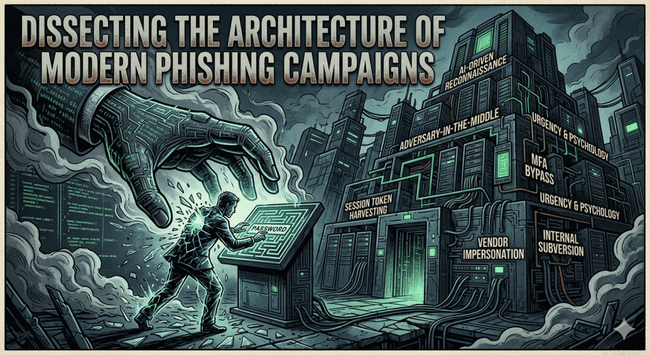
 TANGO EU
 Anastasis Vasileiadis
 Passlock
 4YourData