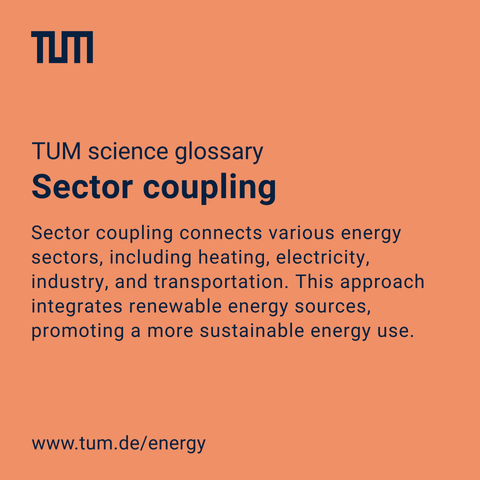
In our #scienceglossary for the research field #energy, today’s term is "#sectorcoupling". #Energysectors are the different areas of the economy where energy is produced, converted, distributed, and used: http://go.tum.de/917142

📷TUM CCC/ T. Hamacher
@burger_jaap
Great thread!
The pace of #SectorCoupling is amazing!

In Helsinki 🇫🇮 it's not only #HeatPumps:
https://www.helen.fi/en/about-us/energy/energy-production/power-plants

Katri Vala
165MW heat + 100 MW cool

Esplanadi
22MW heat + 50MW cool

Eiranranta (2025)
90MW heat + 60MW cool

... but also #SeasonalStorage:
https://www.helen.fi/en/news/2021/gigantic-heat-caverns-in-mustikkamaa-filled

Mustikkamaa (2021):
260.000 m3

Kruunuvuorenranta (2030):
300.000 m3

#ElectricBoilers are also being built promptly in 🇫🇮 as there is often cheap wind power available in winter.

Power plants | Helen

We produce heat, electricity and cooling in power plants and heating plants in different parts of Helsinki. Find out about the power plants and their production outputs.

Yesterday #Fortum, the local heating utility in Espoo, Finland, has shut down their last remaining coal plant at #Suomenoja.
One year ahead of schedule.

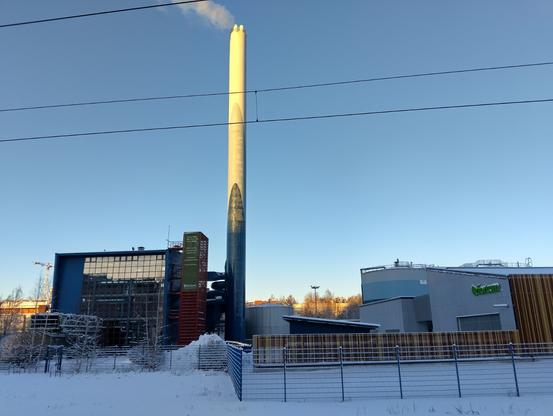
#DistrictHeating in #Espoo is decarbonising quickly and increasingly relies on excess heat recovery, #HeatPumps, several hundred megawatt electric boilers and #heatStorage.

#EspooCleanHeat #SectorCoupling
https://www.fortum.com/media/2024/03/fortum-end-use-coal-finnish-district-heat-production-ahead-schedule

Fortum to end the use of coal in Finnish district heat production ahead of schedule | Fortum

FORTUM CORPORATION ONLINE NEWS 4.3.2024Fortum has today decided to close the last coal-fired unit used for district heat production in Finland on 28th of April 2024. The unit at the Suomenoja

Fortum

@muratk5n The benefit of #sectorCoupling is that efficiency is not restricted to electrical power out / electrical power in.
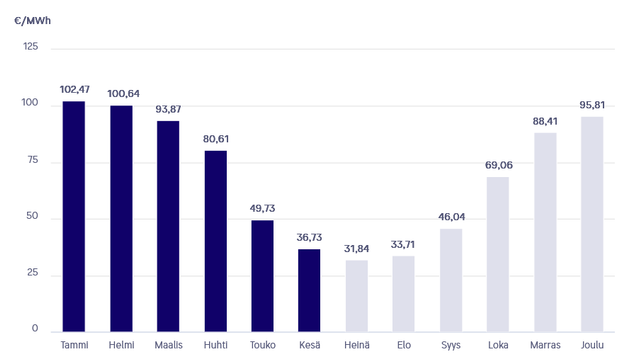
Energy that is normally considered 'lost' in conversion processes like electrolysis turns into heat. For Helen, heat has value when sold to district heat customers (see chart below)
Astonishingly, even an electrolyser with 0% 'efficiency' (=electric boiler) can be profitable when cheap wind power is available in winter and heat price is 100 €/MWh.

https://mastodon.energy/@henrihorn/111840374757744805

Henri Horn (@[email protected])

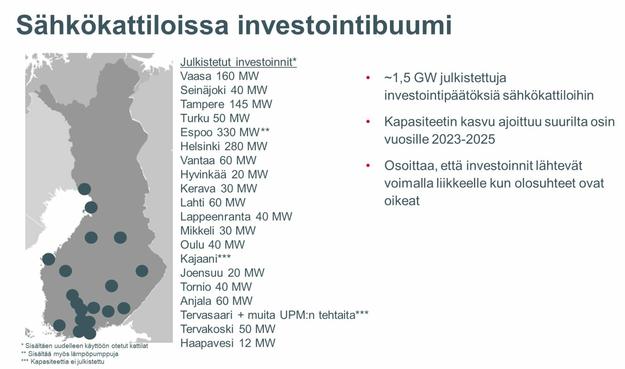
Attached: 1 image After some electricity price shocks, spot prices in #Finland are again close to zero as #WindPower exceeds 6 GW for the first time and domestic generation (13GW) exceeds consumption (11.2GW) https://yle.fi/a/74-20071820 What to do with all this cheap electricity, since large batteries and electrolysers are not yet available? Use #ElectricBoiler to produce heat and store it cheaply in hot water tanks. 1,5 GW of large electric boilers for #DistrictHeating will come online 2024-2025. #SectorCoupling

mastodon.energy

There is a valid concern on #hydrogen economy that poor efficiency of electrolysers and fuel cells make it a very lossy solution for #EnergyStorage.

@energiaHelen, the energy utility in Helsinki is feeding all the waste heat from the 3 MW electrolyser to the #DistrictHeating grid, thus vastly improving #EnergyEfficiency through #SectorCoupling

#HelsinkiHydrogenHub #3H2

https://www.helen.fi/en/news/2024/helen-to-invest-in-helsinkis-first-green-hydrogen-production-plant

Helen to invest in Helsinki’s first green hydrogen production plant

Helen will build a green hydrogen production plant in Vuosaari, Helsinki. This is Helen’s first hydrogen project with which the company will increase its expertise to meet the needs of large-scale hydrogen production and enhance the flexibility to the entire energy system.

@Sustainable2050 @CommercialSolarGuy Assuming that growth in electricity demand also comes from electrification in transportation, heating and industry, where electricity directly replaces fossil oil and gas, the effect of additional 750 TWh/a solar generation is more than just pushing down fossil electricity.It's a systemic change.
#SectorCoupling

After some electricity price shocks, spot prices in #Finland are again close to zero as #WindPower exceeds 6 GW for the first time and domestic generation (13GW) exceeds consumption (11.2GW)
https://yle.fi/a/74-20071820

What to do with all this cheap electricity, since large batteries and electrolysers are not yet available?

Use #ElectricBoiler to produce heat and store it cheaply in hot water tanks. 1,5 GW of large electric boilers for #DistrictHeating will come online 2024-2025.
#SectorCoupling

Historiallinen hetki: Suomessa tehtiin aamulla tuulivoimaennätys, ydinvoimatuotanto jää kauas taakse

Suomi on tuottanut aamupäivän aikana roimasti enemmän sähköä kuin on itse kuluttanut.

Yle Uutiset

This new 11 MW(th) Air-Water #HeatPump in Vermo, Espoo is the largest of it's kind in #Finland and a first step to 100MW Air-Source HPs on the #Fortum #DistrictHeating network in Espoo, Kauniainen and Kirkkonummi.

It was built last year next to a 160 MW oil-fired peak boiler. This week temperatures plunge below the design temperature -15°C of the #ASHP, so the peak boiler takes over. Luckily only for few days annually, and using bio-oil.
#SectorCoupling #Wärmewende

https://www.fortum.com/products-and-services/heating-cooling/espoo-clean-heat

Espoo Clean Heat | Fortum

Electricity-based district heating is a modern alternative to fossil fuels in the cities. Emission-free heat can be captured from air, wastewater and data centers.

Fortum

@iamdavidobrien Finland is slightly behind but also on track to exceed 10GW wind capacity in 2026 and 20GW by 2030. That's a lot for a system where total power consumption is typically 8-12GW.
While large electrolyser plants take years to build, heat production with heat pumps will grow quickly. Electric boilers are even faster to deploy, and inferior efficiency isn't a problem when electricity is almost zero-cost. #SectorCoupling

In efficient markets, demand will adapt to supply.

'Energy storage' is too often understood to comprise only electricity storage.

The heating sector needs to be electrified anyway, so why not use #HeatPumps to convert wind&solar power to heat (or resistors for 'excess' power), and store it in thermal #SeasonalHeatStorage like boreholes, caverns, pits or aquifiers?

That's cheaper in regions, where space heating represents a significant share of energy consumption and #districtHeating is used.

#SectorCoupling

https://www.utilitydive.com/news/NREL-closed-loop-pumped-storage-hydro-study/691532/

Closed-loop pumped hydro storage tech least likely to contribute to global warming: NREL

The analysis examines the global warming potential of different technologies that provide both short-duration and long-duration energy storage.

Utility Dive