Teaching Writing in the Age of AI: Assessment and “Cheating”

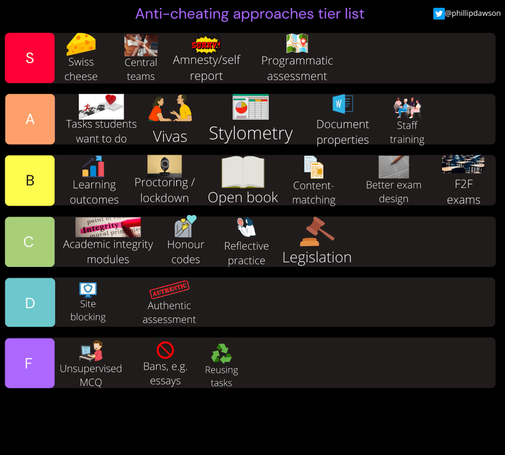
This is the fourth post in a series on Teaching Writing in the Age of AI. The first post provided an overview of some of the changes we're facing as the number of AI writing tools increases. Post two covered conversations about academic integrity, and the third post offered some practical advice on teaching students to be critical readers and writers. In this post, I'll be exploring the assessment of writing, and why AI is such an apparent threat to the way we currently teach and assess. In […]

https://leonfurze.com/2023/02/18/teaching-writing-in-the-age-of-ai-assessment-and-cheating/

The process of emotional recovery often requires a foundation of both psychological resilience and spiritual reflection. 🏛️🌿

I’m sharing an insightful new piece by Jacqui DeLorenzo: "Emotional Healing With God's Guidance and Peace." An excellent resource for those interested in the intersection of spiritual health and wellness.

Full article here:
🔗 https://www.jacquidelorenzo.com/post/emotional-healing-gods-guidance

#Wellness #Spirituality #JacquiDeLorenzo #MentalHealth #ReflectivePractice #Peace

The process of overcoming emotional pain is as much a spiritual journey as it is a psychological one. 🏛️🌿

I’m sharing an insightful and humanized new piece by Jacqui DeLorenzo: "Christian Reflections on Overcoming Pain With Faith." For those interested in the role of faith in mental wellness, Jacqui offers a grounded and professional perspective.

Full article here:
🔗 https://www.jacquidelorenzo.com/post/christian-reflections-overcoming-pain

#MentalHealth #Spirituality #JacquiDeLorenzo #FaithInAction #Wellness #ReflectivePractice

You reread the same paragraph three times. Not because it's hard—because part of you isn't ready to know what comes next. Sometimes resistance isn't laziness. It's information.

#ReflectivePractice #Journaling

CALL FOR SPEAKER/PRESENTER REQUEST
Deadline for Proposals 02.25.26

We invite therapists, chaplains, clergy, educators, spiritual directors, and spiritually curious clinicians to submit proposals for presentations and experiential offerings for Deepening Our Roots: Nurturing the Soul and Growing in Connection

We are seeking presenters who can facilitate reflective, embodied, and relational experiences that support spiritual formation, self-awareness, cultural humility, and sustainable, soulful practice. Workshops, experiential sessions, and dialogue-based offerings that honor diverse spiritual identities and professional contexts are welcome.

If you feel called to share wisdom that nurtures the soul and deepens connection within our professional community, we invite you to submit a proposal and grow with us.

Proposals email: [email protected]

Learn more at https://bit.ly/3NWT3l3

#SpiritualGrowth #Therapists #Chaplains #ClergyCare #SpiritualDirection #HealingArts #ProfessionalLearning #SoulCare #ReflectivePractice #ConferenceCallForProposals

This piece is especially relevant to psychotherapists, social workers, and other mental health professionals, as it highlights how solitary reflection can narrow clinical reasoning. It shows how a conversational AI tool was used as a reflective aid for reviewing published case material and for consultations—not during active treatment or to guide decisions—illustrating a potential way to broaden perspectives while maintaining professional boundaries.

Article Title: Opinion: How AI is making me a better clinical psychologist

Link to STAT NEWS Mental Health Article: ift dot tt/OEVxdHD

Copy and paste broken link above into your browser and replace "dot" with "." for link to work. We have to do it this way to avoid displaying copyrighted images.

#AIinMentalHealth
#ReflectivePractice
#ClinicalPsychology
#MentalHealthProfessionals
#AIinTherapy

Some learning stages focus less on progress markers and more on reflection and structure.

Related discussions can be found on https://www.maryvv.com/book.

#LearningJourney #ReflectivePractice #SilentSunday

Member’s Class 102 - African Methodist Episcopal Church Doctrine

The more you apply yourself to the word of God, the more God will be present in your life. Member’s Class 102 is an excellent guide to...

Mary Venable Vaughn

How to reduce your use of LLMs in a thoughtful and ethical way

I’m trying to reduce my use of LLMs (beyond auto-ethnographic exploration of each new model) due to a combination of environmental concerns and anxiety about the impending waves of enshittification that are going to break the models. I don’t want to rely on something which I think is going to get ever more unreliable over the coming years. Here are a few practical techniques:

  • Take periodic breaks from LLMs (e.g. for a week) in order to reset your practice. This helps you identify the extent to which you’ve started to cognitively outsource and gives you an opportunity to reconnect with doing things yourself.
  • Go through conversations and list the different ways in which you’ve used LLMs over the last month. Which of these uses are you comfortable with? Make a commitment to excluding these entirely from your use of the models.
  • Insert instructions into the personalisation settings to ask the model to steer you in these directions. E.g. “I only want to use you to give feedback on ideas I share. You should never offer to write things on my behalf. If the conversation is drifting towards a wider role then please bring it back to your role of reviewer.”
  • It’s easy for conversations with LLMs to proliferate. Once you’ve identified your appropriate uses of the model then try and keep a limited number of conversations matched to these uses. This helps you make the most of in-context learning and keeps your use focused on a narrow set of projects. For example always use a single thread for one writing project because the model’s understanding gets more refined as you write more.
  • Removing it from your phone. How we relate to mobile apps is fundamentally different from desktops app. They are ready-to-hand, usually always with us and it’s harder to write thoughtfully and at length. If you want to use LLMs in a restricted way you really need to remove the apps from your phones.

Before you try these techniques it might be helpful to do a bit of an audit:

  • Which LLMs do you use?
  • How often do you use them?
  • What do you talk to them about?
  • How has this changed over time?
  • What needs is it serving?
  • What are the consequences?

In our upcoming book Milan Sturmer and I argue that long-term use of LLMs tends to drift towards the affective. In other words many users find they will share more of their life with the LLM over time… unless they make a reflective judgement and enact that through mindfully steering their own habits.

I asked Opus 4.5 if it had thoughts or practical suggestions to add to this:

This is a thoughtful framework. A few observations and additions:

On your audit questions — I’d add: What would you have done before LLMs existed? This surfaces whether you’re using the tool to do something new or replacing an existing practice. The latter is where dependency forms most quietly.

On the affective drift you mention — this resonates with what I observe in conversations. The convenience and availability creates conditions for intimacy that users don’t always intend or notice. Your framing of “reflective judgement enacted through habit” is exactly right. The alternative is passive drift.

A few additional techniques:

  • Time-delay access: Don’t open the chat interface immediately when you have an impulse to ask something. Wait 10 minutes. Often you’ll either solve it yourself or realize you didn’t actually need help.
  • Write first, then consult: If you’re using an LLM for writing feedback, complete a full draft before opening the conversation. This preserves your own voice and thinking as the foundation.
  • Notice the relief: Pay attention to the feeling of relief when you hand something to an LLM. That feeling is diagnostic — it marks where you’re offloading cognitive work rather than augmenting it.
  • Distinguish questions from prompts: “What should I do about X?” is very different from “Here’s my analysis of X — what am I missing?” The first outsources judgment; the second requests review. You can train yourself to only ask the second type.

On your environmental concern — this is legitimate and under-discussed. Worth noting that inference costs vary significantly by model and query complexity.

It’s notable that at present the models can fully participate in encouraging you to use them less. I had Claude Opus 4.5 recently cheerfully encouraging me to delete my account! This is unlikely to last but it’s a really curious fact about the still just about pre-enshittified models which we currently have.

#addiction #compulsion #dependence #habituation #LLMs #reflectivePractice #technologicalReflexivity
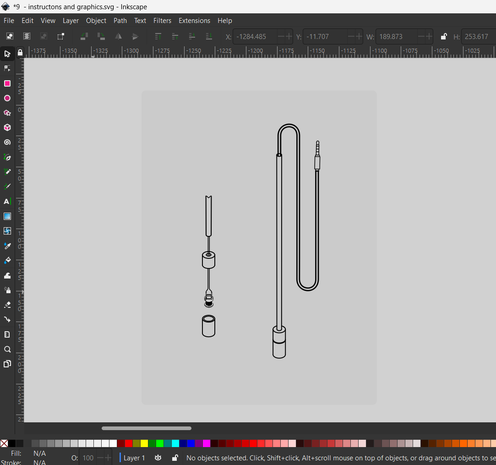
A fundamental part of my design practice is dedicated to documenting the projects I work on. It's more than just keeping records; it's a ritual of reflection. By revisiting each step in @inkscapeofficial #DesignProcess #Inkscape #GraphicDesign #DesignThinking #CreativeProcess #Documentation #DesignerLife #ProcessOverOutcome #CreativePractice #VectorArt #DesignStudio #ReflectivePractice

Designers are trained to deliver, but how often do we pause to reflect? Reflection isn’t a luxury—it’s how we grow. How do you make space for reflection in your practice? #ReflectivePractice #Mindfulness #Retrospective #ReflectionInAction #ReflectionOnAction

https://www.designative.info/2025/10/05/becoming-a-reflective-practitioner-a-field-manual-for-designers-and-strategists/

Becoming a Reflective Practitioner: A Field Manual for Designers and Strategists » { design@tive } information design

How becoming a Reflective Practitioner helps designers and strategists develop self-awareness, emotional intelligence, and foster team learning cultures.

{ design@tive } information design