The Dishonest Button

The mute button on the top of an Amazon Echo of a certain vintage is supposed to disconnect the microphone. A small icon of a crossed-out microphone sits next to the button, and pressing it turns on a red LED that confirms the disconnection. Software controls this button, which means the microphone remains electronically capable of capturing audio after the LED turns red, and the only thing preventing that capture is a line of code in the firmware. Security researchers have documented the capability and the manufacturers have acknowledged it. Whether the capability was ever exercised in practice is a separate question that the user pressing the button cannot answer from the front of the device. Bloomberg reported in April 2019 that Amazon employed thousands of workers worldwide whose job was to listen to Alexa recordings, and similar contractor review programs were acknowledged by Apple and Google for Siri and Assistant later that year. Subsequent Echo models added a hardware microphone disconnect that physically interrupts the microphone circuit when the mute button is pressed. Press the mute button on a smart speaker without that hardware disconnect and you are pressing the third kind of button in this series.

The placebo button was the first kind. It pretended to give you control over a system that ignored your input. The honest button was the second kind. It openly delivered instructions to you while making no claim about the system. The dishonest button is the third kind. It claims to do nothing or to disconnect or to refuse, and then it does the opposite of what it claims, quietly, with no LED to confirm what is actually happening on the other side of the press.

The Wait LED is honest about its uselessness. The dishonest button is dishonest about its activity. It is the most worrying of the three because the user has no way of telling, from the front of the device, whether the button has done what it promised. A placebo button can be tested by timing the signal. An honest button announces what it is doing. The dishonest button presents a clean front while running operations the user is not authorized to see.

The Facebook Like button on a third-party website is the same kind of object. It appears on a news article, on a recipe page, on a blog post, and a reader can press it to share the content with their Facebook friends. A reader who does not press the Like button generally believes nothing has happened. In fact the Like button is a script loaded from Facebook’s servers, and the act of loading the script transmits to Facebook the URL of the page, the time of access, and whatever identifying information the reader’s browser cookies make available. Facebook receives the data whether or not the button is pressed. Pressing is the visible activity. Loading is the actual activity. The button serves as cover story for the script that runs whether the button is touched or not.

The thermostat in a hotel room is a quieter version of the same pattern. The placebo thermostat described in the first essay in this series did nothing because the actual climate control happened from a central building management system. A dishonest thermostat in many newer hotels is the same hardware doing covert work. Its Set Point is recorded. Room occupancy is inferred from the timing of thermostat adjustments. Hospitality analytics vendors aggregate the data and sell hotels reports on guest behavior patterns. The button on the wall is dishonest about being a button. Underneath, the device is doing data work the user has not been asked to consent to.

The Ring video doorbell is a residential version of the same architecture. Amazon sells the product as a security camera that lets a homeowner see who is at the front door. Its Neighbors program, built around the product, partnered with more than two thousand US police departments by 2022, allowing police to request video clips from Ring users for investigative purposes through the app. Amazon ended that feature in 2024 under significant public pressure, after years during which the user’s pressing of the doorbell completed a circuit the user had not been asked to authorize. The user pressed the doorbell. They pressed the install button. They did not press a button labeled “Submit my footage to local law enforcement on request without a warrant.” That button does not exist on the device, because the device was not designed to require that press. The covert work happens at the policy layer, where the user agreement permits what the device cannot ask about directly.

The self-checkout terminal at a grocery store is a more visible example for shoppers who pay attention. Its screen prompts the customer to scan items, place them in the bag, and pay. A camera trained on the customer watches the transaction, and the bagging area’s weight sensor triggers an attendant alert when the weight does not match the scanned items. Many newer self-checkouts also have AI loss-prevention systems that classify customer behavior in real time, flagging movements the system has been trained to identify as potential theft. The customer pressed a button labeled Pay. They did not press a button labeled Be Recorded And Behaviorally Classified. Pay is the cover story. Recording and classification are the covert work, and they run on every customer regardless of whether the customer presses anything.

The pattern across these cases is consistent. A button presents itself as a simple input device, an inert surface, or a placebo. The actual function of the device runs continuously underneath the button, and the button serves either as a trigger for a parallel covert process or as a distraction from a continuous covert process that does not need the button at all. The dishonest button is a magician’s misdirection. A user watches the visible hand pressing the visible button. The other hand is doing the data work, and the data work is what the device exists to perform.

Distinguishing the dishonest button from the placebo button matters for both diagnosis and remedy. A placebo button can be left in place because it does nothing in either direction, and a citizen who knows the button is a placebo can press it for fidget value without harm. A dishonest button cannot be left in place. The dishonest button is the device through which the covert operation runs, and pressing it, or sometimes just being near it, completes the surveillance circuit. Recognizing a placebo button is enough to neutralize it. The remedy for a dishonest button is to refuse it, replace it, or surround it with hardware controls the front-end button cannot override.

This is what hardware microphone disconnects on premium smart speakers were designed to address. The hardware disconnect physically interrupts the microphone circuit when the mute button is pressed, making it impossible for software to continue capturing audio. Apple introduced this on the M1 MacBook in 2020 for the laptop microphone. Some Echo models added similar features after the 2019 reporting. The hardware solution exists because the software solution had been proven dishonest. The hardware disconnect makes the button honest again, in the sense that the LED indicator now corresponds to the actual state of the device. A dishonest button can be rehabilitated by changing what happens on the other side of the press.

The civic version of this pattern is harder to fix because the buttons are everywhere and the disconnects are usually unavailable. Cookie consent banners on websites are the most visible example. A banner asks the user to accept or reject tracking. The user clicks Reject All. Tracking continues via cookies categorized as essential, via fingerprinting, via the user’s IP address, and via the loaded scripts from third parties that do not respect the user’s choice. The Reject button is dishonest in the way the mute button on the early Echo was dishonest. The press is recorded while the compliance is ignored.

The fix has to operate at a layer below the button. Hardware microphone disconnects on smart speakers. Browser-level tracking blockers that operate independently of cookie banners. Mobile operating system permissions that physically prevent apps from accessing data even when the apps claim to need it. State and federal privacy laws that make the covert work illegal regardless of what the user pressed on the front-end interface. Each of these solutions accepts that the button is not the location where the user’s choice will be honored. The user’s choice has to be enforced upstream of the button, or downstream of the data the button covers for, or beside the button entirely.

The three buttons together describe a small civic taxonomy. Among the three, the placebo is the most familiar, the honest is the most political, and the dishonest is the most dangerous because it looks like one of the other two while doing something neither of the other two does, and the user pressing it cannot tell which.

#amazon #dishonest #echo #facebook #hardware #honest #honestButton #like #microphone #placebo #placeboButton #ringVideo #selfCheckout #tech #themostat

The Honest Button

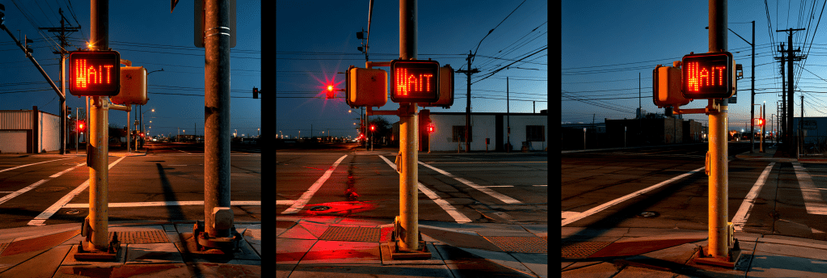
The crosswalk button at the corner of my downtown intersection has an LED above it that lights up red and says “Wait!” when you press it. The traffic signal does not change any faster. No wire runs from the button to the signal timer. The LED is connected only to the button itself, and it does the single job of telling the pedestrian to wait. A reader who pressed one of these recently described pushing it three or four times rapidly anyway, because it’s fun. They are correct on both counts. The button is fun. The button is also a different kind of object than the placebo buttons it replaced.

The first-generation placebo button pretended to give the pedestrian control over the signal. The Wait LED button has dropped the pretense. It tells you directly that your job is to wait. The arrow of communication has reversed. You used to press the button and the system was supposed to listen. Now you press the button and the system instructs you. The button is the system’s mouth rather than its ear.

This is honest in a way the placebo button was not. The Wait LED is not lying about what it does. The lying happens elsewhere, in the placement of the button at a corner where pressing it changes nothing, and in the implication that the city cared enough about pedestrians to install a responsive device. But the button itself, the small red sign that says Wait, is just doing what it says it does. The instruction is real, the light is real, the wait is real, and the only fiction is that the wait has anything to do with the button.

I keep using the word “fun” because the reader, RealGene, who described pressing it rapidly four times in a row was telling the truth about why anyone presses any button on any device that does nothing useful. The button is a fidget object. The hand needs something to do while the body waits, and a button with a tactile click and a visual feedback light gives the hand a small ritual to perform. Researchers in human-computer interaction have studied this for decades under various names. The button is doing kinetic work the body wants done. The fact that the signal does not change is a separate matter from the fact that the finger has been satisfied.

The pattern shows up in many places once you start looking. Hotel thermostats that say “Set Point” and accept your preference and report it to the building management system, which may or may not honor it depending on policy and demand. Self-checkout terminals that flash “Please wait for an attendant” while emitting a beep that signals nothing to any attendant within earshot. Customer service hold systems that announce “Your call is important to us” between hold music intervals, which is honest about the message being a recording and dishonest about whether anyone is actually listening for your call. Airport gate displays that flash “Boarding” before any of the boarding groups have been called, training travelers to drift toward the gate in advance of an instruction the airline has not yet issued. Each of these works as a second-generation honest button, with the system speaking to the user and the button trigger initiating that outbound communication while routing nothing back to whatever underlies it.

The reversed arrow is the diagnostic. A working button takes your input and routes it to a system that responds. First-generation placebo buttons take your input and route it nowhere while pretending to route it somewhere. Second-generation honest buttons take your input and use it to deliver a message back to you while making no claim about the system. The Wait LED functions as a one-sided doorbell. The bell rings only on your side of the door, and the message that comes through the speaker is addressed to whoever pressed it rather than to whoever lives in the house.

Civically this is the more interesting development of the two. The placebo button required citizens to believe they had agency they did not have. The honest button skips the belief requirement and asks only for the ritual. A citizen presses, reads the instruction, complies with the instruction they would have followed anyway. The transaction looks like participation while functioning as training. The body learns to expect that pressing a button produces an instruction, and that the instruction will tell the body what it should already be doing. Over years, this trains a population in a relationship to authority where the authority does not need to listen, because the citizen has already been instructed to do what the authority wanted before the citizen asked.

The Wait LED is small enough that this analysis sounds disproportionate. A red sign at a crosswalk is not a totalitarian apparatus. The point is the pattern, not the single light. A city full of honest buttons is a city training its citizens to confuse instruction with response. Workplaces full of dashboards that display compliance metrics back to the worker do the same thing at a different scale. Schools full of forms that record student behavior and display it back to the student as a flagged dashboard do it to children. The honest button is more dangerous than the placebo button precisely because the honesty disarms the critique. The user cannot complain that the button is lying, because the button never claimed to do anything but tell them to wait.

The fix is the same kind of recognition the placebo button required, with one addition. Notice when the arrow of communication is pointing at you rather than at the system. The diagnostic question is whether a button you press is telling you something or telling something for you. A piece of public infrastructure in the business of issuing instructions disguised as interactive devices deserves the same scrutiny as one that pretends to take input. Then make the choice the rapid-presser at the crosswalk made, which is to press the button anyway, while knowing what the button is. Pressing is fine. Compliance is the problem. The hand can fidget without the body submitting.

The crosswalk button at my downtown intersection will continue to say Wait when I press it, and I will continue to wait, and the signal will continue to change on a fixed timer that has never heard of me. Light and system both keep doing what they have always done. What is new is that the system has decided to speak to me through the button rather than pretending to listen through it, and the speaking is what I need to learn to hear as instruction rather than as conversation.

#button #cities #complicity #crosswalk #danger #function #honestButton #placebo #placeboButton #reader #realgene #school #tech #wait
Placebo Button - Übergangsmusik : Placebo Button : Free Download, Borrow, and Streaming : Internet Archive

I titled this album Übergangsmusik (transitional music) because it captures a period of change for both PLACEB0_BUTT0N and the conversion utility used in...

Internet Archive

The new Placebo Button album "Übergangsmusik" is also on Bandwagon! (Other services coming soon.)

https://bandwagon.fm/67b61af5594e0cd573b4cb09

#PlaceboButton #Bandwagon #Experimental #Electronic #Ambient #Music #image2sound

Übergangsmusik

I titled this album Übergangsmusik ("transitional music") because it captures a period of change for both PLACEB0_BUTT0N and the conversion utility used in generating the music. On one hand, more finely tuned controls were able to be used in the creation process. On the other, there is still the dreamy ambience present in most of the preceding work. Because of the similarities with the "Synthetic Baroque" album, I hesitated to release it. However, I found myself coming back to it, letting myself be carried away, and I decided that I would share it anyway. For those wanting to hear greater growth, rest assured that the next will one will fulfill that desire. For everyone else, enjoy Übergangsmusik! credits released February 23, 2025 Transmuted June - July 2024 image2sound version 0.8 was used for the conversion process codeberg.org/jaerrib/image2sound Mixing and processing was done with Audacity www.audacityteam.org Contact placebobutton.neocities.org Artwork created using generative AI and the following software: Upscaler - theevilskeleton.gitlab.io/upscaler/ GIMP - www.gimp.org Inkscape - inkscape.org

Bandwagon.fm

New Placebo Button album on Bandcamp! This one consists of material created around the time that image2sound 0.8 was being worked on and is similar in style to earlier works.

https://placebobutton.bandcamp.com/album/bergangsmusik

#PlaceboButton #Bandcamp #Experimental #Electronic #Ambient #Music #image2sound

Übergangsmusik, by Placebo Button

8 track album

Placebo Button

A new Placebo Button album is planned to release on Terminalia (23 Feb). "Übergangsmusik" will consist of tracks made before I introduced a number of newer features to image2sound and is very much in line with the first album, "Synthetic Baroque".

#image2osund #PlaceboButton #experimental #ambient

In addition to Bandcamp, Funkwhale, Libre.fm, and the Internet Archive, Placebo Button is now on #Bandwagon!

https://bandwagon.fm/@placebo_button

#experimental #ambient #music #PlaceboButton

@bandwagon.fm@placebo_button

PLACEB0_BUTT0N is an experimental ambient music project by John Beers (Luciftias). Most pieces are created using a generative process beginning with text prompts being fed into an AI, but some images are made using other methods. The results are then processed by the image2sound Python utility, which converts them to audio using the color values of each pixel. The individual color-audio files are imported into Audacity, panned to broaden the stereo spectrum, and further enhanced with reverb, EQ, and fades. Finally, the volume is leveled to reach the final form. Please note that, while AI has been involved in creating the artwork via prompts, none of the audio is created by AI. It is generated solely by interpreting the color data from the images presented to the Python utility. There is, however, human interaction, such as decided the tempo, key, etc.

Bandwagon.fm

Now available on the Internet Archive!

Placebo Button "Algorithmic Chrysopoeia"

https://archive.org/details/placebo-button-algorithmic-chrysopoeia

(Note: some formats are still being auto-derived.)

#Experimental #Electronic #Ambient #Music #PlaceboButton #image2sound

Placebo Button - Algorithmic Chrysopoeia : Placebo Button : Free Download, Borrow, and Streaming : Internet Archive

Place

Internet Archive

Now available on #Funkwhale via Open.audio!

Placebo Button "Algorithmic Chrysopoeia"

https://open.audio/library/albums/21080/

#Experimental #Electronic #Ambient #Music #PlaceboButton #image2sound

Algorithmic Chrysopoeia

Libre Music from the Commons

Open.Audio - Funkwhale

New Placebo Button album on Bandcamp! It consists of alternate mixes created using the Blackman smoothing I added in image2sound 0.7. (Available on other services soon.)

https://placebobutton.bandcamp.com/album/algorithmic-chrysopoeia

#PlaceboButton #Bandcamp #Experimental #Electronic #Ambient #Music #image2sound

Algorithmic Chrysopoeia, by Placebo Button

6 track album

Placebo Button