 13
13The Birotary Engine Explained https://hackaday.com/2025/12/28/the-birotary-engine-explained/
#EngineHacks #Pistonengine #Rotaryengine
#EngineHacks #Pistonengine #Rotaryengine
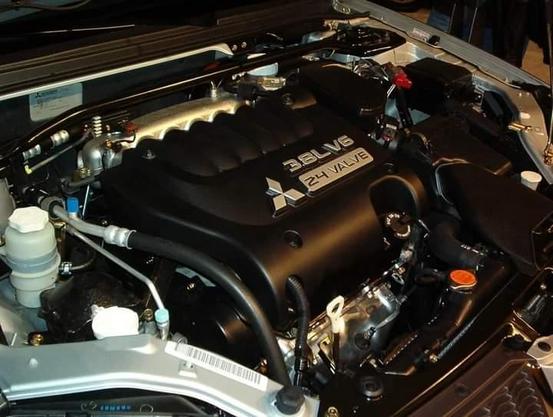
#AutomechanikaShanghai #automechanika #automechanika2024 #autorepairtools #autorepairtools #autorepairtips #5021tips This some #techinformation on some 6G7 series' a of #V6 #pistonengine from #MitsubishiMotors 👇
www.5021.tips/ujanja/6g72
👆☝️
#InshaAllah, may be it of use doing #enginerepairs #autorepairsolutions #autorepairs #carrepairs #autorepairtips #5021tips #repairtips #cartips #cartipsandtricks #HapaUjanjaTu #doityourself #jifunze #autorepair #carrepair #magari

There’s a Wrinkle In This 3D Printed Wankel
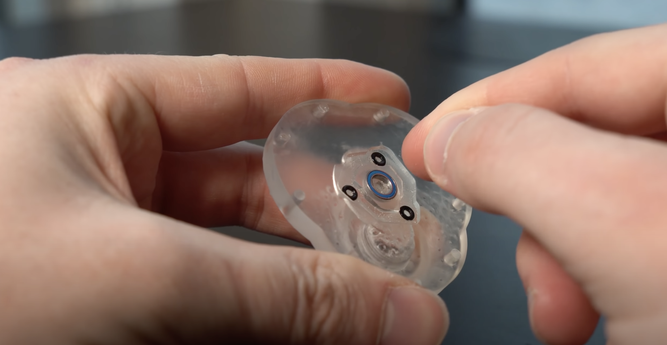
Rotary engines such as the Wankel have strange shapes that can be difficult to machine (as evidenced by the specialized production machines and patents in the 70s), which means it lends itself well to be 3D printed. The downside is that the tolerances, like most engines, are pretty tight, and it is difficult for a printer to match them. Not to be dissuaded, [3DprintedLife] designed and built a 3D printed liquid piston rotary engine. The liquid piston engine is not a Wankel and is more akin to an inside-out Wankel. The seals are on the housing, not the rotor itself, and there are three "chambers" instead of two.
The first of many iterations didn't run. There was too much friction, but there were some positive signs as pressure was trapped in a chamber and released as it turned. The iterations continued, impressively not using any o-rings to seal, but instead standing each part down using a 1-2-3 block as a flat reference, within 25 microns of the design. Despite his care and attention to detail, it still couldn't self-sustain. He theorizes that it could be due to the resin being softer than other materials he has used in the past. Not to be left empty-handed, he built a dynamo to test his new engine out. It was a load cell and an encoder to measure speed and force. His encoder had trouble keeping up, so he ordered some optical limit switches.
This engine is a follow-on to an earlier 3D printed air-powered Wankel rotary engine, and we're looking forward to part two of the liquid piston series. Video after the break.
Wing Can Expand To Fly Really Slow for Short Take-Off and Landing
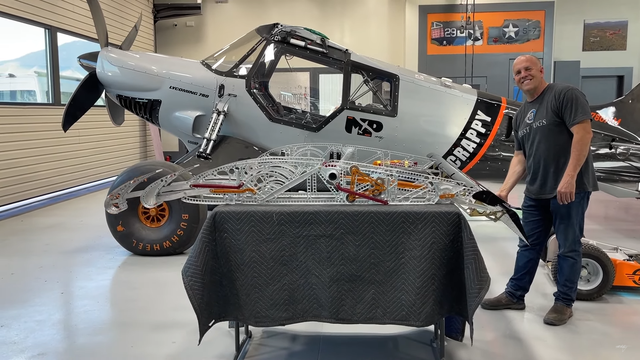
[Mike Patey] had made a name for himself by building high-performance experimental aircraft. In his latest project, he added a transforming wing that can extend its chord by up to 16 inches for low speed and high angle of attack performance.
The aircraft in question, a bush plane named Scrappy, has been attracting attention long before [Mike] even started building the wings. Designed for extremely short take-off and landing (STOL) performance, only some sections of the fuselage frame remain from the original Carbon Cub kit. The wings are custom designed and feature double slats on the leading edge, combined with large flaps and drooping ailerons on the trailing edge. The slats form an almost seamless part of the wing for normal flying, but can expand using a series of linkages integrated into each precision machine wing rib. Making extensive use of CFD simulations, the slats were designed to keep the center-of-lift close to the center of the wing, even with 50 degrees of flaps. Without the slats, the pilot would need to use almost all the elevator authority to counteract the flaps and keep the aircraft's nose up.
Leading-edge slats have been around since before WW2, but you don't see them used in pairs like this. Aircraft like Scrappy will never be commercially viable, but innovation by people like [Mike] drives aviation forward. [Mike]'s previous project plane, Draco, was a large turboprop bush plane built around a PZL-104 Wilga. Sadly it was destroyed during an ill-considered take-off in 2019, but [Mike] is already planning its successor, Draco-X.
#transportationhacks #aviation #bushplane #experimentalaircraft #mikepatey #pistonengine #scrappy

 5021tips
 Itamar Reiner
 hackaday unofficial