 Col. of Remote & Offshore Med
How are you using point of care ultrasound during cardiac arrest?
Would you benefit from our Austere and Prehospital #Ultrasound (APUS) course, which covers #eFAST, IVC measurement, fracture detection, the fundamentals of echocardiography and more?
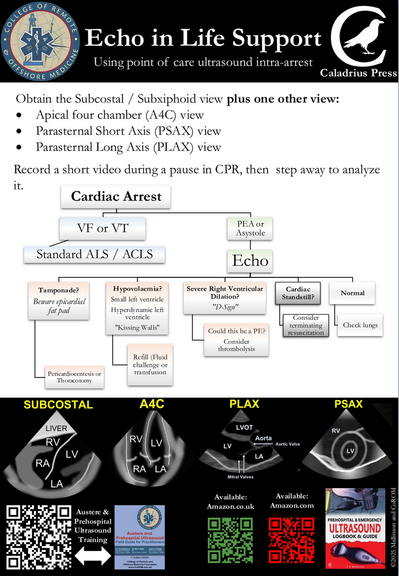
How are you using point of care ultrasound during cardiac arrest?
Would you benefit from our Austere and Prehospital #Ultrasound (APUS) course, which covers #eFAST, IVC measurement, fracture detection, the fundamentals of echocardiography and more?
https://www.youtube.com/watch?v=_co15cgkksA // https://invidious.fdn.fr/watch?v=_co15cgkksA
new phem song 🎉
IVE BEEN WAITING FOR IT FOR LIKE MONTHS AAAAAAAAAAAYGYUDRGREYUTGTFYUE

RT by @ECDC_EU: .@ECDC_EU hosted this week a study tour for @AfricaCDC Public Health Emergency Management fellows.
The visit included presentations and discussions on preparedness plans, response activities, and #EOC management.
Read more: https://bit.ly/3St4dhl
#PHEM #AfricaCDC
🐦🔗: https://nitter.cz/ECDCPHT/status/1749388257261985877#m
[2024-01-22 11:07 UTC]
Guys guys guys... I have a great idea...
Horse stretcher!
What could possibly go wrong?
#PHEM #CommunityEM
Pre-hospital tracheal intubation in severe traumatic brain injury: a systematic review and meta-analysis
https://www.bjanaesthesia.org/article/S0007-0912(22)00428-7/fulltext
The results of previous studies are conflicting regarding pre-hospital tracheal intubation in severe traumatic brain injury.
In this systematic review, the authors summarise the evidence base and demonstrate a trend towards improved outcomes in higher quality studies.
Looking for Mastodon #Anaesthesia/#Anesthesiology/#IntensiveCare #CriticalCare #EmergencyMedicine #PHEM & other Relevant Accounts to follow in #medtwitter migration? Want folk to find your account?
I have made a google sheet with some accounts to follow - https://docs.google.com/spreadsheets/d/1vJqTUMSbRR4Zv5hYuZo-6UFyTJDkgQVvmfA5g-xZa_M/edit#gid=1253419887 - this includes (on a separate sheet) recently posted accounts.
You can add yourself here - https://forms.gle/GXgsajDAdzdzAvyf8
This is a rudimentary start!

Form Submissions Timestamp,Full Mastodon Handle (e.g. @[email protected]),Description (e.g. Anaesthetist, UK),Twitter Handle (optional e.g. @name) 11/21/2022 16:47:11,@[email protected],Anaesthetist UK,@morefluids 11/21/2022 18:21:54,@[email protected],UK Anaesthetist,@brisgasdoc ...
Looking for Mastodon #Anaesthesia/#Anesthesiology/#IntensiveCare #CriticalCare #EmergencyMedicine #PHEM & other Relevant Accounts to follow in #medtwitter migration? Want folk to find your account?
I have made a google sheet with some accounts to follow - https://docs.google.com/spreadsheets/d/1vJqTUMSbRR4Zv5hYuZo-6UFyTJDkgQVvmfA5g-xZa_M/edit#gid=1253419887 - this includes (on a separate sheet) recently posted accounts.
You can add yourself here - https://forms.gle/GXgsajDAdzdzAvyf8
This is a rudimentary start!
Form Submissions Timestamp,Full Mastodon Handle (e.g. @[email protected]),Description (e.g. Anaesthetist, UK),Twitter Handle (optional e.g. @name) 11/21/2022 16:47:11,@[email protected],Anaesthetist UK,@morefluids 11/21/2022 18:21:54,@[email protected],UK Anaesthetist,@brisgasdoc ...

Background Resuscitative thoracotomy (RT) is an intervention that can be performed in the prehospital setting for relieving cardiac tamponade and/or obtaining vascular control of suspected sub-diaphragmatic haemorrhage in patients in traumatic cardiac arrest. The aim of this retrospective case study is to compare the rates of return of spontaneous circulation (ROSC) in RTs performed for both penetrating and blunt trauma over 6 years in a mixed urban and rural environment. Methods The electronic records of a single helicopter emergency medical service were reviewed between 1st June 2015 and 31st May 2021 for RTs. Anonymised data including demographics were extracted for relevant cases. Data were analysed with independent t-tests and Χ2 tests. A p value < 0.05 was considered statistically significant. Results Forty-four RTs were preformed within the 6 years (26 for blunt trauma). Eleven ROSCs were achieved (nine blunt, two penetrating) but no patient survived to discharge. In contrast to RTs for penetrating trauma, twelve of the RTs for blunt trauma had a cardiac output present on arrival of the prehospital team (p = 0.01). Two patients had an RT performed in a helicopter (one ROSC) and two on a helipad (both achieving ROSC), likely due to the longer transfer times seen in a more rural setting. Four of the RTs for blunt trauma (15%) were found to have a cardiac tamponade versus seven (39%) of the penetrating trauma RTs. Conclusion Prehospital RT remains a procedure with low rates of survival but may facilitate a ROSC to allow patients to reach hospital and surgery, particularly when distances to hospitals are greater. A higher-than-expected rate of cardiac tamponade was seen in RTs for blunt trauma, although not caused by a right ventricular wound but instead due to underlying vessel damage.
 ari :autism:
  ECDC
ECDC
 Farbod Ⓥ
 HeliDoc
 Bill Westerman
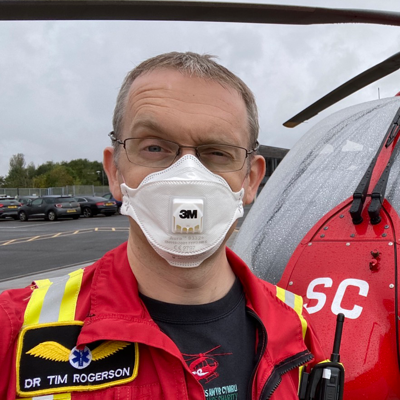 Tim Rogerson
 sethina
 Joanna Poole