 Unofficial PetaPixel Bot
Ukrainian Photographer Maxim Dondyuk on Covering the Russo-Ukrainian War https://petapixel.com/2025/06/18/ukrainian-photographer-maxim-dondyuk-on-covering-the-russo-ukrainian-war/ #warphotographer #warphotography #MaximDondyuk #peterlevitan #Interviews #interview #war

A Chat with Pulitzer Prize-Winning Photographer Deanne Fitzmaurice https://petapixel.com/2025/03/18/a-chat-with-pulitzer-prize-winning-photographer-deanne-fitzmaurice/ #deannefitzmaurice #peterlevitan #Interviews #interview #pulitzer

A Chat with Pulitzer Prize-Winning Photographer Deanne Fitzmaurice https://petapixel.com/2025/03/18/a-chat-with-pulitzer-prize-winning-photographer-deanne-fitzmaurice/ #deannefitzmaurice #peterlevitan #Interviews #interview #pulitzer
 petapixel (unofficial)
Exposed: Aline Smithson, the Ambidextrous Photographer
When I first discovered the rather active analog photographer, journalist, and educator Aline Smithson, I felt that I have been standing in place with one hand tied behind my back. I spend my photographer energy thinking about the project that’s directly in front of me. One project at a time.
Aline, on the other hand, seems to be juggling (yes, I am mixing metaphors) multiple projects at the same time. Aline is a published visual artist, workshop leader, Lenscratch founder, exhibition curator and editor based in Los Angeles.
And, importantly, someone who turned pandemic-born isolation into humor.
Let’s dig in.
Peter Levitan: Aline, you are rather ambidextrous. You use both hands and the right and left sides of your brain to manage your photography career. Before we get into the myriad types of programs and projects that you create, how and where did you start your photography journey?
Aline Smithson: Thank you, Peter! It is an honor to be in conversation with you and the PetaPixel audience. I’m going to give you the long version as all that we do in life, the stew of who we are, informs the work that we make.
I grew up in Los Angeles and was always interested in anything to do with the arts - drawing, painting, sewing - and I loved reading fashion magazines. My father was a hobbyist photographer with a darkroom in the basement, and my uncle was an editorial photographer, but I wasn’t bitten by the photography bug until many years later.
I studied art in college with a focus on painting but also learned printmaking, photography, video, and more. I created large colorist oil paintings and was very influenced by California painters like Ed Ruscha, John Baldessari, Richard Diebenkorn, and David Hockney.
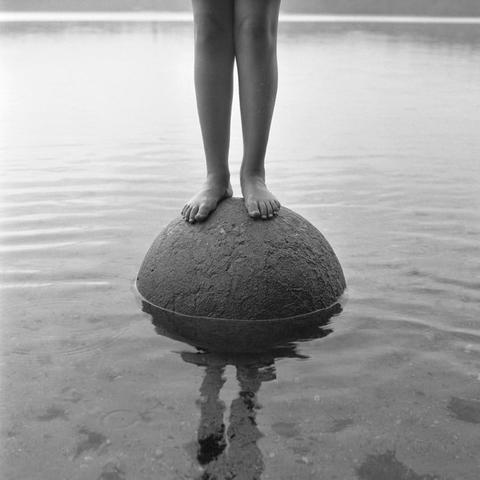
Cement Ball by Aline Smithson.
After college, I moved to New York to make my way as a painter, but the art world was a difficult nut to crack, and an opportunity came up to shift gears and work in fashion. For the next decade, I was the Fashion Editor for Vogue Patterns and Vogue Knitting magazines and catalogs—a position that I was totally unprepared for, but I jumped in feet first. I was responsible for19 publications a year, coming up with story ideas, selecting fabrics, and working with dressmakers to create the clothes, and then setting up photo shoots, traveling the world with significant photographers such as Mario Testino, Patrick Demarchelier, Arthur Elgort, and even Horst.
It truly was a dream job that included some form of creativity each day. The art director and I edited all the film, and happily, it was a skill I brought to my own work. I also learned a lot standing next to a wide range of photographers - how to work with people, how to create a happy and productive set, how kindness and levity go a long way, and I also discovered personalities that I wasn’t interested in working with again.
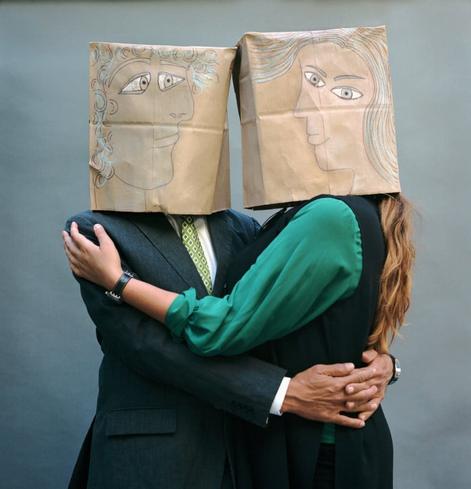
The Hug by Aline Smithson
I eventually moved back to Los Angeles and started a family. I was now the family documentarian and decided to take a photography class to learn how to better use my camera. It was in that class that I discovered my uncle’s 1960’s twin-lens 2.8F Rolleiflex (which I still use today), and it completely shifted how I see.
I realized I could make art with a camera. After that, I never looked back. I spent many years happily anonymous, learning my craft and the darkroom, making work just for me. I began to show my work and just kept going. Eventually, I started teaching and building a community of like-minded photographers in Los Angeles.
Lucy in Teal by Aline Smithson
The publication Lenscratch appears to be your bridge between your editorial and burgeoning photography career. How did that idea develop?
In 2007 I started Lenscratch , a daily journal on photography, in order to learn more about the community I was making work in. I made a vow to write about a different photographer every day. Fifteen years later, the site is still going strong. I have an amazing team of editors and we all work for free as a give-back to our community.
I’ve learned so much by deeply considering other people’s photography and thinking. We have opportunities for photographers at no cost, we offer the annual Lenscratch Student Prize Awards, and lots of features that are of interest to photographers. In December we are dedicating the month to interviews with book publishers.
Lake Meditations by Aline Smithson
I’d like to ask you about a few of your photography series. Since our memory of pandemic isolation is fresh, I find your Undercover series interesting for a couple of reasons. One, it is an unexpected view of the personal side of self-quarantining. And the second is its humorous way of allowing you to make collaborative portraits during lockdown at a time when many of our relationships became so distant. How did this idea roll out?
When the pandemic hit, in those early days of self-quarantining when we were scared to be around each other, I started thinking about how wearing masks and distancing ourselves was changing our social behaviors. How were we able to express our emotions when you couldn’t see one another’s faces? I began to think about masks and what they convey in certain cultures, and I remembered the fabulous paper bag masks that Saul Steinberg created in the 1950s/60s.
From Undercover by Aline Smithson
I decided I wanted to create a project that spoke to this moment in time with levity, creativity, and fun. I asked friends, neighbors, and family to participate. I set up a backdrop in my back yard, instructed my subjects to stand on the paper wearing their masks, and I would come out in my mask and start photographing. The shoot resulted in great hilarity as the subjects were completely covered and lost normal inhibitions of being in front of the camera. It was such a positive experience for all of us.
From Undercover by Aline Smithson
Continuing with the idea that your work leverages your personal relationships, you used your mother as the model in your 20+ image series Arrangement in Green and Black, Portraits of the Photographer’s Mother. What was the genesis of this homage to James Abbott McNeil Whistler’s iconic painting, Whistler’s Mother? Was it difficult to get your very own mother to participate?
Whistler was a painter I very much admired. The series had serendipitous beginnings - I found a print of Whistler’s Mother at a garage sale and I looked at the composition in a new light, realizing that there was potential for play and humor in recreating it. That same day at various garage sales, I found a leopard coat and hat, a piece of leopard fabric, and a cat painting - and I knew I had my first set-up. I asked my 83-year-old mother if she would be my model and it was an immediate yes.
#3 from Arrangement in Green and Black by Aline Smithson
Over two years, we created 20 tableaux - both of us had so much fun working together, and it was a joyous project since it included all the things I love: my mother, thrifting, eBay, and creating something out of nothing. My mother passed away before she saw the painted images, but I like to think of her traveling the world, as the series has been shown in Russia, Korea, China, Italy, and the U.S.
This is the series that launched my career, and it still sells the best. The pieces are hand-painted silver gelatin prints, so each time I sell one, I must print and repaint the piece. But it allows me to spend time with my mother once again.
#14 from Arrangement in Green and Black by Aline Smithson
Many of us have boxes of photographs (well, some of us) and thousands of digital images on hard drives. A couple of years ago, you experienced the destruction of some of your digital files that included 20 years of analog scans. It seems that rather than cry in the corner, I’ve done this, you took this loss as a way of helping us think through the idea of loss and longevity in your Fugue State Revisited work. Are our digital files and images ultimately doomed?
When my hard drive with 20 years of scans died, of course I was bereft. But as an analog photographer, I knew that I still had the negatives. When I got the hard drive back in hopes of recovering the content, I discovered that at least half of my archive was corrupted. Interestingly, each file was corrupted in a totally unique way, as if the machine was creating a new language.
#10 from Fuge State Revisited by Aline Smithson
After the shock wore off, I began to look at that devastation and realized that everyone’s hard drives are going to fail at some point, that the next generation isn’t going to continue to update our archives, and that all digital imagery will cease to exist in 50-100 years. This was a profound realization, but all I had to do was to look at the music industry to understand how changes in technology moved us from vinyl to platforms like Spotify, with no tangible element that connects us to the music. How I miss album covers!
In my research about this phenomenon, I realized that institutions are grappling with this issue. The Getty Research Institute states, “While you are still able to view family photographs printed over 100 years ago, a CD with digital files on it from only 10 years ago might be unreadable because of rapid changes to software and the devices we use to access digital content.”
For this project, I printed out my corrupted scans and then, using silhouettes of portraits I had previously taken, created cyanotypes over the scan as a way to create an object that will move into the future.
#34 from Fuge State Revisited by Aline Smithson
You’ve produced six books. Do you think that a book of photographs might just be the best way for us to preserve our work for future generations? I think that you accomplished this by working with Peanut Press on your Fugue State book itself.
During COVID, I took a hard look at what was important to me. I realized that I wanted to tell my stories - to pass something on to my children and grandchildren that was tangible, that could move through the generations. It made me realize how important books are to create that legacy. I’m working on some smaller self-published books that I will create in small quantities that will be artifacts for the future.
So, to answer your question, yes, a book of photographs just might be the best way to preserve our work. But I also think it’s important to write our stories too. One of my inspirations is Sophie Calle’s True Stories - a small book with small stories and accompanying photography. It doesn’t have to be a grand gesture. It can be humble and still profound.
#12 from Fuge State Revisited by Aline Smithson
How did you manage to have one of your Fugue State Revisited images be the featured illustration in a Harper’s Magazine article? Interestingly the publication is paper based and therefore “permanent”.
The photo editor of Harper’s saw one of my images on Instagram and reached out to me. She commissioned me to make additional images, which was really exciting. I love magazines and Harper’s always makes interesting connections between text and image.
#22 from Fuge State Revisited by Aline Smithson
Moving back to the idea that you are ambidextrous, you are running photography workshops in 2022 at the Los Angeles Center of Photography. One of the sessions, Bringing Projects to Completion , addresses the ongoing question of knowing when we are done and it’s time to move on. How do you know when a project is complete?
Great question. I still have an interest in working on every single one of my projects, but sometimes you just run out of steam or interest. With this workshop, I hope to inspire photographers to see the potential of their projects, to consider the installation and articulation of the work. It’s more of a push to get going and get the work out. We all procrastinate when it comes to the hard (and not so fun) part of marketing the work. Many photographers don’t give the work they create the time and thoughtful effort it requires.
#20 from Arrangement in Green and Black by Aline Smithson
In respect to the workshops, how do you determine what subjects to cover?
I always teach what I wish I had learned on my own journey. As I get further along the road in my photography career, I learn more and pass on that knowledge. Certainly, writing for Lenscratch allows me to dissect artist statements, see themes in contemporary photography, and understand what makes a powerful project and presentation. I then break down that knowledge and pass on my discoveries to my students.
From Undercover by Aline Smithson
For one class I teach creative thinking and ways of working. In another, I demystify the fine art market and teach photographers how to get their work out smartly. I also teach about all the elements that surround photographs - the artist statement, bio, editioning, and pricing, etc. And I am a cheerleader for everyone I meet, helping them to see the potential in their work.
I never teach photographers how to make work like me, as they have their own stories to tell. I work hard to honor each photographer’s way of working.
#10 from Arrangement in Green and Black by Aline Smithson
Last question. You are a 100% analog photographer. Why?
It probably starts with the fact that I learned photography in an analog era. But as time went on, I came to revere the analog process. The unwrapping and loading of the film, metering and preparing for a shoot, hearing that clunk of the Hasselblad when I press the shutter, or the winding of the Rolleiflex as I peer into the focusing screen. And then, the wait to get the film back is always a bit like Christmas morning. It makes me feel connected to photographic history.
As an analog photographer, I do almost all of my editing before I click the shutter, and this slowed-down way of shooting means that I am really looking hard. Shooting digital is a whole other can of beans…so many of my students take hundreds of photographs of something that I might take only two or three frames of. And it means that their creativity is in the editing, not in the photographing.
As an editor, I can always spot a film image—there is a nuance to the light and color that just doesn’t exist in digital images. And finally, there is a lot of discussion about how expensive film is, which is true, but I use cameras that are 50+ years old, so I’m not replacing my technology every few years for thousands of dollars. I figure it all equals out in the end. And the best part: my negatives will live on, long after I’m gone.
From Undercover by Aline Smithson
You can find more of Smithson 's work and writing on her website and on Lenscratch.
About the author : Peter Levitan began life as a professional photographer in San Francisco. He moved into a global advertising and Internet start-up career. Peter photographs people around the world using a portable studio. This is his excuse to travel and meet people.
#interviews #alinesmithson #interview #lenscratch #peterlevitan
Exposed: Yunghi Kim on the Power of Women Photojournalists
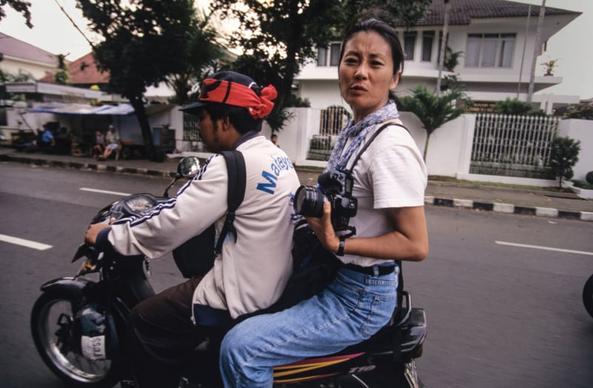
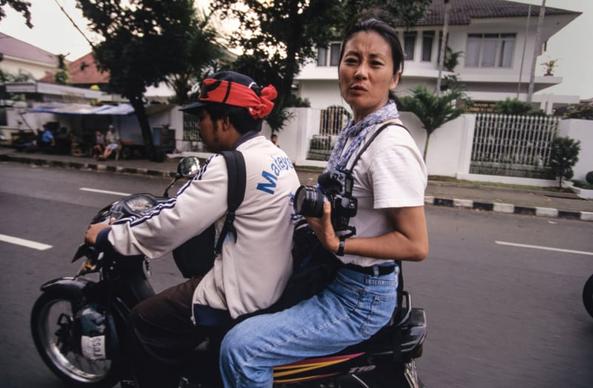
Photojournalist Yunghi Kim getting around students protests in Indonesia 1998. Photo by Paula Bronstein.
It is difficult to quickly sum up the ongoing career of photojournalist Yunghi Kim. Yunghi simply has too much personal energy, global photojournalism chops, and a record of giving back to the photographic community. In particular, Yunghi is known for her support of women photojournalists.
Her energy has driven a dedication to highlighting the power of fellow women photographers. Yunghi’s film, Unflinching Grace chronicles the history of 3 leading woman photojournalists and her Trailblazers of Light website links to the work of 540 female photojournalists and lists 255 picture editors from American newspapers and magazines.
Yunghi is also known for bringing to light the issue of Korean women being forced to serve as sex slaves for the Japanese Army during World War II. It is an example of the power of photography to drive change. Korea’s Comfort Women: The Fight to Be Heard was first published as stand-alone multi-page photo essay in TIME Asia and US News & World Report magazines in 1996 when it generated the initial impact. The New York Times ran the story again in 2015 after which the Obama administration resolved the dispute in a strategic agreement. The series changed the course of Korean and Japanese relations.
Yunghi’s give back is further reflected in her annual Yunghi Grant. In 2015, Kim "paid it forward" by instituting a $10,000 grant to photojournalists. The grant has grown since its inception and has been granted to over 40 photographers. Five photojournalists received $3,000 in grants in 2020.
Yunghi is represented by Contact Press Images.
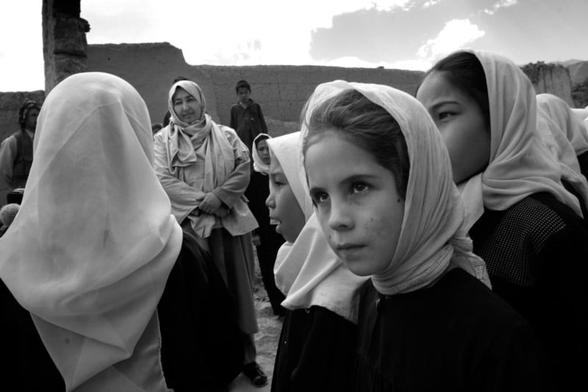
2004 Afghanistan. Massouda Jalal, Afghanistan's first women presidential candidate is greeted by school girls in a largely ethnic Hazara village in Sarkh Parshe, in Parwan Province, 5 hours north of Kabul. Photo by Yunghi Kim / Contact Press Images.
Peter Levitan : I want to start out by congratulating you on your new documentary, Unflinching Grace. It shows the powerful global journalism of Carol Guzy, Paula Bronstein, and you. Why did you produce this film?
Yunghi Kim: The Unflinching Grace doc is an idea I’ve had for several years. In the fast-moving information age of social media and the internet, I saw the opportunity to tell the stories of those of us who started our careers in the analog days. I also wanted to highlight the incredible experiences, the courage, and the dedication displayed as we navigated our careers. I think this comes through in the doc. I wanted to share some of our stories, so I asked Carol Guzy and Paula Bronstein to do the doc with me. Keeping it to three voices made sense for the 30-min format.
Carol, whom I consider to be the best photojournalist of the modern era, and, equally in her own right, Paula Bronstein is one of the hardest working photojournalists still after 40 years in the industry.
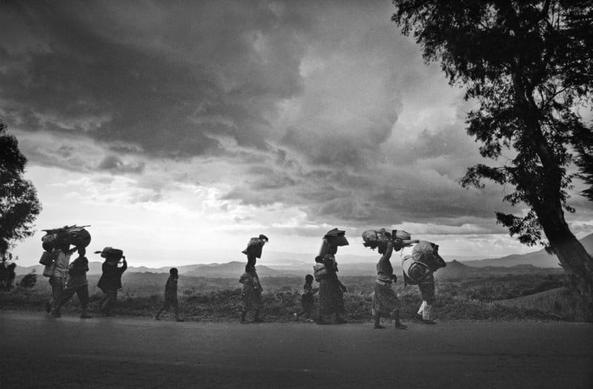
Refugees journey home through the Rwandan mountains. Many would walk for weeks. Photo by Yunghi Kim / Contact Press Images.
I have had great role models throughout my career – both men and women. I’ve had a great journey. I have a voice through my work in how I approach stories and important issues. To be a successful freelancer you must balance both. Personal work can facilitate assignment work; they piggyback off each other. I have worked with the best editors and photographers in the American newspaper industry and am fortunate to work with consummate pros at my photo agency Contact Press Images.
I don't recall seeing another Asian female on the frontlines early in my career, but my career has been rich in the diversity, in situations, and stories I have covered. This doc was intended to give a snapshot of the countless places we traveled to and stories we covered, often in the harshest and dangerous conditions - to get the story. The doc shows the breadth of our work. There was so much material, it was painful to cut it to only 30 min.
Goma, Zaire 1994. Nyirakamari Nzajyibukama, 10 years old, finds a bit of joy singing a Rwandan song while resting on a tree stump. She was with her family gathering wood near Kibumba camp. Photo by Yunghi Kim.
**You also created the websiteTrailblazers of Light. I was blown away by finding so many compelling photojournalists that I’ve never heard of. Other than an obvious degree of sexism, why do you think female photojournalists have not gained the attention of the photography marketplace? Or, frankly, is it simply sexism because most editors were men? **
It wasn't so much sexism for me, but more to debunk the stereotypical first impression of me as a petite Asian a “model minority.” Sure, there are jerks among men as well as women. I find myself paradoxically energized by anyone who doubts my ability. I have always used that to motivate me to prove naysayers wrong. This is something I learned from my mother.
Once people saw my photographs, my skin color -- and my gender -- mattered less. That increased my confidence and competitiveness. Minority women are a force to be reckoned with because we were the underdogs, which meant we’re inherently tougher and grittier. We try harder! Watch out!
1999 Kosovo War. Macedonian soldiers with batang intimidate women at the Blace, no-man's land between Kosovo and Macedonia. The Macedonians authorities did not want an influx of refugees in their backyard. Photo by Yunghi Kim / Contact Press Images.
I think, generally, in our society men become icons, less so of women. I see institutions recognizing male photographers. To promote the “silent generation” of women photojournalists who paved the way from the film era, an educational database for the future generations, I spent 6 months producing the Trailblazer of Light project to correct a misconception on social media.
It’s a project lauding the accomplishments of American photojournalists or those who produced great work for American news publications during the film era. I had to limit the scope of the list to America. The research was tedious and dedicated friends helped me; Debra Pang designed the site, Natalie Behring and Rose Lincoln helped me with the research that took 6 months. There are 540 photojournalists and 255 picture editors from American newspapers and magazines on the list.
1991, With AIDS, Dean Knott, was preparing to die. In early 1990s, it was pretty much a death sentence if you were diagnosed with AIDS. Treatments to manage the disease came later. Photo by Yunghi Kim.
As I mention in the intro to Trailblazers of Light , American newspapers had a push for diversity and gender balance in staff hirings in the 70s and 80s. I was the first female hired at a small newspaper south of Boston - my first job. Four years later when I went to work for the Boston Globe, my dream job, there were women already on staff. I had great role models like Uli Welsch, Janet Knott, and Wendy Maeda, Joanne Rathe, Suzanne Kreiter who paved the way for me. They set the bar high, there was a sisterhood and competition among us.
By the time I left in the mid-’90s to freelance, I would say the staff was 40% women! I think this is true of many of the metro newspapers in the US but if you look at the Trailblazers of Light list, you see the large number of women who went to work in the 1970s at the start of the modern era of photography, it coincides with the wide use of 35mm cameras. To me, women who joined the staff on newspapers across the US are most significant: it was the daily grind and routine coverage work, but also great training. You had to learn to handle diverse and fluid situations. I think the sheer volume of daily assignments we did in this era probably outpaced any generation before us. If you look at all three of us, our archives are expansive, well beyond just a few key stories.
It was a time when American readers hungered for in-depth storytelling of events happening around the world, Newspapers, magazines, wire services, and photo agencies worked hard to fill that demand. Newspapers were grooming their staff and investing in stories by sending their staff abroad with skills sets honed to work fast, process, print, transmit, and meet deadlines. We were up for the challenge. Social issues, wars, famine, news events of all kinds, were covered by a crop of hard-charging, fearless women, who I describe as warriors because we had to be.
2001 Peshawar, Pakistan. A child sleeps among women in burkas. Peshawar is an area with large refugees from Afghanistan. Photo by Yunghi Kim / Contact Press Images.
Magazines in the US (and Europe) were not accountable for this diversity push because by nature they pulled from a different talent pool on a freelance basis per story. The irony was magazine editors were largely comprised of female photo editors in the '80s and ’90s.
Excellent photojournalism is happening right now in the wires (AP, Reuters, AFP, Getty News, EPA) because they invest in coverage. The wires generate a large number of assignments, so they can sustain freelance photographers economically. I believe it's where you still find “working class and middle class” photographers even today.
April 10, 2003, Northern Iraq. Kurdish Peshmerga took over the strategic oil-rich city of Kirkuk, aided by Americans. Looting in the streets as a father and daughter walk by a bank building is on fire. Photo by Yunghi Kim / Contact Press Images.
You’ve written about how important empathy and making emotional connections to your subjects have been to your work. Do you think that a woman photojournalist brings a different perspective to a story? OK, let me be more direct. Does a woman gain a more intimate entry into people’s lives than a man can? Therefore, ultimately creating more compelling images within very personal stories.
I think this depends on the photographer. Each photographer has their own vision and approach. That inner voice is important, and it never stops maturing; I am still visually growing. How you nurture your inner voice is up to the photographer, but one way is being out there in the community and working it. As a freelancer, you answer ultimately to yourself! Confidence in one’s ‘inner voice’ is what gives one the ability to communicate with one’s eye, or one’s ‘outer voice’.
My Comfort Women work from 1996 was informed from my background as a Korean American. I saw it as an important story, the plight of the so-called “grandmothers” brought me to tears when I first learned of it in the mid-90s.
Kang Duk-kyung, 67, dying from lung cancer. Here volunteers take her to a doctor's appointment. She is often too weak to get out of bed. Kang Duk-kyung felt rage after hearing the Japanese government on the TV news denying involvement in, or even existence of, comfort women. She decided to go public. About 200,000 women from Asia, are believed to have been forced into sexual slavery. Photo by Yunghi Kim / Contact Press Images.
These women were forced into sexual slavery as young women during WWII by the Japanese Army. The grandmothers started to go public in the ’90s. Today, a story like this would travel instantly on social media. I worked on it when Korea really was truly on the other side of the globe and news was regionalized.
This work, an intimate profile of the grandmothers captured through their daily life, behind the scenes. I wanted to show who the comfort women were, so the world could connect with the plight of the women. This work helped introduce the issue of the comfort women to the West, it's been widely published during the print era thanks to Jeffrey Smith, Director of Contact Press Images. Initially magazines were not interested, I could not get backing, but it was an opportunity to see my own grandmother (who raised me) when my mother sacrificed for us and immigrated to America in the 60s (why my mother immigrated to the US in the 60s).
Thousands of Korean women were lured or coerced to work in brothels serving the Japanese Army during the 1930s and 1940s. Park Ok-ryeon, 77, thought she was being recruited to work in a factory in Japan to do laundry and look after wounded soldiers. Instead, she ended up on a South Pacific island where she was forced to have sex with Japanese soldiers at a comfort woman. Photo by Yunghi Kim.
Once completed, carefully printed 11x 14 silver gelatin prints, Jeffrey patiently pitched the essay for 6 months to get it published. Once published, there was a first written apology from Japanese Prime Minister Hashimoto in August of 1996, and during the Clinton presidency, the US actually banned Japanese soldiers from WWII from entering the US. People have expressed appreciation for the intimacy in my work. It’s how I connect with people, and hopefully viewers feel what I felt in photographing the grandmothers.
I think conveying empathy and emotion is essential in order to draw the viewer into the story and have a long-term impact on the viewer. Showing the humanity of the people in your photographs connects the viewer with the situation but also it can invoke pleasant or unpleasant feelings.
With a cigarette in her mouth, a worker hurries past a bus station on Stillwell Avenue during the evening rush hour. Photo by Yunghi Kim / Contact Press Images.
In respect to photojournalism itself, I’d like you to help us understand what this term means today. Is a photojournalist different from a documentarian? Different from a street photographer?
At the root of the word, photojournalism is the word ‘journalism” -- that distinguishes itself from other forms of photography. The mission is to document and to inform, and it has a higher mission in that it’s for history. But it leaves the recording of that story – the manner in which it is captured -- to the photojournalist.
Photojournalism is a balance of content (to inform the reader) and photographer's aesthetics (photographer’s vision). Content becomes especially important in news photographs because you are informing an event, and to navigate it requires street smarts, intuitiveness, instincts, and grit. Learning to navigate the ever-changing and complicated landscape of a sometimes dangerous news story, gaining trust, and access, all take time. The journey to becoming a great photojournalist follows a long, meandering road that entails grueling hours on the street covering news or pursuing enterprise. Our generation of women spent 8 to 10 hours a day working every day, shooting 5 or 6 assignments a day, then it's back to the office to develop the film and print all on deadline.
Author and poet Ann Petry in her home in Old Saybrook, Conn. Photo Yunghi Kim.
There is a spectrum in photojournalism, from portraits to features to embedding with families or community to news to sports, and there’s crossover aesthetics. As freelance photographers, one must be able to handle many bread-and-butter jobs from corporate to editorial. And more photographers are freelancing with the new platforms available today. With the advent of the iPhone and filters, everyone is a photographer, especially with being able to instantly upload and send.
But good storytelling is good storytelling either in one photograph or series of photographs, that takes time. We have a role to tell in reporting the story: to make it clear, concise, and demonstrative, without fakery or setting up situations to inform the reader honestly. For me, I am thankful I have the Comfort Women work, most of the grandmothers I photographed are gone. The work was captured by means of photojournalism, but now it is a document, something inviolable that will stand the test of time.
Mourning Freddie Gray April 28, 2015. Men mourn the death of Freddie Gray at a protest in West Baltimore. Gray died from a spinal cord injury sustained while in police custody. Photo credit Yunghi Kim / Contact Press Images.
At the heart of photojournalism is ethics, such that the content of a photograph is not manipulated in post-production, nor are moments fabricated or set up. Again, it's all about the credibility of visual information to the viewer.
I come from the era when images were equivalent to that of a reporter's notebook, it is in the newsroom that you learn ethics. I learned that my negatives -- outside of published images -- should be protected, they are my notebooks. Information in reporters' notebooks published and unpublished should not be used by interest groups.
With cable news, that changed, as opinions are passed off as journalism. We are in confusing times -- now activism and propaganda are passed off as journalism. With Instagram, it's even more confusing to the public, it's mixed with entertainment and influencers. It’s hard to sift through it. So, when the general public sees a news image, people don't see it as reporting but are thinking, “Why am I seeing this on my feed. It's not what I agree with.”
Jakarta, Indonesia, 1998. Photo by Yunghi Kim / Contact Press Images.
At the core of photojournalism is news. News is not always pleasant, but it needs to be visually reported, documented, (i.e., refugee crisis, wars, famines, fires, bombings). Images of photojournalism are powerful in informing and inspiring the world to do something about it.
Think back to Catherine Leroy’s daring images from the Vietnam War where she parachuted with the US military to do her job. She was captured by the North Vietnamese Army. She talked her way out and managed to take their pictures. Margaret Bourke White’s haunting images of the Holocaust, WWII, and the Buchenwald concentration camp in 1945. Dorothea Lange's Japanese Internment camps during WWII in 1942 captured Japanese Americans struggle to retain their dignity, we are thankful these images exist. Further, Carol Guzy’s dedicated work to document Haiti, Janet Knott’s 1986 shuttle explosion. Lynn Johnson's groundbreaking breast cancer series To be Whole Again from 1988, Marilyn K Yee’s daily work as the staff photographer for the New York Times covering “Gotham City” at all hours. Yee was fearless.
These are female photographers on the ground and out in the streets, in the communities, embedded with families, that capture the human condition, showing the worst and best of humanity. In this context, me walking into Iraq to cover the Iraq war in 2003, driving through monsoon rain, walking only at night to escape detection, was nothing to shout about. I did not talk about it for 10 years, then I wrote about it on the 10th anniversary of the Iraq War in National Geographic and went public with my story.
2000 Jakarta, Indonesia. Going to School- Children who can't afford 30 cents to ride the train to go to school by hanging on the side or ride on top which is free. Photo by Yunghi Kim / Contact Press Images.
Let’s step into the business of photojournalism. What advice do you give a young person that wants to enter this world? And, as print publication options fade, how can a photographer show their work to a broad audience – especially if they are creating linear, multi-image stories?
Multi-image essays exist today as they did during the print era except online.
In the print era, it was more of a struggle to get your images published because of limited space. Now it’s a bit easier, with seemingly endless space on the Internet but editing and sequencing are still critical. So is understanding what you are licensing, in what market, and with what rights.
In stories, the edit is important. I can work on it for days or weeks. When I see a good edit now, I study it and I look at it several times to better understand the sequencing.
Endless online space means there are more assignments. Just look at the NYT. They just reported they have one billion in cash.
Be wary of the “exposure game” -- doing work for someone who tells you the "exposure is good for you." Sometimes there is a value to exposure, but it has to be a balance. It's not going to pay your bills.
Learn your craft, look at the industry as a long game, you may have periods with a lot of work, notoriety, and successes, but you will also have periods of banal work and frustrations. It happens to everyone. I respect photographers who persevered despite market downturns and the favoritism of new “flavor of the month” talent over the years.
Network with your peers as support but also know your peers can be your competition. You are all pursuing the same pool of assignment work. But generally, it's important to have a small group of people around you who have your back. I would say, in some ways, there are more assignments now because of the need for endless online content.
I admire younger photographers Hilary Swift, Diana Cervantes, Go Nakamura, Alessandro Rampazzo, Nicolo Filippo Rosso, Ann Wang, Regina H. Boone, Stephanie Keith, John Minchillo, Tom Brenner Byron Smith, Sarahbeth Maney to name a few. These photographers, it’s not what they say, it's in their work. It’s a pleasure to follow their work closely.
It's important to retain your copyright rights especially on work that is personal projects, be careful of contracts you sign, and understand the contracts. Today photographers need to have a multi-prong strategy: assignment, recouping unauthorized use, retaining copyright, print sales, and some may have to do other jobs. Read my friend Todd Bigelow’s book on the The Freelance Photographer’s Guide to Success: Business Essentials. This book will help you.
1998 Jakarta, Indonesia. In the run-up to President Suharto’s resignation as many as 30,000 students gathered daily outside the parliament building. Student protests and the economic crisis led to the resignation of Indonesia's President Suharto after 32 years of rule but it did not put a stop to the unrest that had rocked the country. Photo by Yunghi Kim / Contact Press Images.
Register your work with the Library of Congress. I was one of the first people to encourage photographers to pursue unauthorized use violations in the internet era 10 years ago. Today, the money I recoup from unauthorized use of my work funds my Yunghi Grant started in 2015. Knowing your rights regarding copyright is important. Also, a source of revenue for freelance photographers in today's climate. Theft of images was so rampant it launched an entire cottage industry of lawyers who will work with photographers on contingency.
Last question is about your personal growth. You’ve mentioned that you developed as a photographer because you came to the United States as a child with limited English. What can we learn from your experience in how we can be more conscious about how we see?
My English was limited at the age of 10 when I came to the United States in 1972. It was pretty much Yes or No! That was it. Much of my childhood was spent waiting in Korea to come to America to rejoin my parents. I saw my mother for the first time when I came to the US. I remember in the 4th grade, classmates coming up to me to ask questions, and I would just randomly say yes or no. I can only imagine what they were asking? I laugh now thinking about what the questions might have been.
Some people have a talent with languages, I do not. I am envious of those who can speak 5 languages. I discovered I speak a visual language that has taken me everywhere. I have a great instinct, I'm a reader of people's reactions. Talk is cheap but judging reactions and being observant will save you in a conflict zone. You will learn to see the soul and character of the person.
_You can see Yunghi Kim’s workon her website.
About the author : Peter Levitan began life as a professional photographer in San Francisco. He moved into a global advertising and Internet start-up career. Peter photographs people around the world using a portable studio. This is his excuse to travel and meet people.
#inspiration #interviews #interview #peterlevitan #photojournalist #yunghikim

Exposed: Photographer John Tully and Thoughts of Bruce Springsteen
It is rare to have a photographer conjure up the memory of a particular song. However, I immediately thought of Bruce Springsteen’s Darkness on the Edge of Town when I saw New Hampshire photojournalist John Tully’s recent work.
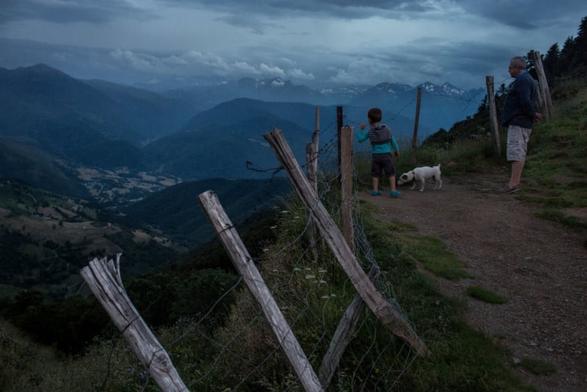
There are three reasons that John’s work sent me to thoughts of Springsteen. First, John has a unique approach to light. In fact, it is his use of darkness, the deliberate absence of light, that helps to reveal the essence of his subject matter. One might call the darkness moody. I think of it as isolating the deeper meaning of the images.
The second reason is that much of John’s photography is about how he works around the edges of a subject. When he photographs the Tour de France race, he is photographing the spectators rather than the expected shots of the riders. This same approach to showing the edges of a subject is often applied to his political work. In this case, his non-traditional approach allows us to experience an un-orchestrated side of the political spectacle of primaries.
Finally, John is very focused on his home state of New Hampshire. As he says, “I would encourage people to photograph what is in front of them and start with what they think they know.” This advice reminds me that Bruce concentrated many of his most famous lyrics on his personal experiences growing up at the New Jersey shore.
Peter Levitan: Your series NEVERLAND about New Hampshire’s White mountains is, in many cases, about the light. Why have you chosen this approach?
John Tully: Thanks so much for the opportunity to share and talk about this ongoing project in northern New Hampshire. It is one that is deeply personal and as much a love letter to the place and people as it is an exploration of memory, self, and the idea of home.
Photographing is always a privilege and exercise in choice, and I tend to focus more on choice of content rather than technical choice. The use of light is just one tool, one choice, and one aspect of an image but for me it’s never just about the single image or the gear or the technical side of photography. The power is in the idea of photography as a tool for communication through the image we present and what we have to say.
New England and more specifically, the North Country, has a history of cliché visuals and tropes that have been reinforced by repetition and a singular narrative that is inaccurate to the place and people as a whole.
Obviously, photography is about light. How does removing light help you tell a story?
There’s a thought that the absence of light can be a subtle hint at feeling, mood -- usually serious, contemplative, depressive, oppressive, thought-inducing, enlightening, traumatic, etc.
Sometimes we have to spend more time with an image that isn’t perfect , and we should. But it’s not so much the removal of light that I’m conscious of and more the presence of light on a scene, how it exists, what it can convey. Especially in the context of work we typically see from the area, which tends to have a wide tonal range and be ‘well’ exposed.
Through its portrayal in the visual arts and media, the White Mountain region has been dominated by perfectly exposed idyllic images of mountains, wildlife, white pioneering, stone walls, foliage, outdoor recreation, etc., and the majority of that work hasn’t come from within the community.
Beginning in the early 1900s to today and the world of Instagram, we’re inundated with a lopsided, public visual record of the region. While researching this ongoing project, it often feels like I’m looking at the longest-running tourism marketing campaign.
Marion Post Wolcott’s work in the 1940s for the Farm Security Administration is an accurate depiction of a place and time, but while Wolcott’s work around the country spanned economic backgrounds and situations, it never quite moved much beyond the landscapes, some logging, and the recreation while she was in the White Mountains.
You’ve applied a slightly different, I’ll call it an editing approach, to your Tour de France and political work. How does looking at the peripheries, the sidelines, of a subject help tell these stories?
I just find that life is more interesting in that space, the peripheries. That’s where life exists. I also think it’s maybe my personal act of defiance. In western culture, we tend to idolize people and create this urge for competition that can be profoundly damaging and reaffirming all while creating division and silence. But famous people are boring and not unique.
We’re told from the top down that everyone has the same opportunity, the same chance to make something of themselves and we see that tiny sliver of the success-story pie blown out of proportion with the rich and the famous. Life is never a level playing field. The danger is trying to avoid becoming too cynical.
You have photographed the political campaigns of Beto O’Rourke and Rick Perry. Is politics a love of yours or did you ‘back into’ politics as a subject because you live near the New Hampshire roadshow?
I think there is a level of intrigue to be self-aware while in the middle of something historical and finding you got there accidentally. That’s the New Hampshire primary for me. Most of the time I laugh because it’s all the same -- kissing babies, bad jokes, access, no access, next event, so on and so forth. There’s a fun challenge in making work in that space.
One reality is that there is a level of interaction, even if it’s just optically, that can have real repercussions on both the politicians and the people. That interaction can lead to a person being put in a position of power with the ability to draft, manipulate, influence, and execute policy that affects people.
It’s a surface-level front seat to history and that can be exciting, a privilege, even when it’s deathly boring.
We often see people who want to get into photojournalism think that they need to head to foreign lands or conflict zones to build their portfolios. I sense that you think that your backyard, even the White Mountains, might be just as fruitful. Would you advise a young photographer to start where they live?
There’s a lot to unpack here. As a white man in an industry that has been primarily dominated by white men from western culture, I can tell you I’m not the person to be listening to and can’t speak for anyone but myself.
When I started out in this industry, my plan was to do internships, get a job at a small newspaper and work my way up to a larger newspaper with an ultimate goal of being a foreign correspondent covering conflict. Pre-2008, this was a path I saw and wanted to emulate. I and it was not unique. That specific course did not play out and I am grateful because it came from an ill-informed, privileged point of view I didn't understand at the time.
Everyone has their own reasons for their decisions and actions. A lot of photographers start in photography after seeing work from around the world. After all, photography can be a ticket to the world. But we need to be ethical.
We need to be honest with not only ourselves but especially to the people we photograph and the reasons we make the work we do. There’s this ‘white savior complex’ in the industry, especially among new photographers or those in an insular circle of peers. That rhetoric of being a voice to the voiceless, or shedding light where there is none, needs to be retired.
Making something as big as a career off of something as small as a photograph doesn’t just end when the photographer goes home because their actions and that photograph can have very real-world repercussions for the people portrayed in that photograph. And we absolutely cannot hide behind this flawed idea of objectivity.
There are responsible and ethical ways to approach all work and it starts by asking why you’re doing what you’re doing and have some courage to admit when you need to maybe take a seat and listen or help someone else.
I would encourage people to photograph what is in front of them and start with what they think they know.
There’s a lot that can be done right outside our own door. And whether we live in a rural or urban area, each presents its own level of intrigue, challenges, risks, and failures to welcome and work through.
Last question. Do you need a particular piece of equipment set up when you travel? Could you use a mobile phone for your journalism instead of a digital camera system?
The cost of equipment and keeping up with the latest and greatest can be a huge barrier to entry. As a working photographer, it can actually be pretty defeating if you let it, both mentally and financially. So don’t let it.
Some of the best images ever made were done on cameras that today, people are practically giving away. Or a point and shoot. Or a mobile phone. Perhaps given the audience and some previous comments there’ll be some pushback but no, I am of the school of thought that the best camera is the one you have.
You can find John Tully’s work onhis website.
About the author : Peter Levitan began life as a professional photographer in San Francisco. He moved into a global advertising and Internet start-up career. Peter photographs people around the world using a portable studio. This is his excuse to travel and meet people.
Image credits: All photographs by John Tully and used with permission
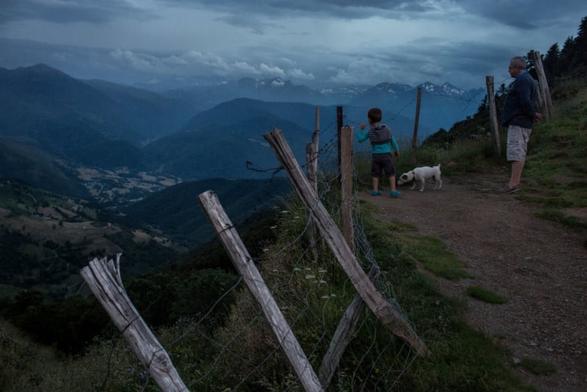


Exposed: An Interview with Superstar Wedding Photographer John Dolan
I am fascinated by the art of wedding photography and have seen it morph from very formal and super staged -- as in very often: “OK, grandma stand over there” -- to having a photographer take a more casual or natural approach. John Dolan’s style approaches wedding photography from the perspective of an involved documentarian interested in the emotional experience.
As the introduction to John’s new book states, “The wedding is one of society's last and lasting ceremonies―universal in its presence, comprehensive in its emotion.”
I have never photographed a wedding. I’d imagine a world of serious pressure and angst as a photographer “must’ capture the essence of someone’s most personal experience. To go a step further, I’d add the anxiety of making sure I’ve saved all the great shots. In an age of digital, which should solve this issue, John still shoots film. And as he says below, he trusts himself and his skills.
From John’s Amazon book page bio:
John Dolan is a pioneer in contemporary wedding photography. For over 30 years he has redefined the genre, blending the honesty of documentary with the grace and beauty of a fashion photographer. His photos featured prominently in the inaugural issue of Martha Stewart Weddings in 1995. His wedding clients include magazine art directors and editors, as well as celebrities Will Smith, Rosanne Cash, Ben Stiller, Kate Bosworth, Bridget Moynahan, and most recently, Gwyneth Paltrow.
John is about to publish his new book The Perfect Imperfect. The Wedding Photographs. Purchase details follow this interview.
Peter Levitan: I must start with what I’ll call the most obvious question. How do you become a celebrity photographer? Was it luck or marketing – or both?
John Dolan: I wouldn’t describe myself as a celebrity photographer. I get hired by people who love photography (some of them well known). I see myself as the opposite of a paparazzi. I shoot things as they happen, not imposing myself on the subject. One celeb told me that they only had two kinds of photos of their family: iPhone pics and paparazzi shots. They needed a photographer who they could trust.
Do celebrities look for a different outcome than, well, let’s call them regular folk? Is there a PR element that a celebrity looks for?
A lot of the work I do for celebs never gets seen. It’s for them, not for their publicist. They hire me to photograph them as they are instead of as the public sees them. I usually shoot solo, not overproducing the images.
How did you get started in wedding photography? And why have you specialized in weddings?
My goal when I started out in New York in the ‘90s was to be an editorial photographer. Along the way, I ended up getting hired by art directors and photo editors who did not want a wedding photographer. They just wanted me to come to their wedding and shoot it like a story.
What planning role do you play? Do you act like a stage director or are you an observer – or to put it another way, a photojournalist?
I arrive at a wedding without a plan, intentionally. My magazine work trained me to feel the flow of a wedding and know when to be invisible and when to play court jester. I can wrangle a group photo when needed to but I also am sensitive to the psyche of a couple under the pressure of a wedding and I try not to boss them around. I get my photos in between moments without directing. Some photographers are directors. I’m a collector.
What kind of conversations do you have with the couple to determine their expectations before the big day?
It’s all about trust. I tell them I have no expectations of them to model or pose, rather, I want to feel whatever they feel and embrace that. I make it clear that this is their wedding and not about me.
I am fascinated by the wedding ritual. Do you see a consistent, as you call it dramatic arc?
The arc goes from nervous preparation to ecstatic celebration, with everything in between. There is a broad range of emotion that gets overlooked in traditional wedding photography. I think of it as the mixture of salt and sweet. You need both to get the full flavor. I see a lot of younger clients and photographers embracing this approach.
You define your work as delivering: Beauty; Truth and Bliss. What are the key elements of each of these?
This is the variety of moments I have observed over the years. The beauty is everywhere, but the moments of truth can be subtle and surprising and easy to miss. The reality of the solemnity of the ritual hits people, often when they least expect it. Bliss comes as a sense of relief when the wedding reaches a peak. There is a sense of accomplishment near the end of a wedding, on the dance floor, or in a quiet moment.
Do you have a personal style? When I look at your work, I see that you really think about the light (mostly natural light), use motion and you shoot around the edges. Is this a fair assessment?
Light certainly inspires me, but I think my work is defined by my intimate connection to my subjects. I shoot from the inside of a wedding, almost as if I was a cousin. I feel the flow of the day and use that feeling to tell me how to photograph. There is motion when things get chaotic, not as a trick but because that is my only choice. I can’t press pause at a wedding and rearrange everything. I make photographs of what it felt like that day, not what it looked like.
How do you ensure that you get the right shots? Do you ever work with a second shooter?
My clients expect me not to play it safe. They encourage me to make art, not follow a checklist of expected images.
I love shooting solo. It keeps me more involved with the couple. For weddings over 250, clients sometimes ask me to bring a second.
Since a wedding is a very important one-time event, how do you ensure that you’ve taken and can guarantee that you’ve got the files in a safe place? Are you more confident being digital than when you shot film?
I still shoot 70% film. Film has taught me to have faith in myself and in my lab. My philosophy is this: Weddings are too important to play it safe. As you say, this is a one-time event. To make art you have to take risks. I turn the risk into adrenaline to power my creativity.
What kind of camera equipment do you use? I’ve heard that you mix up your formats.
I use Leica, Rollieflex, and Holga.
You just published the new book THE Perfect Imperfect about your wedding photography journey. Give us a bit of background on the why and how of publishing what seems like a life’s work?
This book is a 30-year tour of the emotional landscape of weddings. The imperfect, the unplanned, the unexpected, these are the moments that feel more real to me than the perfect moments that are staged and controlled.
My hope is that I open the door to a wide range of approaches to photographing at weddings. Each wedding follows a similar script, but each one is a unique study in human nature under pressure. There are so many stories to be discovered by curious photographers.
The Perfect Imperfect. The Wedding Photographs is available from the publisher and on Amazon. It spans 268 pages, weighs 2.5 pounds, and costs $90. A limited number of signed copies are also available through Dolan's website.
About the author : Peter Levitan began life as a professional photographer in San Francisco. He moved into a global advertising and Internet start-up career. Peter photographs people around the world using a portable studio. This is his excuse to travel and meet people.
Image credits: All photographs by John Dolan and used with permission
#interviews #interview #johndolan #peterlevitan #weddingphotography
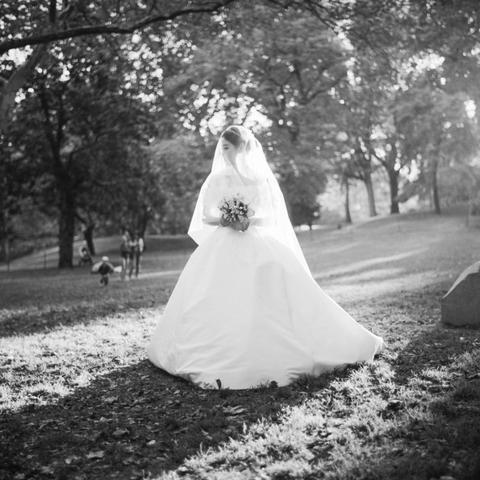
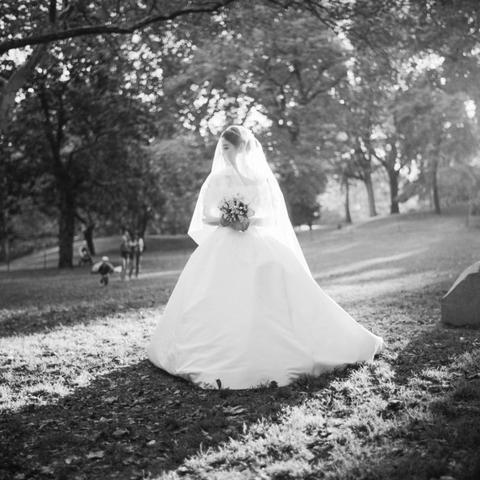
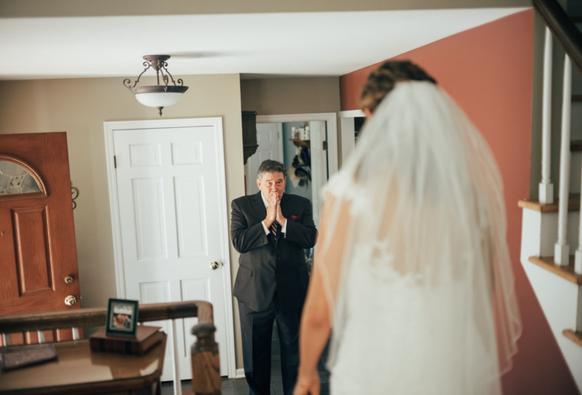
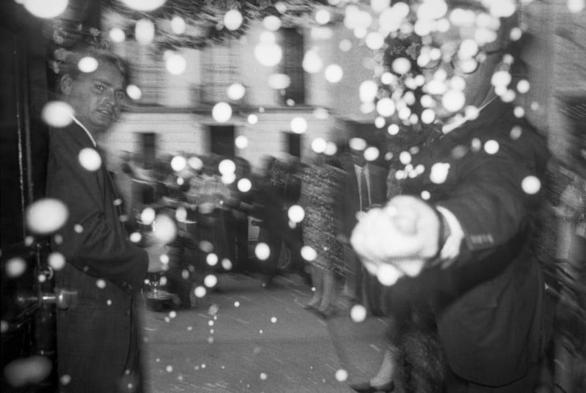

Exposed: An Interview with Superstar Wedding Photographer John Dolan
I am fascinated by the art of wedding photography and have seen it morph from very formal and super staged -- as in very often: “OK, grandma stand over there” -- to having a photographer take a more casual or natural approach. John Dolan’s style approaches wedding photography from the perspective of an involved documentarian interested in the emotional experience.
As the introduction to John’s new book states, “The wedding is one of society's last and lasting ceremonies―universal in its presence, comprehensive in its emotion.”
I have never photographed a wedding. I’d imagine a world of serious pressure and angst as a photographer “must’ capture the essence of someone’s most personal experience. To go a step further, I’d add the anxiety of making sure I’ve saved all the great shots. In an age of digital, which should solve this issue, John still shoots film. And as he says below, he trusts himself and his skills.
From John’s Amazon book page bio:
John Dolan is a pioneer in contemporary wedding photography. For over 30 years he has redefined the genre, blending the honesty of documentary with the grace and beauty of a fashion photographer. His photos featured prominently in the inaugural issue of Martha Stewart Weddings in 1995. His wedding clients include magazine art directors and editors, as well as celebrities Will Smith, Rosanne Cash, Ben Stiller, Kate Bosworth, Bridget Moynahan, and most recently, Gwyneth Paltrow.
John is about to publish his new book The Perfect Imperfect. The Wedding Photographs. Purchase details follow this interview.
Peter Levitan: I must start with what I’ll call the most obvious question. How do you become a celebrity photographer? Was it luck or marketing – or both?
John Dolan: I wouldn’t describe myself as a celebrity photographer. I get hired by people who love photography (some of them well known). I see myself as the opposite of a paparazzi. I shoot things as they happen, not imposing myself on the subject. One celeb told me that they only had two kinds of photos of their family: iPhone pics and paparazzi shots. They needed a photographer who they could trust.
Do celebrities look for a different outcome than, well, let’s call them regular folk? Is there a PR element that a celebrity looks for?
A lot of the work I do for celebs never gets seen. It’s for them, not for their publicist. They hire me to photograph them as they are instead of as the public sees them. I usually shoot solo, not overproducing the images.
How did you get started in wedding photography? And why have you specialized in weddings?
My goal when I started out in New York in the ‘90s was to be an editorial photographer. Along the way, I ended up getting hired by art directors and photo editors who did not want a wedding photographer. They just wanted me to come to their wedding and shoot it like a story.
What planning role do you play? Do you act like a stage director or are you an observer – or to put it another way, a photojournalist?
I arrive at a wedding without a plan, intentionally. My magazine work trained me to feel the flow of a wedding and know when to be invisible and when to play court jester. I can wrangle a group photo when needed to but I also am sensitive to the psyche of a couple under the pressure of a wedding and I try not to boss them around. I get my photos in between moments without directing. Some photographers are directors. I’m a collector.
What kind of conversations do you have with the couple to determine their expectations before the big day?
It’s all about trust. I tell them I have no expectations of them to model or pose, rather, I want to feel whatever they feel and embrace that. I make it clear that this is their wedding and not about me.
I am fascinated by the wedding ritual. Do you see a consistent, as you call it dramatic arc?
The arc goes from nervous preparation to ecstatic celebration, with everything in between. There is a broad range of emotion that gets overlooked in traditional wedding photography. I think of it as the mixture of salt and sweet. You need both to get the full flavor. I see a lot of younger clients and photographers embracing this approach.
You define your work as delivering: Beauty; Truth and Bliss. What are the key elements of each of these?
This is the variety of moments I have observed over the years. The beauty is everywhere, but the moments of truth can be subtle and surprising and easy to miss. The reality of the solemnity of the ritual hits people, often when they least expect it. Bliss comes as a sense of relief when the wedding reaches a peak. There is a sense of accomplishment near the end of a wedding, on the dance floor, or in a quiet moment.
Do you have a personal style? When I look at your work, I see that you really think about the light (mostly natural light), use motion and you shoot around the edges. Is this a fair assessment?
Light certainly inspires me, but I think my work is defined by my intimate connection to my subjects. I shoot from the inside of a wedding, almost as if I was a cousin. I feel the flow of the day and use that feeling to tell me how to photograph. There is motion when things get chaotic, not as a trick but because that is my only choice. I can’t press pause at a wedding and rearrange everything. I make photographs of what it felt like that day, not what it looked like.
How do you ensure that you get the right shots? Do you ever work with a second shooter?
My clients expect me not to play it safe. They encourage me to make art, not follow a checklist of expected images.
I love shooting solo. It keeps me more involved with the couple. For weddings over 250, clients sometimes ask me to bring a second.
Since a wedding is a very important one-time event, how do you ensure that you’ve taken and can guarantee that you’ve got the files in a safe place? Are you more confident being digital than when you shot film?
I still shoot 70% film. Film has taught me to have faith in myself and in my lab. My philosophy is this: Weddings are too important to play it safe. As you say, this is a one-time event. To make art you have to take risks. I turn the risk into adrenaline to power my creativity.
What kind of camera equipment do you use? I’ve heard that you mix up your formats.
I use Leica, Rollieflex, and Holga.
You just published the new book THE Perfect Imperfect about your wedding photography journey. Give us a bit of background on the why and how of publishing what seems like a life’s work?
This book is a 30-year tour of the emotional landscape of weddings. The imperfect, the unplanned, the unexpected, these are the moments that feel more real to me than the perfect moments that are staged and controlled.
My hope is that I open the door to a wide range of approaches to photographing at weddings. Each wedding follows a similar script, but each one is a unique study in human nature under pressure. There are so many stories to be discovered by curious photographers.
The Perfect Imperfect. The Wedding Photographs is available from the publisher and on Amazon. It spans 268 pages, weighs 2.5 pounds, and costs $90. A limited number of signed copies are also available through Dolan's website.
About the author : Peter Levitan began life as a professional photographer in San Francisco. He moved into a global advertising and Internet start-up career. Peter photographs people around the world using a portable studio. This is his excuse to travel and meet people.
Image credits: All photographs by John Dolan and used with permission
#interviews #interview #johndolan #peterlevitan #weddingphotography
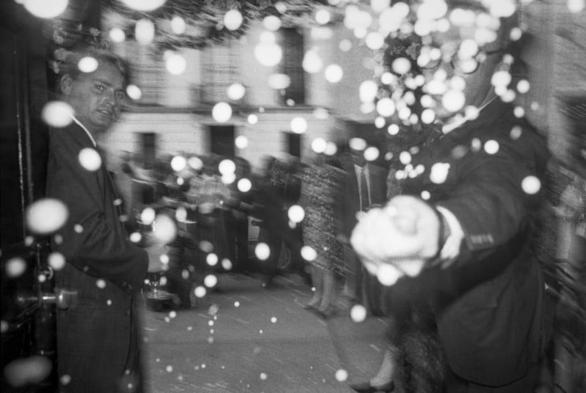
Don’t Make the Critical Facebook and Instagram Photography Mistake
I have a good friend that uses Facebook as his photography business’s digital platform. I have multiple friends that use Instagram as their portfolio. This also goes for, yes to a lesser degree, using Behance, Tumbler, Model Mayhem, Imgur, and Flickr as a portfolio destination.
The primary issue for all these websites is that you do not own or control them. You are loaning your work to them and must abide by their rules and regulations. And future business model.
Oops
Both Instagram and Facebook recently went down for hours. This meant that beyond not being able to look at photos of your friends' kids, if your photography world counted on either of these sites, your business and portfolio went down too. It’s like you did not exist. This was painful for millions of businesses, many of which only use Facebook as their business information website. I’d imagine that millions of dollars of sales were lost that day.
While this event was a Facebook server issue, are you sure that Facebook and Instagram, as we know them today, will be here in their current formats forever?
Forever, as in the place that you want to show your work – forever?
Remember Myspace?
For a few years, Myspace was the ultimate destination for musicians to share their work and build reputations. From 2005 to 2008 it was the largest social media site.
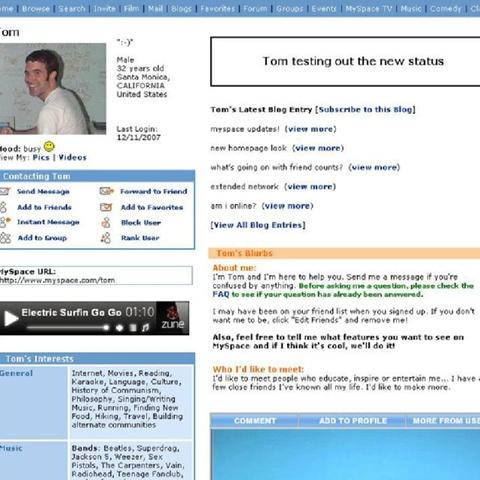
A screenshot of Myspace co-founder Tom Anderson's page in the early days of the social network.
Popular musicians like Arctic Monkeys and Calvin Harris made their names on Myspace. Unfortunately trusting Myspace turned out to be a rather bad idea. From a Myspace press release:
As a result of a server migration project, any photos, videos and audio files you uploaded more than three years ago may no longer be available on or from Myspace. We apologize for the inconvenience.
“Inconvenience.” Really?
At that time, CNN reported that "Andy Baio, a tech expert and former chief technology officer of crowdfunding platform Kickstarter, warned that the music of up to up 14 million artists may have been lost."
Myspace accidentally lost all the music uploaded from its first 12 years in a server migration, losing over 50 million songs from 14 million artists. https://t.co/OyKB5Dxtw9
-- Andy Baio (@waxpancake) March 18, 2019
14 million. Really?
Own Your Work
Other than morality issues, I am sure that having your work on Facebook and Instagram is a good idea. Each platform reaches zillions and, in the case of Instagram, is known as a photography destination. Plus, you get the dopamine hit from all those cherished ‘likes.’
However, trusting these third-party platforms as your primary and forever marketing resource is a BAD idea.
I’ll state the obvious. Add your own website to your marketing mix. Yes, I know that this is obvious. However, in the case of Instagram, too many photographers trust it as their little photo universe. They may have a real website, but because they view updating as a pain in the rear, they do not keep it updated. Updating is in the eye of the beholder. Do you really have to show every photograph you take? Editing is a good thing.
A side note related to marketing: both of these sites are trending older. If reaching the under-35 crowd is important, you might be missing a sizable audience.
Your Partners
There is another problem about ownership that I’ll admit probably will not be an issue. But, then again, who knows?
Instagram and Facebook clearly say that they do not own your images. However, their terms and conditions state that users grant them a “non-exclusive, fully paid and royalty-free, transferable, sub-licensable, worldwide license to use their content”. This means that you are effectively in a "partnership" with Mark Zuckerberg as it relates to image ownership.
Is this a big problem today? Probably not. But tomorrow? Who knows? Remember the Myspace debacle.
Own You
I am sure that a great number of serious photographers have their own branded websites. Right?
If not, I suggest going out and reserving your own URL, which you should do even if you will not build your own destination. Just own you. And then build your website. You can use tools like Squarespace or Wix or even WordPress.
The bottom line is that you do not have to build out a major website. Just make sure that you’ve got your very own branded destination if the stuff hits the fan. Because… it probably will.
Some hard-working photography websites are very deep and some deliver a simple look. Regardless, they should be viewed as critical elements in building and owning a photographer’s personal brand.
About the author : Peter Levitan began life as a professional photographer in San Francisco. He moved into a global advertising and Internet start-up career. Peter photographs people around the world using a portable studio. This is his excuse to travel and meet people.
Image credits: Header and camera illustrations licensed from Depositphotos.
#editorial #advice #branding #business #facebook #hosting #instagram #marketing #oped #opinion #peterlevitan #socialmedia


Petrina Hicks: Australia’s Beguiling, Even Mysterious, Photographer
The large-scale, hyperreal photographs of Australia’s Petrina Hicks are formal, super professional, sightly odd, and beguiling. Even bewitching in the most positive sense.
Petrina’s studio work is very similar to the lighting, spare style, and equipment that professional advertising photographers use. However, Petrina and product photographers, in terms of subject matter, could not be further apart. Imagine applying expert technique to children swallowing parrots, beautiful albinos, large noses, and peaches. Petrina also has a rather hypnotic snake video.
One of Petrina’s positive reviewers describes her work of delivering a ‘gentle oddness’.
Peter Levitan: Every time I look at one of your images, for example your girl with the parrot, I take away a different emotion. Do you purposefully aim for each viewer to have his or her very own reaction?
Petrina Hicks: I prefer my images to remain open, with no set narrative, aiming for ambiguity or perhaps something enigmatic. Certainly, one of my approaches when making images is to translate a certain emotion, one that is quite abstract, so the ‘feel’ of the images is important. Translating an abstract emotion through photography is quite challenging, I enjoy this process though.
I’m always aiming for a sense of ‘ease’ in the images also, a sense of stillness, quiet, and ease.
From Lauren, 2004. Courtesy the artist and Michael Reid Gallery, Sydney.
Your photography is beautiful, unexpected, and challenging, where do your ideas come from?
The ideas are quite inward, an exploration of psyche. I’m interested in making images of females that portray their interior world, more so than their external world, often their eyes are closed, or their faces are turned away from camera. I’m drawn to art’s historical references, archetypes, myths to find inspiration much of the time.
From Still Life Studio, 2008. Courtesy the artist and Michael Reid Gallery, Sydney.
I’ve read that you seek “utopian perfection” or using another term, “hyperreality”. Is this a fair statement?
I aim for the images to tread a fine line between reality and illusion, so they look very real – great detail in skin, hair, clothing, animal fur, feathers, etc. – yet they seem to exist in an illusionary space, a space that cannot be connected to any particular time in history, like a void. The surface appearance of the images is harmonious with lots of space around the subjects, often this perfect appearance works in opposition to the more unsettling ideas in some of the works.
From California, 2016. Courtesy the artist and Michael Reid Gallery, Sydney.
I get seduced by your subjects and visual pallet. I find that your lighting, choice of subjects including sculptures, animals, snakes, and women are all seductive. Even soulful. Are you seeking viewer seduction?
I’m very interested in the soulful or spiritual aspect of human and animal beings, the lightness of our spirit in comparison to our corporeal bodily experience. I explore this in many ways in the works, and this may look soulful. I do exploit beauty in my work, the images and subject matter are very seductive and harmonious.
From The Unbearable Lightness of Being, 2015. Courtesy the artist and Michael Reid Gallery, Sydney.
Do you have a process for series development? For example, when you created the Bleached Gothic series did you storyboard the series as a unit, as in an evolving story, before you started?
There is a period of research, then production before I begin creating a new series.
I photograph one idea several times, across several photoshoots until the idea is resolved and is translating as a photograph in the way I intended.
The research is always constant and evolving though, so I’m always in the research phase. Often, I will spend much time looking at color combinations, before I begin production, the color palette of each series is important.
The Whistleblower, 2021. Courtesy the artist and Michael Reid Gallery, Sydney.
You shoot in the studio in a way that an advertising photographer would handle a subject. Is having total control a requirement of your technique?
Yes, I employ a style of studio lighting that is recognized as advertising or commercial, I only make work in a studio. I’m often observing minute changes in gesture or pose, then homing in on something very subtle, so I find a controlled lighting environment assists with this process. I also aim for the images to appear timeless, or in some kind of void – so the studio setting assists with this.
I have always shot with film, and still do, medium and large format – so a controlled studio setting is essential for me.
From The Shadows, 2013. Courtesy the artist and Michael Reid Gallery, Sydney.
You shoot on large format film only. How does your choice of film vs. digital and equipment affect your way of seeing and working? What cameras do you use?
I shoot with a Hasselblad and Linhof Technika 4X5 with some very beautiful lenses.
It’s important for me to continue making work in the way I started, shooting on film is essential to my process. I make observations when shooting that are reliant on imagination and a more abstract way of thinking, with shooting digital I would be seeing the results instantly on a screen – and this takes me away from that illusionary head space.
It’s also the craft and tradition of film photography that I’m drawn to, and the final print quality that I find great satisfaction in.
My film is scanned at high resolution with a Hasselblad scanner, then finished in Photoshop before inkjet prints are made on fine art paper.
Most of the process in Photoshop revolves around retaining the ‘film-like’ quality of the image – this is often only apparent in exhibition prints, not on computer screens.
From Beautiful Creatures, 2011. Courtesy the artist and Michael Reid Gallery, Sydney.
You’ve moved into video. I get mesmerized, like in a Zen state, when I look at your video work - especially the Ouroboros snake and vase video. Where does an idea like this come from?
The video works are very photographic, the camera is locked off in 1 position, and I employ high-speed video shooting up to 1000s frames per second, resulting in the slow-motion effect. It feels like I’m stretching out the photographic moment, so all the details the eye misses in those few seconds are captured in fine detail.
From Still Life Studio, 2018. Courtesy the artist and Michael Reid Gallery, Sydney.
Are you working on a new long-term project?
I’m shooting a lot more at the moment, since COVID I have had more time on my hands, it’s been a very productive period and a shift in the way I make work.
In Sydney we are still currently in a 2nd lockdown due to the Delta variant, the lockdown started in July and is due to finish early October.
All of my exhibition deadlines continued, and exhibitions have been held ‘online’ so I have been very busy despite all of this.
From Untitled, 2005. Courtesy the artist and Michael Reid Gallery, Sydney.
You can find more Petrina Hicks work onher website, at this virtual gallery tour and at Sydney’s Michael Reid Gallery.
About the author : Peter Levitan began life as a professional photographer in San Francisco. He moved into a global advertising and Internet start-up career. Peter photographs people around the world using a portable studio. This is his excuse to travel and meet people.
Image credits: Header courtesy the artist and Michael Reid Gallery, Sydney.
#interviews #fineartphotographer #interview #peterlevitan #petrinahicks