Never Grow Up

Like many children, I wanted to grow up a bit faster. There were so many things I couldn’t do because I was just a kid. Now, as a grandparent, I see my little grandchildren, and I don’t want them to grow up too quickly. A part of me wants them to never grow up.

That sounds like a version of Peter Pan Syndrome. You know that story, but the psychology term is not a fun story. More on that later…

What about the man who wrote Peter Pan and the idea of never growing up?

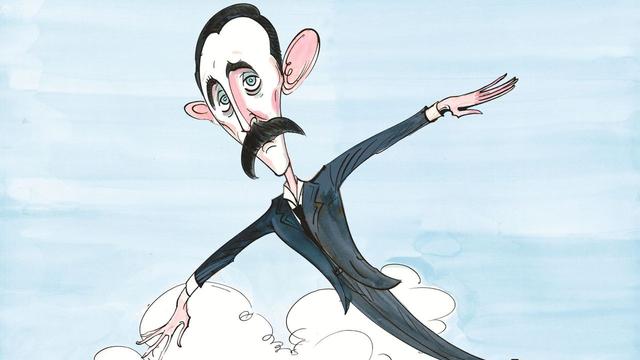
J(ames) M(atthew) Barrie was born in Angus, Scotland, in 1860. He was the seventh of eight children. When he was six years old, his older brother died in a skating accident. His mother fell into a deep depression, and Barrie tried to make her feel better by wearing his older brother’s clothes and doing things his older brother used to do.

At some point, it occurred to Barrie that his dead brother would never grow up, and the idea stuck with him for the rest of his life.

As a young man, he became a very successful writer of sentimental novels and humorous plays. Then, after his marriage in 1894 didn’t produce any children, he started spending time with the children of one of his friends. He began to tell them stories about a boy who had run away to a place called Never Land, where he refused to grow up, and he named that boy Peter Pan.

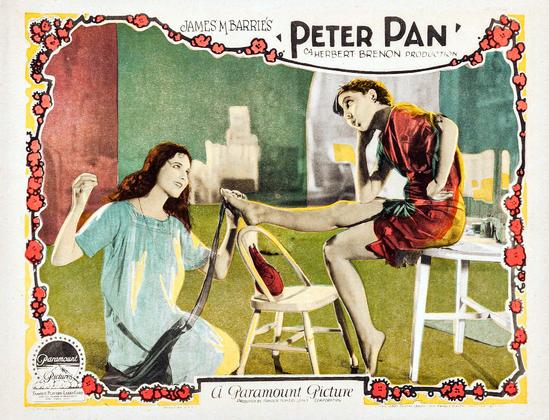
Barrie first wrote about Peter Pan in a book of children’s stories called The Little White Bird (1902). Two years later, he produced the play Peter Pan, the Boy Who Wouldn’t Grow Up (1904), which included the well-known story about Peter and Wendy and Captain Hook. Even though he’d produced many successful plays before, Barrie became obsessed with the production of Peter Pan. He rewrote the script more than 20 times. It was one of the most expensive productions ever attempted at that time, since it required the construction of harnesses and wires so that the actors could appear to fly around the stage.

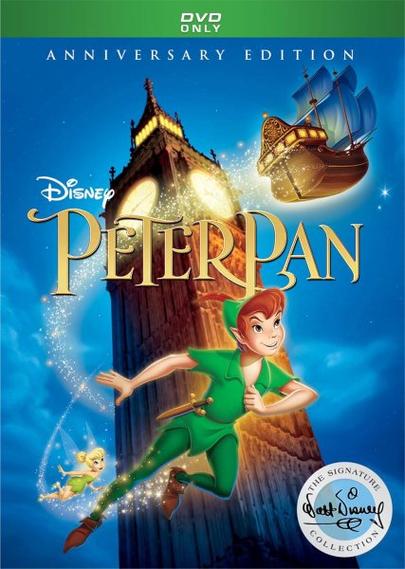
There are now many versions of the Peter Pan story as books, movies, and stage productions. For me (and I suspect many others), my first and most memorable connection to the story comes from the Disney animated film.

I tried to watch it a few years ago with my granddaughter and ended up shutting it off because I thought the depiction of Indians was so dated and inappropriate.

As a kid, I remember mostly liking the idea of flying. The story makes it clear that Tinker Bell’s pixie dust gives the children the ability to lift off the ground, but they can only stay airborne if they truly believe they can fly. I know that I tried to believe I could fly, but alas, no pixie dust.

I did have a crush on Tinker Bell. I suppose there is some psychology in that.

“Peter Pan Syndrome” is a pop psychology term for adults who struggle to mature emotionally or socially, often avoiding adult responsibilities, commitments, and financial accountability. I don’t think I suffer from that, and I certainly wouldn’t want my grandchildren to suffer from it either.

It is not an officially recognized clinical diagnosis, but it serves as a helpful label to describe a pattern of arrested development. The term was popularized in 1983 by psychologist Dr. Dan Kiley in his book, The Peter Pan Syndrome: Men Who Have Never Grown Up. While initially focused on males (“failure to launch”), the behavioral patterns can apply to any gender. Experts often attribute these traits to over-protective parenting, a fear of failure, or deep-seated anxieties about the pressures of adult life.

#books #growingUp #Movies #PeterPan #psychology
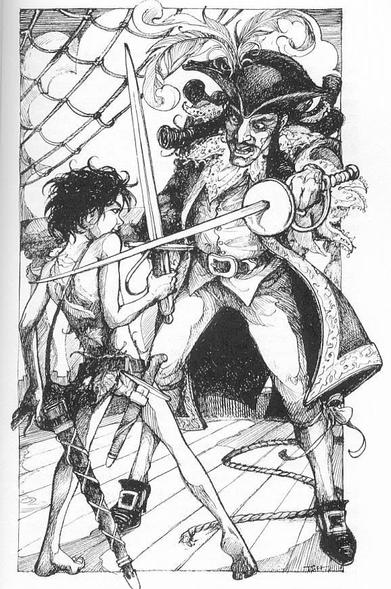
Captain Hook "had been at a famous public school. Its traditions still clung to him.... Above all he retained the passion for good form. Good form! However much he may have degenerated, he still knew that this is all that really matters."
- J. M. Barrie, "Peter Pan"
🎨 Trina Schart Hyman

#BookWormSat #GothicSpring #Literature #Fiction #PeterPan #CaptainHook #JMBarrie #TrinaSchartHyman

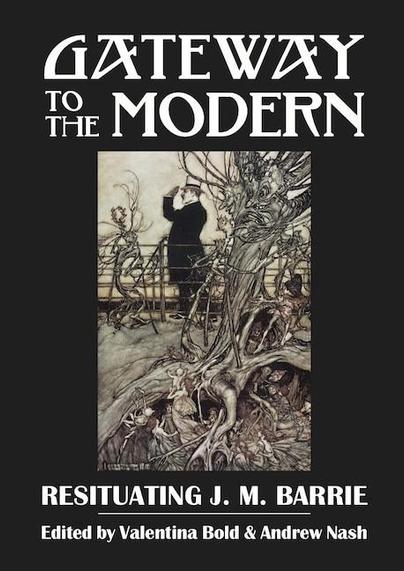
Although Barrie is remembered today almost exclusively for PETER PAN, he was a prominent 19th-century novelist & the most successful British playwright of the early 20th century.

GATEWAY TO THE MODERN, edited by Valentina Bold & Andrew Nash, explores Barrie’s multifarious career

@litstudies

7/10

https://asls.org.uk/publications/books/occasional_papers/gateway_to_the_modern/

#Scottish #literature #JMBarrie #kidlit #ChildrensLiterature #19thcentury #Victorian #20thcentury #Edwardian #PeterPan #drama #cinema #cinemahistory

“Neverland is as much a tomb for the unloved and forgotten as it is a map of a child’s mind. It is a place ruled by a boy with a memory as thin as the skeleton leaves he wears.”

—Sabrina Orah Mark on lost boys, fairy tales, & raising Black sons in America

5/10

https://www.theparisreview.org/blog/2019/06/19/sorry-peter-pan-were-over-you/

#Scottish #literature #JMBarrie #kidlit #ChildrensLiterature #PeterPan #motherhood #race

Sorry, Peter Pan, We’re Over You by Sabrina Orah Mark

June 19, 2019 – On lost boys, fairy tales, and raising black sons in America.

The Paris Review

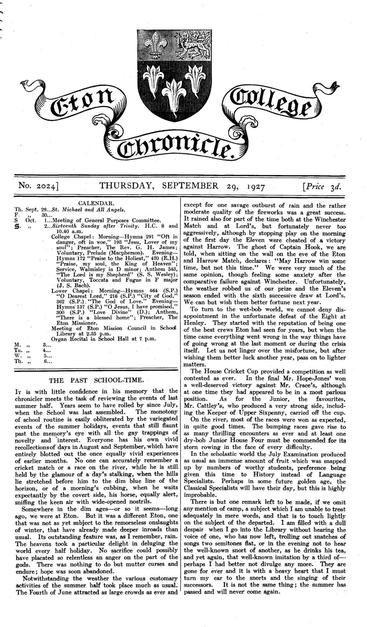
“…James Hook’s last will, which was forwarded to his aunt by a land-shark of Rio. By this James left everything to Eton. But the Governors, it appears, had scruples—even about the hat—and so all passed to his aunt Emily…”

—JM Barrie’s “Captain Hook at Eton” – being the text of an address delivered at Eton College in 1927 – can be read online via WikiSource

4.5/10

https://en.wikisource.org/wiki/Captain_Hook_at_Eton

#Scottish #literature #JMBarrie #kidlit #ChildrensLiterature #PeterPan #EtonCollege #privateschools

“James Hook, the pirate captain, was a great Etonian, but not a good one…”

—Brian Till in The Atlantic explores “The Secret History of Captain Hook”

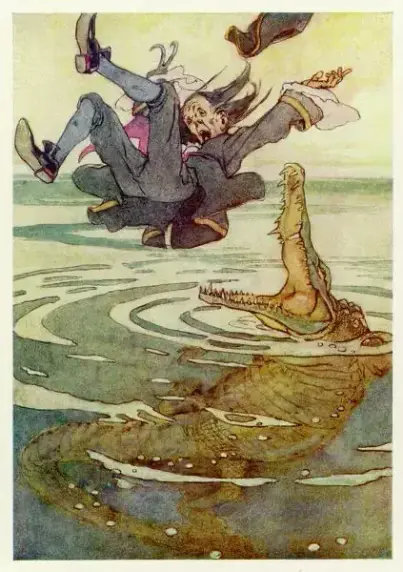
🖼️ Alice B. Woodward (1862–1951), “Right into the jaws of the crocodile”

4/10

https://www.theatlantic.com/entertainment/archive/2010/12/the-secret-history-of-captain-hook/68313/

#Scottish #literature #JMBarrie #kidlit #ChildrensLiterature #PeterPan #EtonCollege #privateschools

“To be born is to be wrecked on an island.”

From the true-life adventure of Alexander Selkirk, through Daniel Defoe, RM Ballantyne, & Robert Louis Stevenson, John Pielmeier – author of HOOK’S TALE – follows a chain of real & fictional islands to JM Barrie’s Neverland…

3/10

https://lithub.com/visiting-the-actual-island-that-inspired-neverland/

#Scottish #literature #JMBarrie #kidlit #ChildrensLiterature #PeterPan #RobertLouisStevenson #DanielDefoe #RobinsonCrusoe

Visiting the Actual Island That Inspired Neverland

“To be born is to be wrecked on an island.” J.M. Barrie wrote this in his introduction to R.M. Ballantyne’s The Coral Island, and for me it has proven to be the surprising theme of my life. As it w…

Literary Hub

“Barrie’s book may ostensibly be about the boys’ eternal childhood, but it’s the mother figures who are the scaffolding upon which his story rests.”

– Liz Michalski, author of DARLING GIRL, on the mother figures in PETER PAN

2/10

https://lithub.com/empathizing-with-the-mother-figures-of-peter-pan/

#Scottish #literature #JMBarrie #kidlit #ChildrensLiterature #PeterPan #motherhood

Empathizing with the Mother Figures of Peter Pan

Is an adventure an adventure if there’s no one waiting at home at home to hear about it? I’ve pondered this off and on ever since rereading Peter Pan. As a child, I loved Peter, the Lost Boys, and …

Literary Hub

“Barrie was a wounded creature, from his earliest youth, and his probing of that wound is what makes PETER PAN so enduringly painful to read […] The tensions are bald and excruciating.”

A 🎂 🧵 for JM Barrie (1860–1937) – born #OTD, 9 May

1/10

https://www.newyorker.com/magazine/2004/11/22/lost-boys

#Scottish #literature #JMBarrie #kidlit #ChildrensLiterature #PeterPan

Why J. M. Barrie Created Peter Pan

Anthony Lane writes about J. M. Barrie, who wrote “Peter Pan” and was portrayed as a character in “Finding Neverland.”

The New Yorker