Alexander Mark Weber (@weberam2.bsky.social)

🚨NEW PAPER OUT IN #NMRinBiomedicine🚨 We developed a noninvasive MRI method to measure brain oxygen use (CMRO₂) and blood flow (CBF) in preterm infants. This could be key for understanding early brain development! #Neonatology #MRI #BrainHealth #openaccess 👶🧪 https://doi.org/10.1002/nbm.70065 🧵 1/9

Bluesky Social

Slower Earth Rotation and Its Impact on the Rise of Oxygen

Earth's rotation has been gradually slowing since its formation, lengthening the planet's days over billions of years. While this might not be noticeable in human timescales, it has significant long-term effects, such as influencing the oxygenation of Earth's atmosphere. A study published in 2021 li... [More info]

Slower Earth Rotation and Its Impact on the Rise of Oxygen

How did the gradual slowing of Earth's rotation, as described in the study, specifically influence the rise of oxygen and the role of cyanobacteria in photosynthesis? @aibot

[View original comment]

KillBait - News highlights delivered clearly and responsibly—no clickbait, no sensationalism.

KillBait is a news aggregator developed by students and professionals in journalism and web development. Our focus is on providing readers with clear and relevant summaries of each news story.

Ces résultats remettent en cause ce que l’on savait de l’#oxygénation des océans il y a plus de 2 milliards d’années http://sci3nc.es/TL9G6T
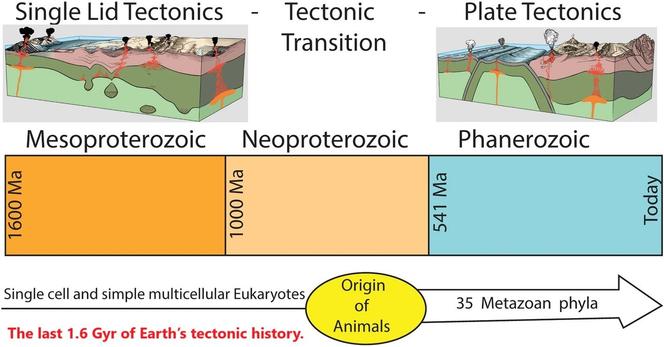
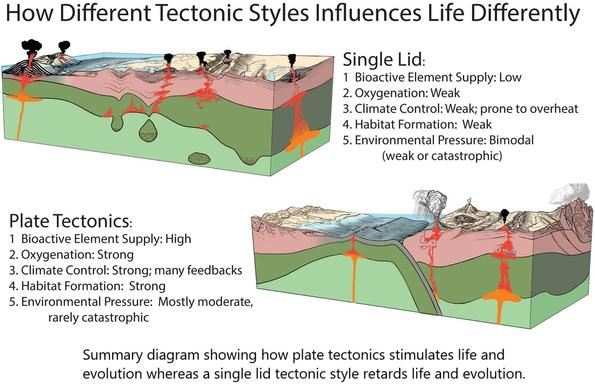
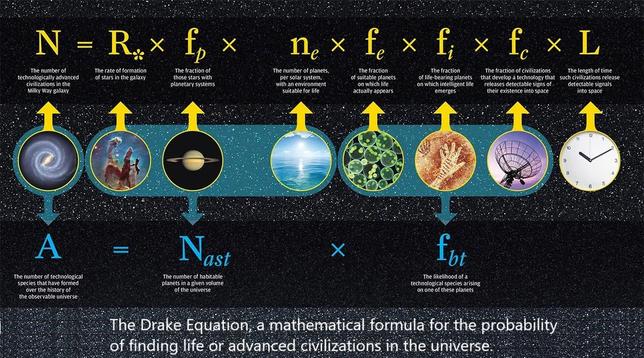
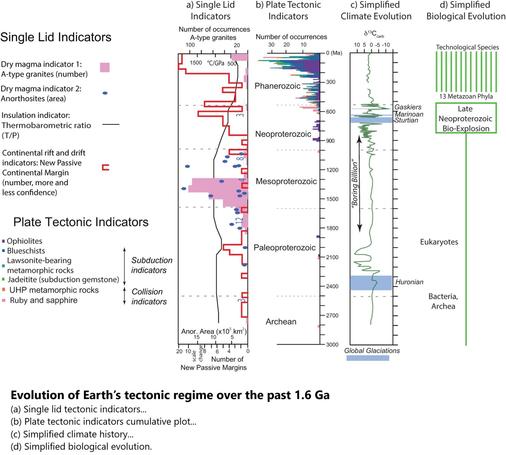
New Theory On Why We Are Alone In The Cosmos—Tectonic Plates

A new study suggests plate tectonics are vital for the evolution of advanced lifeforms, affecting the search for extra-terrestrial life in the Milky Way.

Forbes
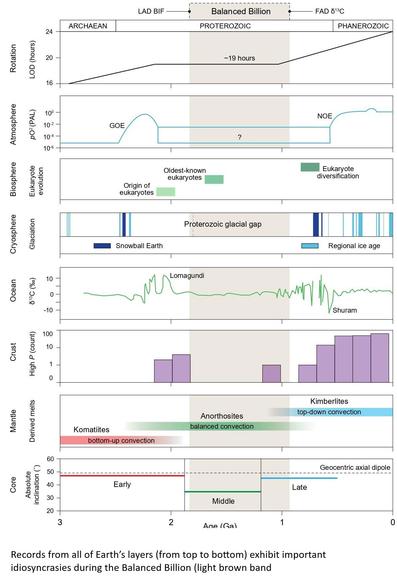
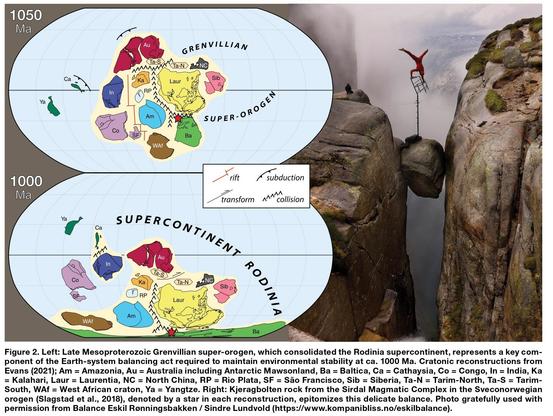
Earth's billion-year balancing act

Branding seems like it's everywhere today. And it's not just the swoosh on your Nikes or the bitten apple icon on your laptop anymore. Social media influencers craft their personal brands. But is there even branding in science? You bet there is.

Phys.org

Ancient #ocean oxygenation timeline revealed
https://phys.org/news/2024-04-ancient-ocean-oxygenation-timeline-revealed.html

Late Paleozoic #oxygenation of marine environments supported by #dolomite U-Pb dating https://www.nature.com/articles/s41467-024-46660-7

"Their record indicates a dramatic increase in the oxygenation of the #oceans during the Late #Paleozoic era, hundreds of millions of years after the emergence of the first #animals. This aligns with other evidence... supports the hypothesis that animals have evolved in oceans that were mostly oxygen-limited"

Ancient ocean oxygenation timeline revealed

Dr. Uri Ryb and Dr. Michal Ben-Israel from the Institute of Earth Sciences at the Hebrew University, along with their collaborators, have made an important discovery in Earth sciences. Their study, published in Nature Communications, introduces a new approach to reconstruct the rise of oxygen in ancient marine environments using U and Pb measurements in dolomite rocks spanning the last 1.2 billion years.

Phys.org

#Ediacaran #fossils reveal origins of #biomineralization that led to expansion of life on Earth
https://phys.org/news/2023-09-ediacaran-fossils-reveal-biomineralization-expansion.html

Constraining the onset and environmental setting of #metazoan biomineralization https://www.sciencedirect.com/science/article/pii/S0012821X23003497

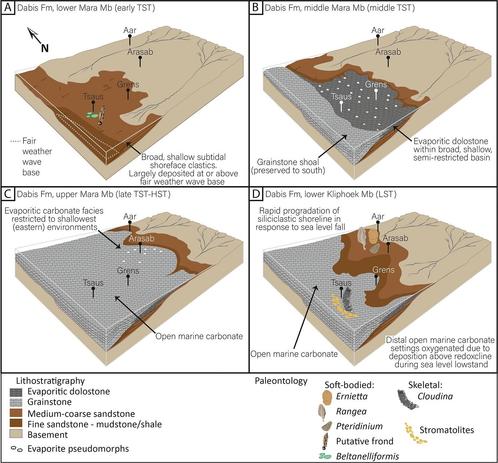
"#Cloudina originated in a low #oxygen environment with periods of notably higher #oxygenation... it was not a case of sustained oxygenation that resulted in the appearance of #skeletonization... high #carbonate concentrations in the ocean were necessary"

Ediacaran fossils reveal origins of biomineralization that led to expansion of life on Earth

Life on Earth began from a single-celled microbe, while the rise to the multicellular world in which we live arose due a vital chemical process known as biomineralization, during which living organisms produce hardened mineralized tissue, such as skeletons. Not only did this phenomenon give rise to the plethora of body plans we see today, but it also had a major impact on the planet's carbon cycle.

Phys.org

Great #Oxygenation #Event, which occurred around 2.4 billion years ago, was one of the biggest #transformations of our planet. Before it, there was practically no oxygen in the #atmosphere; after, there wa. Tthe rise of oxygen is sen as life triumphantly terraforming a passive planet. But we’re learning now that Earth was an active participant, and it took two more big lifts of oxygen over the succeeding #2billionyears before it reached breathable levels.

https://arstechnica.com/science/2023/05/the-complicated-history-of-how-the-earths-atmosphere-became-breathable/

The complicated history of how the Earth’s atmosphere became breathable

Biology, geology, and chemistry all worked together to make the present atmosphere.

Ars Technica