Lovely highlights. I'll be happy to see even one of these. :-)

"This post highlights my favourite images and firsts from the year, a reminder that even familiar forests can still astonish when you stay curious and keep looking closer."

https://www.nickybay.com/macro-highlights-the-best-of-2025/

#NickyBay #Photography #MacroPhotography #Arthropods #Organisms

Macro Highlights – The Best of 2025 - Macro Photography by Nicky Bay

After years of trudging through forests and peering into the hidden lives of tiny creatures, the number of lifers I get should rightfully decline but 2025 proved to be remarkably defiant. This year delivered an extraordinary run of lifers — each one earned through planning, patience, persistence, luck, and lots of grit. This post highlights

Macro Photography by Nicky Bay - exploring microfauna since 2018

A post by Nicky Bay on people using AI image generators to get clicks (and money), bypassing copyright on the original photos.

"It is not just unethical and unlawful. The ones who do it don’t even care what the content is about. The generated photo sometimes showcases anatomically incorrect details. The accompanying text is also generated by AI and is almost always factually wrong."

https://www.nickybay.com/ai-abuse-to-skirt-copyright-law/

#NickyBay #Photography #AI #Images

AI Abuse to Skirt Copyright Law - Macro Photography by Nicky Bay

In the past week, a number of prominent nature photographers showed how their photographs were being stolen and mangled into "AI-nonsense", deceiving countless others into believing the made-up stories in the captions. The perpetrators look for beautiful wildlife photos and to skirt copyright infringement scanners, use AI to re-generate the photo to be posted on social media. It is not just unethical. The ones who do it don't even care what the content is about. The generated photo sometimes showcases anatomically incorrect details. The accompanying text is also generated by AI and is almost always factually wrong.

Macro Photography by Nicky Bay - exploring microfauna since 2018

"Our Observation of the Week is this Twig Spider (genus Poltys) egg sac, seen in Singapore by @nickybay!"

https://www.inaturalist.org/blog/105323-spider-egg-sac-or-cotton-candy-observation-of-the-week-1-21-25

#NickyBay #Nature #iNaturalist #Spiders

Spider Egg Sac, or Cotton Candy? - Observation of the Week, 1/21/25

Our Observation of the Week is this Twig Spider (genus Poltys) egg sac, seen in Singapore by @nickybay! A few weeks ago, David Ringer (@djringer) messaged me on iNat and suggested we feature a gorgeous spider egg sac observation from Nicky Bay (@nickybay) as Observation of the Day, which I happily did. The extra attention gave the community some clues as to which spider might have constructed this silken puffball. From David:  I like looking through the orbweaving (Araneoidea) and unclassified spiders from tropical and subtropical Africa, Asia, and Australasia. Several times over the last few years, I'd noticed photographs of apparent orbweaver (Araneidae) egg cases covered in hot pink silk threads, usually with a “tail” or “ribbon” of silk decorating the construction…I had no idea what was making the pink ones, and apparently no one else on iNaturalist did either. One possibility was the genus Poltys, a genus of nocturnal, highly cryptic (and often spectacular!) twig- and dead leaf...

iNaturalist

Lots and lots of amazing photos of moths by Nicky Bay!

"At Borneo Jungle Girl Camp, I stayed for 4 nights with a group of friends and returned with almost 7000 photos, recording almost 600 species of moths and lots of other insects and arachnids."

https://www.nickybay.com/moths-of-borneo-gunung-trusmadi/

#NickyBay #Moths #Images #Borneo #Entomology

Moths of Borneo: Gunung Trusmadi - Macro Photography by Nicky Bay

The Borneo Jungle Girl Camp or Trus Madi Entomology Camp sits deep in the lush forests of Gunung Trusmadi, Sabah — the northern-most state of Malaysian Borneo.

Macro Photography by Nicky Bay - exploring microfauna since 2018

Lots of amazing macro shots. By Nicky Bay.

"2023 went by in a flash, but not without a bang. I managed to document lots of amazing lifers and did field trips in Borneo and Thailand as well."

https://www.nickybay.com/macro-highlights-the-best-of-2023/

#NickyBay #MacroPhotography #Nature #Photography

Macro Highlights – The Best of 2023 - Macro Photography by Nicky Bay

2023 went by in a flash, but not without a bang. I managed to document lots of amazing lifers and did field trips in Borneo and Thailand as well. I've finally launched Isopod Site which started as a photo compilation of terrestrial isopods and slowly adding in information on taxonomy and biology of isopods. Towards

Macro Photography by Nicky Bay - exploring microfauna since 2018

Lots of wonderful macro shots from local macro photographer Nicky Bay in this end of 2022 highlight post.

"Here are 100 of my most memorable photos from 2022. Hope you enjoy them as much as I had fun taking them."

https://www.nickybay.com/macro-highlights-the-best-of-2022/

#NickyBay #Photography #MacroPhotography #Bugs #Insects

Macro Highlights - The Best of 2022 - Macro Photography by Nicky Bay

In 2022, I spent a little more time exploring the urban microfauna. I was also an instructor at BugShot Ecuador 2022 and had lots of lifers from the Amazon and cloud forests. I also resumed some workshops in the field, while most of my lectures were still conducted online. All in all, I found myself […]

Macro Photography by Nicky Bay

A collection of photos by local photographer Nicky Bay, showcasing some of the little wonders that can be found in #Singapore.

CW: link contains photos of spiders, centipedes, etc.

https://www.nickybay.com/macro-highlights-the-best-of-2021/

#Photography #MacroPhotography #NickyBay

Macro Highlights - The Best of 2021 - Macro Photography by Nicky Bay

2021 has pretty much contained us within Singapore but despite that, we had many significant discoveries in the little red dot. While we were largely exploring the same trails, we still managed to find something new almost every fortnight. I also started some different styles or approaches to macro photography, including wide-angle selfies and 3D […]

Macro Photography by Nicky Bay

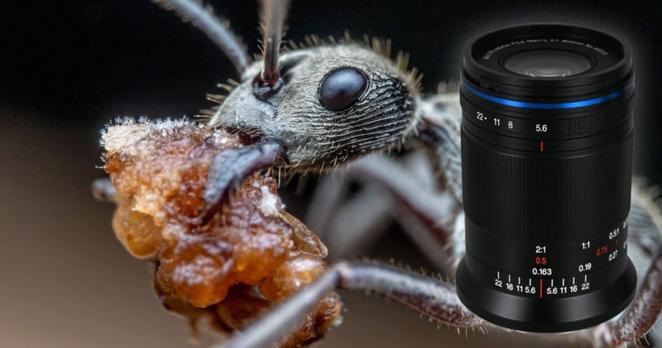
Laowa 85mm f/5.6 Review: The Smallest 2x Macro Packs a Big Punch

The new Venus Optics Laowa 85mm f/5.6 2x Macro lens is one of the smallest macro lenses that I’ve ever used for a full-frame sensor. It is even smaller than the Laowa 50mm f/2.8 2:1 for Micro Four Thirds, and that’s no mean feat!

The reason for a small f/5.6 lens is that very few photographers ever take macro shots at f/2.8. Of course, the small size does come with some drawbacks. In this field review, I’ll show the results from this lens and explain the practical considerations you’d have before deciding if this lens should go into your camera bag.

Equipment Used for Field Test

For this field test, I used a Nikon Z7 II kindly loaned to me from photographer Chris Ang and the sample lens was loaned from Laowa.

  • Nikon Z7ii
  • Laowa 85mm f/5.6 2x Ultra Macro APO
  • Meike MK320
  • Dual LED Headlamp for Focusing Light

Should You Get This Lens?

As with every lens review, there are a number of pros and cons to each lens. Let’s get into the details here.

Lens Size and Weight

The Laowa 85mm F/5.6 2x is small and light, there’s no doubt about it. Here’s a quick comparison between other macro lenses for full-frame mirrorless mounts.

The Laowa 85mm is clearly a tiny and powerful beast, with its weight at less than half of that of most competitor lenses.

Autofocus

The Laowa 85mm is a completely manual lens with no electronic contacts. There is no auto-focus, but that really isn’t needed for high magnification work beyond 1:1. I recommend fixing the focusing ring at the desired magnification before taking the shot and moving the camera in slowly to get the subject in focus.

Aperture Coupling

As a manual lens with no electronic contacts, there is, unfortunately, no aperture coupling. This means that the lens is stepped down at the current aperture setting when composing your photo. This is important for a few reasons.

Dark image

Without a wide-open aperture while focusing, the image is very dark. Fortunately for most mirrorless cameras, disabling the live view exposure simulation alleviates that problem.

Less precise focus

Another issue with stepped-down focusing is the loss of precision in the depth-of-field. The deeper DOF while focusing means that it is more difficult to get precise focus as more of the subject appears to be in focus. This will require a bit of experience in handling this lens to overcome. It is also mitigated slightly with focus peaking features on the camera.

The Laowa 85mm f/5.6 2x mounted on a Canon R6 mirrorless camera.

Aperture ring position

The aperture ring is at the tip of the lens. Depending on your flash diffuser design, this aperture ring might be blocked by the diffuser, making it difficult to adjust the aperture while looking at the numbers on the lens. After some experimenting, I found that it was easier to turn the ring to f/22, and then click it down once for f/16, or twice for f/11. This way, there is no need to look at the aperture number.

Lens Diameter

A small lens diameter makes it easier for us to approach subjects without knocking into too many things. It also allows for better lighting for close-ups, since lenses with big diameters tend to block out light at the shortest working distance. The Laowa 85mm f/5.6 shines in this aspect with a filter ring of just 46mm. This is even smaller than the Laowa 50mm f/2.8 2x for MFT, which has a filter ring size of 49mm.

An important advantage of a smaller lens diameter is that using the Raynox DCR-250 would not be subject to vignetting. Vignetting makes these close-up filters unusable for big lenses like the Laowa 100mm.

Magnification

Like most Laowa ultra macro lenses, the Laowa 85mm f/5.6 focuses from infinity to 2x. The working distance at 2x is at a comfortable 69mm. To boost your magnification, just attach a Raynox DCR-250 and you’ll get a decent magnification of about 4x.

Focus Throw

The focus throw for this lens is shorter at approximately 160° when compared to other Laowa macro lenses like the Laowa 50mm 2:1 for MFT, which had an amazing focus throw of 215°. This won’t be a problem if you fix the focusing ring and move your camera in and out to get the subject in focus. But if you work on a tripod, the precise focus will be more difficult to attain. Then again, there is little reason to go for a lightweight lens if you are working on a tripod.

Working Distance

The working distance of this lens is 96mm at 1x, and 69mm at 2x. These are very comfortable numbers to work with. A relatively small flash diffuser would also suffice to cover the subject well.

Internal Focusing

With internal focusing and no recessed front lens element, less dust would get into the lens. Also, skittish subjects like jumping spiders would not be able to jump into any recessed areas of the lens.

Image Quality

The Laowa 85mm f/5.6 is very sharp, even with a dual-glass element Raynox DCR-250 attached. Areas of high contrast also show minimal to no signs of chromatic aberration. I personally use F/11 for 1x to 2x magnification and F/16 for lower magnification shots. This minimizes diffraction and light loss while maximizing DOF.

Comparison with Other Macro Lenses

The only other full-frame lenses that can focus from infinity to 2x are the Laowa 60mm f/2.8 2x and Laowa 100mm f/2.8 2x. The Laowa 85mm f/5.6 2x is clearly a better choice than the Laowa 60mm due to the much smaller size. The Laowa 100mm has a slight advantage for the Nikon F mount with its aperture coupling capability. Otherwise, the Laowa 85mm is the obvious lens to go for.

Price

The launch price for the Laowa 85mm f/5.6 2x is $449 for Nikon Z, Canon RF, and Sony E mounts, and $499 for Leica M mount. It is just a little bit cheaper than the Laowa 100mm and a little bit more expensive than I expected. But with the APO design and 3 extra-low dispersion lenses, the price is fair. There is also no other similar lens in the market to compare with!

Recommended Use

I would personally pair the Laowa 85mm f/5.6 2x with a Raynox DCR-250. This covers a very good range for most macro subjects with a full-frame width of 8mm at 2x and 55mm at infinity. Using a small flash like the Meike MK320 matched with a concave diffuser and reflector would result in a very effective and compact setup.

Field Test

As with most of my other lens reviews, I am focusing on practical use and field tests rather than studio tests based on specifications. A macro lens review must be based on its intended use. I tested this lens over 3 short sessions, but most of it was in the last session as I had spent the first 2 sessions fumbling with camera settings that I was unfamiliar with.

Camera Settings

I used the settings below for most shots in this review.

  • ISO 250
  • Shutter 1/100s to 1/250s
  • Aperture f/11 (1x to 2x) or f/16
  • Flash power ranges from 1/32 to 1/16

I started simple at 1.25x on this shield bug.

Shield bug (Cantao ocellatus)

Then I attempted close-ups at 2x, cropped.

Shield bug (Cantao ocellatus). For those interested, I have a checklist of Shield Bugs & Stink Bugs.

As expected, stepping down to f/8 or f/11 was a little harder to focus as it was difficult to see where the exact focal plane was. This shot was pretty messed up as I shot it in low-quality JPEG and the white balance was way off:

Jumping spider (Siler semiglaucus)

At 1x, I tried f/16 but the light loss was significant and there was a bit of diffraction.

Ant (Polyrhachis sp.)

I also had some test shots at about 0.25x on this common wolf snake at f/16. Tack sharp!

Common wolf snake (Lycodon capucinus)

One of the key features of this lens is its 2x magnification so most of my shots would be at its maximum magnification. This was shot with the Raynox DCR-250 attached at f/11:

Jumping spider (Pystira ephippigera). If you like jumping spiders, visit my Salticidae Checklist: Jumping Spiders

This treehopper stood pretty still, so I was able to do a stack of 3 shots for this photo:

Treehopper (Membracidae). For more photos of treehoppers, check out my Membracidae Checklist

I found lots of pseudoscorpions. Those familiar with these arachnids would know how small they are. This individual has a mite attached to it. Approximately 50% crop.

Pseudoscorpion (Pseudoscorpionida)

This stalk-eyed fly was always on the move, so stacking wasn’t possible. At f/11, the DOF at this magnification is pretty thin, so only 1 eye was in focus.

Stalk-eyed fly (Diopsidae)

I was pleasantly surprised to find this owlfly larva nestled comfortably on the fiber of a mossy rope. It was really wet, but there’s so much detail on its body!

Owlfly larva (Ascalaphidae)

There were lots of harvestmen perched on the railings, so I did a 5-shot stack on this individual at maximum magnification.

Harvestman (Opiliones)

These red maggoty springtails are really beautiful when viewed up close, like little gummy worms.

Red springtail (Neanurinae)

This shot is out of focus as I couldn’t get these little guys to stop moving. But… so cute!

Black springtail (Pseudachorutinae)

This is a poorly processed stack from 3 shots. But the details on the beetle’s elytra are pretty much retained!

Leaf beetle (Chrysomelidae)

Some of these shots have missed frames in the stack due to problems with my camera settings. Purely my problem as I was new to the camera.

Planthopper nymph (Fulgoroidea)

Found a huntsman spider exoskeleton, perfect subject for testing sharpness!

Huntsman spider moult (Pandercetes sp.)

During my night shoot, Melvyn kindly pointed me to this trilobite beetle. Look closely and you’d see a little springtail on top of it:

Trilobite beetle (Platerodrilus ruficollis). For more information on these beetles, check out Platerodrilus Checklist: Trilobite Beetles

Close up of its head at maximum magnification. I was happily getting used to this lens!

Trilobite beetle (Platerodrilus ruficollis)

Close up of its dorsum. It was a really wet night and raining half the time, hence the water droplets.

Trilobite beetle (Platerodrilus ruficollis)

And one of my favorite angles for most trilobite beetles!

Trilobite beetle (Platerodrilus ruficollis)

Just one log away, I found 2 other trilobite beetles of a different species. Same same but different.

Trilobite beetle (Platerodrilus ngi)

On one of the logs, I found this highly cryptic mud spider. It was about 5mm, an ideal size for this setup!

Mud spider (Cryptothele sp.)

Still on the same log was this black pill cockroach. These little guys conglobulate when disturbed, like pill bugs and pill millipedes.

Pill cockroach (Perisphaerus sp.)

Amazingly, this bug is pretty common but this is the first time that I’ve ever photographed it. I’ve seen it on numerous occasions in the past but never had my camera with me. Tilt your head to see the “man-face”. This is also often called the Elvis Presley bug.

Man-faced stink bug (Catacanthus incarnatus)

Vince kindly showed me this scale insect, probably immature or a female.

Scale insect (Monophlebidae)

The only way to see its eyes, from beneath!

Scale insect (Monophlebidae)

This is a very common derbid planthopper. Interestingly, we’d only see its pseudopupils in the day.

Planthopper (Derbidae)

Also found this super tiny treehopper nymph. It kind of mimics a thorn and is often accompanied by ants who offer it protection. In turn, it produces sugary substances for the ants in a symbiotic relationship. This is from a single shot and heavily cropped.

Treehopper (Membracidae)

This huntsman spider was busy with its prey on a tree, so it was an easy target. Just one shot for testing.

Huntsman spider (Heteropoda sp.) For more huntsman spiders, check out my Sparassidae Checklist

This moth-like planthopper had see-through membranes on its wings, so I positioned a flash behind it. The points of high contrast showed little to no chromatic aberration.

Moth-like planthopper (Ricaniidae)

The fingerprint ant is great for highlighting details. Single shot, cropped.

Fingerprint ant (Diacamma sp.)

Found another individual bringing food back to its nest. This is also single shot following a moving subject.

Fingerprint ant (Diacamma sp.). For those of you interested in ants, visit the Formicidae Checklist.

These planthopper nymphs were about 4 to 5mm in size, but there are lots of details on their bodies!

Planthopper nymph (Fulgoroidea)

Interestingly, I found several of these red velvet mites on fallen logs.

Red velvet mite (Trombidiidae)

Finally, I was lucky to get these 2 planthopper nymphs together and in focus. The small one was walking around and only perched in position for a few seconds before walking off again. The fireworks-like waxy tails are often a treat to photograph!

Planthopper nymphs (Fulgoroidea)

Conclusion

This is a limited field review with photos from three short field trips, during which, most of the time was spent getting used to the camera body and its settings. Despite this, most of the initial issues faced could be overcome and I got quite comfortable with using the lens. To see the other photos, I have compiled them into a Flickr album.

Pros

  • Wide focusing range from 2x to infinity
  • Ridiculously small and light-weight for a full frame lens
  • Decent working distance
  • Great image quality, sharp with minimal CA
  • Pairs very well with Raynox DCR-250 or Raynox DCR-150 without vignetting

Cons

  • No aperture coupling
  • No autofocus
  • Short focus throw between 1x and 2x

The Venus Optics Laowa 85mm f/5.6 2x is a tiny yet powerful lens. It is sharp, compact, lightweight, and produces great images. It is just shy from being perfect due to the lack of aperture coupling, something that I wish would make more progress in Laowa’s macro lens lineups.

You can order the lens directly from Venus Optics or MacroDojo -- purchasing via MacroDojo helps me out a little bit.

About the author : Nicky Bay is a macro photographer based in Singapore. You can find more of his work and follow along with his adventures through his website and Flickr photostream. This article was also published here.

#equipment #reviews #fieldreview #laowa #laowa85mmf56 #lens #macro #nickybay #review #venusoptics

Photographing Glowing Mushrooms in Singapore

Singapore is home to a number of bioluminescent fungi. Out of over 148,000 known species of fungi across the world, over 70 of them are known to exhibit bioluminescence.

All known luminescent species are white-rot fungi, which means that it breaks down lignin in wood. Lignin is responsible for the support tissues in plants and lends rigidity to wood and bark, which is why trees and logs with white-rot fungi tend to be moist, soft, spongy, or stringy. This wood decay forms a critical component in the forest’s nutrient cycle.

Why Do Mushrooms Glow?

There are limited studies done to determine the reasons for the glow. The most commonly suggested hypothesis is that the light attracts other invertebrates which help to disperse its spores. Experiments had been done with plastic mushrooms with and without lights, where the one with simulated lights attracted a lot more insects. However, using plastic mushrooms left out many other factors so it was still inconclusive.

I’ve had a number of readers asking which UV light I used for the photos in this post. Please note that the bioluminescence is naturally occurring and does not require any UV exposure. We can see the glow with our naked eyes!

Which Bioluminescent Fungi Can We Find in Singapore?

The 2 most commonly sighted species of bioluminescent fungi are Mycena illuminans and Filoboletus manipularis. The flowering bodies of both species are umbrella-shaped and relatively small at 1 to 2cm in diameter. Mycena illuminans is gilled and depressed in the center, while Filoboletus manipularis is pitted and has a slightly pointed center. I’ve encountered other species before but had been unable to determine their IDs.

Family: Mycenaceae Overeem (1926)

Mycena illuminans Henn. (1903) Mycena illuminans Henn. (1903)

Family: Tricholomataceae R.Heim ex Pouzar (1983)

Filoboletus manipularis (Berkeley) Singer, 1945 Filoboletus manipularis (Berkeley) Singer, 1945

Unidentified

Unidentified Unidentified Unidentified

Are Bioluminescent Fungi Rare?

Bioluminescent fungi are seasonal and tend to flower during the rainy season. A nice big cluster with bright bioluminescence is considered rare as most would only last for a day or two before losing its glow and wilting. Because of that, we rely heavily on sightings among friends and photos from hikers in Facebook groups.

How To Photograph Bioluminescent Mushrooms

For those new to photographing these amazing fungi, here are some basic tips.

Tripod. A small tripod is essential. Most of these fungi are found on fallen logs at a low height, which means that a large tripod would restrict your angle for composition.

Behind the scenes: After many years of attempts, I’ve learned to be prepared with a chair, and a tiny tripod loaned from Chris.

Cable Shutter Release. Use a cable to trigger the shutter release, and use the mirror-up mode for DSLRs. This reduces any camera shake when the shutter button is pressed.

Lens. For large clusters, bring a wide-angle lens. Sometimes there may not be enough space to position your camera if you used a long lens.

Camera. A full frame camera will be very helpful for clearer photos at high ISO. Unfortunately, this rules out many of the entry-level cameras.

Settings. I typically use f/8, ISO 1600, 30s. It will vary somewhat, depending on the brightness of the glow and focal length of the lens used. I’d try to avoid exposures over 30 seconds as that would almost always generate hot pixels.

Small Group. It would be much easier to photograph this with a friend or two, but not in a big group. It is difficult to ask everyone to remain in the darkness for extended periods while one or two are taking photos.

Oops. Many years of experience couldn’t prevent the pants from tearing after squatting in odd positions.

Stray Light. Check for any equipment that emits light as any light could affect the resulting exposure. e.g. flash or camera LEDs, mobile phone screens, etc. This is another reason for going in smaller groups.

Bioluminescent Mushrooms Gallery

Throughout the years, I’ve been on the hunt to photograph the largest and most beautiful clusters of bioluminescent mushrooms, envisioning a scene of Pandora from the movie Avatar. Here’s a quick summary of my sightings so far.

Mycena illuminans. My first sightings of bioluminescent mushrooms were with the help of James Koh way back in 2012 when I first saw photos of them on his blog. He kindly found some for me during a hike, and despite just a few individual flowering bodies, witnessing them for the first time was really difficult to forget. Mycena illuminans. It wasn’t long before I found myself stuck with these glowing mushrooms, figuring out different compositions to accentuate its beauty. Mycena illuminans. These fungi are usually found on fallen logs. Occasionally we would find them on upright trees. It usually means that the tree is already dying or dead. This cluster has exceptional bioluminescence! Mycena illuminans. View from below. Filoboletus manipularis. First time encountering this species. The cap has already lost some of its glow. Filoboletus manipularis. To help others visualize this sight, I did an animation to show how the scene looked like before and after switching on the lights. Filoboletus manipularis. Before long, I was out in search for the next bigger cluster. Filoboletus manipularis. I also experimented with wide angle shots to include the entire scene into the background. Filoboletus manipularis. On one occasion, my friends had found a huge cluster while I was overseas. I could only see their photos and hope that some would be left when I returned home. As soon as I put down my luggage, I rushed to the spot (got lost a few times with various different directions) but was disappointed to find that most of them had wilted. However, there were more little spots of flowering bodies coming out! It was like a little galaxy of mushrooms. Filoboletus manipularis. The next giant cluster that I encountered was just a few months after the last one. Not the freshest nor brightest, but the biggest! Filoboletus manipularis. Again, an animation to visualise the scene. Filoboletus manipularis. I then tried to mix in some light to capture both the forest and bioluminescence. Filoboletus manipularis. It was after another year before I found the next cluster, while I was reviewing the Laowa 12mm F/2.8 Zero-D lens. Filoboletus manipularis. I had a bioluminescent mushroom drought for 5 years and was alerted to a beautiful cluster in some mushroom groups on Facebook, thanks to Bennett Tan. However, most of it had already wilted by the time I got there. Filoboletus manipularis. The last attempt reignited our interest in these shrooms, and with some luck, we found the biggest and brightest cluster yet! Thanks to Chris for the heads up! Filoboletus manipularis. Closer view of the cluster. Filoboletus manipularis. Animation again, always helps. Filoboletus manipularis. Luckily, I had the Laowa 15mm 1:1 macro lens with me. This cluster was barely 30cm from the ground, so taking shots of it from below and getting most of it in focus proved to be very challenging. Filoboletus manipularis. Wide angle close up from the side. Filoboletus manipularis. Finally, a shot of the entire scene with some accidental blue LED exposure from my flashlight’s battery indicator. Looked interesting enough for me to keep the photo.

I hope you’ve enjoyed this series!

About the author : Nicky Bay is a macro photographer based in Singapore. You can find more of his work and follow along with his adventures through his website and Flickr photostream. This article was also published here.

#features #tips #tutorials #bioluminescent #gallery #glowing #mushrooms #nickybay #wildlife

Photographing Glowing Mushrooms in Singapore

Singaporean photographer Nicky Bay shares how he photographs bioluminescent mushrooms that glow in the dark.