 Reymond Aguinaldo
 Uwe
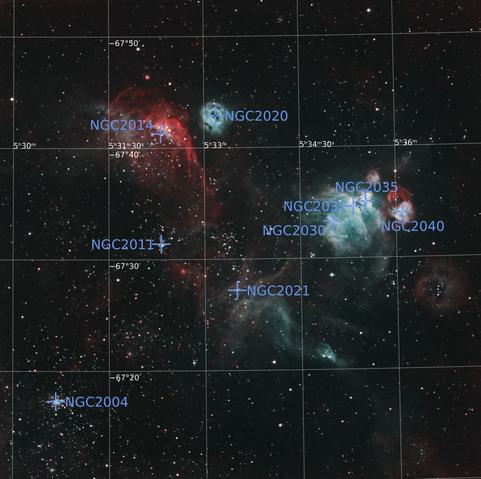
UweDie Gasnebel NGC2014, 2020, 2030, 2040 und Andere in der Großen Magellanschen Wolke, welche eine Satellitengalaxie unserer Milchstraße ist. Sie ist ein Objekt des Südsternhimmels und somit von Mitteleuropa aus nicht sichtbar. Für das Foto habe ich das iTelescope T32 im Siding Spring Observatority benutz. Das Foto mit einer Gesamtbelichtungszeit von 3h 20min entstand an mehreren Abenden in dem Zeitraum 1. - 13. April 2023.
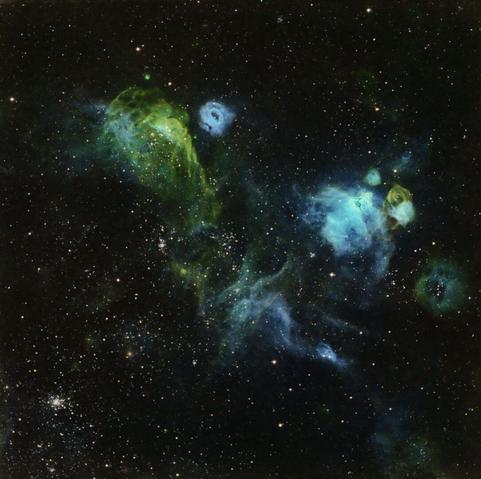
Es ist ein Falschfarbenfoto erstellt mit den Schmalbandfiltern Ha, OIII und SII.
Die erste Bildumsetzung entspricht der sogenannten Hubble Palette
(R: SII G:Ha B:OIII)
Das zweite Bild mit der Farbzuordnung R: Ha G+B: OIII
Bildverarbeitung:
PixInsight & Photoshop
#astrophotography #sky #deepsky #deepspace #universe #universum #astrofotografie #itelescope #nightphotography #longexposure_shots #longexposure #starphotography #nebula #galaxies #galaxie #narrowband #rgblights #starphotography
#ngc2020 #ngc2014 #ngc2030 #astrophoto #deepskyobject #nightphotography
Es ist ein Falschfarbenfoto erstellt mit den Schmalbandfiltern Ha, OIII und SII.
Die erste Bildumsetzung entspricht der sogenannten Hubble Palette
(R: SII G:Ha B:OIII)
Das zweite Bild mit der Farbzuordnung R: Ha G+B: OIII
Bildverarbeitung:
PixInsight & Photoshop
#astrophotography #sky #deepsky #deepspace #universe #universum #astrofotografie #itelescope #nightphotography #longexposure_shots #longexposure #starphotography #nebula #galaxies #galaxie #narrowband #rgblights #starphotography
#ngc2020 #ngc2014 #ngc2030 #astrophoto #deepskyobject #nightphotography

 stux⚡️