The Lock

An empty wardrobe, a rescued pendulum clock, and a lingering scent in the kitchen. Closing a door, forcing the key a little, and leaving a piece of life behind.

https://my-notes.dragas.net/2026/05/31/the-lock/

#MyNotes #Memories #Life #Reflections #Blogging
The Lock

An empty wardrobe, a rescued pendulum clock, and a lingering scent in the kitchen. Closing a door, forcing the key a little, and leaving a piece of life behind.

The Lock

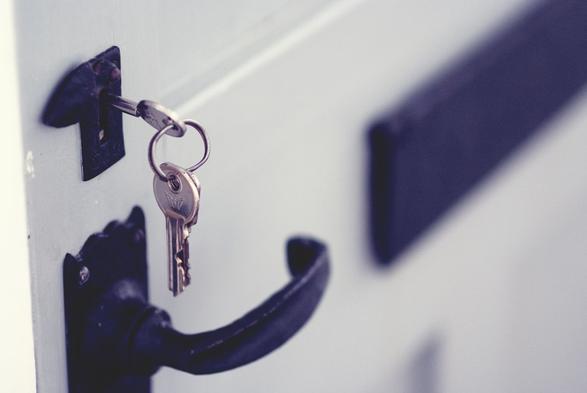
Photo by Jaye Haych on Unsplash

The lock is harder than I remembered. The sound is the same. The door opens without effort, the whole hallway laid out before me.

On the left, the paintings are gone. On the right, the bright living room sits bare, stripped of its small ornaments. My eye looks for the photo of me with the red telephone, forgetting it is already at my own house. The sofa has been shifted slightly, the small table pushed into a corner. It was the only way to get through with the walker. The shutter is up, the curtain open onto a pleasant, sunlit day.

The big living room television is gone, leaving a patch of different colour on the cabinet. Next to it, the kitchen. The fridge is off, the small television also gone, the table pushed into a corner. The smell of the stuffed olives she used to make for me is still there. Or perhaps it is only in my mind. Without thinking, I open the oven. Empty, as it never was. I close it again. The mantel clock has vanished, and so has the Frate Indovino calendar. The fireplace is still sealed. They said it was the regulations, but grandfather was tired of carrying the wood up. The old boiler is off, its dial worn down.

I turn back and step toward the hallway. The old pendulum clock is still there, stopped. As a child, in the old house, I used to play around it, circling it. It looked enormous to me. When they moved, grandfather cut it short at the bottom and hung it on the wall. Crooked, otherwise it would stop. I lift it off the wall, revealing the mark behind it, and set it down on the floor. I remembered it lighter. To the left, the room where I slept only once. I smile, because everything is the same. I open a drawer, empty. The family photos used to be in that drawer. I close it. On the wall, my embossed poster with a cat and a dog. Faded with the years, flattened by games and house moves. I fought to keep it from being thrown out, even in that state.

I leave the room and move on to theirs. The photos are gone, and all the furniture is polished and clean. A ray of sunlight comes through the window and falls on the chest of drawers - it's morning, the sun comes from the east. When they were here, the shutter was always half-lowered at this hour. They would get up very early and take a nap mid-morning. Then they'd raise it again, and I'd know I would find them awake. Ready to make me something good when I was hungry. Or just a comfort, when I was tired.

I turn and go into the room across the hall. I open the doors of the large wardrobe, but it is empty. My comics are gone, and so are my toys. All of their things are gone. How big that wardrobe is, and how full it used to be! There are still some things on the old red table. Thirty-five years ago, give or take, in its place there was the cardboard box. He had brought it home so we could play with it, and we had turned it into a kind of fort, with all our friends. It seemed enormous, but it was probably smaller than that table. So many memories, here. Out of habit, I look at the corners of the room. My friend had brought the fishing worms and we had forgotten to close the box. They had spread all over the room. But I got away with it, that time too.

I leave the room, on the right the brown bathroom. In good shape, but worn by time. I didn't remember that handle. Ah yes - grandfather had put it in when he was starting to have trouble moving. The shower could use some work, but it still functions. I keep walking and reach the other bathroom - my bathroom. The tub is still untouched, even after more than forty years. It can't have been used five times. The toilet still has its original seat, in perfect condition. That day, just back from school, I was peeing when she came running into the bathroom. She was crying. A boy in her class had insulted her. "Don't worry, just tell me who it is, I'll come to school and your big brother will have a word with him." She smiled and calmed down, while grandmother was telling us to wash our hands because everything was ready. The bidet is still gleaming, while the sink shows a few more signs of wear than I remembered. Maybe, in the last few years, she had taken some shortcuts to clean it more quickly. But I haven't been in here for a long time, maybe I'm not remembering well. The tiles are still spotless. Except for the one near the window, where I dropped the hammer.

I take another walk through, trying to memorise everything, one more time. The bare walls, to my eyes, are still full of life. The cabinets full of photographs. And again, I catch the smell coming from the kitchen.

I take down the pendulum clock and lift it onto my shoulder. I reach the door. I open it and step out. I turn, looking once more, for the last time, at the long, bright hallway.

I close the door, forcing the key a little, and tear the label off the doorbell.

https://my-notes.dragas.net/2026/05/31/the-lock/

#Life #MyNotes #Reflections
The Lock

An empty wardrobe, a rescued pendulum clock, and a lingering scent in the kitchen. Closing a door, forcing the key a little, and leaving a piece of life behind.

My City

I spent years trying to return to my city, only to understand that what I was looking for had disappeared long before I did.

https://my-notes.dragas.net/2026/05/22/my-city/

#MyNotes #Life #Memories #Reflections #People #Change #Friendship #LifeLessons
My City

I spent years trying to return to my city, only to understand that what I was looking for had disappeared long before I did.

My City

I spent years trying to return to my city, only to understand that what I was looking for had disappeared long before I did.

https://my-notes.dragas.net/2026/05/22/my-city/

#MyNotes #Blogging #Life #Reflections #Memories

My City

I spent years trying to return to my city, only to understand that what I was looking for had disappeared long before I did.

My City

Photo by Kevin Martin Jose on Unsplash - Not the city I'm talking about

A little while ago I watched a five-second clip - an ancient, weathered column. That was all it took to identify the exact place where those images had been filmed. A moment later they widened the shot, and I recognised the precise spot. It was a city. My city.

Childhood memories stay imprinted in the mind far, far longer than those accumulated in adulthood.

In the square full of columns where that footage was shot, I used to go often with my grandmother, as a child, to the fruit and vegetable market - with that strong, distinctive scent of a herb market. As a teenager, I would sit on those low walls and lean against those columns with my friends, talking about the things teenagers talk about, dreaming and living. Those columns, like other corners of that city, were my world. And the pizzeria nearby, which tempted us every afternoon with the fragrance of freshly baked focaccia.

Ancient cities have a particular quality: they remain unchanged in space and time, allowing memories to reinforce their own persistence. There was a phase of my life when that city was perfect. I knew almost all my peers, at least by sight. All I had to do was step out at half past six in the evening, walk into the centre, and run into someone to exchange a few words with or take a stroll. No appointments needed - we all knew that if we were free, we only had to go into the centre and we would find each other, and then make plans from there. Mobile phones either didn't exist or were still expensive and primitive, and yet social life existed all the same.

When the time came to go to university, many kilometres away, it felt like a trauma. I knew something would change - who knows, perhaps forever - and I decided to cling to my old life. Every weekend I took the train back, even if only for forty-eight hours, to keep living my life - that life - which I had earned with so much effort and which was slipping through my fingers. Some of my friends had stayed in the area; others hadn't moved far, choosing universities nearby or going straight into work.

A few months in, on the train, I was so excited about a dinner organised at one of their houses that I had jotted down notes about the countless things that had happened to me in Bologna during that period - things I couldn't wait to share. I arrived right on time, busied myself helping out - nothing was supposed to change - until we sat down at the table. The conversation drifted across the usual topics, the usual people, and when I took the floor to talk about my experiences, the conversation dropped shortly after. I didn't think much of it - conversations have a life of their own, take unexpected turns. The second time, when directly asked, I started again, and again the conversation dropped.

I was stunned: the lapse, I realised, was not accidental. So I fell quiet, participating half-heartedly in the usual talk about the usual people, the usual places, the usual things. At the end of dinner, a couple of friends who had also moved away - to Milan, for their studies - came over and, pulling me aside, said something that stopped me cold: "They're not interested in what we're doing outside of here. Those who stayed have no interest in what happens to us out there. Some out of a kind of resentment, others simply out of genuine indifference. Their whole world is here - and what we do beyond it is, for them, completely irrelevant."

I realised they were absolutely right. Even when we had greeted each other at the start of dinner, after weeks apart, no one had asked: "So, how's your new life going?" They had continued seeing each other often, but I had stayed away for a while, held back by exams. This seemed to produce no variation on the theme whatsoever. I ran a social experiment: I took the floor again and shared a piece of local gossip. In that moment I had their complete attention - everyone, and I mean everyone, hung on my every word until the very last detail. I went home incredulous. What I had feared had probably come to pass - my life had changed, yes, but not so dramatically. But for them, my life was now different, outside their circle of interest, and in that moment foreign to them, unless it aligned entirely with their expectations. My determination not to cut the umbilical cord only worked if my social life revolved around events that had happened between Friday and Sunday. If something strange had happened to me on a Wednesday in Bologna - indifference. If I had a funny story - silence. If instead I had mentioned that a former classmate had broken up with his girlfriend - total attention. The whole train journey, then, served only to feed in me the illusion of a continuity that was already compromised. I concluded the effort was one-sided, and gradually, I let go.

But I didn't give up on reclaiming what was mine. As soon as I graduated - though I was already teaching and working - I set about finding a way to get closer again. To return to my city. And this desire was so strong that it didn't allow me, at least back then, to consider Bologna as a permanent home in any way. I hadn't even bothered to adapt, to make too many friends - "I'll be going back to my city soon."

Having kept good relations with everyone, I immediately started sending out CVs. Letting people know - friends, acquaintances, contacts - that I was ready to come back, ready to start from the bottom if needed, just to return.

Many pretended not to hear. Others called me in for interviews - and when they understood what I wanted and what I could do, they dismissed me with a flat "you're overqualified for what we're looking for." I was told my skills exceeded those of the owner, and that was completely inconceivable. I tried to enter a public competition - nothing doing: the role required a diploma in IT subjects. A degree, though a higher qualification, would not be valid. And a strong knowledge of French was required - though no one could explain why. I understood. Later, I discovered the competition had been tailored specifically for someone who was always going to get the role. My interest had only "complicated things." Undeterred, I pressed on - until I reached the encouraging offer: "You work for me for three years for free, I sell the service. If I make enough, I'll pay you. Otherwise we part ways - you're young, you have time." When I asked for more details about what "enough" meant, the person grew irritated and ended the conversation quickly, calling me a "presumptuous kid."

Meanwhile, in Bologna I had a dream salary and was doing work I loved. In a city that was not "mine", where I knew no one, but where people actually wanted to use my skills. Since part of my work involved training funded by European grants, I decided to try bringing that kind of training to my city. They already had IT courses - the classic "How to use Windows to write in Word" kind. I would simply bring what I was doing in Bologna, manage everything myself, adding value without taking anything away from anyone. No one listened. Determined, I spoke to an influential person and put forward my proposal. He told me, in all honesty, that this type of course had "always" been run by an elderly engineer, now in his eighties, and that there was no interest in expanding these projects into more modern forms. "If you want, I can look into it and try to speak to a politician, but I can't promise anything. Even if it's paid for by European funds."

That afternoon I drove for 30 kms and sat by my sea. It was moving at just the right pace - that steady, rhythmic sound, the smell of the shoreline and the fine mist of salt that clings to your lips, so that when you run your tongue across them you can taste it too. And I understood, beyond any doubt, that my life would not be in that city.

Almost all of my friends - the ones who didn't have their own businesses in the city - were now scattered across the world. The results had been the same for all of us. The ancient walls were still there, but "my people" were gone. My city no longer existed. Perhaps it had never quite existed at all. Or perhaps simply the fourth dimension - time - had erased what had made it so desirable to me. And I stopped trying, with the bitterness of someone who understands that the dream was always a pale illusion.

I don't go back to my city very often. Sometimes years pass between one visit and the next, because the feeling is divided: on one side, the sweet pleasure of memories. On the other, the sharp sting of rejection. Not of me, but of improvement, of change. The city continues, even today, to live in a self-referential closure, where many of its more ambitious children have found their paths far away, while those who remain indifferent to what happens beyond its walls keep speaking to the instincts of those who stayed. The population is in freefall.

When I speak today with someone who remained, that person still carries that sense of quiet resentment - as if the fault for all of this were mine, and the fault of everyone who left. But I don't hold it against them. They live inside a bubble made of former glory - family businesses, public sector jobs, privileged positions. They have never seen or experienced what it means to want to be, in some way, part of something important. So I have stopped defending myself too, because my city - if it ever existed in the form I knew it - has been gone for over twenty-five years. The market hasn't been held in that square for a long time now. The pizzeria on the corner has closed.

Now it is their city.

Beautiful, to visit. But not mine.

https://my-notes.dragas.net/2026/05/22/my-city/

#Life #MyNotes #Reflections
My City

I spent years trying to return to my city, only to understand that what I was looking for had disappeared long before I did.

The Red Envelope

Photo by Siora Photography on Unsplash

A red envelope. Kept in a drawer for many, many years.

I opened it.

Inside, another cover, cardboard-coloured. I didn’t remember that.

The plastic binding had darkened; the contents had not.

I read the dates. I started reading.

I closed it, as I had done so many years before. To protect myself.

Then I opened it again. And I realised that no, I will never be ready. Not even many, many years from now.

I read the last pages.

I stayed there, listening to myself.

How many years, still. How many questions. How many doubts.

I looked at it and made it disappear forever.

Regretting it an instant later.

https://my-notes.dragas.net/2026/05/15/the-red-envelope/

#Life #MyNotes #Reflections
The Red Envelope

A red envelope reopened after many years. A few pages, too many questions.

The Last Shift

A forgotten cotton swab in an old cabinet brings back the memory of a terrifying afternoon on the road, the indifference of crowds, and the quiet dignity of a stranger's last day at work.

https://my-notes.dragas.net/2026/05/06/the-last-shift/

#MyNotes #Life #Memories #Reflections
The Last Shift

A forgotten cotton swab in an old cabinet brings back the memory of a terrifying afternoon on the road, the indifference of crowds, and the quiet dignity of a stranger's last day at work.

The Last Shift

Photo by Zoshua Colah on Unsplash

While I was doing some work around the house, a screwdriver slipped and I gave myself a small cut on my hand. Nothing serious, but I decided to disinfect it and put on a plaster. But where are the plasters? My wife thought she had put them in the bathroom cabinet, but... nothing. Failing that, I remembered there were some in the cabinet that had been moved - eleven years ago - from the old house. Old, perhaps, but probably still usable. When I opened the cabinet, I found a small cotton swab, still sealed, whose existence I had completely forgotten. I smiled - which drew my wife's curiosity - because...

That afternoon in 2011, I was on top of the world. I was getting ready for a series of connected events I had been looking forward to for some time. I was going to an introductory meeting with an important potential client - one that would have allowed me to do wonderful things - and then a journey of around 150 kilometres to somewhere else, for a rather important evening, and the following morning, another work meeting. In those two days I would lay the foundations for my entire future and, after such a long time, I was truly, truly proud. I looked at myself in the mirror before leaving the house, and I liked what I saw. My smile was full, rich, bright. I decided to take a photo of myself in front of the mirror, to capture that moment.

Keys - taken. Wallet - taken. Laptop - of course. Suitcase with everything I'll need - yes. Does the car have a full tank of diesel? Yes. After closing the shutters and taking one last satisfied look at the living room, I locked up and got into the car.

The Thick as a Brick CD - to get myself going - and off. The journey went smoothly, filled with thoughts about what I would propose, how I would play it. And the meeting was a success: their situation was a disaster, and my project would give them stability within a few days. They approved it immediately, without any hesitation. In the meantime, an unexpected message had arrived, which I only saw at the end of the meeting. This message carried considerable weight - perhaps as much as the previous meeting, though in an entirely different context - and I read it twice, feeling my heartbeat shift. I arranged an evening programme, given how close my hotel was to this person.

I put on the Thick as a Brick CD again, this time turning up the volume and driving more calmly. I watched the people in the other cars and tried to read their expressions. Now and then, someone would look back at me. Who knows whether my expression gave away my emotions. What I do know is that I got a few smiles in return.

While I was comfortably overtaking, I felt something strange in my mouth. I paid no attention - I had eaten a sandwich not long before - and carried on singing. Until the moment I glanced down and saw fresh blood on my shirt. I pulled down the sun visor and looked in the mirror. My entire mouth was red, and a trickle of blood was running down my face. I opened my mouth and saw a whole pool of fresh blood, with no way of understanding where it was coming from. I froze. I turned off the music. I indicated right and pulled into the first service area I could find.

I couldn't make sense of anything. On instinct, I just thought about rinsing. I opened a small bottle of water I had brought with me, rinsed and spat out of the car door. Again and again, but the more I rinsed, the more the blood increased. The pool beside my door had become enormous, swelled by the blood diluting with water. I decided to run to the service station bathroom.

I don't like the sight of blood - but I immediately thought to bring my bag with me, with my precious laptop inside. They get stolen all the time, precisely when you're travelling alone and you step away toward the bathroom. The blood kept flowing, kept filling my mouth. That taste, that terrible taste, wouldn't leave me. I couldn't understand. The more I tried to find the source, the more agitated I became, the more it accumulated in my mouth.

I started to feel dizzy. I couldn't tell whether it was from the fright or from losing too much blood, but in either case, there was no time to work it out. I decided to sit down, not far from the sinks, on the floor. The service station was fortunately clean, and various people were coming and going. I had come from a work meeting - I was well dressed, with my bag. I was pale, my shirt stained, and visibly worried. I decided to half-close my eyes for a moment, without allowing myself to faint - and I decided that no, I was not going to die there, like that.

Meanwhile, dozens of people came and went. Lorry drivers, family men, businesspeople, young people and not so young - it was a busy service station at peak time. And I was there, worried and deeply ashamed, sitting in the corner of a motorway service station bathroom, alone, with blood coming out of my mouth. Many people saw me. Nobody asked if I needed help. I didn't need help - I would have asked - but nobody cared. Nobody alerted the staff. At best, I was invisible. At worst, someone to glance at sideways with disgust.

I could have cried - from shame, from fear, from the sense of emptiness. Then, all at once, I understood that no, I was not going to die in this corner of a service station, and that, in fact, the bleeding had stopped a few minutes ago.

I waited a moment longer and stood up. I rinsed the shirt - cold water removes fresh blood, a friend had taught me - and decided I would change it as soon as I got back to the car. Or perhaps not - what if the blood started flowing again?

I rinsed my mouth once more and returned to the car. I saw the pool of my blood beside the door, stepped over it, and continued on my way, with the headache of someone who had come close to passing out.

After about ten kilometres, I felt the taste of blood again. I opened my mouth and saw it was coming from a tooth - that wisdom tooth. It had decided to push through on exactly that day, far from home, with such important plans ahead. I reassured myself and simply managed the situation. I understood that by breathing through my mouth and letting air in, it would stop. My dear old platelets - you just have to stop rinsing them away.

Calmer, I continued my journey to my destination, my hotel. I checked in and went to my room to have a long shower. I didn't cancel the rest of my plans, but adapted accordingly. I took off the shirt, looked at it carefully, and decided that if the blood didn't come out, I would dye it a dark colour once I got home. I checked that the others were in order - they were, and I always pack at least one spare. The shower was long and relaxing. I changed into the other shirt - the one I had packed not for work, but for the evening - and checked myself in the mirror one more time before going out.

That night I fell asleep very, very late. The room was exactly as I had left it - yet somehow emptier. And no, I wouldn't have wanted to be alone. I didn't feel calm. Yes, the wisdom tooth and the bleeding seemed to have stopped hours ago - but I was alone, in an anonymous, clean, sterile hotel room. And no, I wouldn't have wanted to die there either - I thought - though this time almost mocking myself for the excessive fear of the afternoon.

When I woke the next morning, I made an unpleasant discovery: the pillow and the sheets were heavily stained with blood. I felt guilty. White sheets, a wonderfully comfortable pillow - ruined. After a shower, I went down for breakfast, making sure to eat only soft things. I went back to the room and got ready for the next appointment, though worried about this new episode of blood loss.

I went down to reception to check out. The receptionist was different from the one the previous evening: an older man, professional, with a reassuring smile - but with wrinkles that showed the smile was simply a professional habit. I handed over the room key and explained what had happened, asking to pay for the extra cleaning or any damage my blood might have caused to their linen.

All at once, his smile became real. "You can't imagine what we find in the rooms", he murmured. And he asked me to wait. After about a minute, he came back with a small white bag. "These are two gum swabs. If it happens again, place one on the affected area. It will absorb the blood and help the wound close." He wouldn't let me pay for them. I thanked him warmly and said I hoped we'd meet again. "Oh, that won't happen. Today is my last day." As he said it, though, his smile shifted, and his face settled back into the shape of his wrinkles, until the greeting for the next guest.

"I've never understood what that thing is, but I suppose it's ready to be thrown away by now?" My wife knew about my adventure on that trip, but some details were and will remain mine alone.

"Nothing, just a swab to absorb blood in case of problems with a tooth. It's fifteen years old, but I want to keep it anyway."

She asked no more questions, and carried on looking for a plaster to cover my slight abrasion.

https://my-notes.dragas.net/2026/05/06/the-last-shift/

#Life #MyNotes #Reflections
The Last Shift

A forgotten cotton swab in an old cabinet brings back the memory of a terrifying afternoon on the road, the indifference of crowds, and the quiet dignity of a stranger's last day at work.

Anatoly's Mother

Anatoly's mother waits for her son's messages with the quiet, stubborn hope only a mother can have. In the space between one phone call and the next, war enters the house through silences, small gestures, and the unbearable weight of what everyone already knows.

https://my-notes.dragas.net/2026/04/22/anatolys-mother/

#Life #War #MyNotes
Anatoly's Mother

Anatoly's mother waits for her son's messages with the quiet, stubborn hope only a mother can have. In the space between one phone call and the next, war enters the house through silences, small gestures, and the unbearable weight of what everyone already knows.

Anatoly's Mother

Photo by Levi Meir Clancy on Unsplash

Anatoly's mother had her eyes lowered, beneath the table. "Why are you looking at your phone? The roast is getting cold!" She put the phone down with a quick, seemingly involuntary gesture. "I haven't heard from my son in two days. It happens, sometimes: at the front they have no signal, and until the mission is over, no one gets in touch. But this time... I don't know." We looked at each other for a second and reassured her. We all knew he was heading to the front, to replace a young man who had been seriously wounded. We all put on a mask of a smile and began to eat, talking about the usual trivialities people talk about over a meal: it was the 25th of March and spring was beginning to make itself felt. And Anatoly's mother, who has worked for our family for over ten years, had already started putting flowers on the balconies of the house. A way of adding colour to such a grey time.

On International Women's Day, Anatoly's mother was smiling. Her son had sent her a message with his wishes. He had been moved to the rear lines a few days earlier and, at last, could sleep in a bed. Could wash. Because in the trenches, he told her, days passed all the same, sleeping on the ground, without washing. And in those few hours of light sleep, the nightmare was always the same: the sound of a drone - the kind of drone that, if you hear it, it is already too late. But now, thankfully, he was calmer. Perhaps he might even manage to come home for a few days - who knows - to see his sisters. He wasn't convinced himself; he said it with conviction. The conviction of someone who hopes it might happen. "And you, Mamma, how are you?" She laughed, though moved: she was safe, in Italy, in a warm house with people who have treated her as part of the family for many years. With her aches and pains as age advances, she is well. And yet he worried about how she was doing.

Only a few months earlier, at the end of 2025, Anatoly's mother had received a message. "Mamma, I'm scared. I don't want to die." He was travelling to the front, knowing he would remain there - hopefully - for a long time. An early return would have been decidedly ill-omened, because you only come back early in two ways: wounded or dead. "You won't die, my son. Be brave." We have known her for many years; she is an extremely strong woman and could say nothing else. Her eyes, as she told us, said everything: she would have run there, to take him, to bring him home. But her country is at war and there was nothing she could do. Thirty-five years old, in good health and, like all his brothers, a handsome young man. Until a few months earlier he had been working in Poland, but at a certain point he had to return, and although all his older brothers were already at war, they needed him too. He accepted because he had no other choice. "And you, how are you?" Anatoly's mother smiled. "I'm fine, my son. I'm fine, don't worry about me." She told us this with a smile. The smile of someone who, every day, hopes a message will arrive from her son. "I'm fine, Mamma, don't worry." Even when he was under the bombs. Even when his friend was killed, hit by a drone.

On the morning of the 26th of March, Anatoly's mother was on her way back from the hospital, to collect test results from a few days earlier. When the phone rang, at an unusual hour and from a family member, she answered without a second's thought. Her expression changed instantly and her voice broke. They told her nothing, only that she was needed at home. She already knew what had happened. A mother knows without knowing. She packed in a rush, throwing into a suitcase whatever she could, and managed to catch the bus that same evening. Over twenty-four hours of travel expected, which would become many, many more.

Anatoly's mother said goodbye to her son on the 2nd of April, burying him in the local cemetery. The mud was so deep that the municipality had to intervene with heavy equipment to allow the ceremony to take place. The mayor published photographs. His friends, a video. She saw him for the last time, his face clearly recognisable and at peace, though marked by trauma and wounds. But they told her not to touch him: only the visible parts were still presentable. She approached his coffin and leaned down, supported by one of her daughters. She had always known - always known - it would end like this. But Anatoly's mother, like all mothers, had hoped until the very last that, at least for him, fate would have looked the other way. Their family is Catholic, but the funeral was celebrated by Orthodox priests: the Catholics were busy with Easter preparations and were unable to celebrate the funeral of young Anatoly. But none of this matters very, very much to Anatoly's mother.

https://my-notes.dragas.net/2026/04/22/anatolys-mother/

#Life #MyNotes #Reflections
Anatoly's Mother

Anatoly's mother waits for her son's messages with the quiet, stubborn hope only a mother can have. In the space between one phone call and the next, war enters the house through silences, small gestures, and the unbearable weight of what everyone already knows.