Mice Plague Grips WA Regions; Stronger Baits Deployed
Why are Western Australia farmers using stronger mouse bait? Learn how the new emergency permit helps protect crops from the current rodent plague.
#westernaustralia, #mouseplague, #farmingnews, #grainproducers, #pestcontrol
https://newsletter.tf/wa-mouse-plague-stronger-bait-may-2026/
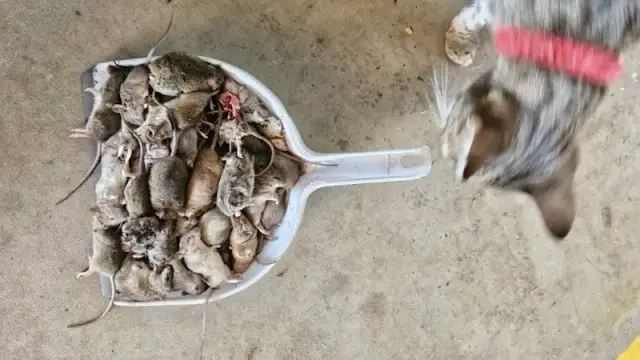
Grain producers in Western Australia now have access to stronger rodent bait. This is a big change from the older, weaker bait used earlier this year.
#westernaustralia, #mouseplague, #farmingnews, #grainproducers, #pestcontrol
https://newsletter.tf/wa-mouse-plague-stronger-bait-may-2026/
Stronger mouse bait approved for Western Australia farmers May 2026
Why are Western Australia farmers using stronger mouse bait? Learn how the new emergency permit helps protect crops from the current rodent plague.
Impressed with the determination of this little mouse. In 4 hours he produced about half a teaspoon of plastic flakes attempting to gnaw his way out of the humane trap 💪 🐁
He has regained his liberty in the conservation park nearby 💚
#Adelaide #mouseplague #mice #MiceOfMastodonCheck out the latest paper from our group (and Nikki’s 1st publication from her excellent MRes thesis!). In this study, she used spatial capture-recapture data to test whether social structure in mouse populations is correlated with the tendency to outbreak. Well done Nikki! #mouseplague
https://onlinelibrary.wiley.com/doi/10.1002/ece3.10843
Our latest work out now in @PLOS ONE on applying more efficient genotyping techniques for #populationgenetics analyses to support research on #mouseplague in Australia
https://journals.plos.org/plosone/article?id=10.1371/journal.pone.0288701

From chip to SNP: Rapid development and evaluation of a targeted capture genotyping-by-sequencing approach to support research and management of a plaguing rodent
The management of invasive species has been greatly enhanced by population genetic analyses of multilocus single-nucleotide polymorphism (SNP) datasets that provide critical information regarding pest population structure, invasion pathways, and reproductive biology. For many applications there is a need for protocols that offer rapid, robust and efficient genotyping on the order of hundreds to thousands of SNPs, that can be tailored to specific study populations and that are scalable for long-term monitoring schemes. Despite its status as a model laboratory species, there are few existing resources for studying wild populations of house mice (Mus musculus spp.) that strike this balance between data density and laboratory efficiency. Here we evaluate the utility of a custom targeted capture genotyping-by-sequencing approach to support research on plaguing house mouse populations in Australia. This approach utilizes 3,651 hybridization capture probes targeting genome-wide SNPs identified from a sample of mice collected in grain-producing regions of southeastern Australia genotyped using a commercially available microarray platform. To assess performance of the custom panel, we genotyped wild caught mice (N = 320) from two adjoining farms and demonstrate the ability to correctly assign individuals to source populations with high confidence (mean >95%), as well as robust kinship inference within sites. We discuss these results in the context of proposed applications for future genetic monitoring of house mice in Australia.
#mouseplague in my studio. Bye ceiling...
 NewsletterTF
 Ⓧ ⓂⒾⓃⓊⓈ Ⓣ🤦♂️🇺🇸
 Colonel "Bat" Guano
 Whiskers 🇦🇺
 Kevin Oh
 Smart Home Junkie