53 Followers
143 Following
16 Posts
evolutionary ecology, invasive species biology, conservation genetics | he/him
webkevinohphd.weebly.com

Interesting piece in NYT today, highlight some of the cutting edge work here in Aus, leveraging new genomic tools for desperately needed conservation interventions.

https://www.nytimes.com/2024/04/14/science/australia-wildlife-assisted-evolution.html

Should We Change Species to Save Them?

When traditional conservation fails, science is using “assisted evolution” to give vulnerable wildlife a chance.

The New York Times

Check out the latest paper from our group (and Nikki’s 1st publication from her excellent MRes thesis!). In this study, she used spatial capture-recapture data to test whether social structure in mouse populations is correlated with the tendency to outbreak. Well done Nikki! #mouseplague

https://onlinelibrary.wiley.com/doi/10.1002/ece3.10843

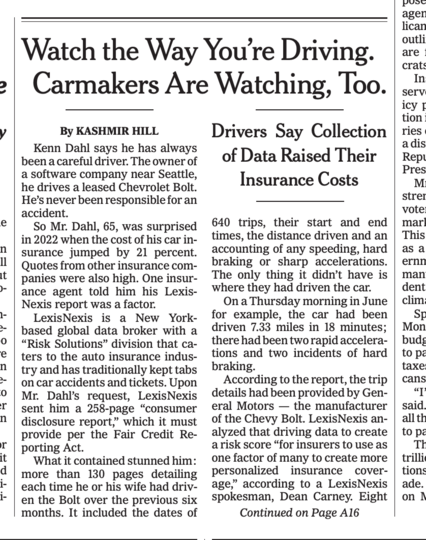
My story about how telematics data from people's cars unexpectedly raised their insurance rates is on the front page today...

https://www.nytimes.com/2024/03/11/technology/carmakers-driver-tracking-insurance.html?unlocked_article_code=1.b00.DzhQ.GXkvg-kgWebx&smid=url-share

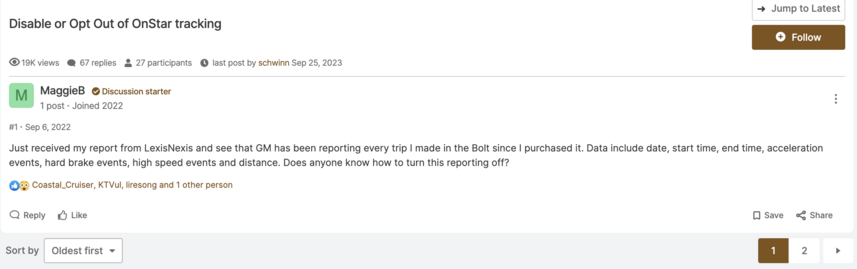
... and this is where it started: me lurking on car forums and seeing comments like this.

If this story doesn't convince lawmakers we need a strong federal privacy law, I'm not sure what will.

Automakers Are Sharing Consumers’ Driving Behavior With Insurance Companies

LexisNexis, which generates consumer risk profiles for the insurers, knew about every trip G.M. drivers had taken in their cars, including when they sped, braked too hard or accelerated rapidly.

The New York Times
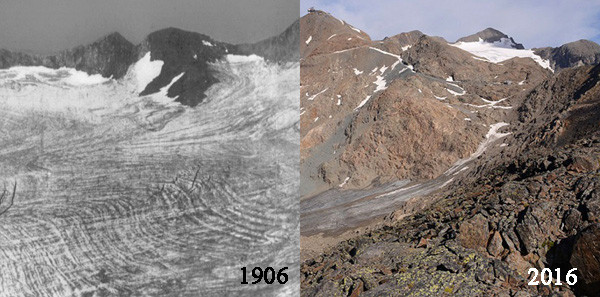
Montagne. « Une fonte d’un mètre en un mois » : le glacier de l’Alpe d’Huez réduit à néant

À l’Alpe d’Huez (Isère), le glacier est réduit à la taille d’un jardinet. Il ne sera plus suivi dans le cadre de l’observatoire Glacioclim, après 75 ans d’études.

Le Dauphiné Libéré

*Edit:*

I want to express my thanks and appreciation for all the boosts and comments! I had no idea this would get spread so widely, and I'm humbled by the support.

I'll reply to this post with the plan that I have for the next session.

Original post below...

I'm volunteering at my daughter's elementary school by teaching a "coding club" for 5th graders during their lunch and afternoon recess.

It mostly went great, except I left nearly in tears...

One of the kiddos that joined is blind, and I discovered that the coding programs for kids don't appear to be accessible *at all*.

First we tried Swift Playgrounds, but that didn't seem to work with VoiceOver. Then, he said that he's liked ScratchJr. in the past, and he got frustrated with that because he couldn't get his cat to move.

I'm kinda at a loss for how to help him. He left crying because he thinks that he can't get it, but I'm sure he can. Does anyone have any advice?

Thanks!!

#coding #swiftplayground #blind #accessibility #apple #ipad

I am a guest editor on this Special Feature of Methods in Ecology and Evolution:

Conservation, Ecology and Artificial Intelligence: Advances and Symbiotic Solutions

Accepting proposals until December 1! Please boost!

https://besjournals.onlinelibrary.wiley.com/hub/journal/2041210x/call-for-papers/conservation-ecology-ai

Xuechun Feng, Nicky Faber, and I are hosting a session at the International Congress of Entomology in Kyoto, Japan 24-28 August 2024. Our session is “Genetic Population Engineering for Pest Management” under the “Pest Management” topic.

We welcome submission of abstracts, which opens on September 1st (https://ice2024.org/call-for-paper/). Gene drive and anything else related to genetic control would fit in well at our session. Looking forward to a good conference!

Call for Papers - ICE2024-International Congress of Entomology2024(第27回国際昆虫学会議)

Deadline December 15, 2023. This is our theme of ICE202

ICE2024-International Congress of Entomology2024(第27回国際昆虫学会議) - XXVII International Congress of Entomology; 25 -30 August 2024(ICE2024)
New report gauges the huge impact of invasive species on biodiversity, along with a massive economic toll. https://www.nytimes.com/2023/09/04/climate/invasive-species-cost-ipbes.html
Invasive Species Are Costing the Global Economy Billions, Study Finds

A new scientific report offers the most exhaustive look yet at how nonnative plants and animals can drive extinctions, disrupt food systems and harm human health.

The New York Times
Invasive species cost Australian economy $25b every year

Trusted and independent source of local, national and world news. In-depth analysis, business, sport, weather and more.

Our latest work out now in @PLOS ONE on applying more efficient genotyping techniques for #populationgenetics analyses to support research on #mouseplague in Australia

https://journals.plos.org/plosone/article?id=10.1371/journal.pone.0288701

From chip to SNP: Rapid development and evaluation of a targeted capture genotyping-by-sequencing approach to support research and management of a plaguing rodent

The management of invasive species has been greatly enhanced by population genetic analyses of multilocus single-nucleotide polymorphism (SNP) datasets that provide critical information regarding pest population structure, invasion pathways, and reproductive biology. For many applications there is a need for protocols that offer rapid, robust and efficient genotyping on the order of hundreds to thousands of SNPs, that can be tailored to specific study populations and that are scalable for long-term monitoring schemes. Despite its status as a model laboratory species, there are few existing resources for studying wild populations of house mice (Mus musculus spp.) that strike this balance between data density and laboratory efficiency. Here we evaluate the utility of a custom targeted capture genotyping-by-sequencing approach to support research on plaguing house mouse populations in Australia. This approach utilizes 3,651 hybridization capture probes targeting genome-wide SNPs identified from a sample of mice collected in grain-producing regions of southeastern Australia genotyped using a commercially available microarray platform. To assess performance of the custom panel, we genotyped wild caught mice (N = 320) from two adjoining farms and demonstrate the ability to correctly assign individuals to source populations with high confidence (mean >95%), as well as robust kinship inference within sites. We discuss these results in the context of proposed applications for future genetic monitoring of house mice in Australia.