Like a Million Pounds…

I’ve come down with some sort of lurgy and had to cancel a tutorial that was due to take place today, which I am sorry about. I did, however, manage to rise from my sick bed earlier this morning to publish a paper at the Open Journal of Astrophysics. When I checked the publishing dashboard I saw that this one is paper No. 425. This is a significant figure if you reckon by the cost of an Article Processing Charge (APC) at Monthly Notices of the Royal Astronomical Society. The current APC is £2356 per paper. If you multiply this by 425 the result is just over a million pounds (£1,001,300 to be exact). The Open Journal of Astrophysics, being a Diamond Open Access journal, is totally free for authors.

I mentioned a couple of weeks ago, that this is a small fraction of the money being wasted by the astronomical community worldwide on publication charges but if even a small operation like ours can save a million pounds, just think of what could happen if we all published this way! For one thing, there would certainly be more money available for actual research. That doesn’t only go for astronomy, of course: almost every scientific discipline is being ripped off by publishers who have hijacked the Open Access movement to generate income from APCs.

I’ll repeat the quotation I posted yesterday about a scandal relating to corporate publishing giant Elsevier

The scandal exposes the windfall profits of scientific publishers, who in recent years have amassed billions of dollars in earnings from public funds earmarked for science.

It’s a shocking idea, I know, but what if we spent public funds on what they are supposed to be spent on rather than handing millions to greedy publishers?

#apc #articleProcessingCharge #diamondOpenAccess #mnras #monthlyNoticesOfTheRoyalAstronomicalSociety #openAccess #openJournalOfAstrophysics #theOpenJournalOfAstrophysics
Money and Open Access

I was thinking when I did Saturday’s update of the week’s new papers at the Open Journal of Astrophysics that I should convey some idea of the amount of money being saved by using Diamond Open Access.

So far this year we have published 181 articles in the Open Journal of Astrophysics. That’s a very small fraction – a few percent – of the output of the established journals in the area, Astrophysical Journal, Astronomy & Astrophysics and Monthly Notices of the Royal Astronomical Society, MNRAS.

I will take MNRAS as an example for comparison. Last time I looked, the Article Processing Charge (APC) (i.e. publication fee) for a paper submitted there is £2356. Our 181 papers published this year would have cost their authors £426,436 had they had to pay the MNRAS APC. Some – especially in the UK – do not pay directly, but have an equivalent amount taken from their institution(s) via Read-and-Publish agreements. The charge therefore does not come directly from the authors’ funds but from their institution, but that is just splitting hairs. The point about OJAp is that neither authors nor their institutions have to pay.

For comparison, a year’s stipend for a PhD student outside London at UKRI rates is £20,780. That means that the total amount saved by publishing in OJAp rather than MNRAS (£426,436) would be more than the cost of 20 PhD students. It might even be enough (just) to pay your Vice-Chancellor’s salary…

You might well think that is a trivial amount of money compared to the total circulating in science funding, but the real point is that it represents only a tiny fraction of the money being siphoned off from astrophysics research into other activities. Taking all the APCs paid (or page charges or other words that mean “publication fee”) to all the journals, the total figure is probably at least 50 times the £426,436 obtained above. That would be a figure in excess of £20 million. That is not a trivial amount of money. Even for a Vice-Chancellor.

Wouldn’t you and your institution rather keep your grant funds to spend on research than hand it over – directly or indirectly – to publishers? I know I would!

#apc #articleProcessingCharge #diamondOpenAccess #mnras #monthlyNoticesOfTheRoyalAstronomicalSociety #openJournalOfAstrophysics #scientificPublishing #theOpenJournalForAstrophysics

The Future of Diamond Open Access in Astrophysics

The Open Journal of Astrophysics is now reasonably well established as a Diamond Open Access journal for the astrophysics community. We have published over a hundred articles so far this year at such a low cost that we can make our publications free to read and to publish. Thanks for all this is due to the volunteers on our Editorial Board, the excellent team at Maynooth University library, who have supported this project for 6 years, to the arXiv, as well of course to the authors who have chosen to publish with us.

Although we have established a good base, we’re still much smaller than the mainstream journals publishing just a few percent of their output. There is no sign of a slowdown at OJAp. Indeed there are signs that pace will pick up. I heard last week, for example, that Oxford University Press (the publisher of Monthly Notices of the Royal Astronomical Society) has decided to cancel the ‘Read-and-Publish’ agreement that allowed authors from Australian institutions to avoid APCs. I imagine we’ll get quite a few more submissions from Down Under thanks to that decision.

Nevertheless, we’ve a long way to go to catch up with the likes of A&A, MNRAS and ApJ in terms of numbers. If activity continues to grow then we will incur greater costs – our provider, Scholastica, charges us per paper. Those costs will still be smaller than regular journals, but I think it’s unfair that the expense of running a journal that serves the global astrophysics community should fall entirely on one small University in Ireland.

Expense is only one issue. I never envisaged that OJAp would be unique. It was more intended to be a proof of concept. I would like to see a range of Diamond Open Access journals offering a choice for authors and serving different sub-disciplines. Most universities nowadays have publishing operations so there could be network of federated journals, some based on arXiv and some based on other repositories. Perhaps institutions are worried about the expense but, as we have shown the actual cost, is far less than they are wasting on Article Processing Charges. I rather think it’s not the money that is the issue, just the unimaginatively risk-averse thinking in what passes these days for university management.

There are two simple – but not mutually exclusive – possibilities.

One is that astrophysics institutions club together and donate funds not only to keep OJAp going, but also to allow us to invest in improvements. A donation equivalent to the cost of just one APC for a typical journal would help us enormously. We do actually get some donations already, but more would always be welcome. In the long run, an investment in Diamond Open Access would pay back many times in savings; OJAp has already saved the worldwide community over £500,000.

The other is that other members of the community follow the lead of OJAp and set up their own journals. I wouldn’t see others as much as competitors, more as allies with community-led federated system. In the light of the OUP decision mentioned above, why don’t Australian research institutions set up their own version of OJAp? I’d be happy to discuss how to start up such a journal with anyone interested.

If you would like to discuss either of these possibilities please use the comment box below or email me here.

P.S. There is another issue concerning the future of OJAp, which is that I will be retiring in a few years, but now isn’t the time to discuss that one!

#DiamondOpenAccess #journals #MNRAS #OpenAccess #OpenJournalOfAstrophysics #OxfordUniversityPress #TheOpenJournalOfAstrophysics

The Open Journal of Astrophysics

The Open Journal of Astrophysics is an arXiv overlay journal providing open access to peer-reviewed research in astrophysics and cosmology.

This morning I published a paper at the Open Journal of Astrophysics that brought the total number of publications there to 217. That may not seem a very significant number but I’ve had it in the back of my mind for some time. Some time ago Monthly Notices of the Royal Astronomical Society (MNRAS) decided to go Gold Open Access, charging a baseline APC of £2310 per article. I know that cost is not paid directly by authors from institutions with Read and Publish agreements with Oxford University Press (the publisher ofn MNRAS) but that doesn’t mean that it’s free: funds are still siphoned off from library budgets.

Anyway, taking the indicative cost of an APC to be the £2310 charged by MNRAS – some journals charge a lot more – the fact that we have published 217 papers means we have now saved the astronomical community around 217 × £2310 which is over £500k (€600k) in APCs. The cost to us is just a few percent of that figure.

The issue of University funding is a very live one in England, in Ireland and in The Netherlands. None of the financial crises can be solved completely by moving away from APCs but there is no justification at all for continuing to hand millions per year out of a shrinking pot over to greedy publishers. Surely this is an excellent time for Higher Education Institutions collectively to make a decisive move in the direction of Diamond Open Access?

https://telescoper.blog/2024/11/07/saving-money-via-diamond-open-access/

#ArticleProcessingCharge #DiamondOpenAccessPublishing #MNRAS #MonthlyNoticesOfTheRoyalAstronomicalSociety #OpenAccess #TheOpenJournalOfAstrophysics

Star formation in the high-extinction Planck cold clump PGCC G120.69+2.66 | Published in The Open Journal of Astrophysics

By Anlaug A. Djupvik, João L. Yun & 1 more. Using imaging and spectroscopy to identify sites of star formation in a molecular cloud.

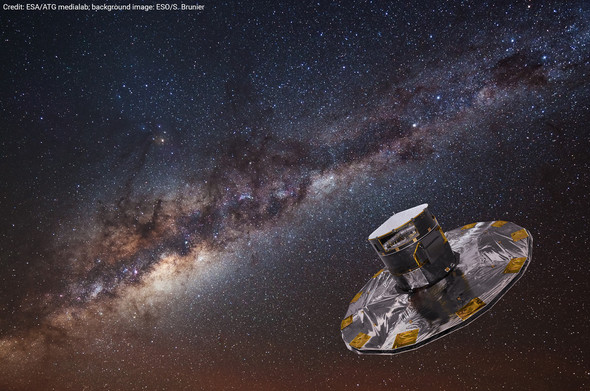
Hundreds of new companion stars of #exoplanet host stars were found by astrophysicists at #UniJena analysing the lastest observational data from the European Space Agency's Gaia space telescope. The researchers present their findings in the journal #MNRAS @royalastrosoc.

➡️ https://www.uni-jena.de/en/240117-exoplanet-host-stars

Extrasolar worlds between several suns

Astrophysicists analyse data from the Gaia space telescope and find hundreds of new companion stars of exoplanet host stars

Friedrich Schiller University Jena
Astrophysicists @UniJena analysed the latest observational data from the @ESAGaia space telescope and found hundreds of new companion stars of #exoplanet host stars. The team published the results in the journal #MNRAS @RoyalAstroSoc.
https://nachrichten.idw-online.de/2024/01/17/extrasolar-worlds-between-several-suns
Extrasolar worlds between several suns

Astrophysicists @UniJena analysed the latest observational data from the @ESAGaia space telescope and found hundreds of new companion stars of #exoplanet host stars. The team published the results in the journal #MNRAS @RoyalAstroSoc.
https://nachrichten.idw-online.de/2024/01/17/extrasolar-worlds-between-several-suns
Astrophysiker @UniJena werteten neueste Beobachtungsdaten des Weltraumteleskops @ESAGaia aus und fanden dabei Hunderte neue Begleitsterne von #Exoplaneten-Muttersternen. Seine Studie veröffentlichte das Team im Journal #MNRAS @RoyalAstroSoc.
https://nachrichten.idw-online.de/2024/01/17/extrasolare-welten-zwischen-mehreren-sonnen
Extrasolare Welten zwischen mehreren Sonnen

🚨 Advance publication by Camila Franco, Felipe Avila, and Armando Bernui, in #MNRAS on probing isotropy in the Local Universe, using the Arecibo ALFALFA survey data: study finds a signature of the Dipole Repeller we discovered back in 2017. That's just great!
https://doi.org/10.1093/mnras/stad3616

#dipolerepeller #cosmology #cosmography #cosmicflows #isotropy #universe #localuniverse #astrophysics #astronomy #astrodon #arecibo #arecibotelescope #alfalfa #survey #space #science #research #knowledge

Probing cosmic isotropy in the Local Universe

Abstract. This is a model-independent analysis that investigates the statistical isotropy in the Local Universe using the ALFALFA survey data (0 < z < 0.0

OUP Academic

🌌 The @royalastrosoc announced that all journals will be #OpenAccess from 📆 January 2024. All articles from the very first volumes published in 📆 1827 to the latest articles, will be free to read in their entirety. https://ras.ac.uk/news-and-press/news/royal-astronomical-society-announces-all-journals-publish-open-access-2024

#Astronomy #RAS #MNRAS

Royal Astronomical Society announces all journals to publish as open access from 2024

The Royal Astronomical Society (RAS) has today announced that all journals published by the Society will be Open Access (OA) from January 2024. This move will enable...

The Royal Astronomical Society