Imagining of a camp in the Mesolithic period, Wales, UK
#Paleoecology of #Doggerland
A study of DNA preserved in the sediments of a river system in the now-inundated Doggerland landmass in #NorthSea finds evidence suggesting the presence of temperate tree species in Doggerland around 16,000 years ago, earlier than they appeared in surrounding European forests. The findings suggest that Doggerland may have been a favorable environment for the development of #Mesolithic societies, according to the authors. https://www.pnas.org/doi/full/10.1073/pnas.2508402123 #science
@joeroe I think what is cool about this paper is it shows how unique early Holocene biomes are, and therefore it is mostly #Mesolithic adaptations I have in mind now. But you are right, that it changes the perception of Neolithic niche creation
Soil samples from 1980s excavations just revealed Stone Age graves weren’t empty after all — microscopic feathers, weasel fur, and owl barbules survived 7,000 years. A new method is rewriting Mesolithic burial research. #Mesolithic #Archaeology #StoneAge https://www.anthropology.net/p/what-the-soil-remembered-microscopic
What the Soil Remembered: Microscopic Fibres and the Dressed Dead of Stone Age Scandinavia

A new technique for recovering feather and fur remains from ancient graves is rewriting what we know about Mesolithic burial dress

Anthropology.net
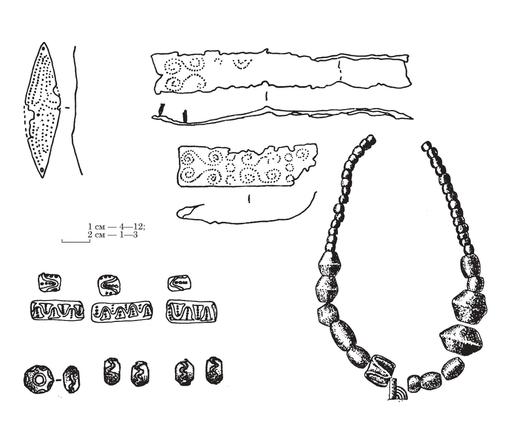
El collar del chamán mesolítico de Star Carr (c. 8500 a.C.) de lutita decorada en un contexto arqueológico. Se ha planteado que las marcas representen un mapa, un árbol, una hoja o marcas de conteo. 📷Milner, N., et al, 2016 #mesolitico #mesolithic
Northern Britain’s oldest burial is an 11,000-year-old girl. Her cave was used for 7,000 years by people who weren’t related to each other. #archaeology #prehistory #Mesolithic https://www.anthropology.net/p/the-cave-that-kept-calling-them-back
The Cave That Kept Calling Them Back

For 7,000 years, people in northern Britain buried their dead in the same limestone fissure. They weren't the same people.

Anthropology.net

Re-evaluation Identifies 11,000-Year-Old Remains as a Young Child, Not an Adult Male

https://newsletter.tf/cumbria-child-remains-11000-years-old/

Bones found in Cumbria, 11,000 years old, are now known to be from a young child, changing earlier ideas about them being an adult male.

#Cumbria, #Archaeology, #AncientHistory, #IceAge, #Mesolithic

11,000-Year-Old Remains Found in Cumbria Are a Young Child, Not an Adult

Scientists have learned that old bones found in a cave in Cumbria, England, belong to a three-year-old child. These bones are about 11,000 years old. This is important for understanding how people lived in England after the Ice Age.

https://newsletter.tf/cumbria-child-remains-11000-years-old/

#Cumbria, #Archaeology, #AncientHistory, #IceAge, #Mesolithic

11,000-Year-Old Remains Found in Cumbria Are a Young Child, Not an Adult

New study shows 11,000-year-old remains from Cumbria are a child, not an adult male. This changes what we know about early people in Northern England.