 Tgomas the Fabulous
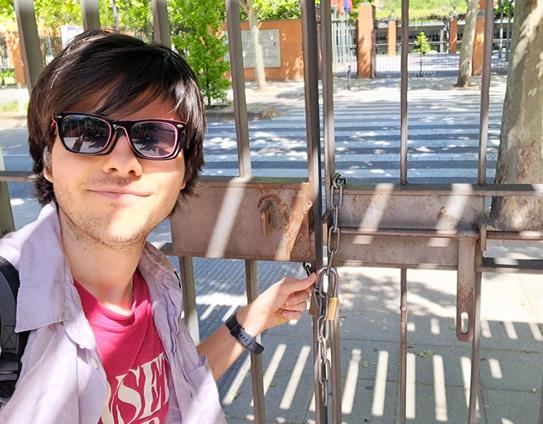
#DailyDoseOfTgomas #LockedInsideUni #LongStory #OneOfThoseDays #LosAngelesVirginDay #YesReally #GreatHoliday #DidntGoMyWay #Slog #SelfieBlog #FabulousSelfie #QuirkyBoy #Quirky #Selfie #DailySelfie
Currently working on Chapter 92 of "Behind Every Myth"! 😅 It's wild – I genuinely thought this would be a short story when I started.
Now, 300,000 words later, I realize Hank's adventure is far from over. So much more story to tell!
Catch up on Royal Road: https://www.royalroad.com/fiction/109734/behind-every-myth
#Fantasy #Harem #Adventure #LongStory #Book #WritingCommunity #bbhartwich


When reclusive photography student Hank Avery travels from Seattle to San Diego Comic-Con, he expects to spend the weekend building his portfolio... capturing costumed fans, vibrant creativity, and maybe getting noticed by a few big-name cosplayers. What he doesn't expect is to witness a violent incident outside his hotel, or to accidentally photograph (...)
Hey #QubesOS using world! Don't be me and try to install a template rpm file directly using dnf! You Have Been Warned. Use qvm-template instead.
Chinese checkers: How PC maker Lenovo stayed safe
In the years that followed, more Chinese companies came under scrutiny.
The Enforcement Directorate, the agency which fights economic crimes, seized over ₹5,500 crore worth of Xiaomi India’s assets after a probe found that the smartphone maker made illegal remittances to foreign entities while showing them as royalty payments. The agency also alleged that Vivo, another Chinese mobile handset maker, siphoned off ₹70,000 crore from India under the guise of imports. And earlier this year, some China backed fintech firms were searched as part of a money laundering case.
In the middle of all this, one Chinese electronics company with sizable operations in India managed to stay safe and below-the-radar: Lenovo. It didn’t find itself in the law’s crosshairs.
Before we answer, let’s look at Lenovo’s history and its current operations, in India and across the world.
Idea in a dusty room
In a dusty room in Beijing, in 1984, Liu Chuanzhi and 10 other researchers from the Institute of Computing Technology of the Chinese Academy of Sciences founded a company called Legend. Chuanzhi, according to Legend Holding’s website, graduated from the People’s Liberation Army Institute of Telecommunication Engineering in 1966. He went on to become a representative of “the 16th and 17th National Congress of the Chinese Communist Party and of the 9th, 10th and 11th National People’s Congress of China”. Chuanzhi is today the honorary chairman of Legend Holdings.
The personal computer (PC) division came to be called Lenovo and listed in Hong Kong in 1994. By 1997, Lenovo became the No. 1 PC maker in China by market share.
View Full Image
India is part of Lenovo’s Asia Pacific operations. (Photo: Bloomberg)The company now operates in over 180 markets. Headquartered both in Beijing and North Carolina, US, the group’s leadership team is dispersed across locations. It has made large acquisitions in the US—IBM’s Thinkpad business in 2005; the X86 server businesses in 2014 and Motorola devices business from Google in 2014. Over the last decade, the Lenovo group grew from about $20 billion in revenue to over $59 billion in 2023.
India is part of the company’s Asia Pacific operations, which contributes about 19% to global revenue. India has over 1,700 employees; globally, Lenovo employs 69,500. In 2023-24, the company generated revenue of ₹10,847 crore with a profit of ₹100 crore. Today, its three manufacturing sites in the country produce 6.5 million devices, including PCs, phones and tablets.
‘We pay our taxes’
Chinese companies, for decades, have tried a charm offensive strategy in India. In May 2010, The Economic Times reported that Huawei, a telecom equipment major, was nudging its Chinese staff to Indianize their names. “Chen Tian Siang, a top consultant with Huawei India, introduces himself as Chetan Chen; Ling Yong Xu, a top management executive, is Deepak to his Indian colleagues; Liu Fang, a senior executive with its networks division, goes by the name Deepika Fang,” the report stated.
View Full Image
Huawei nudged its Chinese staff to adopt Indian names. (Photo: Bloomberg)Lenovo had a more straightforward idea: Good compliance.
Amid increasing geopolitical conflict, the group has been open to scrutiny from foreign governments, Shailendra Katyal, the managing director of Lenovo India Pvt Limited, told Mint.
“We pass the highest level of scrutiny across markets, not just in India. Federal governments still buy from us, whether it is the US, Japan or Korea. We have one-third of the supercomputer market share, which means research universities in Europe and North America (critical from a security point of view) use our supercomputers,” he said.
Katyal added that the company has been a good citizen. “We pay taxes regularly. There’s never been a security incident related to Lenovo, whether in India or globally.”
Analysts tend to agree with this view. Bharath Shenoy, principal analyst at advisory and research firm IDC India, said that Lenovo has been in the India PC business since 2005. With time, came trust. “Over the years, they have been well accepted not just by global enterprises, Indian enterprises and small and medium businesses, but have also fulfilled several government orders in the past,” he said. “Close to two decades of operations, existing relationships in the ecosystem, and also the intent to invest in India might have helped Lenovo weather the storm better compared to others,” he added.
Make or break
Invest in India implies local manufacturing. While Chinese smartphone companies under the Indian government’s scrutiny also locally manufacture, either directly or through third parties, they have been a bit late in the game.
A senior industry executive from a Chinese phone brand, who didn’t want to be identified, said that the allegations of funds being siphoned and tax evasion emerged because some companies simply didn’t want to comply with Indian laws. They started to manufacture locally only after the government’s import substitution measures—high customs duties on the import of finished products and components—kicked in since 2014. Vivo India, for instance, started assembling its devices in India, from its Greater Noida facility, only in 2015.
View Full Image
Vivo India started assembling its devices in India in 2015.“The Chinese brands had cornered the Indian market, driven local brands out of business by undercutting the market,” the executive said, which alarmed both industry bodies and the government.
This was not the case with Lenovo’s operations.
The company has been making PCs in India since 2005 after it acquired IBM’s facility in Puducherry. Over the years, it has added products to local manufacturing and recently engaged Dixon Technologies to make laptops and tablets. In September this year, the company announced that it will begin making artificial intelligence (AI) servers locally—AI servers are designed to support generative AI computing.
“Lenovo has a higher percentage of locally assembled notebooks compared to most of its competition,” said IDC’s Shenoy. “Lenovo has been consistently increasing its locally assembled notebook mix and thereby reducing its dependency on imports.”
Lenovo is currently the No.2 in India’s PC market with a 17.3% share of the 4.5 million units shipped in the September quarter, as per IDC. It trails HP, which leads with 29% share and is ahead of Dell and Acer who have 14.6% share each.
Meanwhile, analysts think that making AI servers will be a big deal, going forward. William Li, a senior analyst from Counterpoint Research, said that establishing AI server manufacturing in India strengthens Lenovo’s position in the Indian market, and can possibly avoid US-China trade tensions while aligning with the global trend of supply chain diversification. “In addition, this move supports the Indian government’s Make in India initiatives, enabling Lenovo to secure favourable policies for business development in the country,” he added.
Global, not Chinese
An important facet of staying under-the-radar is how Lenovo is perceived in different circles. The group, on the whole, does not want to be known solely as Chinese-owned or operated. In its history page, on the websites of different countries, Lenovo likes to mention its IBM association upfront, one that makes it look more multinational.
“Lenovo’s story begins in a dusty room in Beijing in 1984, the same year IBM launched its first ‘portable’ computer, the IBM Portable PC, weighing a hefty 30lbs (13.60kg). The history of the two companies became intertwined over the coming years,” the history page states.
A former senior executive in the India office, who didn’t want to be identified, said that the mandate was clear—the company had to be known for its global operating style and outlook. This also reflected in the profile of the executives it chose to hire.
Lenovo does not want to be known solely as a Chinese-owned or operated brand.
“The executives representing Lenovo were rarely from China; they would be either local or global talent. For instance, if Lenovo operated in Europe, its leadership team would be from the region,” the executive said.
Nonetheless, this strategy isn’t unique to Lenovo. Xiaomi, for instance, had Indians leading their domestic operation. But some smartphone brands did have Chinese nationals across operations, in leadership, manufacturing and distribution. In December 2023, the Enforcement Directorate arrested Hong Xuquan, the interim CEO of Vivo and a Chinese national, in connection with the agency’s probe into alleged money laundering.
Katyal, who has been the India managing director at Lenovo since 2021, and part of the group since 2011, clarified that the company goes by meritocracy—“best person for the job irrespective of the citizenship”— across markets. “It is truly merit driven. And yeah, you’ll have enough Indians in many places,” he said.
Katyal’s boss, for instance, is Indian—Amar Babu, the president of Lenovo Asia Pacific. While Babu has been with Lenovo for 17 years, he is of American vintage, having been the country manager of chipmaker Intel in India, between 1999 and 2007.
View Full Image
A file photo of Shailendra Katyal, managing director, Lenovo India.Vocal for components
While Lenovo has stayed safe from investigations and the bad press smartphone makers and Chinese apps received, the military standoff post Galwan, and subsequent policies, did impact its business.
India’s policies on foreign investments changed. The country amended its rules for foreign direct investments, especially those coming in from countries that shared a land border. In addition, India revised its public procurement norms in July 2020. Bidders from countries that share a border now needed additional clearance in the form of a pre-registration with the department for promotion of industry and internal trade (DPIIT). The move impacted pretty much all major Chinese vendors and companies.
Lenovo regularly bagged large contracts for supplying laptops or tablets from central or state governments. Post July 2020, this business dried up. “Since government contracts didn’t come to Lenovo, they went to HP, Dell or Acer, which also led to its sales declining in 2022 and 2023,” IDC’s Shenoy said.
Lenovo’s India revenue slipped 12% in 2022-23 and 14% in 2023-24.
Katyal told Mint that presently, Lenovo was unable to participate in any of the government tenders even though it has been compliant with category 1 requirement of the preferential market access (PMA) policy. PMA states that a minimum of 50% of the components used in making a product should be made in India. Component manufacturing is India’s next goal, post its success with electronics assembly.
The company began making motherboards used in PCs and laptops from its Puducherry manufacturing plant earlier this year, in addition to sourcing other components locally, meeting the criteria.
“We’ve done whatever the government has asked for. We’ve applied for a fresh application, which is still pending approval. We continue to make representations to allow us to participate in government tenders,” Katyal said.
India and China have begun engaging in diplomatic talks to de-escalate border tensions and this gives hope to Chinese companies.
In the meantime, Lenovo, in its representations to the government, is stressing on the value it can create by deepening its operations and creating a supply-chain for component manufacturing.
“We can help build global scale, not just India for India, but India for the world,” Katyal said. “And if we’re bringing in our top 10 supply chain partners into India, it should have an impact for us as well—in terms of our corporate reputation,” he added.
Share this:
#ChineseCheckers #ChineseCompanies #ChineseElectronicsCompanies #EnforcementDirectorate #GalwanClashes #Lenovo #LenovoSHistory #longStory #ministryOfElectronicsAndIT #mintLongStory #PCMaker #TikTok #Vivo #Xiaomi #XiaomiIndia
What can cats and dogs do for Godrej Consumer?
In India, too, the pandemic years have changed some things ‘fur’ever.
As Indians spent more time online and indoors, they embraced change. Quick commerce was in, OTT viewership shot up, and pet adoption exploded. Today, people continue to adopt cats and dogs in droves. From 26 million pets in FY19, India’s pet population zoomed to more than 32 million in FY24, as per consulting firm Redseer. And it’s set to grow to more than 40 million in another four years.
That might explain why the maker of Good Knight insect repellent and Cinthol soap is looking to pets for growth. But what can Godrej Consumer Products Ltd do differently in this relatively smaller market, historically dominated by imports and domestic meat processors?
Long-term play
In August, Godrej Consumer announced it would enter the pet care market by setting up a brand new subsidiary called Godrej Pet Care. Records with the ministry of corporate affairs show no entity with this name has been incorporated as of now.
A spokesperson for Godrej Consumer declined to comment.
“While the opportunity is clear, we believe that our right to win as a group is high,” Godrej Consumer CEO Sudhir Sitapati told investors in an earnings call in August. “The lead time to set up capex [capital expenditure] is long and we hope to commence manufacturing in the second half of next year.”
View Full Image
Sudhir Sitapati, the managing director and chief executive officer of Godrej Consumer Products Ltd. (Photo: Mint)Nitin Jain, formerly the director of sales at pet food maker Mars India, is the chief operating officer of this business. He spent nearly 10 years with Mars.
Godrej’s sister concern, Godrej Agrovet, a meat processing and animal feeds business, will manufacture the products.
While Godrej estimates this to be a ₹5,000 crore market, consulting firm Redseer pegs the overall petcare market at $3.5 billion or ₹29,000 crore a year (including food, grooming, veterinary care, and other services). Redseer estimates this will grow to $7-7.5 billion by FY28.
Despite the surge in pet ownership since the covid pandemic, just 10% of Indian households formally own a pet, Godrej’s Sitapati told investors. And of those households, only 10% feed their pets packaged food, he added in the earnings call cited above, alluding to the headroom for growth.
India’s pet food market is largely dominated by three manufacturers. Mars Inc., owner of iconic brands Pedigree and Whiskas, controls an estimated one-third of the total market. Nestlé, which launched Purina in 2018, is a dominant player globally but has been slow to scale up in India, industry executives say. Purina sells pet food brands Supercoat, Felix, and Friskies in India and abroad. In 2022, Nestlé acquired the standalone Purina India business for ₹123 crore.
Broiler conglomerate IB Group is also a major name in the business with brands such as Drools, Purepet, and Meat Up. FMCG company Himalaya also sells some pet food and several pet medicines and supplements.
Godrej is likely to build in the mass-premium category, adjacent to Mars’ Pedigree and Whiskas and their rival Drools. “We are not the kind of company to play at just the top of the pyramid or something small,” Godrej’s Sitapati told investors in the earnings call quoted above. “If we play, we would want to play pretty much in the belly of the market. What exactly the positioning and price is, we’ll figure out with time.”
The aim: to develop a category, and not just compete with market leaders.
“Over the last two years, we’ve developed some muscle around category development,” Sitapati said in the earnings call. “And we feel this is a category that can benefit with category development,” adding that the firm’s ₹500 crore investment is largely for operating expenses, including sales and marketing, not for capacity expansion.
Adjacent business
It is relatively easier for Godrej to enter the pet foods business, given the category is adjacent to its existing animal feeds and meat processing business, Godrej Agrovet. So, while Goderj Consumer focuses on category creation, the sister concern will handle manufacturing. Godrej Agrovet will be compensated for the goods supplied via a transfer pricing mechanism, Sudhir Sitapati told investors during the earnings call. It will also receive a “small management fee” for the transaction, he added.
Access to Godrej Agrovet, which makes nearly half of its annual revenue from the poultry business, gives Godrej Consumer an edge over most of its rivals in the pet foods business. International rivals Mars and Nestlé have largely manufactured their pet food abroad, importing it into India from hubs in South Africa and Europe. Newer pet food brands such as Belotta and Me-O import from Thailand, the biggest source of imported pet food in India.
But, relying on imports alone can mean increased costs and lost chances. When the pandemic and lockdown first struck India in 2020, imported goods struggled as supply chains were disrupted worldwide. Domestic brands Drools, manufactured by its parent poultry firm IB Group, capitalized on the shortage of better-known brands to gain traction in the market. Company filings show that between FY20 and FY22, Drools’ revenue nearly tripled to over ₹350 crore; market leader Mars grew as well, but much slower.
Since then, both Mars and Nestlé have expanded domestic manufacturing. In August last year, Mars announced it would spend ₹800 crore on expanding its existing facility in Telangana. This April, French cat food brand Royal Canin opened its first pet food packaging centre in Bhiwandi, near Mumbai, with a ₹100 crore investment.
Meanwhile, more animal feed and meat processing manufacturers have entered the pet foods business in the last two years. Hyderabad-based Allana Group, among India’s biggest meat exporters, spent ₹200 crore setting up a pet food facility outside Hyderabad in September last year. This May, seafood processor Growel Group said it was spending ₹80-100 crore to open a pet food manufacturing facility in Andhra Pradesh.
But Godrej Consumer has an edge over its poultry and broiler rivals in distribution. “With their personal care and home insecticides products, they already have access to the chemist channel. This has become a big channel for pet foods in the last few years, so their distribution is already in place for this category,” said Mrunmayee Jogalekar, an analyst with broking firm Asit C Mehta.
Demand for better products
“For most manufacturers, pet food is often seen as an attractive space, an afterthought in terms of diversification,” Anand Ramanathan, partner at consulting firm Deloitte and leader of its consumer products and retail practice, told Mint. “They may have an existing animal feed or meat processing business. Traditionally, you take leftovers from your animal feed business and process it into pet foods. That can bring you economies of scale, but there can be challenges in terms of quality and food safety.”
View Full Image
The writer’s pet cats, Bambi (left) and Raju (right).Smaller, insurgent pet care brands are tapping into that concern.
“Most commercial pet food for dogs and cats is made with chicken byproducts including the neck, head, blood, and feathers,” said Abhishek Agrawal, co-founder at Gurugram-based cat food startup Smylo. “They are also full of artificial preservatives to extend the product’s shelf life. But these ingredients aren’t healthy for pets—a majority of pet dogs and cats in India are obese and need better nutrition.”
34-year-old Poulomi Mazumdar, a Mumbai-based consultant and parent to three adopted cats, agrees. “Affordability is an issue, especially with wet food for cats in India,” she said. “I do feed dry kibble (ground meal shaped into pellets) to my cats sometimes, but I avoid it because it is known to cause obesity, dehydration, and kidney-related issues in the long-term.”
Kibble tends to be 30-50% cheaper than wet food. However, Mazumdar eventually reduced the amount of packaged food for her cats altogether, substituting it with home cooked meat and vegetables.
Agrawal and his co-founder Kartikeya Gupta founded Smylo last year, hoping to introduce better-quality cat food made with good cuts of meat and sans artificial preservatives. While researching how to build a cost-effective yet high-quality pet food supply chain, they discovered that southeast Asian manufacturers were ahead of most of their domestic counterparts.
“What matters is the protein digestibility in the pet food,” Smylo’s Gupta explains. “Manufacturers in countries like Vietnam, Thailand, and the Philippines use fresh water fish which have higher digestible protein and fat content than salt water fish or chicken byproduct. They also followed better hygiene standards and had the best machinery, at par with what is used in the UK and Germany.”
Manufacturers in some South East Asian countries use fresh water fish which have higher digestible protein.
— Kartikeya Gupta
While Smylo is clear it wants an entirely domestic supply chain in the long-run, the founders said they are currently experimenting with manufacturers in these southeast Asian countries.
For Godrej to offer higher value for money, it may need to carefully consider what raw materials Godrej Agrovet puts into the pet food it manufactures. “About 65-70% of the overall cost in pet food is raw material cost, so you have to consider the quality of your sources,” Deloitte’s Ramanathan added.
High-margin focus
Godrej Consumer’s interest in pet care comes at a time of great change for the firm. Under Sitapati, the company has been pursuing a long-term strategy of simplifying its product portfolio to focus on high-margin categories, such as premium niches in laundry and now, pet food, where margins can be as high as in the firm’s mainstay personal and home care categories.
“Since FY21, GCPL’s domestic business has shown early signs of revival following the sales slowdown experienced during FY17-FY20,” brokerage firm Motilal Oswal wrote in a company note from September this year. “The under-penetrated HI [home insecticides] and Hair Color categories have significantly benefited from Mr. Sitapati’s extensive experience in transforming low-penetration categories at Hindustan Unilever.”
Winning in a new category will be a crucial part of its strategy to placate investors—the company’s stock has underperformed the Nifty FMCG index in the last three years. In the past year, the company has reported better-than-expected volume growth of 7% year on year. But subdued consumer demand, a surge in palm oil prices, the delayed north Indian winter, and cyclonic weather in south India may affect sales in the December 2024 quarter, Godrej Consumer said in an investor note late last week.
“GCPL’s strength has been rolling out products with a sharp R&D focus to beat rivals,” said analyst Jogalekar. “For example, they took back market share from the illegal incense stick market by launching Good Knight agarbattis earlier this year. They have also successfully launched handwashes and laundry detergents in powder-to-liquid format. Innovation has worked well for them over the years. One would expect the same in their pet care entry.”
Hot opportunity
Despite the manufacturing challenges, the time is ripe for category creation in pet care, say market watchers. Pet food brands in India have not built niches or price differentiation for themselves. Besides, many Indians are becoming pet parents for the first time.
“Post the pandemic, we saw more affluent households spending on pet ownership, but now middle-income households are also adopting pets,” said Deloitte’s Ramanathan.
An affluent household in this context is one with an annual income of over ₹30 lakh. On average, consulting firm Redseer estimates Indian pet parents are spending over ₹50,000 on pet products and services a year. Most of this is offline.
View Full Image
Post the pandemic, more affluent households spent on pet ownership. (Photo: Pexels/Barnabas Davoti)For most experienced pet parents, the biggest pain point is finding packaged food that is of a better quality than the market leaders, but not extremely expensive and intermittently available. Amulya Vanga, a 32-year-old Delhi-based media professional, had plenty of widely available cat food brands to choose from in the US, where she first adopted her pet cat Auggie. But six years ago, when she moved back to India, she settled for Whiskas. “It is widely available in India and at least a standard quality,” she says.
When Auggie’s veterinarian diagnosed the 10-year-old cat with obesity, Vanga was asked to dramatically change his diet. Like Mazumdar in Mumbai, she chose a mix of home cooked meat and vegetables with some Whiskas wet food, necessary for taste and nutrients like taurine not found in human-grade food. “What I see missing in the market is premium, high-quality, widely available, but affordable food, where my cat is getting good quality meat and not grain and filler ingredients.”
That may be Godrej’s opportunity over domestic rivals just entering the business.
Godrej Consumer’s Sitapati said that roughly half of all pet food sales in India come from speciality pet stores. The firm plans to scale up distribution in that channel.
In the earnings call, Godrej Consumer’s Sitapati said that roughly half of all pet food sales in India come from speciality pet stores. The firm plans to scale up distribution in that channel, while it already occupies a leading position in modern trade and e-commerce, where its premium, urban-focused brands in laundry and hair colour sell.
Quick commerce in particular is keen to capitalise on the growing pet care market, brands in this space told Mint. “Category managers for leading quick commerce platforms have been approaching us and other pet care startups to list food,” Garima Kaushal, co-founder of Delhi-based, dog-focused startup Sploot, said. “Platforms like Zepto and Blinkit have taken some share of the pet parent’s wallet. They are all seeking out listings. But quick commerce still tends to be a channel for unplanned stockouts of pet food at home, not yet for planned pet food purchases,” she added.
Dog food brands Pedigree and Drools sell 10kg mega packs of dry kibble for dogs, meant to be stored and used over a long period of time.
Platforms like Blinkit, for instance, have been advertising their pet care offerings aggressively. All kinds of quick commerce orders are often delivered in brown packaging telling customers to get pet products in 10 minutes.
Godrej Consumer already sells heavily on these quick-commerce channels. The rising popularity of pet food on platforms such as Blinkit gives the firm much needed speed in its go-to market strategy. That speed can help boost its new brand even as competitive intensity increases, with more companies entering the market and market leaders increasing domestic capacity.
With so many dogs and cats (and other pets) entering homes, many more firms are likely to invest in this market, and competition in the pet care business will heat up. The next two years will reveal if Sitapati—and Godrej Consumer—can stave off the competition and hold their own, while building a mass category from scratch.
Share this:
#Blinkit #catFood #cats #dogFood #dogs #GodrejAgrovet #GodrejConsumer #GodrejConsumerProductsLtd #homeCookedMeat #IndiaSPetPopulation #KukurTihar #longStory #MarsInc_ #mintLongStory #Pedigree #petcareMarket #SudhirSitapati #Whiskas
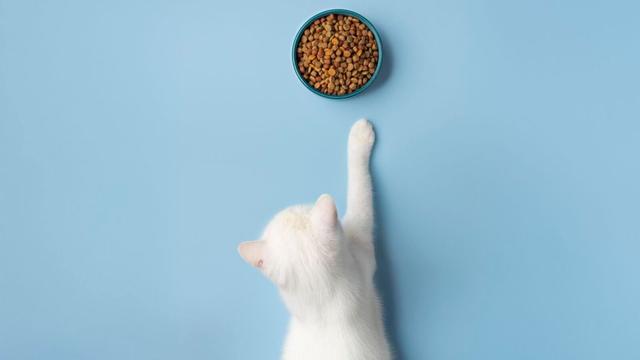
Atrée vit l'ovin nouveau-né au pelage tout doré, Atrée se souvint de sa promesse de sacrifice, Atrée fit : "Hmmm, oui, mais non", et garda l'agneau pour lui.
Mal lui en prit. C'était un piège d'Hermès (qui haïssait toute cette famille) pour irriter les autres dieux.
Cependant Sthénélos le roi local mourut et son fils, Eurysthée, finit zigouillé par les fils d'Héraclès. #longstory
Le peuple de Mycènes et/ou d'Argos se gratta donc très fort le menton. Qui nommer roi désormais ?
#BraceYourselves | #BraceBrace...
A #LongStory in #ManyParts with #MusicalInterludes and #OtherStuff along #TheWay...
#IT will #TakeSomeTime to #PortIT all over from #SpaceKarenX's US$44bn #VanityProject; so, #BearWithMe... 🧸 Or, #Not...
#IT won't #AffectTheOutcome; #IT's #AlreadyHappened...
#IT'll #HappenAgain...
#HoldOn to your #Spoons and #GetYourself #WoolReady...
🧙🥄🤖 🤖🥄🧙 |
🤖🥄🧙 |  🦹🚀🦄🚀🦹
🦹🚀🦄🚀🦹
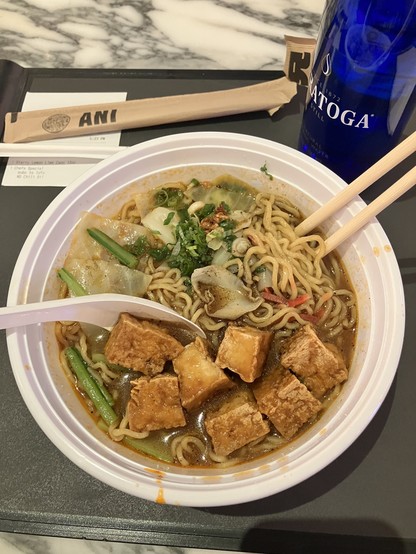
#AniRamenHouse has possibly the WORST ordering interface I've ever encountered:
lemon lime seltzer arrived as Sprite #Rejected
I would NEVER sub tofu for pork belly because my doc has said to avoid soy #LongStory
So this bowl of ramen is tasty, but NOT what I had in mind for dinnerafter #CANstruction
But anyways...
Aside from #NotBeingAGarry; #Someone who I also don't know (and who doesn't know me at all) called me a #Saint the other day...
#IKnowRight; she don't know me #TooWell, at all...
But #Nonetheless; she insisted on calling me a #Saint...
#BraceYourselves (and #Embrace your #LittleElves); there's a #LongStory #ComingUp...
You'll "need" a #Biscuit or #Something; maybe a #ComfortBlanket...
The #EmergencyExits are #Here, #Here and #OverThere...
🧙⚔️🤖🐺🤖⚔️🧙 | 🎈🦹🍪🦄🍪🦹🎈
 Author - B. B. Hartwich
 Aaron Rainbolt
 sikar24
 Histoires Mythiques
 PSiReN-X

 Sesame Squirrel
 Endaf - N6UTC/MW1BQO