 NekoProgram TKZ Edition
You're welcome @django 
You're welcome @django
I wonder ... Maybe this isn't such a bad idea for teaching basic Rust to complete new beginners.
I've recently thought about how I learnt to code. This was in the mid 80s, where BASIC was very common. There were no fancy editors. But you got to see the result pretty quickly.
Later on I moved to Pascal, C, PHP, Python and C++. But I always started with a very simple editor each time, not the grand IDEs. Now I'm slowly starting to dive into Rust and golang.
I first found my interest in more advanced editors when I started to understand the language reasonably well. That's when the power of IDEs comes into play.
There are plenty of reasons why to choose other languages than Rust for newcomers. But the Rust language itself at its core isn't that advanced. It gets more advanced once you start adding crates and putting all the pieces together. But it starts with a fairly simple basis. Just like the simple editors and BASIC 40 years ago.
⭐️ Interesting project: https://github.com/wojtczyk/trust TRUST – Coding Rust like it's 1989
Learning how to write these few lines of #rust code took me way longer to figure out that I want to admit, and I still don't really fully understand how it works.
I feel really stupid, because it looks so simple.
:(
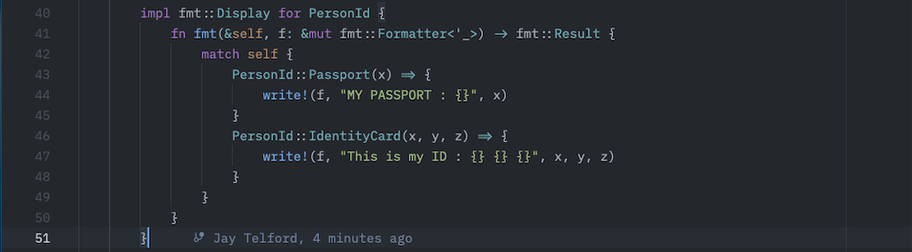
I find it extremely annoying when you are trying to learn to #code and all the tools your course points you to are full of AI that want to do the coding for you. Like seriously, if I wanted an AI to code, I'd go ask Claude to write my code, not be paying for a course to learn to write #humancode
It is very irritating.
I want to learn to do something myself, not just cheat by using AI!!!
More lessons from #Udemy — learning to write #Rust. You can see from running: cargo run, in the terminal that my code works, but it still has two mistakes. I’m getting there slowly, but I am getting there.
This is very early lessons though, so I am still learning and praticing for now.
🤖 🤖 🤖
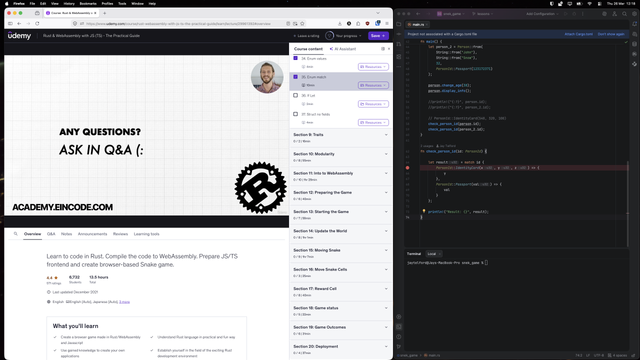
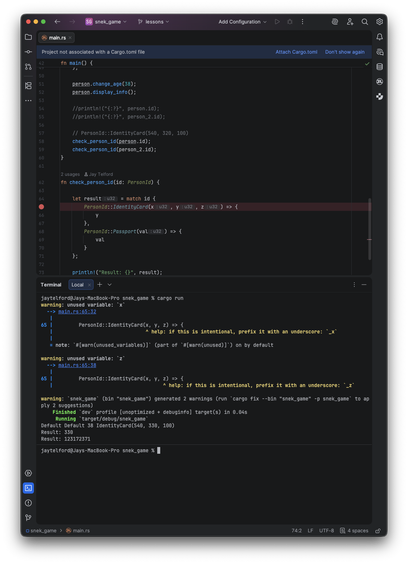
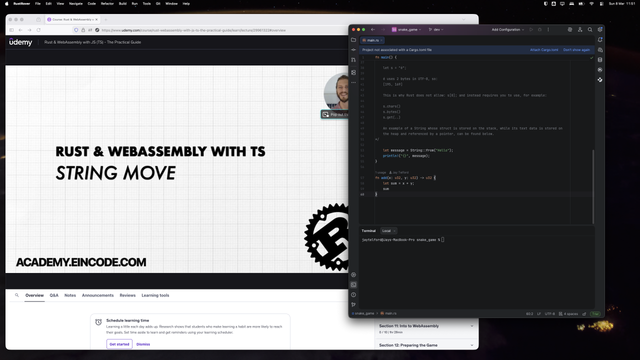
Learning to code in Rust with the goal of eventually creating a snake game as my final project… and wow, this lesson just broke my brain.
Send help!!!
I don't think my brain is meant for system-level languages. Thank goodness it’s not the 60s and I’m not wrestling with actual Assembly—honestly, I might not have survived that.
 HackerNoon
 Hacker News
 🐈⬛David Sommerseth
 Jay
Jay Diggy
Diggy Martin's Pipe Dreams