 jefewiggum at KillBait
El presidente de la Confederación Hidrográfica del Júcar, Miguel Polo, ha expresado su perplejidad ante la falta de respuestas rápidas por parte de los responsables de Emergencias de la Generalitat durante la crisis provocada por la DANA de octubre de 2025. Durante su testimonio ante la jueza, Polo ... [Ver más]
 professor at KillBait
Repito (una vez más) lo que pienso, aunque sinceramente ojalá me equivoque, pero con lo que voy viendo me empieza a cuadrar todo más y más, y me tiene muy preocupada, lo digo en serio: Mi teoría conspiranoica: El gobierno catalán ya sabía que no iba a hacer nada, y creo que ni se le pasó por la cabe...
 Hernán Elvira
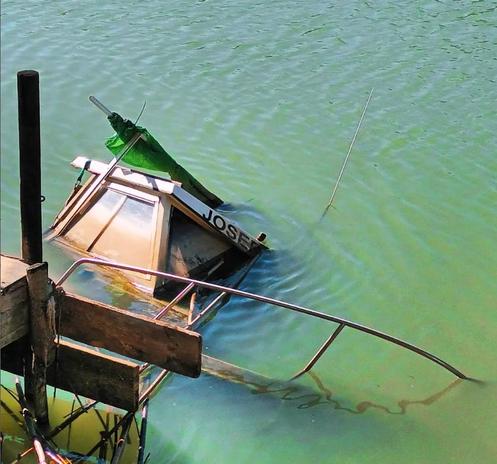
Se fue a pique Josep (Cullera, dic., 2024) #cullera #riuxuquer #jucar #naufragio #apique #josep #fotografía #fotoencontrada #foto
 Víctor Chico
Tu també ets fruit del deliri
#vacaciones #holiday #spain #españa #xuq #jucar #jorquera #albacete #lamancha #girl
#vacaciones #holiday #spain #españa #xuq #jucar #jorquera #albacete #lamancha #girl

 David Salesa 🌱
Importante trabajo sobre tendencias y patrones de #precipitación en las cabeceras de cuenca del #Guadalquivir, #Guadiana, #Júcar y #Segura.
👉 Llueve menos (📉9%) y en menos días (📉14%). Esto ocurre en invierno y, sobre todo, en verano.
👉Los días de precipitación suave (<10mm/día) se reducen, los de gran intensidad (>40mm/d) aumentan muchísimo.
👉La media del número de días sin lluvia aumenta. Aún lo hace mucho más el máximo de días secos consecutivos.

Analysis of Precipitation and Drought in the Main Southeastern Iberian River Headwaters (1952–2021)
This study evaluated the long-term changes in precipitation patterns and drought conditions in one of the key recharge areas of the hydrological system of southern and southeastern Spain, namely, the Sierra de Cazorla y Segura, which contains the headwater sectors of the catchment basins of two important rivers, namely, the Guadalquivir and the Segura. The research covered a period of 70 years (1952–2021) and undertook an exhaustive analysis of data from 348 pluviometric stations. The most relevant results are as follows: (1) most areas experienced a decrease in the precipitation volume and number of rainy days during the study period; (2) summer and winter showed the most significant decreases; (3) weak and moderate precipitation (<40 mm/d) showed significant decreases in both volume and frequency, while heavy precipitation (≥40 mm/d) showed the opposite behavior; (4) the durations of dry periods increased, while the durations of wet periods decreased in most areas; and (5) the SPEI showed an increase under drought conditions. This research underscores the need for water resource management and resilience strategies with interdisciplinary relevance in the face of changing hydrological patterns.