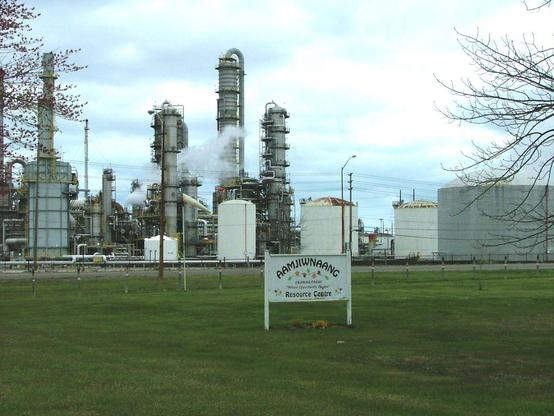
#podcast 📻 Métis scholar and activist M. Murphy discussing colonialism’s impact on Indigenous communities, environmental harm in Chemical Valley, and relational, queer approaches to data, memory, and justice that imagine worlds beyond extractive and normative logics.

https://rwm.macba.cat/en/podcasts/sonia-403/

#activism #indigenousstruggle #lgbtqia #toxicity #climatechange #climatejustice

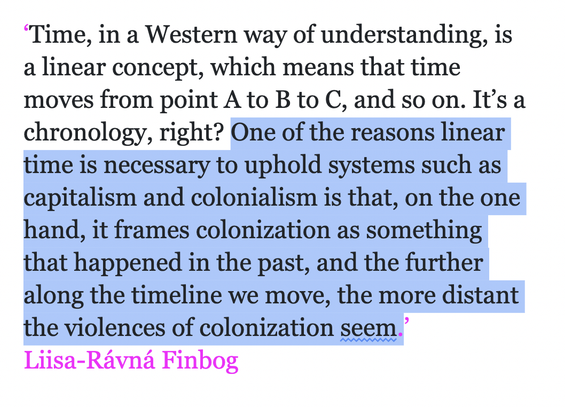
In this #podcast Sámi researcher, artist, and curator Liisa‑Rávná Finbog dives into museum practice, coloniality, cultural extractivism and the hidden violence of assimilation. Through discussions about duodji — traditional Sámi material knowledge — and the politics of collections and objects, the conversation opens up perspectives on how knowledge, materiality, and interdependence challenge dominant Western logics.

▶️ https://rwm.macba.cat/en/podcasts/sonia-406/

#indigenousstruggle #activism #art #museum

Despite a Boycott Attempt, Tacuro Decides in Favor of Self-Government

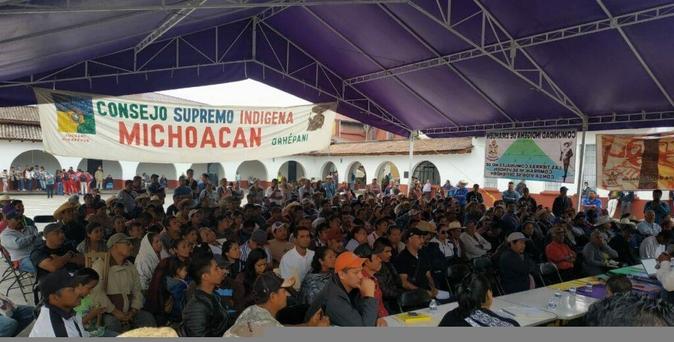
DESPITE ATTEMPTED BOYCOTT, TACURO DECIDES IN FAVOR OF SELFGOVERNMENT TACURO ANTAKUA VICTORY FOR TACURO! THE CHILCHOTA TOWN HALL TO INDIGENOUS PEOPLES AND COMMUNITIES TO THE PEOPLE OF MEXICO AND MICHOACÁN TO THE MEDIA THE MEXICAN STATE Indigenous and AfroMexican communities in #Michoacán as of February 27, 2025. K’eri Kunkorhekua Iretecheri, the Supreme Indigenous Council of Michoacán #CSIM, an autonomous and independent council of governments, political parties and religious institutions, made up of traditional authorities from 70 communities, we jointly state the following: The P’urhépecha community of #Tacuro, an ancestral village with hundreds of years of history, located in the Cañada de los Eleven Peoples in the Municipality of #Chilchota, today, gathered in the General Assembly, maximum authority of the primitive peoples, determined with 307 votes in favor and 0 against, to directly manage their resources, to be governed by uses and customs and to selfgovern. This exercise of direct democracy, convened by the civil and communal authorities of Tacuro and protected by the historical, international, constitutional and state right that the indigenous peoples have to exercise their free selfdetermination, is totally relevant and historic, since it was held despite the attempted boycott by the Municipal President of Chilchota Alejandra Ortiz Suárez and his Secretary of the City Council Oskar Pake Gómez, who through a group of inhabitants of Tacuro, mainly employees of the City Council as well as their relatives, took the road CarapanZamora to try to stop the consultation, however, the people of Tacuro woke up, did not pay attention to the provocations and voted in favor of their autonomy. From the four P’urhépecha regions, the Hñahñú or Otomi region, the Matlatzinca or Pirinda region, the Nahua region and the AfroMexican region of #Michoacan, we congratulate the people of Tacuro fraternally and invite all the peoples and communities to undertake a State Day of Struggle in Defense of Autonomy and against President Alejandra Ortiz Suarez and Oskar Pake Gómez, enemies of the indigenous peoples who refuse to recognize their free selfdetermination and autonomy. From this moment, we hold the Municipal President Alejandra Ortiz Suárez and the Secretary of the City Council Oskar Pake Gómez directly responsible for any repression, arbitrary detention or criminalization that may be suffered by the comrades who are demanding selfgovernment. To the peoples and communities members of the CSIM we ask them carefully and respectfully to prepare to attend the call to the State Day of Struggle in Defense of Autonomy that we are about to begin. The communities of the Cañada de los Eleven Peoples are not alone, it is time to collectively actualize. We demand that the City of Chichota approve the transfer of resources to the community of Tacuro! TERUNHASKUA K’OIA, ECHERI KA JURAMUKUKUKUKUKUU IAMENTU IRETECHANI JUSTICE, TERRITORY AND AUTONOMY FOR INDIGENOUS PEOPLES SUPREME INDIGENOUS COUNCIL OF MICHOACÁN #CSIM

https://abolitionmedia.noblogs.org/?p=17257

#antiColonialism #Autonomy #Chilchota #CSIM #indigenousStruggle #mexico #MICHOACAN #SelfGovernance #Tacuro

Despite a Boycott Attempt, Tacuro Decides in Favor of Self-Government – Abolition Media

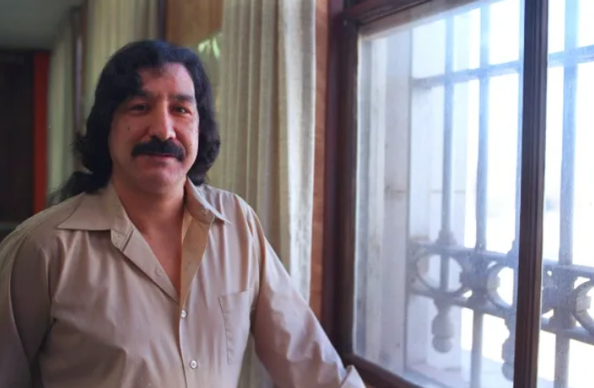
Indigenous Political Prisoner Leonard Peltier Welcomed Home After Release

Native American activist Leonard Peltier traveled to Belcourt, N.D., on Tuesday after being released from a Florida prison.

Ron Leith watched as Peltier arrived in Belcourt to the Turtle Mountain Band of Chippewa Reservation.  Leith, an Ojibwe writer and activist, said, “As many people as possible came from the reservation and made this welcoming committee.”

Leith said there was a procession of cars, including the one with Peltier inside, that drove onto the reservation while the welcoming committee gathered along the sides of the road.

“From the boundary, for about a mile onto the reservation, there were cars and people and signs, and on both sides of the highway for a long time, long ways. And it was just a magnificent sight,” said Leith.

Nick Tilsen, founder and CEO of the Indigenous-led organization NDN Collective, was by Peltier’s side as they drove to the reservation. NDN Collective, among other partners, were significant advocates for Peltier’s release. The organization also arranged Peltier’s travel and housing.

Tilsen said of the welcome, “It was so beautiful. And [Peltier] looked at me and he’s like, ‘I did not expect any of this.’”

“Even though it was cold, he kept his window down the entire time and acknowledged and waved at every single person,” said Tilsen. The temperature at the time was below zero degrees.

Tuesday evening, a crowd of Peltier’s supporters and family members came together for a welcome dinner at the Sky Dancer Casino & Resort.

Leith was at the celebration and he estimated at least 300 people were in attendance, with more arriving. Though Leith said that Peltier was not in attendance.

“He went home, you know. He’s had quite the day.”

In 1977, Peltier was convicted of two counts of first-degree murder in the deaths of two FBI agents. Though not a pardon, former President Joe Biden granted him clemency as one of his final official acts. Peltier’s sentence commutation announcement came minutes before Biden left office.

Peltier is an enrolled member of the Turtle Mountain Band and will serve the remainder of his sentence in home confinement on his tribal homelands at Turtle Mountain.

For years, activists and supporters had been petitioning for the release of the 80-year-old, whom they say had been wrongly convicted of killing FBI agents Jack Coler and Ronald Williams in 1975.

In a news release from NDN Collective on Tuesday morning, Peltier said, “Today I am finally free! They may have imprisoned me, but they never took my spirit!”

In the news release, Peltier thanked his supporters all over the world who helped fight for his freedom. “I am finally going home. I look forward to seeing my friends, my family, and my community. It’s a good day today.”

“Leonard Peltier is free! He never gave up fighting for his freedom so we never gave up fighting for him. Today our elder Leonard Peltier walks into the open arms of his people,” said Tilsen in Tuesday’s statement.

“Peltier’s liberation is invaluable in and of itself — yet just as his wrongful incarceration represented the oppression of Indigenous Peoples everywhere, his release today is a symbol of our collective power and inherent freedom.”

The festivities continued Wednesday at the Sky Dancer Casino & Resort event center on the Turtle Mountain Band of Chippewa Reservation. NDN Collective assisted Peltier with travel and lodging arrangements and hosted the event.

The large event space was set up with a tipi in the middle. The welcome started with a song from a drum group, while Peltier was brought into the room. People spoke to the crowd, a prayer was offered, and Peltier was gifted a traditional star quilt.

Korina Barry, the action managing director of NDN Collective, helped lead the welcoming. She has also been a part of the efforts to bring Peltier home.

“Incarcerated people, too often, that reentry back into community is not supported. Often prisons just open the door, give them their bag of stuff and send them on their way. And we’re not going to let that happen to our elder,” she said.

Some relatives whom he has yet to meet were there in celebration.

Robin Clauthier said she is one of those relatives. She grew up learning stories about him, believing in his innocence. Now, she says she looks forward to getting to know Peltier.

“I think he’s going to do good. And I feel like all of this will be, it’s worth something. It’s meaning is more than life,” Clauthier said.

Peltier spoke Wednesday afternoon, as well. He shared personal anecdotes of his time in prison, and the significance of the Indigenous community in their efforts leading up to his release.

“I want to also mention that from the day one, from the first hour I was arrested, Indian people came to my rescue from all over the country … and they’ve been behind me ever since,” Peltier said. “It was worth it for me to be able to sacrifice for you.”

“I want to say thank you. Thank you very, very much for showing me this.  Much pride in being this important. It was surprising. It was a total shock. It was surprising to see all of you lined up there and welcoming me home.”

Peltier then spent some time greeting many of the folks in the room, shaking hands, smiling and getting acquainted with his community and family. He also signed a few autographs.

In January, over 120 tribal leaders across the U.S., including more than a dozen from Minnesota, called on Biden to grant clemency to Peltier.

“For the majority of his life, Leonard Peltier has been serving a sentence based on a conviction that would not hold up in court today and for a crime that the government has admitted it could not prove. Mr. Peltier’s continued incarceration is a symbol to Native Americans of the systemic inequities of the criminal justice system in America,” said the letter published to NDN Collective’s website.

Attorney Kevin Sharp, who was on Peltier’s legal team for five years, echoed the need for justice. He said, “This isn’t just about Leonard Peltier and this one case. This kind of injustice, I hate to say it, happens way too often, right?”

Not everyone supported the commutation. Former FBI Director Christopher Wray expressed criticism in a January letter to Biden, stating that granting “Peltier any relief from his conviction or sentence is wholly unjustified and would be an affront to the rule of law.”

U.S. Rep. Dusty Johnson, R-South Dakota, said in a written statement in January, “This commutation was another unfortunate mistake by the Biden Administration, and I asked the White House not to do this.”

“More than twenty federal judges and Biden’s own FBI Director agree — Peltier’s convictions and sentence must stand.”

Peltier is a member of the grassroots Native American organization the American Indian Movement, or AIM, which was formed in Minneapolis in the late 1960s during a nationwide struggle for civil rights.

In 1975, FBI agents were attempting to serve an arrest warrant for another individual on the Pine Ridge reservation in Oglala, S.D. They spotted and followed a pickup truck in which Peltier and a few other men were inside traveling back to their campsite where fellow AIM members were located. A shootout ensued.

Peltier and others were charged with two counts of first-degree murder of the FBI agents and aiding and abetting. With an already outstanding warrant, Peltier fled to Canada. Later, he was extradited back to the U.S. in 1976 where he faced charges of two counts of first-degree murder. The other men were tried acquitted on the grounds of self-defense.

Peltier was found guilty in 1977 and has been serving two consecutive life sentences. He has acknowledged his presence and shooting a firearm at a distance but maintains his innocence in the killing of agents Coler and Williams.

Peltier’s release marks an end to what he and others have said is his fight for justice. But through it all, Tilsen said he walked out of prison with dignity.

“He walked through the doors, and he shook the hands of all the corrections officers and the transition team over there,” Tilsen said. “All of them, you know, respected him and he respected all of them and they were all happy for him to go home.”


https://abolitionmedia.noblogs.org/?p=17080

#indigenousStruggle #leonardPeltier #politicalPrisoner

Indigenous Political Prisoner Leonard Peltier Welcomed Home After Release – Abolition Media

Leonard Peltier to be Released After Executive Action

As one of his last official acts, genocidal President Joe Biden on Monday commuted the life sentence of Leonard Peltier, 80, allowing the American Indian Movement member to serve the rest of his sentence in home confinement.

Peltier was wrongfully convicted of murdering two FBI agents during a 1975 shootout on the Pine Ridge Reservation in South Dakota. He has maintained his innocence during his nearly 50 years in prison.

In a statement announcing the commutation, Biden said that Peltier suffers from serious health problems and has spent most of his life in prison. He will be transferred to home confinement Feb. 18 and has not been pardoned.

“It’s finally over — I’m going home,” Peltier said after learning of the commutation, according to a social media post from the NDN Collective, an Indigenous rights group. “I want to show the world I’m a good person with a good heart. I want to help the people, just like my grandmother taught me.”

Peltier is expected to return to his birthplace, the Turtle Mountain Indian Reservation near Belcourt, N.D., where a home is waiting for him to spend time with his children and grandchildren. He’ll have 72 hours after his release to report to local probation officials.

Nick Tilsen, NDN Collective founder and CEO, said in a statement that Peltier’s release: “is the result of 50 years of intergenerational resistance, organizing, and advocacy. We will honor him by bringing him back to his homelands to live out the rest of his days surrounded by loved ones, healing, and reconnecting with his land and culture.”

Lisa Bellanger, who grew up in the American Indian Movement and is now one of its leaders, said Peltier’s imprisonment was part of an longstanding government effort to discredit their organization, which was founded in Minneapolis in 1968.

“Today will go down in history as one of the greatest days in Indian country,” Bellanger said. “I’m very appreciative. We are very appreciative of his ability to come home. He has a family he has not met. We celebrate his release from the prison walls.”

https://abolitionmedia.noblogs.org/?p=13873

#colonialism #indigenousStruggle #leonardPeltier #northAmerica #politicalPrisoner

Leonard Peltier to be Released After Executive Action – Abolition Media

Mexican Countryside, Swimming With Sharks

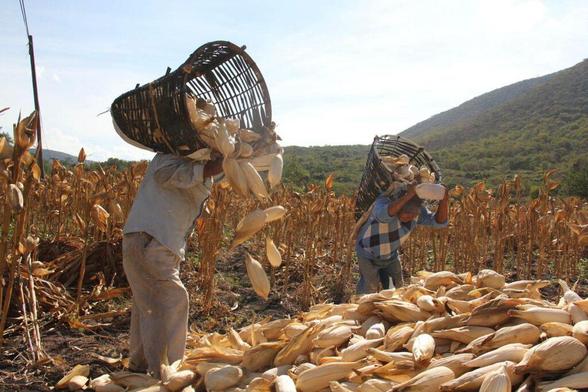
The United States is the world’s largest agricultural power. Mexico’s food supply depends, in large part, on the grains, oilseeds and meat it sells us. We are the main destination for U.S. exports of corn, pork and pork products, dairy products, meat and poultry products, wheat and sugar. We are second in soybean meal and prepared foods. And third in soybeans (https://shorturl.at/1Nrph). In terms of food, we are subordinate to our neighbor to the north. Almost three quarters of the food we buy from abroad comes from there. They are not just luxury goods (which there are). They are mainly foodstuffs that we need and consume on a daily basis. Let us imagine for a moment what would happen if, for whatever reason, it were to stop supplying us. Uncle Sam is also the most important buyer of our agricultural products: it purchases 92 percent of our foreign sales in this area. In 2023 they reached more than 41.9 billion dollars.

We have almost all our eggs in the same basket. What would Mexico do if, from one day to the next, it were to find itself with thousands of liters of beer and tequila and tons of avocados, red fruits or tomatoes that it could not sell in the markets where it used to? Many of these businesses are in the hands of transnational conglomerates. Beer sales to the U.S. alone represent 13 percent of our agricultural exports to the neighboring country. However, the two most important Mexican breweries are part of international portfolios.

Cuauhtémoc-Moctezuma is owned by Heineken. Modelo is a subsidiary of AB-InBev, the world’s largest brewer. In addition, we buy grain, barley and corn starch from the U.S. to make the beverage. Tequila exports to our neighbor account for 10 percent of our agricultural sales to that nation. But that wealth does not stay here. Many of the major tequileras have been acquired by multinationals. In 2002, Cazadores was swallowed up by Bacardi, Sauza was bought by Beam Future Brands, Viuda de Romero was acquired by Pernord Ricard and Herradura by Brown Forman Corporation. U.S. purchases of strawberries, raspberries, blackberries and blueberries from Mexico accounted for 6 percent of its agricultural imports with us in 2023.

Interestingly, the main packers or agro-exporters are gringo-owned companies. About half of the industry is in Driscoll’s hands. The same happens with other fruit and vegetable activities. This preponderance of large corporate sharks in agro-exports is also a constant in other product chains in the domestic market.

Among many examples, small coffee growers face Nestlé and Andatti-Femsa; medium grain farmers face flour mills like Minsa and Maseca; family farmers face pig factories like Smithfield; and small poultry farmers face giants like Bachoco and JBS. Up against the sharks, some 5.3 million ejidatarios, communal farmers and their families struggle to survive and remain campesinos.

They get by by combining production for self-consumption, in which they sow to harvest food, not money, small-scale cash crops, remittances from their relatives in the US, direct government support, day labor and salaried work in construction or services in the cities.

Migration, temporary or permanent, to the cities, agricultural fields or to the US is part of their life trajectory. As we explained in another article (https://shorturl.at/F2K0p), this agricultural model focused on exports and dominated by agribusinesses, which began with Mexico’s entry into GATT in 1986, was consolidated with the agrarian counter-reform to the 27th Constitution in 1992, and was padlocked to close the door with NAFTA in 1994, the signing of free trade agreements with 40 countries and the T-MEC, remains intact. It has gone hand in hand with the purchase and renting of the best lands of the social sector, the appropriation of water concessions, the control of seeds and the proletarianization of campesinos.

In recent years, the agro-export model has remained intact, although most subsidies to commercial agriculture, which produces staple crops, have disappeared and have been replaced by direct subsidies aimed at providing economic assistance to vulnerable sectors of the population. The combination of the lack of productive support and the climate crisis has eroded the sector’s profitability and reduced the margins of food self-sufficiency. There is a lack of resources for development, financing, agricultural insurance and marketing. Programs (some of them questionable) that gave certainty to marketing have been eliminated. Now, those who farm as a business do not want to take risks. And, there is no evidence that rainfed production has grown.

In addition to deepening food dependency, the dominant agricultural model has an anti-campesino bias. As important as they are, the direct transfers given to farmers do not enable them to face the unfair competition of highly subsidized imports from the US, nor the savage exploitation of labor in the fields of horticultural export crops, nor the abusive intervention of large agro-industrial sharks in the marketing of key products, nor the monopolization of the best land, water and seeds. Without substantive resources and another rural policy, our food self-sufficiency will be further and further away. Incidentally, we run the risk of being left with a countryside without campesinos.


Source: Schools For Chiapas

https://abolitionmedia.noblogs.org/?p=13662

#indigenousStruggle #mexico #usImperialism

Mexico

USDA Foreign Agricultural Service

ANAVI Greeting to the 4th Assembly of Indigenous Peoples in Defense of Water and Life

To the 4th Assembly of Indigenous Peoples in Defense of Water and Life Colleagues and colleagues From the peoples, communities, organizations and individuals that make up the National Assembly for Water and Life (ANAVI) we send a greeting to those who meet today in this assembly, to their peoples, communities and families. Where the water that comes down from the Popocatepetl volcano flows along with that born from springs and ameyales, we have seen how a dignified struggle in defense of life grows. We have seen how that struggle that freed the water that had been hijacked by Bonafont and Danone is intertwined with the one that tries to prevent the PROFAJ landfill from poisoning it and with those that are no longer willing to have that water continue to be used as a commodity and as a privilege by the shopping centers and luxury fractions that have invaded agricultural lands and territories that are fundamental to the health of our ecosystems and our community life. We also saw how this assembly has walked from the lands that resist urban depredation in Cholula and Coronango, then to those lands where plunder and deception barely manage to survive that older brother who is the Ahuehuete of Acuexcomac, and now here in Nealtican, on the feet of Don Goyo, where we hope that his roar will join our cry of resistance that says: Enough of plundering! Resistance is a difficult, dangerous path, full of lying negotiations and misleading words from bad governments and those who work for them. Deceptions and simulations are always thrown at us, but we know that the wisdom of the people can always get over it. We in the ANAVI believe that our path to resistance must always lead our step, that of autonomy and rebellion, and our look, that we put on the horizon of that other world that we want, one more worthy for all that lives on this planet. On that path we take with each step of our struggle and that we have learned to walk with people and peoples who struggle and who are our references, like those who are part of the National Indigenous Congress or like our sisters, brothers and sisters of the Zapatista National Liberation Army.

We hope that this assembly will help the peoples and communities to strengthen themselves collectively on the road to autonomy, we believe that only in this way we can stop the looting, kidnapping and poisoning of our sister water. Congratulations compas for this meeting, because unlike the simulations that are made in the institutions of the bad governments, this is a true democratic act of deliberation on their territory and in defense of the life of all in this region and in this country.

It is not drought, it is plunder!

Land, Water and Freedom

NATIONAL ASSEMBLY FOR WATER AND LIFE


#NoEsSequíaEsSaqueo 

#elaguaesdelospueblos 

#NuestraLuchaEsPorLaVida


Source: Congreso Nacional Indigena

https://abolitionmedia.noblogs.org/?p=13317

#ANAVI #elaguaesdelospueblos #IndigenousDefense #indigenousStruggle #mexico #NoEsSequíaEsSaqueo #NuestraLuchaEsPorLaVida #waterDefense

SALUDO DE LA ANAVI A LA 4TA ASAMBLEA DE PUEBLOS ORIGINARIOS EN DEFENSA DEL AGUA Y LA VIDA A REALIZARSE EN NEALTICAN, PUEBLA, EL 9 DE DICIEMBRE

<p>A la 4a Asamblea de Pueblos Originarios en defensa del Agua y la Vida Compañeras y compañeros Desde los pueblos, comunidades, organizaciones y personas que conformamos la Asamblea Nacional por el Agua y la Vida (ANAVI) les enviamos un saludo a quienes se reúnen hoy en esta asamblea, a sus pueblos, comunidades y familias. Por…</p>

Congreso Nacional Indígena

Leonard Peltier was denied parole on Tuesday, meaning there’s likely only one other way the ailing, 79-year-old indigenous revolutionary will ever be released after serving nearly 50 years in prison: a commutation from the head of the US regime.

Peltier has been in prison since 1977 when the US state unjustly, and absurdly convicted him for killing two FBI agents in a 1975 shoot-out on Pine Ridge Reservation in South Dakota.

His trial was full of political misconduct, including federal prosecutors hiding evidence that exonerated Peltier and the FBI threatening witnesses into lying to blame Peltier. The government’s case fell apart after these revelations, so it quickly revised its charges against Peltier to aiding and abetting whoever did kill those agents — on the grounds that he was one of dozens of people who were on the reservation when the shoot-out occurred.

There was never evidence that Peltier committed a crime. The FBI and U.S. attorney’s office never did figure out who killed those agents.

The FBI continues to oppose Peltier’s release and is the main reason, if not the only reason, that he’s still in prison. But its reasons for opposing Peltier’s release are full of holes and remarkably easy to disprove.

The FBI has not publicly addressed the key context of that 1975 shoot-out: The FBI was intentionally fueling tensions on that reservation as part of a covert campaign to suppress the activities of the American Indian Movement, or AIM, a grassroots movement for Indigenous rights. Peltier was an active AIM member and an FBI target.

Peltier has maintained his innocence the entire time he’s been in prison. It has almost certainly contributed to him being denied parole.

Prior to Tuesday, the last time Peltier was denied parole was in 2009. He is unlikely to live long enough to try for parole again, given the years-long process it takes, his advanced age and poor health. Peltier has diabetes and an aortic aneurysm.

In his parole hearing last month, Peltier’s team made the case that he be allowed to live out his final years in home confinement, with his family and tribe in North Dakota. His supporters have set up a house for him there. Currently, Peltier spends most days confined to a cell with inches of space to move within, as his maximum security prison in Florida is regularly in a state of lockdown. He requires a walker to get around. He is blind in one eye from a stroke.

https://abolitionmedia.noblogs.org/post/2024/07/03/indigenous-political-prisoner-leonard-peltier-denied-parole/

#aim #colonialism #indigenous #indigenousStruggle #leonardPeltier #northAmerica #politicalPrisoner #us

Indigenous Political Prisoner Leonard Peltier Denied Parole – Abolition Media

M Murphy: “In Western understandings, jurisdiction or law comes as a kind of output of the state apparatus, or as an output of human agreement. In the understanding of Indigenous people in the Great Lakes area, where we work, law does not come from people, it comes from the land, it comes from how non-humans, airs, waters, generations make possible each other’s livingness.”

#podcast https://rwm.macba.cat/en/podcasts/sonia-403/

#toxicity #pollution #indigenousstruggle #endocrinedisruptors
#climatechange

SON[I]A #403. M. Murphy | Podcast | Radio Web MACBA | RWM Podcasts

Activist and writer M. Murphy is a professor in History and Women and Gender studies and an interdisciplinary scholar whose work explores the complexities of colonialism and its impact on Indigenous…

MACBA Museu d'Art Contemporani de Barcelona
San Cristóbal de Las Casas, Chis. At least 37 Tsotsil families from the community of Tzanembolon, municipality of Chenalhó, took refuge in the local school, due to death threats by armed men linked to the group of Los Herrera, residents of the area reported.

They explained that the residents went from their homes to the school on Sunday, after the gunmen cut the electricity to six families at 11:00 am.

They were only able to take a little food and go back to the school, because there are no conditions for them to stay in their homes, since they have no electricity, they said. Some things had already been stolen from their homes.

The locals consulted said that on Sunday at 11:00 a.m. a man climbed one of the poles of the Federal Electricity Commission to cut the electricity, while other armed men protected him.

Faced with the death threats and the power cut, the families left their homes and went to the school, others moved to neighboring communities, they said.

The aggressors live in the area known as Fracción Tzanembolon, and the threatened families live in Tzanembolon Centro, they said.

For this reason, the displaced people complain that the government does nothing to protect them, given that Sedena forces are stationed in the area. They also blamed the three levels of government for whatever happens to the residents of the community.

The majority of the families want to go to the capital of Chenalhó, but they are afraid that they will be attacked on the way.

Los Herrera maintained dominion over Pantelhó for two decades, until July 21, 2021, when the self-defense groups of the town of El Machete broke in and expelled them.

Since then, El Machete has had control of the municipality, but Los Herrera intended to regain it, so they allied to attack the inhabitants of Tzanembolon, adjacent to Pantelhó and close to the town of San José Tercero, the self-defense groups’ stronghold.

In their attempt to regroup, Los Herrrera integrated deserters from El Machete, such as Gilberto Perez Gomez, known as Comandante Tigre, who were murdered on June 2 in Polho (Chenalho), along with his wife, daughter, son-in-law and three-year-old grandson, as well as two bodyguards.


https://abolitionmedia.noblogs.org/post/2024/03/25/37-tsotsil-families-from-chenalho-leave-their-homes-due-to-threats/

#chiapas #indigenousStruggle #mexico #northAmerica

37 Tsotsil Families From Chenalhó Leave Their Homes Due to Threats – Abolition Media