 kelvind.com
Still not sold.
Reduce asking prices for the 2nd time.
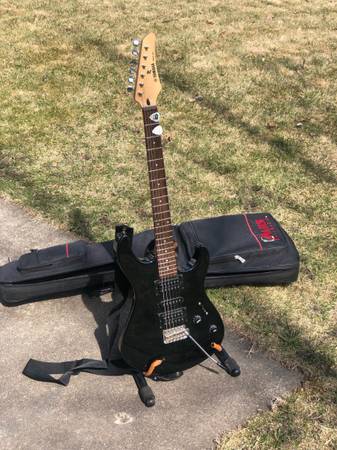
#yamaha #ElectricGuitar #guitar #harmonica #HarmonicaMic #InEarMonitor
minneapolis.craigslist.org/ank/msg/d/hu...
Yamaha Electric Guitar And Mor...
Yamaha Electric Guitar And Mor...
#JuzearXZReviewsDefiant #InEarMonitor #IEM #audiophile
"The JUZEAR x Z Views Defiant is a hybrid In-Ear Monitor (IEM) featuring a single 10mm dynamic driver (1DD) paired with three balanced armature (3BA) drivers to deliver a vibrant and refined audio experience."
JUZEAR x Z Reviews Defiant Review » MOONSTAR Reviews
"JUZEAR x Z Reviews Defiant IEM: Hybrid 1DD+3BA drivers, 3-way crossover, damped acoustic tubes, 6N cable, DLP resin shells & CNC faceplate."
https://moonstarreviews.net/juzear-x-z-reviews-defiant-review/
#InEarMonitor #IEM #audiophile
Here's another test track for headphones/earphones/earbuds featuring Billie Eilish. Be prepared for jump scares in the audio. It will not work even on a good surround sound system.
Billie Eilish - bury a friend (8D AUDIO)
Listen to 8D Music on Spotify 🎧
https://youtu.be/7-4HG0KSESc?si=GM_iCp7EtdQopPTZ

#InEarMonitor #IEM #audiophile
Here's a mind-blowing test track for headphones/earphones/earbuds. It's an incredible experience. You have a giant speaker rotating around your head and Billie stomping around you in a circle clicking her fingers. It will not work even on a good surround sound system.
8D AUDIO PENTATONIX / Billie Eilish - Ilomilo (USE HEADPHONES) whatsapp audio
https://youtu.be/-tRk9N8teLU?si=tPn30CqW9kfg6M8c

#InEarMonitor #IEM #audiophile
"There are many IEMs with excellent tunings available at very low prices, and there are some inexpensive IEMs which have a surprisingly large soundstage or impressive imaging..."
How Do I Find the Best IEM for Me in 2025?
"The near constant release of new IEMs means that there are loads of great options for audiophiles, but it also means that it’s harder than ever to sort through the available options and find the set that’s going ..."
https://bloomaudio.com/blogs/articles/how-do-i-find-the-best-iem-for-me-in-2025#:~:text=Balanced%20Armature%20drivers%20are%20known%20for%20their,driver%20types%20across%20all%20kinds%20of%20headphones.

The near constant release of new IEMs means that there are loads of great options for audiophiles, but it also means that it’s harder than ever to sort through the available options and find the set that’s going to be best for you. In this guide we’ll cover the basics of what differentiates one IEM from another, and provide some recommendations based on some of our favorites from the Bloom office. Price, Performance, and Preference Probably one of the toughest aspects to sort out in the IEM world is untangling the relationship between price, performance, and your personal preference for sound. If you mostly listen to hip hop, a $2000 IEM tuned for classical music might sound worse to you than a $100 IEM with a tuning better suited to hip hop, but an experienced classical listener will be able to describe 100 ways that $2000 IEM enhances their listening experience. Generally speaking IEM tunings fall into three categories: Reference, Balanced, and “Fun,” with different tuning styles being good for different genres or just listening preferences. A Reference tuning is focused on accuracy above all else. Often a tuning target like “diffuse field” is used, which only boosts or cuts sound frequencies with the goal of sounding like well-tuned speakers in a treated room. Reference tunings are often preferred by fans of classical music since the wide range of instruments requires accuracy across the frequency spectrum. A Balanced tuning enhances different parts of the frequency spectrum to deliver a balance of bass, midrange, and treble that matches broad user preferences. The famous Harman Target is an example of a balanced tuning, as it’s not truly neutral, but sounds “right” to most listeners. Balanced tunings can be good for a wide variety of genres, but can excel at specific ones depending on how the bass, vocal range, or other characteristics are managed. Fun tunings typically start with a more balanced sound, and then enhance specific parts of the frequency spectrum for a more unique sound. Most often this means boosting the bass or “scooping out” the midrange to create a tuning that sounds more energetic, and – well – fun. Fun tunings tend to be good for pop, rock, hip hop, and in general, genres that favor impact and engagement. Along with that, IEMs have different ways of presenting Soundstage, Imaging, Detail, and Resolution. Soundstage is the perception of a room or space that the music is happening in. Imaging is how clearly you perceive different instruments, voices, and sounds, and their placement in the room. Detail and Resolution describe the ability of the IEM to present the finer details of the music present in the recording – the sense that, if the recording was of high enough quality to capture the sound of a pin dropping in the studio, then these IEMs would let you hear that pin drop. While there are many IEMs with excellent tunings available at very low prices, and there are some inexpensive IEMs which have a surprisingly large soundstage or impressive imaging, typically you need to go up in price to get a better balance of tuning, soundstage, imaging, and resolution. You can check out our article on Audiophile Jargon for a deeper explanation of some common audiophile terms. Driver Types and Capabilities There are five main types of drivers you’ll find in IEMs, each with unique characteristics and capabilities: Balanced Armature (BA), Dynamic (DD), Planar Magnetic (or just “planar”), Electrostatic (EST), and Bone Conduction (BC) Dynamic and Balanced Armature are by far the most commonly used driver types in IEMs, and both can accurately reproduce the full range of bass, midrange, and treble. Balanced Armature drivers are known for their fast response and tight, accurate delivery. Their small size means that IEM creators can use large numbers of Balanced Armature drivers in a single IEM. Dynamic Drivers are the most commonly driver types across all kinds of headphones. They’re known for having the most natural timbre of any driver type, and they produce a larger displacement of air than other IEM driver types which can result in dynamic drivers offering a physical, dynamic feeling that other driver types can’t reproduce. Planar Magnetic drivers offer a balance of the characteristics found in Dynamics and Balanced Armature drivers. They’re similar to Dynamic drivers in their ability to be used as a single driver representing the full frequency range, while also providing a good sense of physical impact. They also offer speed and an articulate presentation similar to Balanced Armatures. Bone Conduction and Electrostatic drivers are more limited in their capabilities, but excellent for more specific purposes. Electrostatic IEM drivers are generally only used for treble. Their ability to quickly and precisely reproduce ultra-high frequencies makes them perfect from treble in IEMs that use multiple driver types. Bone Conduction works by vibrating and resonating with the inner ear. They’re most frequently used for bass, but can also be used for other frequency ranges as they can expand the sense of space in the sound. While many IEMs use only a single driver (most frequently a single dynamic driver like the Moondrop Aria) or multiple of a single type of driver (like 64 Audio’s multi-balanced armature IEMs, with as many as 18 drivers in each shell), IEMs which use multiple driver types are becoming increasingly common. Hybrids use two different types of drivers, Tribrids use three, and Quadbrids use four. Any of those types can use any number of total drivers, with some Quadbrid IEMs like the Empire Ears Raven using as many as twelve – 1 bone conduction, 2 dynamics drivers, 5 balanced armatures, and 4 electrostatic – while some hybrids may only use as little as two drivers. Picking the IEM that’s Right for You With tuning, technical performance, and driver types and combinations all taken into account, in most cases price is going to be the final deciding factor. Thankfully, the recent explosion in IEMs has provided a number of solid possibilities across the price range. Under $200 For under $200, Moondrop May provides a balanced sound signature, and is a good all-arounder for anything from pop to classical. It has a strong build and design especially considering its $74.99 price point. If you’re looking for a more fun sound that’s more focused on rock, pop, and hip hop, DUNU Titan S2 is a single dynamic driver IEM with a warm, bass-boosted sound, and a really nice build and design for $79. At $159, Meze Alba is also a single driver IEM, but provides a sound signature that’s just slightly warm with a sound signature that’s closer to neutral. Alba provides great timbre which makes it perfect for music that use primarily acoustic instruments ranging from folk and rock to classical. If you’re looking for a little more wow factor though, Ziigaat Arcadia is a $199 hybrid IEM with one dynamic driver and three balanced armatures that offers a sound that has a strong focus on detail in the midrange and treble, almost leaning towards a reference sound until the strong boost in the low-end hits, giving you powerful thick bass to complement good overall performance. Name Price Driver Configuration Tuning Style Moondrop May $74.99 1DD + 1 Planar Balanced DUNU Titan S2 $79 1DD Warm/Balanced Meze Audio Alba $159 1DD Warm/Neutral Ziigaat Arcadia $199 1DD + 3BA Bass Boosted Neutral Under $500 Moving the price up a little bit, you’ll find the FATfreq HBB Deuce, which features dual dynamic drivers, and delivers an insanely powerful low-end for $239. Deuce isn’t just a bass monster as it provides solid vocals and a good sense of space and imaging as well. For $249, if you’d rather have a balanced experience that leans more towards a reference signature, the Kiwi Ears Orchestra Lite trades pounding bass and big impact for stronger detail and resolution. DITA Project M is another strong performer that sits in between the balanced and reference styles of tuning, offering an incredibly natural sound and surprisingly all performance from a single dynamic driver and $325. DUNU DK3001 Braindance trades some of Project M’s natural character for the speed and precision of four planar drivers in its tribrid driver configuration, and it adds a nice size bass boost at the bottom to combine fun with technical performance. Name Price Driver Configuration Tuning Style FATfreq HBB Deuce $239 2DD Fun/Bass Boosted Kiwi Ears Orchestra Lite $249 8BA Balanced DITA M Project M $325 1DD Balanced/Neutral DUNU DK3001 Braindance $499 1DD + 4BA + 4 Planar Bass Boosted Neutral Under $1000 Priced at $600, Moondrop Variations delivers the sort of tribrid experience listeners might expect to spend thousands of dollars on for a fraction of the price. With its balanced sound and strong technical performance, Variations has become a benchmark for other IEMs since its release. 7th Acoustics is a relatively new player, but Supernova took the IEM world by storm with its incredibly transparent, natural tonality. It uses six balanced armature drivers, but most listeners would swear that there’s a dynamic driver based on its excellent timbre and that exceedingly natural overall sound. For a more reference-like experience, 64 Audio Aspire4 was designed as a reference monitor for aspiring musicians, but it’s excellent detail and clear, transparent sound have made it a favorite for audiophiles as well. Thieaudio Origin is another IEM to exceed all expectations for what’s possible at its price point, offering a 8-driver quadrid, with bone conduction, dynamic, balanced armature, and electrostatic drivers that sounds like a top of the line flagship IEM for $849. Name Price Driver Configuration Tuning Style Moondrop Variations $600 1DD + 2BA + 2EST Balanced 7th Acoustics Supernova $849 6BA Balanced Thieaudio Origin $849 1BC + 1 DD + 4BA + 2EST Bass Boosted Neutral 64 Audio Aspire4 $899 1DD + 3BA Neutral/Reference Under $2000 At $1299 Thieaudio Prestige LTD sounds incredibly clean, precise, transparent, and well-balanced. Genres like fusion and progressive rock that need a tight, articulate presentation sound amazing, and the tonal balance makes it a good generalist as well. Similarly, 64 Audio U4s offers a sound that sits in the sweet spot between a slightly warm, balanced tuning style, and a highly detailed technical performer. If you’re craving a basshead IEM with impeccable craftsmanship and flagship-like characteristics, Empire Ears Triton delivers massive bass, alongside of the total premium IEM package – both sonically and visually. For our office favorite in this price range, you’ll want to check out Ice Lab Spectrumica. Spectrumica offers soundstage, imaging, and clarity that rivals the very best on the IEM market. Name Price Driver Configuration Tuning Style 64 Audio U4s $1099 1DD + 3BA Warm/Balanced Thieaudio Prestige LTD $1299 1DD + 4BA + 4EST Balanced Empire Ears Triton $1799 2BC + 1DD + 1BA Fun/Bass Boosted Ice Lab Spectrumica $1999 1BC + 1DD + 4BA + 2EST Balanced Top of the Line For a fun, energetic, v-shaped sound, the 64 Audio Volur is hard to beat at any level. Its spacious soundstage and strong resolution mean it offers insight into the music and dynamic fun all at the same time. Campfire Audio Trifecta is another top of the line IEM that leans towards the “fun” end of the spectrum, but Trifecta offers a sound that’s massive and feels like a headphone compressed into IEMs. There are few IEMs that capture classic rock as well as Trifecta with his warm, lush sound. Vision Ears EXT MK2 is probably the most natural sounding IEM I’ve heard, with near perfect timbre and tonal balance, along with incredible detail. EXT MK2 features a unique hybrid design, with two dynamic drivers and four electrostatic, which results in natural delivery and fast, crisp highs. In terms of raw “wow” factor though, it’s hard to beat the Empire Ears Raven, a 12-driver quadbrid. Raven offers a massive soundstage, holographic imaging, and incredible detail, alongside of deep, powerful bass, and strong detail and resolution. Name Price Driver Configuration Tuning Style 64 Audio Volur $2499 2DD + 8BA Fun/”V-Shaped” Campfire Audio Trifecta $3299 3DD Fun/”V-Shaped” Vision Ears EXT MK2 $3399 2DD + 4EST Neutral/Balanced Empire Ears Raven $3599 1BC + 2DD + 5BA + 4 EST Balanced/Bass Boosted The Bottom Line We’ve listed more than a dozen great IEMs here across a number of price points, and hopefully that helps you narrow down exactly what you’re looking for in an earphone. There are so many great products out there made by brands from around the world, and one of them is going to be a perfect match for you. Shop IEMS
#InEarMonitor #IEM #audiophile
"Each of these drivers has its own characteristics, its own pros & cons, and delivers its own touch to the sound output. Today this blog, we will be discussing the characteristics and features of each driver type and we will also list some of our top picks as well."
Different Types of Drivers in IEMs
"In-Ear Monitors, Headphones, or Speakers, whatever your medium of audio enjoyment might be, the core sound performance will always depe..."
https://conceptkart.com/blogs/guides/different-types-of-drivers-in-iems

In-Ear Monitors, Headphones, or Speakers, whatever your medium of audio enjoyment might be, the core sound performance will always depend upon the quality of the driver used in them. When it comes to IEMs and Headphones, there are different types of drivers that are currently being used in them such as Dynamic Drivers,
#InEarMonitor #IEM #audiophile
What’s the Difference Between IEM Driver Types?
"IEMs all-across different price ranges use different kinds of drivers(speakers) and combinations. But what’s the difference between all the different types? And why do you need more than one driver per side anyway?"
What's the Difference Between Dynamic, Balanced Armature, and Electrostatic IEM Drivers?
"If you’ve been shopping for IEMs, you’ve probably noticed that there are a lot of..."
https://bloomaudio.com/blogs/articles/whats-the-difference-between-dynamic-balanced-armature-and-electrostatic-iem-drivers#:~:text=There%20are%20five%20types%20that,bone%20conduction%2C%20and%20planar%20magnetic.

If you’ve been shopping for IEMs, you’ve probably noticed that there are a lot of different options for drivers: different quantities, different types, and different combinations. While the majority of over-ear headphones still use the familiar dynamic driver, and only an extremely rare few use more than one driver, IEMs all-across different price ranges use different kinds of drivers and combinations. But what’s the difference between all the different types? And why do you need more than one driver per side anyway? What’s the Difference Between IEM Driver Types? First of all, what even is a driver? A driver, or transducer is composed of a magnet, voice coil, diaphragm, and suspension. The coil and magnet transmit the electromagnetic signal into the diaphragm, which moves to generate sound, and the suspension keeps the diaphragm in place. IEM drivers are essentially the same as the drivers you find in headphones or speaker systems, but shrunk down to fit inside your ears. There are five types that are commonly used in IEMs: dynamic, balanced armature, electrostatic, bone conduction, and planar magnetic. Dynamic Drivers Dynamic drivers (DD) are the most commonly used drivers in consumer headphones, and they’re featured in a large number of IEMs as well. Dynamic drivers can cover the full frequency spectrum with a single driver, and are generally considered to be the most natural and lifelike sounding drivers. DD are the gold standard for bass in IEMs, but their response can be slower than other driver types. The driver itself is made of a conical diaphragm made from paper or cloth (often with a special coating) that’s moved by a voice coil that is pushed and pulled by a central magnet. The large amount of physical motion from this process displaces more air than other driver types, adding a stronger physical component to the sound. Advantages Natural Timbre Physical feeling bass Full range response Disadvantages Slower impulse than other driver types Not as well suited for high frequencies Balanced Armature Balanced armatures (BA) have steadily gained popularity since they started being featured in professional IEMs in the 1990s. BA drivers can be made incredibly small, which allows designers to put many drivers inside of a single earbud. The “balanced” part of the name refers to a small coil which is suspended in perfect balance inside of a circular magnet. The magnetic signal shifts the balance of the coil, which then moves the diaphragm. This design uses a minimal amount of motion and is highly sensitive, providing a very fast response that makes BA drivers ideal for musicians to use on stage and to provide extremely clear, detailed sound for audiophiles. Advantages Fast response Clean, clear output Small size allows for many BAs in a single IEM Disadvantages Timbre isn’t as natural as DD Less physical movement means less sense of physical response in bass Electrostatic Electrostatic (EST) have been used in speakers and high-end over-ear headphones for decades, but have gained popularity in IEMs, primarily for their ability to deliver upper treble ranges than DD and BA drivers struggle with. While they used the same principles as larger electrostatic drivers, the ESTs in most IEMs are technically electret drivers. Traditional electrostatic drivers require a large amount of external power to maintain the charge in the magnetic field that vibrates the thin membrane diaphragm. Electret drivers carry some of their own charge, which combined with the small size of the drivers eliminates the need for so much external power. Advantages Fast response Ultra-clear treble Extension far above range of human hearing Disadvantages Limited to upper ranges Can sound tiny or metallic Bone Conduction Bone Conduction (BC) first appeared with headsets that attached directly to your skull and transmitted the sound through vibrations that the ear would perceive as sound, without actually generating an audible sound wave in the air. While the initial use was for full range headphones, the full range versions had practical applications, but didn’t present complete, high fidelity sound. IEM makers, however, found that they could use bone conduction to deliver ultra-low frequencies that are hard to create with IEMs, and enhance the presentation of other frequencies with the vibrations. Advantages Provides deep subbass below range of human hearing Vibrations can complement frequencies across the spectrum Disadvantages Requires tight fit to properly experience While bone conduction can cover the full frequency spectrum, they don’t offer high quality sound unless they’re combined with other drivers Planar Magnetic Planar Magnetic drivers are primarily used in high-end over-ear headphones, but have also found a place in IEMs. Like dynamic drivers, planar magnetics drivers can cover the full frequency range, but some IEMs have used them specifically for the treble. Planar drivers have many of the same advantages as DD, but have a faster feeling and stronger upper extension. However, planars often lack the natural feeling of dynamic drivers. Planar drivers combine aspects of electrostatic and dynamic drivers to create a design that moves air more like a dynamic driver, but with a diaphragm that is flat like an electrostatic driver that can create a more even, accurate representation of the sound. Advantages Full range response Faster than dynamic drivers Disadvantages Large footprint Don’t sound as natural as dynamic drivers Why do IEMs have Multiple Drivers? While most consumer earphones and IEMs still use a single driver for each ear, most audiophile IEMs feature either multiple BAs or an arrangement of multiple drivers and types, and multi-driver designs are becoming increasingly common in products from mainstream brands. With multiple drivers, you can take advantage of the best aspects of each driver’s performance, putting them together in a way that presents a richer experience than a single driver can provide. In most cases, IEMs with multiple drivers use a crossover to send only specific frequencies to specific drivers – not unlike how a home theater system uses a crossover to send only the bass to a subwoofer. In its most basic form, a multi-driver IEM could use three differently tuned BAs, with one for the treble, one for the midrange, and one for the bass. A hybrid like the Campfire Bonneville uses two different driver types – DD and BA. Bonneville uses four total drivers with a DD for the bass, and 3 BAs split with 2 for the midrange and 1 for the treble. Some IEMs use 3 or 4 driver types in even more complex arrangements, like the Empire Ears Raven which has 12 total drivers: 1 Bone Conduction for Subbass 2 Dynamic Drivers for Bass 5 Balanced Armatures for Midrange 4 Electrostatic for Treble While using multiple driver types can have many advantages, there are also challenges that come along with it. Some enthusiasts prefer single driver IEMs, or IEMs that use only one driver type as using multiple driver types in a single IEM can create issues in timing and cohesion as drivers like EST and BA respond faster than DDs, creating a sense of incoherence in the sound. Because of the differing types of magnetism used and the differing amounts of motion each driver type creates, there are tiny differences – on the level of milliseconds – between the impulse created by a dynamic driver vs a faster technology like electrostatic. Often this is a big difference between inexpensive tribrid models and higher end designs. While at the upper end of IEMs, designers take extra care to compensate for the timing differences, some IEMs with multiple drivers sound incoherent to trained ears. At more budget-friendly prices, single driver designs often offer more cohesive sound than similarly priced hybrids or tribrids. How Many Drivers and What Combination Should I Get for my IEMs? While there are dozens of factors to consider, eventually you’re going to have to figure out what works best for you. While there are specific characteristics of each driver type and combination, because the actual tuning of an IEM can vary so much between models with similar drivers it’s hard to recommend a specific driver type or configuration for a specific listener, but there are some general guidelines that can help. For a warmer more natural sound, you’re almost always going to want a dynamic driver. Single driver dynamic IEMs like the Meze Advar or HIFIMAN Svanar tend to offer a highly natural cohesive sound, while IEMs like the Campfire Trifecta – which boasts three dynamic drivers – can provide a bigger more exaggerated version of that sound. BA + DD hybrids like the Thieaudio Hype Series or 64 Audio Volur take the same natural sound, but add a tighter upper end. For a more technical sound, all balanced armature designs and planar magnetic drivers provide fast, clean detail. Almost all of 64 Audio’s line-up of pro focused IEMs uses designs with multiple balanced armatures because of the way they can cleanly deliver fine detail and imaging information. While planar magnetic drivers haven’t gain the same sort of popularity as other types, the Campfire Supermoon provides a good argument that more brands should look into planar IEMs for their ability to deliver and ultra-fast, resolving experience with a single driver. Some configurations also use EST drivers to enhance the treble response, so a combination of BA and EST drivers like the (now discontinued) Empire Ears ESR MKII used can provide out of this world technical performance. Probably the biggest trend in IEMs the last few years has been adding more driver types into flagship IEMs to try to capture every aspect of the music and give the listener details and insights that could almost never be heard live. Bone Conduction and EST drivers are added to the base of a DD + BA hybrid to extend and enhance the sound. IEMs like Noble VIking Ragnar and Empire Ears Raven use tribrid and quadbrid configurations to provide crystal clear presentation of every instrument and vivid three dimensional imaging that captures every tiny facet of the recording for you. For some this might be the engame, but for others, a smooth relaxing single DD might be all that they need.
#InEarMonitor #IEM #audiophile
IEMs are the earbuds of the audiophile community. While they're not wireless like Apple AirPods, they offer far more in terms of sound quality and technology. Audiophiles know that a wired connection is far superior than a wireless...
IEM Buyers Guide: Universal & Custom In-Ear Monitors
"We've created this guide to be your one-stop resource for understanding and buying in-ear monitors."
https://www.moon-audio.com/blogs/expert-advice/in-ear-monitors-buyers-guide
#InEarMonitor #IEM #audiophile
Whether you're looking to improve your listening experience on the go or you're a musician looking for your first pair of innards to play on stage, this video will be everything you need to know to get started with IEMs.
The ABSOLUTE Beginner's Guide to IEMs - Everything You Need to Know in Less than 10 Minutes
"Getting into the world of IEMs feels like a maze nowadays. There's so much information out to sort through. Fc-Construct br..."
https://youtu.be/1YUdNFLefVk?si=p1u_NoYvFWGvmIfX

#InEarMonitor #IEM #audiophile
"In Ear Monitors are devices that look and act similar to earbuds, but were originally designed for musicians, performers and audio engineers to hear themselves on stage without needing to rely on the stage’s speakers."
It's become a huge hobby world.
What are IEMs? And how do they work?
"In Ear Monitors have become very popular in the last decade, and for good reason. They have a lot of advantages over traditional earbuds, and can ..."
https://www.earlab.com.au/guide/what-are-iems
 Dennis A

