 a f a s i a
#i29 https://ift.tt/Ox1IdbC | posted by afasia | daily entries on contemporary art and architecture #afasiaarchzine #afasiaarq |
#architecture #arquitectura #design
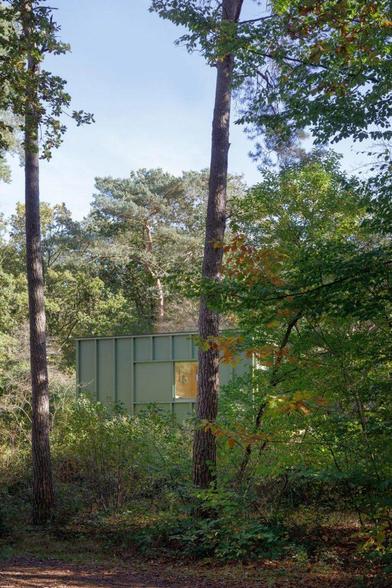
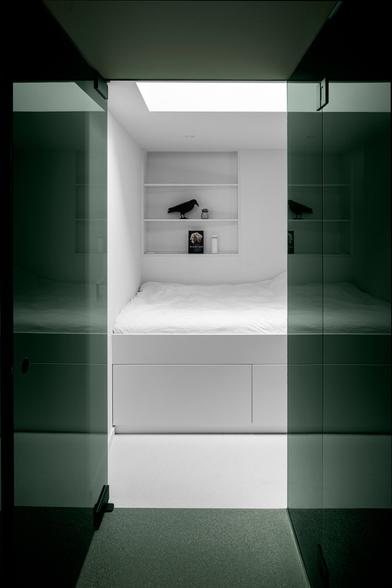
Lounge Lodge . Dwingeloo i29 . photos: © Ewout Huibers . + dezeen Lounge Lodge, 20-…
#i29 https://ift.tt/Ox1IdbC | posted by afasia | daily entries on contemporary art and architecture #afasiaarchzine #afasiaarq |
#architecture #arquitectura #design
Lounge Lodge . Dwingeloo i29 . photos: © Ewout Huibers . + dezeen Lounge Lodge, 20-…
Watertown Fire Rescue Responds to Grass Fires and Trailer Fire on Interstate 29
#KXLGNews #KXLGRadio991 #LiveandLocal #LocalNews #WFR #SouthDakota #WatertownSD #I29 #Interstate29 #news

Myra Museum: Lustron House & More in Grand Forks, North Dakota
The Myra Museum is a North Dakota attraction that provides many surprises for visitors. While you might expect an agricultural history of Grand Forks focus, given the rich farmland of the Red River Valley where the city is located, agriculture is just one small piece of its mosaic.
Myra Museum exhibits. Photo by Linda Aksomitis.Linda’s Pick of the Exhibits
My favorite exhibit was a totally unexpected surprise — the Lustron metal house. And I don’t mean doll house. I mean a prefabricated house for families with everything built in.
Girls’ room with built-in metal furnishings in the Lustron house with era games in the closet and dolls. Photo by Linda Aksomitis.To put it mildly, I was enchanted walking through what seemed to be a fairytale house with its porcelain-finish steel panels.
What’s the history of Lustron Homes?The Lustron Corporation was founded by engineer, Carl Strandlund. It was established to take advantage of a Federal Housing incentivization of prefabricated, high volume home construction to deal with a post-war housing shortage.
Lustron Homes were dream homes for those who’d survived the hardships of WWII and feared the horror of nuclear war during the Cold War years. Originally, the manufacturers were supposed to produce 100 homes a day when the factory opened in the former Curtis-Wright Navy airplane manufacturing plant in Columbus, Ohio, in 1948 .
People were already used to Sears homes, which had been arriving by railroad boxcar since 1908. So, the idea of ordering a house out of a catalog wasn’t new.
However, producing the homes cost more than original estimates. And soon, a corruption scandal was uncovered. When the money was called in, there wasn’t enough to cover the loans. The Lustron Corporation went bankrupt in 1950.
Out of the more than 20,000 orders, only 2680 homes were built. It’s estimated that 1500 of the homes are still around, several of which have been added to the National Register of Historic Places.
Advertisements of the day indicated the homes were pest-free (find another fall home you pesky mice!), fire and rot proof (no wood anywhere here), and rustproof (porcelain is an amazing material).
Pin me!I can’t imagine how challenging it would have been to get my “house” in 3300 pieces! I’m not great at following assembly instructions at the best of times, so it would likely have taken me a lot longer than the estimated 350 hours. Neither a manual or the erection training school would have likely helped me.
The initial Lustron design was a two-bedroom, 1000 sq. ft. ranch-style house. Additional floor plans with more bedrooms were soon added.
But what was in a steel-framed Lustron house?
What’s in the Myra Museum?
The Myra Museum is a small, open air museum that started with the Campbell House. Built by Thomas D. Campbell, Sr., the house started out as a log cabin in 1875. In the 1890s, the cabin was incorporated into a classic Gothic Revival house.
Campbell House interior. Photo by Linda Aksomitis.The house, along with three acres of land and $12000 for restoration was donated to the Grand Forks County Historical Society.
Tom Jr., Campbell’s son, had operated a gigantic wheat farm on a lease-option for 200,000 acres on the Crow Indian Reservation in Montana and Wyoming in 1918. Indeed, he was known internationally as the “Wheat King.”
Then, in 1976, the Myra Museum was constructed with funds from the Myra Foundation. It was the legacy of John Myra, a North Dakota pioneer who operated a lumber business and farm implement dealership.
Myra Museum Collection
The artifacts inside the Myra Museum building cover a range of eras, starting as far back as the Ice Age.
Some artifacts, of course, stand out more than others. For example, did you know that the Cream of Wheat cereal had its start in Grand Forks?
Cream of Wheat box and photo with cowboy that says, Where the Mail Goes, Cream of Wheat Goes. Photo by Linda Aksomitis.Back in 1893 things were tough for small flour mills. So, head miller, Tom Amidon sold the idea of selling a “breakfast porridge” he’d been using himself.
Amidon’s porridge was made of the part of the wheat taken from the first break rolls in the flour mill — it was referred to as the “middlings.”
Fast Fact: Initially, the cardboard cartons for Cream of Wheat porridge were hand cut and labeled, then crated in wooden boxes made from waste lumber. From this humble start, the business outgrew its Grand Forks plant and moved to Minneapolis by 1897.Other artifacts include such things as vintage quilts, equipment from a doctor’s office, church alter, pews, and artifacts, along with historic photos and information.
Other Buildings
Mobil Oil gas station replica, Lustron House, & schoolhouse with the retaining wall for water behind. Photo by Linda Aksomitis.Other buildings have been added to the Myra Museum since its opening. They include:
Linda’s Road Trip Tips
Pin me!We often visit North Dakota, so I have lots of favorite museums when it comes to exploring the state.
My favorite exhibit here, the Lustron house, was particularly exciting as it tied in very well with my interest in Cold War history.
Indeed, the Ronald Reagan Minuteman Missile State Historic site was one of our must-see stops. It’s about 80 miles from Grand Forks.
From Grand Forks we continued 80 miles on I-29 to Fargo. There, I highly recommend the open air pioneer village, Bonanzaville.
Who Should Visit the Myra Museum?
The Myra Museum provides a different experience than many heritage museums in the Midwest that focus on agriculture. Instead, you’ll get more community insights about the growth of the city and important landmarks in its past.
As well as lots of tidbits for history lovers, kids will find several areas interesting. The Lustron House has lots of period games — and kids may marvel at having everything already built-in when it comes to furnishings. They’ll also get to see a few children’s toys from pioneer days in the Campbell House.
Home made chuckwagon, horses, and driver in the Campbell House. Photo by Linda Aksomitis.The museum will take an hour or so to go through, as there aren’t a lot of signs on artifacts to keep you reading. Buildings are well-spaced apart with good walkways between, so they’re generally accessible.
How Do You Visit the Myra Museum?
The Myra Museum archives some of the significant historical points in the history of Grand Forks, North Dakota.
Display inside the Mobil Oil replica gas station. Photo by Linda Aksomitis.Location: The Myra Museum is located at 2405 Belmont Road, Grand Forks, ND. Grand Forks is on I-29, about 145 miles (233 km) south of Winnipeg, Manitoba.
Parking: There's lots of free parking on the museum grounds.Check days open (usually seasonally except by special arrangements) and fees on the Go-North Dakota website.
Take an aerial tour of the Myra Museum on YouTube.
Plan your visit with Google Maps.
Find More Museum Reviews for North Dakota
Check out more reviews of museum attractions in North Dakota on guide2museums.com.
Discover More Heritage Museums
Maple Creek’s Intriguing Jasper Cultural & Historical Centre
Discover the Mormon Handcart Historic Site & Devil’s Gate in Wyoming
See 100 Miles Across Nebraska From Scotts Bluff National Monument
Standout Ranching History at the MonDak Heritage Center: Sidney, Montana
Myra Museum: Lustron House & More in Grand Forks, North Dakota
Fort Cody Trading Post: Miniature Wild West Show in North Platte, Nebraska
Sukanen Ship Pioneer Village & Museum: Moose Jaw, Saskatchewan
Museum of Northern British Columbia: Indigenous Art & History in Prince Rupert, British Columbia
Vermilionville: Living History Open Air Village in Lafayette, Louisiana
Museum of the Southern Jewish Experience: New Orleans, Louisiana
Bonanzaville: Open Air Pioneer Village Museum in Fargo, North Dakota
Reference(s)
Danaparamita, A. (2013). Lustrons: Building an American dream house. National Trust for Historic Preservation. https://savingplaces.org/stories/lustrons-building-an-american-dream-house
Liverman, A. (2010, updated 2018). Lustron Housing Corporation. History Colorado. https://www.historycolorado.org/sites/default/files/media/documents/2018/lustronbackground_with_biblio_2018.pdf
Sunwall, C. (Feb. 19, 2009). The wheat king. Dakota Datebook Archive. https://news.prairiepublic.org/show/dakota-datebook-archive/2022-05-21/the-wheat-king
#history #I29 #lifestyles #museums #NorthDakota #pioneers #travel #US
i29 enlivens 17th-century canal house in Amsterdam with pops of colour
Bursts of blue and green appear inside this centuries-old canal house in Amsterdam that has been renovated by local architecture studio i29.
i29 worked alongside a team of specialists for more than two years to revive the three-floor home, which had been severely neglected since its construction in 1675.
It now features a sequence of bright, white-painted living spaces with colourful interventions that the studio hopes will bring an "unexpected" quality to the interior.
The house dates back to 1675
The ground floor of the house accommodates the kitchen, which has a long oak wood counter running down its centre.
One half of the counter serves as a dining table, while the other half has a stove, sink, and counter space where meals can be prepared.
A green volume containing a guest room has been introduced in the kitchen
Just beyond the counter is a glossy, forest-green volume that conceals a guest bedroom, complete with its own en-suite bathroom and access door to the garden.
Towards the other end of the kitchen is an oak-lined stairwell stained dark grey. After the first few steps is a small landing that has been turned into a cosy seating nook.
Just a few furnishings are in the home's living room
The steps eventually leads up to the first-floor living area, which has been minimally finished with a sofa, armchair and an amorphous white pendant lamp.
A wall here has also been lined with greige acoustic fabric.
A bookcase can be pushed back to reveal a secret snug
At the rear of the room is what appears to be a simple bookshelf, but it's actually a secret door.
When pushed back, it reveals a serene, deep-blue snug where inhabitants can go to read and relax during the day.
All surfaces in the snug are a calming shade of blue
A study is also included on his level of the house.
While a majority of the space is grey, a segment of the ceiling, floor and walls has been painted sage green, as has the room's desk and lamp.
Part of the study is painted sage green
The entirety of the third floor is dedicated to the sleeping quarters, which i29 has designed to "radiate comfort and luxury like a true hotel experience".
At the heart of the room is a shiny enclosure that contains the stairwell, and a shower cubicle with two-way mirror walls that allow views out to the canal that runs in front of the house.
A bedroom sits beneath the house's pitched roof
To one side of the enclosure lies the bedroom, set under the peak of the house's original pitched roof.
On the other side is the bathroom, complete with a Japanese-style wooden tub and standalone sink.
A Japanese-style tub and sink feature in the bathroom
i29 is no stranger to using bold hues; the studio recently designed a dentist in Amsterdam that features khaki-green communal areas and fresh white treatment rooms.
In 2020 the studio also revamped the Dutch capital's esteemed Felix Meritis building, finishing its interiors with blue ombre walls, cherry red furnishings and sunshine-yellow seating booths.
Photography is byEwout Huibers.
Project credits:
Restoration: Kodde
Contractor: G.K. Visbeen & Co
Interior builder: Schneider Interieurbouw
The post i29 enlivens 17th-century canal house in Amsterdam with pops of colour appeared first on Dezeen.
#residential #all #interiors #amsterdam #netherlands #houses #i29 #renovations #dutchhouses


i29 creates colour-block interiors for Amsterdam dental clinic
Fresh white treatment rooms are contrasted with khaki-green communal areas inside the Dentista dental clinic in Amsterdam, which has been designed by local studio i29.
As the clinic is Dentista's first, i29 was tasked with creating an interior scheme and visual identity that could be easily rolled out to future locations.
i29 used white and khaki-green to create colour-block interiors for the Dentista clinic
"Our design strategy was to bring together a clean, fresh medical environment and a wellness experience," the studio explained.
"Natural wood, abundant greenery and an open-plan layout make visitors feel at ease."
A strip of greenery runs along the clinic's front windows
Upon entering the clinic with its timber-clad facade, patients find themselves in a waiting area that houses a few chairs and a tall wooden box seat.
While the majority of the room is rendered in white, the immediate area around the help desk is finished completely in khaki green, from the furniture to the ceiling, walls and floors.
Glass partition walls with semi-opaque stripes surround the treatment rooms
A strip of flooring that runs alongside the clinic's front windows has also been painted green and decorated with an array of tall, leafy plants in khaki-coloured pots that help obscure the interior from passersby.
A white corridor leads to the rear of the clinic, where eight treatment rooms encircle a planted open-air courtyard.
[
Read:
i29 designs Amsterdam home around owner's extensive art collection
](https://www.dezeen.com/2021/03/15/i29-home-of-the-arts-amsterdam-apartment-interior/)
Each room is fronted by timber-framed glass panels with semi-opaque stripes that help to maintain patients' privacy while letting in light.
Apart from a khaki-green feature wall, the treatment areas have been painted completely white, which i29 says "intuitively refers to medical professionalism".
Green statement walls offset the clinical white interiors
Colour reappears in the staff breakout area in the form of a khaki-green kitchenette and a cushioned bench seat that backs onto a matching wall.
In the evening, when less natural light filters through from the courtyard, the entire clinic is illuminated by a series of ring-shaped pendant lights.
Green walls also appear in the staff breakout area
i29 is based in the Dutch municipality of Ouder-Amstel and is led by Jeroen Dellensen and Jaspar Jansen.
The studio has completed a few other projects in Amsterdam this year, including an angular house that floats on a canal and an apartment for an avid art collector.
The photography is byThomas van Schaik.
Project credits:
Client: Dentista Amsterdam
Design: i29
Contractor: UMB group
Interior builder: Cornelissen Interieurs
Equipment: Henry Schein
Lighting: Delta light
Glass walls: Plan Effect
Flooring: Duracryll
Plants: Hydrozorg
Furniture: Lensvelt
The post i29 creates colour-block interiors for Amsterdam dental clinic appeared first on Dezeen.
#medical #all #interiors #instagram #amsterdam #netherlands #i29 #dentists #health
 Steve Jurrens - News Director
 guide2museums.com
 dezeen (unofficial)

 Jim Cantore Bot