 EricF
EricFPour les pros #kubota #chantier #geniecivil #hydrostatic #4x4 #diesel #montagne #rtv #agriculture #outils #vignes #commune #voirie

About #Pluto and other #planets. Yes, I said it, Pluto is indeed a #planet.
Taxonomical alignment with geological complexity is the most useful scientific taxonomy for planets.
That is, all Solar System bodies in #hydrostatic equilibrium should be labelled planets, regardless of what they orbit.
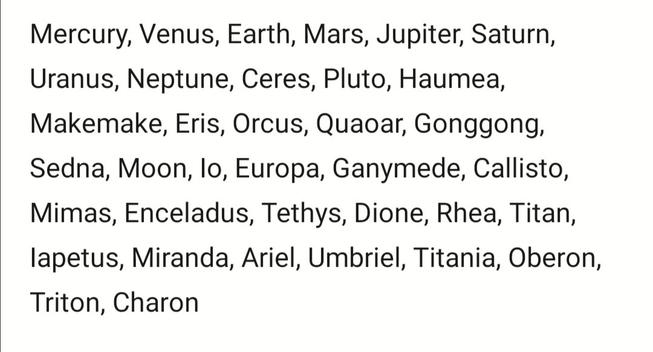
Solar System therefore has 36 planets including 8 primary planets, 9 dwarf planets, and 19 secondary planets we typically refer to as #moons.

We argue that taxonomical concept development is vital for planetary science as in all branches of science, but its importance has been obscured by unique historical developments. The literature shows that the concept of planet developed by scientists during the Copernican Revolution was theory-laden and pragmatic for science. It included both primaries and satellites as planets due to their common intrinsic, geological characteristics. About two centuries later the non-scientific public had just adopted heliocentrism and was motivated to preserve elements of geocentrism including teleology and the assumptions of astrology. This motivated development of a folk concept of planet that contradicted the scientific view. The folk taxonomy was based on what an object orbits, making satellites out to be non-planets and ignoring most asteroids. Astronomers continued to keep primaries and moons classed together as planets and continued teaching that taxonomy until the 1920s. The astronomical community lost interest in planets ca. 1910 to 1955 and during that period complacently accepted the folk concept. Enough time has now elapsed so that modern astronomers forgot this history and rewrote it to claim that the folk taxonomy is the one that was created by the Copernican scientists. Starting ca. 1960 when spacecraft missions were developed to send back detailed new data, there was an explosion of publishing about planets including the satellites, leading to revival of the Copernican planet concept. We present evidence that taxonomical alignment with geological complexity is the most useful scientific taxonomy for planets. It is this complexity of both primary and secondary planets that is a key part of the chain of origins for life in the cosmos.
Researcher uses #hydrostatic pressure to understand #RNA dynamics.
https://phys.org/news/2023-06-hydrostatic-pressure-rna-dynamics.html
 Mikko Tuomi
 CellBioNews
 Scientific Frontline