#YonhapInfomax #FordMotor #ElectricVehicle #InvestmentReduction #AssetWriteDown #HybridModels #Economics #FinancialMarkets #Banking #Securities #Bonds #StockMarket
https://en.infomaxai.com/news/articleView.html?idxno=95664
Machine Learning and Deep Learning in Computational Finance: A Systematic... https://youtu.be/kPbvwwnjo2M?si=K4OnMd0lWrdHUXRq via @YouTube #ML #DL #cryptocurrencies #computationalfinance #creditrisk #hybridmodels #assetpricing #economicgrowth #prisma2020
https://www.youtube.com/watch?v=kPbvwwnjo2M&utm_source=flipboard&utm_medium=activitypub
Posted into NOSAAINISTA @nosaainista-OluOyekanmi
Zebra-Llama: Towards Efficient Hybrid Models
https://arxiv.org/abs/2505.17272
#HackerNews #ZebraLlama #HybridModels #AIResearch #MachineLearning #Efficiency
With the growing demand for deploying large language models (LLMs) across diverse applications, improving their inference efficiency is crucial for sustainable and democratized access. However, retraining LLMs to meet new user-specific requirements is prohibitively expensive and environmentally unsustainable. In this work, we propose a practical and scalable alternative: composing efficient hybrid language models from existing pre-trained models. Our approach, Zebra-Llama, introduces a family of 1B, 3B, and 8B hybrid models by combining State Space Models (SSMs) and Multi-head Latent Attention (MLA) layers, using a refined initialization and post-training pipeline to efficiently transfer knowledge from pre-trained Transformers. Zebra-Llama achieves Transformer-level accuracy with near-SSM efficiency using only 7-11B training tokens (compared to trillions of tokens required for pre-training) and an 8B teacher. Moreover, Zebra-Llama dramatically reduces KV cache size -down to 3.9%, 2%, and 2.73% of the original for the 1B, 3B, and 8B variants, respectively-while preserving 100%, 100%, and >97% of average zero-shot performance on LM Harness tasks. Compared to models like MambaInLLaMA, X-EcoMLA, Minitron, and Llamba, Zebra-Llama consistently delivers competitive or superior accuracy while using significantly fewer tokens, smaller teachers, and vastly reduced KV cache memory. Notably, Zebra-Llama-8B surpasses Minitron-8B in few-shot accuracy by 7% while using 8x fewer training tokens, over 12x smaller KV cache, and a smaller teacher (8B vs. 15B). It also achieves 2.6x-3.8x higher throughput (tokens/s) than MambaInLlama up to a 32k context length. We will release code and model checkpoints upon acceptance.

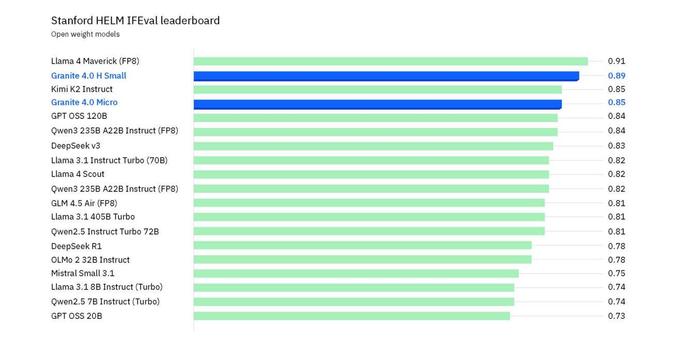
IBM’s New Granite 4.0 AI Models Slash Costs with Hybrid Mamba-Transformer Architecture
#AI #IBM #EnterpriseAI #OpenSource #Mamba #Granite4 #AIModels #HybridModels
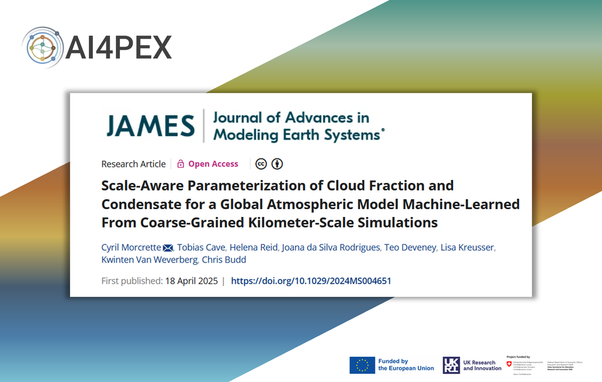
💡 New Paper!
Clouds are crucial for climate modeling, affecting sunshine, heat, and rainfall. Traditional models use coarse grids, but new methods involve high-detail simulations and #MachineLearning to predict cloud cover and cloud content to improve #HybridModels accuracy.
👉 Learn more:
https://agupubs.onlinelibrary.wiley.com/doi/full/10.1029/2024MS004651
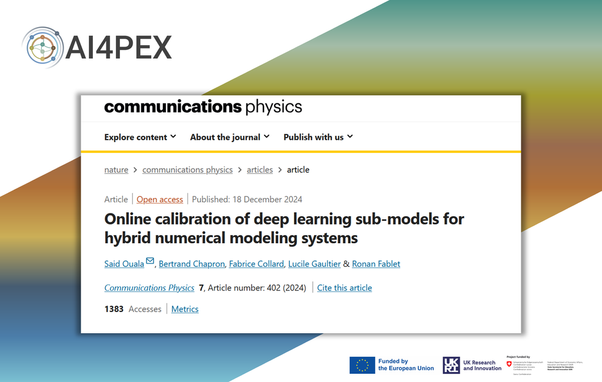
💡 New Paper!
How to improve #DeepLearning submodels for hybrid numerical modelling systems? Ouala et al. showcase an efficient and practical online learning approach using Euler Gradient Approximation for #HybridModels.
👉 Learn more: https://www.nature.com/articles/s42005-024-01880-7
End-to-end learning in hybrid numerical models involves solving an optimization problem that integrates the model’s solver. In many fields, these solvers are written in low-abstraction programming languages that lack automatic differentiation. This work presents a practical approach to solving the optimization problem by efficiently approximating the gradient of the end-to-end objective function.
#AI4PEX research focus 5: Land
We build #hybridmodels representing short-to-long-term responses of #TerrestrialEcosystems to changes in climate and atmospheric CO2, improve the vegetation response to water and heat stress and temperature sensitivity of decomposition in soils.
#AI4PEX research focus 3: Atmosphere
We will build new data-driven, yet physics-aware, ML-based #hybridmodels to better represent #CloudFeedbacks and related atmospheric processes with special focus on subtropical low clouds.