Alarming News for Gray Whales.
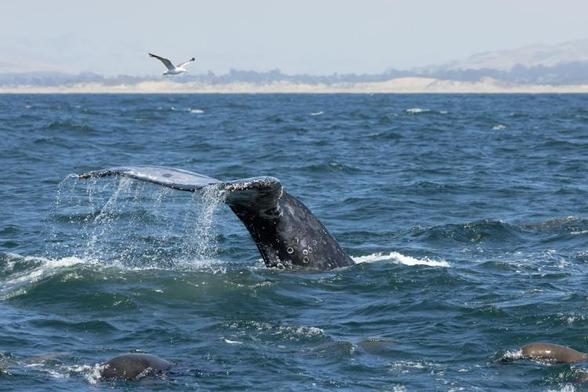
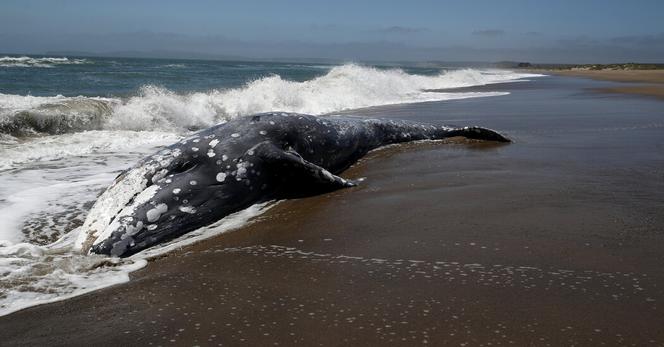
Scientists are concerned about a potential gray whale die-off as starving whales migrate north along the Pacific coast. This troubling trend highlights ongoing environmental challenges affecting marine life.

#GrayWhales #MarineConservation #OceanHealth #WildlifeProtection

https://www.oregonlive.com/environment/2025/04/gray-whale-die-off-feared-as-starving-whales-migrate-north.html?outputType=amp

Gray whale die-off feared as starving whales migrate north

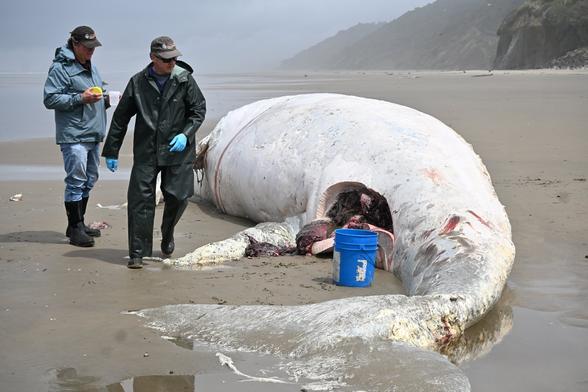
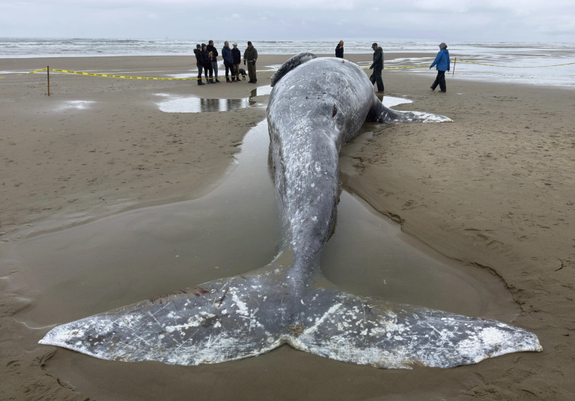
Thousands of gray whales are migrating past the Oregon coast in poor condition, with record-low calf numbers and visible signs of starvation. Researchers link the crisis to changing Arctic feeding conditions and warn another die-off may be underway.

oregonlive
Scientists unsure why gray whales are dying off Pacific Coast again

Gray whales are dying in large numbers, again.

Los Angeles Times
ShiSh on Instagram: "#whale #whales #graywhale #salishsea #pugetsound #seattle #pnw"

4 likes, 1 comments - 5h15h on March 29, 2025: "#whale #whales #graywhale #salishsea #pugetsound #seattle #pnw".

Instagram

#Whales move nutrients from Alaska to Hawaii in their urine, supporting tropical ecosystems https://phys.org/news/2025-03-whales-nutrients-alaska-hawaii-urine.html

Migrating #BaleenWhales transport high-latitude nutrients to tropical and subtropical ecosystems https://www.nature.com/articles/s41467-025-56123-2

"in oceans across the globe, great whales—including #RightWhales, #GrayWhales, and #humpbacks—transport about 4,000 tons of nitrogen each year to low-nutrient coastal areas in the tropics and subtropics. They also bring more than 45,000 tons of biomass"

Whales move nutrients from Alaska to Hawaii in their urine, supporting tropical ecosystems

Whales are not just big, they're a big deal for healthy oceans. When they poop, whales move tons of nutrients from deep water to the surface. Now new research shows that whales also move tons of nutrients thousands of miles—in their urine.

Phys.org

Drone footage provides new insight into #GrayWhales' acrobatic feeding behavior
https://phys.org/news/2024-09-drone-footage-insight-gray-whales.html

"The #whales' movements, including forward and side-swimming, headstands and the use of bubble blasts change as the whales grow... bubble blasts (a single big exhale that produces a circle pattern at the surface) are used by to regulate their buoyancy while feeding in very shallow water... Larger, fatter whales were more likely to bubble blast, especially while performing headstands."

Drone footage provides new insight into gray whales' acrobatic feeding behavior

Drone footage captured by researchers in Oregon State University's Marine Mammal Institute is offering new insight into the acrobatics undertaken by gray whales foraging in the waters off the coast of Oregon.

Phys.org
#Pacific coast #graywhales have gotten 13% shorter in the past 20–30 years, study finds
The smaller size could have major consequences for the health and reproductive success of the affected #whales, and also raises alarm bells about the state of the #foodweb in which they coexist, researchers say. If the same trend were to happen in humans, that would be like the height of the average American woman shrinking from 5tf 4in, to 4ft 8in tall over the course of 20 years!
https://phys.org/news/2024-06-pacific-coast-gray-whales-shorter.html
Pacific coast gray whales have gotten 13% shorter in the past 20–30 years, study finds

Gray whales that spend their summers feeding in the shallow waters off the Pacific Northwest coast have undergone a significant decline in body length since around the year 2000, a new Oregon State University study has found.

Phys.org

Wildlife mystery: Why are gray whales swimming into San Francisco Bay in increasing numbers? https://phys.org/news/2024-06-wildlife-mystery-gray-whales-san.html

"#GrayWhales have been veering off their normal routes and swimming under the #GoldenGateBridge into #SanFrancisco Bay in unprecedented numbers. Using thousands of photos of markings on the #whales' backs to identify them, #scientists have confirmed that at least 71 different gray whales swam into the bay between 2018 and 2023, with some staying for more than two months"

Wildlife mystery: Why are gray whales swimming into San Francisco Bay in increasing numbers?

Gray whales have been veering off their normal routes along the West Coast and swimming under the Golden Gate Bridge into San Francisco Bay in unprecedented numbers.

Phys.org
Orca Network Whale Sighting View Points – Google My Maps

Puget Sound sighting view points by www.orcanetwork.org. Many thanks to Thorsten Lisker and Alisa Lemire Brooks for design and content of the viewpoints map.

Google My Maps

Good news for gray #whales: 'Unusual mortality event' declared over https://phys.org/news/2024-03-good-news-gray-whales-unusual.html

"It was a worrisome few years for North Pacific #GrayWhales, with hundreds washing up dead on shorelines along the West Coast leading to an estimated 30% decline in their population. But the #GrayWhale population is now considered healthy enough #NOAA this week declared closed the Unusual Mortality Event it designated in 2019."

Good news for gray whales: 'Unusual mortality event' declared over

It was a worrisome few years for North Pacific gray whales, with hundreds washing up dead on shorelines along the West Coast leading to an estimated 30% decline in their population.

Phys.org

↪ Rising global temperatures has meant that the Northwest Passage - which connects the #Atlantic and #Pacific through #Arctic waters - has been ice-free during the summer

This has meant #GrayWhales have been able to travel between the oceans more freely than in previous centuries.