“There’s never enough time to do all the nothing you want.”*…
Over the past two decades, we’ve been reallocating our time away from offices, malls, and classrooms… and toward home and solitude. Hyunsoo Rim illustrates…
With our Covid-induced lockdowns now a moderately foggy memory for most, the last few years have turned out to be a continued normalization for many of the habits that defined the pandemic era.
Peloton bikes are now doubling as coat racks; the banana bread craze has cooled; Zoom’s share price is almost back to where it started; millions of people have gone back to clothes shopping in person; and companies like Del Monte are stuck with mountains of unsold canned fruit that’s no longer flying off the shelves.
But one seismic lifestyle change has proven far more permanent than any fitness fad or panic-buying spree — and it turns out to be part of a much longer trend that’s been building for decades: Americans are spending more time at home, and alone. And not everyone has the means to break that growing trend…
[Rim uses infographics to chart American’s use of time…]
… According to the annual American Time Use Survey (ATUS) — a self-reporting survey conducted by the Bureau of Labor Statistics — an average American’s typical day still breaks down pretty much the same as it did 20 years ago. Roughly a third still goes to sleep, a fifth to leisure and sports, and, perhaps most surprising to anyone feeling burned out, just one-sixth to work. The rest goes to household chores, meals, and everything else. The survey does, of course, represent the average, with many retirees likely skewing the work figures down.
But if you look closer, the routines underneath tell a different story about how the collective American experience has changed.
Over the past two decades, Americans have gained about 30 minutes of sleep per day — now averaging over nine hours, more than ever — and spend roughly 11 more minutes on household activities such as cooking, cleaning, and pet care.
Where did those extra hours come from? It seems like we’ve carved them out of work commutes, mall trips, and in-person classes… activities that usually have us interacting with others out in public in some way.
Some of this shift can certainly be explained by demographic factors — America is an older country than it was in 2003, as birth rates have dropped. Nevertheless, on aggregate, the figures are pretty staggering for a nation of 340+ million people — and the sharp rise in the pandemic era suggests at least a decent amount of the shift is behavioral.
Indeed, in 2003, the average American spent 7.7 hours per day at home, according to the ATUS data compiled by IPUMS. By 2024, that rose to 9.1 hours, with the pandemic only accelerating the climb…
… what’s more striking is how time once spent outside or with others has steadily moved in the opposite direction…
… As more of our daily lives have moved home and online, the same shift is reshaping how we unwind. Since 2003, time spent socializing and communicating — from hanging out with family and friends to hosting events — has fallen 24%, while travel time is down 26%…
… But not everyone is experiencing the shift in the same way. As evidence for the K-shaped economy — where some groups thrive while others struggle — becomes harder to ignore, income is proving to be a strong differentiator.
In fact, households earning under $35,000 now spend about 10 hours a day at home, almost an hour and a half longer than those earning $150,000 or more. The pattern holds for time spent alone, too, with a two-hour daily gap between the lowest- and highest-income groups…
… wealthier Americans aren’t just spending less time at home; they’re more likely to pay their way out of it, with restaurant meals instead of cooking, pilates classes instead of home workouts, or washer-dryer combos instead of hours tied up in chores.
For the very wealthiest, that logic even goes further: according to a recent survey by Long Angle, nearly two-thirds of multimillionaires now outsource housekeeping, while about half pay for gardening services and two-fifths employ nannies.
Of course, time at home and alone isn’t inherently negative — as researchers note that, for many, solitude can be valued as a way to rest, think, or create. But when more of your day is taken up by unpaid chores and low-cost, home-bound leisure, that retreat indoors starts to look less like a choice…
Americans are spending more time at home and alone — and money determines who can opt out. Eminently worth reading in full: “Home. Alone.” from @sherwood.news.
* Bill Watterson, Calvin and Hobbes (August 28, 1988)
###
As we contemplate our calendars, we might recall that it was on this date in 1967 that kids across America could “go out” even as they stayed in: they were invited for the first time into Mr. Roger’s Neighborhood, as the series premiered on NET (which later became PBS). The show had had earlier local incarnations in Canada, then in Pittsburgh, where the national show was birthed and produced. Michael Keaton, who worked for the Pittsburgh public television station WQED at the time, often helped out with Roger’s show. And future horror director George A. Romero worked on the show shooting short films.
source
#AmericansUseOfTime #culture #demographics #economcs #FredRogers #GeorgeRomero #history #inforgraphics #MichaelKeaton #MrRogersNeighborhood #NET #PBS #society #Technology #time #timeUse #useOfTime Dallin
 Newfangled
 Stefan Bohacek
 Deadline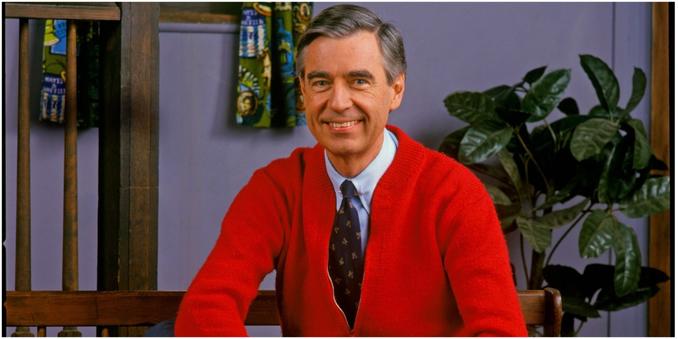
 Absolute Memery 🎭
 50+ Music
 (Roughly) Daily


 P. L. Klein
 Wm.son