Is Your Bank Really Texting You? 3 Red Flags of a Phishing Message.
2,483 words, 13 minutes read time.
The Psychological Architecture of the Smishing Epidemic
The mobile phone is the most intimate piece of hardware in the modern world, a device that lives in our pockets and demands our immediate attention with every haptic buzz and notification chime. This proximity creates a dangerous psychological feedback loop where the user is conditioned to respond to SMS messages with a level of trust that they would never afford an unsolicited email. While email has decades of junk mail filters and visible header data to warn us of danger, the SMS interface is deceptively clean and stripped of context. When a text arrives claiming to be from a major financial institution, it enters a high-trust environment where the barrier between a legitimate service alert and a criminally organized credential harvest is virtually non-existent. Analyzing the current threat landscape, it is clear that the surge in smishing is not merely a technical failure of our telecommunications infrastructure, but a masterful exploitation of human neurobiology. Attackers understand that by bypassing the corporate firewall and landing directly on a victim’s personal device, they are catching the user in a state of cognitive vulnerability, often while they are distracted, tired, or multi-tasking.
The sheer volume of these attacks indicates a shift toward the industrialization of mobile deception. According to recent data, bank impersonation via text message has skyrocketed to become one of the most reported scams, primarily because the return on investment is staggering compared to traditional phishing. It costs almost nothing for an adversary to blast out thousands of messages using automated scripts and cheap gateway services, yet the potential payoff is total access to a victim’s financial life. This is not a hobbyist’s game; it is a highly refined business model that relies on the trusted screen effect. We have been trained to view our phone numbers as a secure second factor for authentication, which ironically makes us more susceptible to the very messages that seek to undermine that security. Consequently, the first step in defending against these attacks is to dismantle the inherent trust we place in the SMS protocol, recognizing that the medium itself is fundamentally insecure and easily manipulated by anyone with a malicious intent and a basic understanding of social engineering.
Red Flag #1: The False Sense of Urgency and Emotional Manipulation
The most potent weapon in a smisher’s arsenal is not a sophisticated zero-day exploit, but the manufactured crisis. Every successful bank-themed phishing message is designed to trigger a physiological response that prioritizes immediate action over rational analysis. When you receive a text stating that your account has been suspended due to suspicious activity or that a large transfer is pending your approval, the attacker is forcing you into a high-stakes decision window. They know that a panicked user is unlikely to look for the subtle technical flaws in the message because their primary focus is on resolving the perceived threat to their financial stability. This artificial urgency is a deliberate tactic to bypass the critical thinking filters that would otherwise identify the message as fraudulent. In the world of social engineering, time is the enemy of the victim and the best friend of the predator. By imposing a deadline, the adversary effectively shuts down the user’s ability to verify the claim through official channels.
Furthermore, these messages often utilize a push-pull dynamic of fear and relief. The initial fear of a compromised account is immediately followed by the perceived relief of a simple solution provided in the form of a link. This emotional roller coaster is a hallmark of sophisticated phishing kits where the goal is to drive the victim toward a pre-built landing page that mimics the bank’s actual login portal. I see this pattern repeated across thousands of observed samples: the language is always direct, the consequence is always severe, and the solution is always a single click away. Professionals must understand that a legitimate financial institution will never use a medium as volatile and insecure as SMS to demand immediate, high-stakes action involving sensitive credentials. If a message makes your heart rate spike before you’ve even finished reading the first sentence, that is not a customer service alert; it is a psychological exploit in progress. The grit of the situation is that these attackers are betting on your human instinct to protect what is yours, and they are winning because our biological hardware hasn’t evolved as fast as their social engineering software.
Red Flag #2: Deconstructing the Malicious URL and Domain Spoofing
The technical linchpin of a bank impersonation scam is the hyperlink, a digital trapdoor designed to look like a bridge to safety. In a legitimate banking environment, URLs are predictable, branded, and hosted on top-level domains that the institution has spent millions of dollars securing. However, attackers rely on the fact that the average mobile user rarely inspects the full string of a URL on a five-inch screen. To obscure their intent, they leverage URL shorteners or link-in-bio services that strip away the destination’s identity, replacing a recognizable bank domain with a sanitized, high-trust string of characters. When you see a link that begins with a generic shortening service, you are looking at a deliberate attempt to hide a malicious redirection chain. This infrastructure is often backed by sophisticated Phishing-as-a-Service platforms which generate unique, one-time-use links for every target. This makes it significantly harder for automated security filters to flag the domain as malicious because the URL effectively dies after it has been clicked by the intended victim, leaving no trail for threat researchers to follow in real-time.
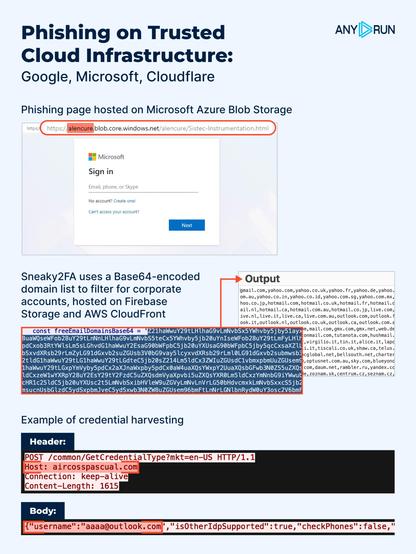
Beyond simple shortening, more advanced adversaries utilize typosquatting or punycode attacks to create a visual illusion of legitimacy. They might register a domain that replaces a lowercase letter with a similarly shaped number, or they use international character sets that look identical to the English alphabet but lead to an entirely different server in a jurisdiction where law enforcement is non-existent. These spoofed domains are often hosted on legitimate cloud infrastructure, which allows them to bypass reputation-based filters that only look for bad neighborhoods on the internet. Once you click that link, you aren’t just visiting a website; you are entering a controlled environment where every pixel has been engineered to mirror your bank’s actual interface. The gritty reality is that by the time you realize the URL in the address bar is off by a single character, your keystrokes have already been captured by a headless browser or an Adversary-in-the-Middle proxy. Analyzing these landing pages reveals a level of craft that includes working help links and legitimate-looking privacy policies, all designed to keep you in the trust zone just long enough to hand over your credentials.
Red Flag #3: Inconsistencies in Delivery Architecture and Metadata
If you want to spot a fraudster, you have to look at the plumbing of the message itself. Legitimate financial institutions invest heavily in Short Code registries—those five or six-digit numbers that are strictly regulated and vetted by telecommunications carriers. When a bank sends an automated alert, it almost always originates from one of these verified short codes because they allow for high-throughput, reliable delivery that is difficult for scammers to spoof at scale. In contrast, most smishing attacks originate from standard ten-digit Long Codes or, increasingly, from email addresses masquerading as phone numbers via the SMS gateway. If a message claiming to be from a multi-billion dollar global bank arrives from a random area code in a different state or a Gmail address, the architecture of the delivery is screaming that it is a fraud. These long codes are essentially burner numbers, bought in bulk through VoIP providers or generated via automated botnets of compromised mobile devices. The disconnect between the supposed sender and the technical origin of the message is a massive red flag that is hiding in plain sight.
Furthermore, the metadata and lack of personalization provide critical clues to the message’s illegitimacy. A real bank notification is tied to a specific account and a specific customer profile; it will often include a partial account number or use a specific format that matches previous interactions you have had with that institution. Smishing messages, however, are designed for the spray and pray method. They use generic salutations like “Dear Customer” or “Valued Member” because the attacker doesn’t actually know who you are; they only know that your phone number was part of a massive data leak from a social media breach or a compromised e-commerce database. These messages are sent to thousands of people simultaneously, betting on the statistical probability that a certain percentage will actually have an account with the bank being impersonated. This lack of specificity is a hallmark of industrial-scale social engineering. When you receive a text that feels like a form letter with an artificial sense of emergency, it is a clear sign that you are being targeted by an automated script rather than a legitimate service department. The absence of your name or specific account details isn’t just a lapse in customer service; it is a fundamental technical indicator of a malicious campaign.
The Failure of Traditional MFA against Modern Smishing
The most dangerous misconception in modern personal security is the belief that Multi-Factor Authentication (MFA) via SMS is an impenetrable shield. While having any MFA is better than none, the grit of the current threat landscape is that smishing has evolved to bypass these secondary layers with ease. Modern phishing kits are no longer static pages that just steal a password; they are dynamic proxies that facilitate Adversary-in-the-Middle (AiTM) attacks. When a victim enters their credentials into a fraudulent bank portal, the attacker’s server passes those credentials to the real bank’s login page in real-time. The bank then sends a legitimate MFA code to the victim’s phone. The victim, thinking they are on the real site, enters that code into the attacker’s portal. The attacker then intercepts that code and uses it to complete the login on the real site, effectively hijacking the session. Within seconds, the adversary has bypassed the very security measure designed to stop them, proving that SMS-based codes are a liability in a world of proxied attacks.
This technical reality necessitates a shift toward more robust authentication standards. Analyzing the successful breaches of the last few years, it is evident that the only reliable defense against smishing-induced MFA bypass is the implementation of hardware-backed security keys or FIDO2/WebAuthn standards. These methods use public-key cryptography to ensure that the authentication attempt is tied to the specific, legitimate domain of the service provider. If an attacker directs a victim to a spoofed domain, the security key will simply refuse to authenticate because the domain signature doesn’t match. Consequently, relying on “text-to-verify” is essentially building a house of cards in a hurricane. We must move toward a zero-trust model for mobile interactions where no incoming text message is considered valid until it is verified through a separate, trusted out-of-band channel, such as calling the official number on the back of your physical debit card or using the bank’s official, sandboxed mobile application.
Hardening the Human and Technical Perimeter
Defeating the smishing threat requires more than just a sharp eye for typos; it requires a fundamental change in how we interact with our mobile devices. The first line of defense is a technical one: treat every unsolicited message as a potential payload. This means never clicking a link in an SMS, regardless of how legitimate it looks or how much pressure the message applies. Instead, the standard operating procedure should be to close the messaging app and navigate directly to the bank’s official website by typing the address into the browser yourself, or by opening the official app. This simple act of “breaking the chain” completely neutralizes the attacker’s redirection infrastructure. Furthermore, users should take advantage of mobile threat defense (MTD) tools and carrier-level spam reporting features. By forwarding suspicious messages to the “7726” (SPAM) short code used by most major carriers, you are contributing to a global database that helps telecommunications providers block these malicious origin points before they reach the next victim.
Ultimately, we have to accept that the SMS protocol was never designed with security in mind; it was designed for convenience. In a professional context, this means that organizations must stop using SMS for sensitive customer communications and move toward encrypted, authenticated in-app messaging. For the individual, it means adopting a mindset of aggressive skepticism. If your bank really needs to reach you, they will use a secure channel or a verified notification system that doesn’t rely on a fragile, easily spoofed text message. The gritty truth is that as long as people keep clicking, criminals will keep texting. By identifying these red flags—the manufactured urgency, the mangled URLs,
Call to Action
The digital battlefield is no longer confined to server rooms and encrypted tunnels; it is in the palm of your hand, vibrating in your pocket every time a predator decides to test your defenses. You can no longer afford to treat an SMS as a “simple text.” In an era where organized crime syndicates use automated botnets to exploit human fear, your only real firewall is a shift in mindset. You have the technical red flags—the artificial urgency, the mangled URLs, and the broken delivery architecture. Now, you have to use them.
Don’t wait until your balance hits zero to start taking mobile security seriously. Audit your accounts today. If you’re still relying on SMS-based two-factor authentication for your primary banking, you are leaving the door unlocked for any adversary with a proxy kit. Switch to a hardware-backed security key or an authenticator app immediately. The next time you receive a “critical alert” from your bank, don’t click. Don’t reply. Delete the message, open your browser, and go to the source yourself. The criminals are betting that you’ll be too distracted to notice the trap; prove them wrong by staying relentlessly skeptical. Your data is your responsibility—defend it like it.
SUPPORTSUBSCRIBECONTACT ME D. Bryan King
Sources
Disclaimer:
The views and opinions expressed in this post are solely those of the author. The information provided is based on personal research, experience, and understanding of the subject matter at the time of writing. Readers should consult relevant experts or authorities for specific guidance related to their unique situations.
#accountSuspensionScam #adversaryInTheMiddle #AiTMAttacks #amygdalaHijack #bankTextScams #botnets #caffeinePhishing #CISAGuidelines #credentialHarvesting #cyberHygiene #cybercrimeSyndicates #cybersecurity #dataBreach #digitalForensics #domainSpoofing #endpointProtection #EvilProxy #fakeBankNotifications #FCCRegulations #FIDO2 #financialFraud #fraudAlerts #fraudPrevention #hardwareSecurityKeys #identityTheft #longCodes #maliciousURLs #MFABypass #mobileSecurity #mobileThreatDefense #mobileVulnerabilities #MTD #multiFactorAuthentication #networkSecurity #NISTCybersecurity #onlineBankingSecurity #PhaaS #phishingKits #phishingRedFlags #phishingAsAService #psychologicalTriggers #robotexts #scamAlerts #shortCodes #smishing #SMSGateway #SMSPhishing #socialEngineering #socialEngineeringTactics #technicalAnalysis #threatIntelligence #typosquatting #unauthorizedAccess #urgentAlerts #urlShorteners #VerizonDBIR #WebAuthn #zeroTrust ANY.RUN
 Bryan King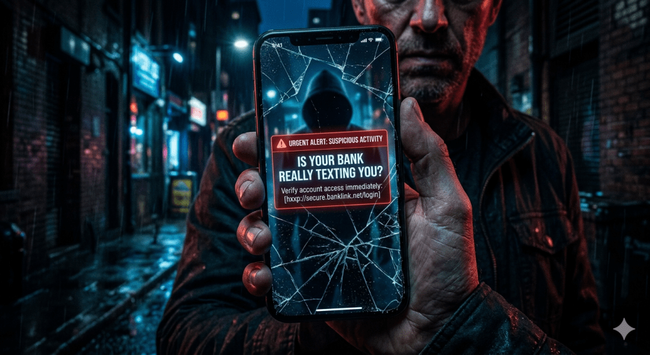
 The Threat Codex
 John Leonard
