Sex Drive: 5 Surprising Facts from a 67k Person Study

What really drives sexual desire? We often rely on a handful of common assumptions about age, gender, and relationships to answer this question. But what happens when we peel back the layers and look at the science behind sex drive?

A groundbreaking study from the Estonian Biobank provides some of the clearest answers to date, challenging much of our conventional wisdom.

By analyzing data from over 67,000 participants (N = 67,334), researchers uncovered a complex tapestry of unseen forces shaping who wants sex and why. This article shares the most counter-intuitive findings from this massive study that are changing our understanding of human libido.

The Gender Gap in Desire is Wider and More Persistent Than we Thought

The first force this study brings into sharp focus is gender.

While it’s no secret that men, on average, report higher sex drive than women, this research revealed the difference to be exceptionally large and consistent across the lifespan.

In fact, the effect size found was even larger than those documented in previous large-scale meta-analyses. η² = 0.18, a large effect size indicating that gender alone explained a substantial 18% of the difference in desire.

This robust finding underscores just how profound and persistent the influence of gender is on libido. The study’s authors highlight the sheer magnitude of this difference across different life stages:

“Even the peak of average woman’s sexual desire at ages around 20 to 30 remains lower than men’s average levels across much of adulthood. It is only after the age of 60 + that men’s declining sexual desire falls below the highest levels ever reported by women.”

Furthermore, the research showed that this gap in desire actually widens with age, reaching its peak in the 60+ age group.

Men’s Sex Drive Peaks Surprisingly Late

We’re often told that a man’s sex drive is like a rocket. Supposedly peaking in his late teens and slowly coming down.

This study, however, suggests it’s more of a long climb to a high plateau.

Contrary to popular belief, men’s sexual desire actually peaked around their late 30s to early 40s. This finding was particularly surprising because it runs counter to what we know about male biology.

The researchers noted the unexpected nature of this pattern:

“A noteworthy finding was that men’s sexual desire peaked around the age of 40, exceeding even early adulthood levels… This pattern is surprising because it does not align with the well-documented trajectory of testosterone decline…”

This suggests that factors beyond simple biology are at play.

The researchers propose that men in this age group “are more likely to be in stable long-term relationships, which have been associated with increased sexual activity and emotional intimacy.”

In another fascinating hypothesis, they suggest that as men get older, their “levels of desire may be starting to adapt to their partner’s declining levels of desire,” which could help explain the drop-off in later life.

Licensed Professional Counselors, do you need continuing education hours?

Look no further!

If you find this article interesting, Dr. Weeks’ course Sexual Education and Porn Use in Women, and her other unique courses, will engage and educate!

Parenthood Affects Men and Women’s Desire in Opposite Ways

One of the most fascinating unseen forces revealed by the study was how parenthood impacts libido differently for men and women.

For men, having more children was consistently associated with higher sexual desire. This effect grew stronger with each additional child, with the largest positive association found in fathers with five children. β = 0.43, indicating a strong positive association between fatherhood of five children and higher desire compared to mothers.

This stands in stark contrast to the experience of women, where the demands of parenthood are frequently linked to a decline in desire. A trend also suggested by the study’s data.

The researchers speculate that this opposing effect may reflect:

“…gendered differences in parental roles, stress levels, time availability, and energy investment within a family.”

They also offer a thought-provoking alternative explanation: it’s possible that “higher levels of desire may contribute to men having more children” in the first place, showing the complex relationship between cause and effect.

Single People May Actually Have a Higher Sex Drive

It’s often assumed that being in a committed relationship is the key to a healthy sex drive.

At first glance, the data seemed to support this, showing that partnered people had slightly higher desire on average. But when the researchers used a more powerful statistical lens, controlling for factors like age and gender, the picture flipped.

Partnered individuals actually reported lower sexual desire compared to their single counterparts. β = −0.10, a small but statistically significant effect suggesting that, all else being equal, being in a relationship was linked to a slight decrease in desire.

This surprising result challenges the idea that a relationship automatically sustains high desire. The study’s authors suggest this could be related to habituation in long-term partnerships, a phenomenon that “particularly for women, points to the potential for habituation and shifts in relational dynamics over time.”

In other words, the comfort of a long-term relationship may sometimes come at the expense of novelty.

Are you a professional looking to stay up-to-date with the latest information on, sex addiction, trauma, and mental health news and research? Or maybe you’re looking for continuing education courses?

Stay up-to-date with all of Dr. Jen’s work through her practice’s newsletter!

Your Career Choice Could Be Linked to Your Libido

In perhaps the most novel finding, the study uncovered a remarkable link between a person’s occupation and their level of sexual desire. Simple averages suggested that people in manual-labor and military jobs had the highest libido, but the researchers quickly noted this was likely because those fields are dominated by younger men.

The real story emerged after controlling for factors like age and gender. The study then compared all occupations to a baseline group: senior managers. The results were clear:

  • Lower Desire Occupations (Compared to Senior Managers): After accounting for other factors, nearly every other occupation was linked to significantly lower sexual desire. This effect was especially strong for elementary workers (β = -0.27), skilled workers and craftsmen (β = -0.19), and office and customer service workers (β = -0.16).

This highlights the often-overlooked connection between our professional lives, daily stress, and our personal well-being. It suggests that the pressures and routines of our jobs can be a powerful, hidden influence on our libido.

Conclusion: Rethinking What We Know About Sex Drive

This research paints a new picture where desire isn’t just a biological switch. It’s a dynamic outcome of a person’s age, gender, parental role, relationship status, and even their career.

The fact that these demographic and life factors alone could explain nearly 30% of the variance in sexual desire underscores just how profoundly they shape this fundamental human experience.

As we learn more about the complex web of factors that shape our desires, how might we change the conversations we have about sexuality in our own relationships?

Drop your thoughts in the comments.

For an in-depth guide on talking to your adolescents about cybersex and pornography, check out Dr. Jen’s book. Amazon | BookBaby

Do you feel your sexual behavior, or that of someone you love, is out of control? Then you should consult with a professional.

Are you looking for more reputable data-backed information on sexual addiction? The Mitigation Aide Research Archive is an excellent source for executive summaries of research studies.

The Study

Below is the study this post was based on for those who’d like to further explore these revelations about Sex Drive.

associations-of-sexual-desire-with-demographic-and-relationship-variablesDownload #ageAndLibido #biopsychosocialModel #couplesCounseling #EstonianBiobank #evidenceBasedTherapy #genderDifferences #habituation #intimacy #largeScaleStudy #libido #marriageAndSex #menSDesire #mentalHealth #occupationalStress #parenthoodAndLibido #psychologyOfSex #relationshipDynamics #sexDrive #sexEducation #sexResearch #sexualDesire #sexualFrequency #sexualHealth #sexualWellbeing #singleVsPartnered #stressAndLibido #womenSDesire

The 7 most evidence-based therapy modalities in 2025:

🧠 CBT – 2,000+ clinical trials
💭 DBT – emotion regulation
🌱 ACT – values-based living
👁️ EMDR – trauma processing
🎯 ERP – gold standard for OCD
💊 Psychedelic-assisted therapy
⚡ TMS neuromodulation

Which approach fits your needs? We break down the research.

https://cerevity.com/most-sought-after-mental-health-therapy-modalities-in-2025/

#TherapyModalities #MentalHealthTreatment #EvidenceBasedTherapy #CaliforniaTherapist

Most Sought-After Mental Health Therapy Modalities in 2025 | CEREVITY

Focused, discreet sessions for anxiety, overthinking, and relationship strain—built for demanding schedules.

CEREVITY — Online Psychotherapy in California

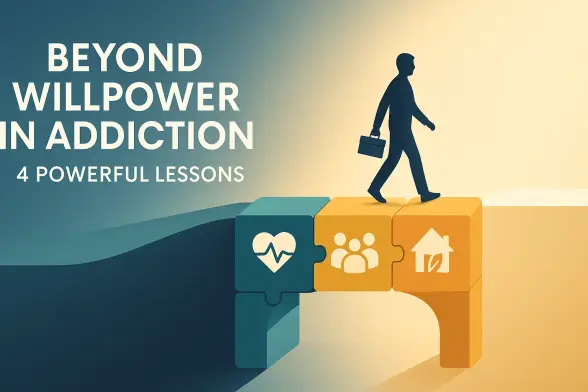
Beyond Willpower in Addiction: 4 Powerful Lessons

Originally Published on November 11th, 2025 at 08:00 am

We often think of addiction as a private, grueling battle of willpower.

Whether it’s a dependency on a substance, a behavior like gambling, or even an unhealthy pattern in a relationship, the prevailing narrative suggests that breaking free is a matter of pure, individual strength.

If you just try hard enough, you can overcome it. If you fail, it’s a personal failing. 

But what if this framework is fundamentally flawed? A recent, year-long study offers a more structured, hopeful, and evidence-based path to recovery.

Researchers applied a specific form of therapy, Cognitive Behavioral Therapy (CBT), to individuals struggling with a range of addictions and discovered that the right tools can do more than just help people cope; they can fundamentally transform their lives.

It’s about building a life so full and satisfying that the addiction no longer has room to thrive.

This year-long study is particularly significant because it was conducted in Kazakhstan, a region where evidence-based psychotherapy is still emerging and social stigma can be a major barrier to recovery. 

This article distills the four most impactful takeaways from this groundbreaking research. It reveals how a systematic therapeutic approach can lead to profound, measurable life changes, challenging the myth that recovery is simply a matter of gritting your teeth and pushing through. 

Lesson 1: The Change to Isn’t Small, It’s Transformative

While we might expect therapy to offer some benefit, the sheer magnitude of improvement seen in this study was extraordinary.

Participants who received Cognitive Behavioral Therapy didn’t just get slightly better; they experienced a dramatic and measurable enhancement in their overall well-being. 

The study used the World Health Organization’s Quality of Life scale (WHOQOL-BREF), which measures well-being across four key areas. The results were staggering.

On average, the experimental groups saw their quality of life scores jump from the low 40s to the mid-70s on a 100-point scale. To put that in concrete terms, participants with alcohol use disorder went from an average score of 42.31 before therapy to 74.47 after one year.

This isn’t just a number on a chart; it represents a profound shift from a life constrained by addiction to one filled with new possibilities and well-being. 

Meanwhile, the control groups, those who did not receive CBT, saw no meaningful improvement in their quality of life, with their average scores remaining essentially unchanged.

This powerful contrast repositions recovery as a genuine opportunity to build a measurably better and more satisfying life.

It’s about building a life so full and satisfying that the addiction no longer has room to thrive. 

Are you exploring your trauma? Do you feel your childhood experiences were detrimental to your current mental or physical health? Utilize this free, validated, self-report questionnaire to find out.

Take the Adverse Childhood Experience (ACE) Questionnaire

Beyond Willpower Lesson 2: The Same Tools Can Fix Different Problems

One of the most compelling aspects of the study was its breadth.

Researchers applied the same core therapeutic model, CBT, to four very different challenges:

  • Alcohol use disorder
  • Drug addiction
  • Gambling disorder
  • Codependency

The key finding was that CBT was highly effective across the board. 

For every single group that received therapy, there was a statistically significant reduction in the severity of their addiction. The data paints a clear picture of this versatility: 

  • For drug addiction, the experimental group’s average severity score dropped from 7.96 (signifying harmful use) down to 3.14 (representing low-risk or minimal use). 
  • For gambling disorder, the average severity score plummeted from a “severe” 39.55 to a “mild or moderate” 14.36

This suggests that no matter the substance or behavior, the underlying challenge is often the same: learning to recognize triggers, challenge automatic negative thoughts, and develop new, healthier coping strategies.

CBT provides a toolkit for rewiring these exact processes, effectively helping people move from a place of denial or ambivalence into decisive action and long-term maintenance. 

Do you have enough hours for your LPC renewal? Are you in need of continuing education, but bored with the current offerings? Check out Dr. Weeks’ course on Cannabis Use Disorder, and other unique courses on her practice website.

Sexual Addiction Treatment Services has been approved by NBCC as an Approved Continuing Education Provider, ACEP No. 7250. Programs that do not qualify for NBCC credit are clearly identified. Sexual Addiction Treatment Services is solely responsible for all aspects of the programs.

Lesson 3: Codependency Isn’t Just a “Relationship Problem.” It’s Treatable.

The study took the significant step of including codependency, an excessive emotional or psychological dependence on a partner, often linked to that partner’s addiction, alongside clinical addictions. While codependency is not formally classified as a standalone diagnosis in major manuals like the DSM-5-TR, the researchers recognized it as a clinically significant phenomenon that is actively addressed in rehabilitation. 

The results were a powerful validation of this approach.

The experimental group for codependency saw their average severity scores drop from a “high level” of 69.12 to a “moderate or low level” of 31.44. The control group, in stark contrast, showed no significant change.

For anyone who has felt trapped in a dynamic of supporting someone else’s addiction at the expense of their own well-being, this finding is a beacon of hope. 

This is a crucial takeaway.

It frames the struggle of codependency not as a character flaw or an intractable relationship dynamic, but as a treatable condition. It offers empowerment and a clear path toward building greater independence, self-esteem, and healthier relationship dynamics. 

Beyond Willpower Lesson 4: Recovery Isn’t Just Stopping, It’s a Total Life Upgrade

The study’s design was brilliant in its simplicity: it measured success in two ways. It tracked the reduction of the negative (addiction severity) and the increase of the positive (overall quality of life). The results showed that these two things are deeply intertwined. 

The “quality of life” assessment wasn’t a vague feeling of happiness; it was a concrete evaluation of four essential domains of life: 

  • Physical Health: Including energy and fatigue, quality of sleep, and even physical mobility. 
  • Psychological Health: Covering everything from positive feelings and self-esteem to the ability to concentrate and learn new things. 
  • Social Relationships: Examining the quality of personal relationships, the strength of social support networks, and even sexual activity. 
  • Environment: Looking at practical, real-world factors like financial security, physical safety, the comfort of one’s home, and access to healthcare. 

The participants who underwent CBT saw significant improvements across all of these areas. This demonstrates that effective treatment doesn’t just happen in a therapist’s office. It radiates outward, improving every facet of a person’s existence.

True recovery, as this study shows, is about building a life that is so robust and fulfilling that the old addictive behaviors no longer hold the same power or appeal. 

Conclusion: A New Framework for Change

The findings from this study in Kazakhstan provide a powerful, evidence-based roadmap for recovery that moves far beyond the limited concept of willpower.

It shows that addiction, in its many forms, is not a moral failing but a condition that responds remarkably well to structured, compassionate, and science-backed intervention. 

By focusing on cognitive and behavioral strategies, individuals can achieve not just abstinence, but a transformative and holistic improvement in their lives. The tools exist, the evidence is clear, and the potential for change is immense.

This research leaves us with a vital question to consider: 

If we can treat these complex issues so effectively, what does that change about how we should approach mental health and personal growth in our own lives? 

Are you a professional looking to stay up-to-date with the latest information on, sex addiction, trauma, and mental health news and research? Or maybe you’re looking for continuing education courses? Then you should stay up-to-date with all of Dr. Jen’s work through her practice’s newsletter!

Do you feel your sexual behavior, or that of someone you love, is out of control? Then you should consult with a professional.

Are you looking for more reputable data-backed information on sexual addiction? The Mitigation Aide Research Archive is an excellent source for executive summaries of research studies.

#addiction #addictionRecovery #addictionTreatment #alcoholAbuse #alcoholRecovery #alcoholUse #alcoholUseDisorder #cbt #cognitiveBehavioralTherapy #drugAbuse #drugAddiction #drugAddictionRecovery #drugUse #evidenceBasedTherapy #gambling #gamblingAddiction #kazakhstan #therapyOutcomes #willpower

Why You Can’t Just ‘Get Over’ Trauma: The Science Behind Healing

YouTube